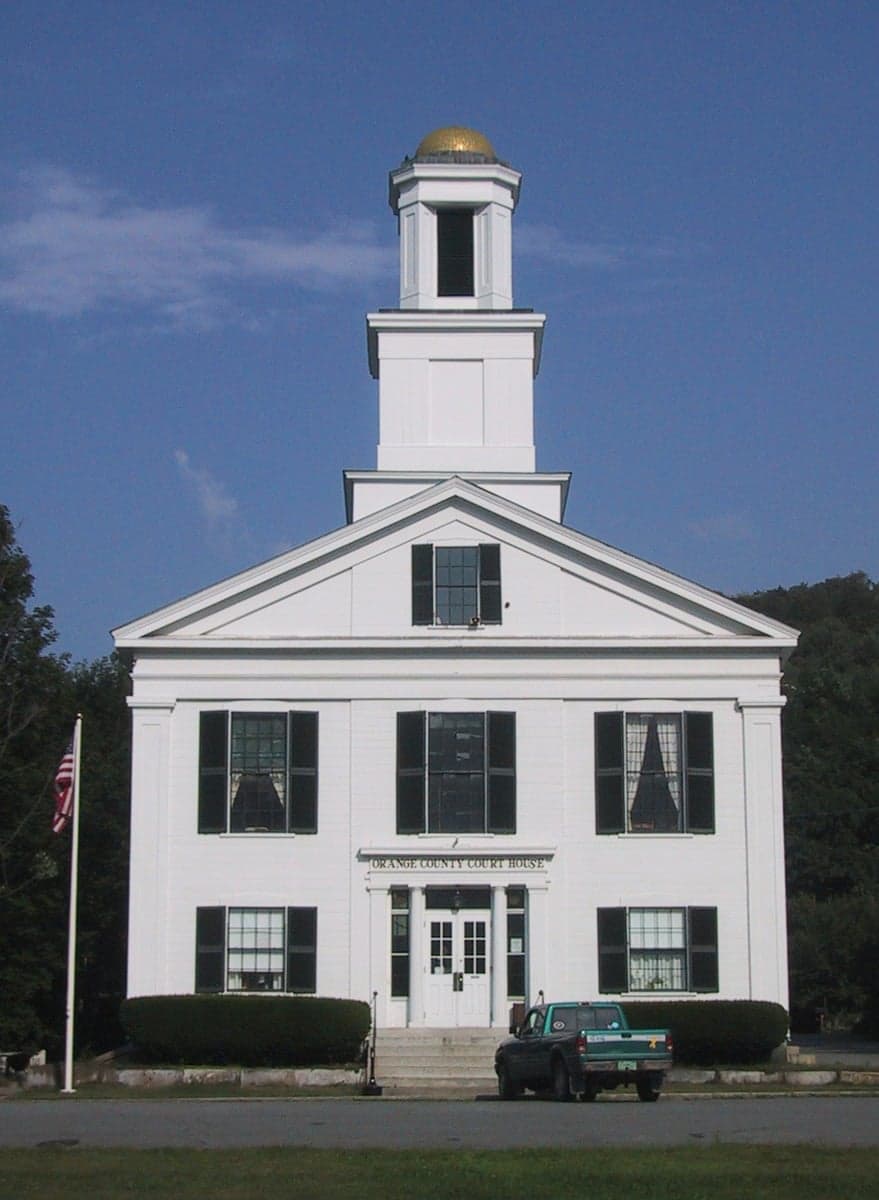
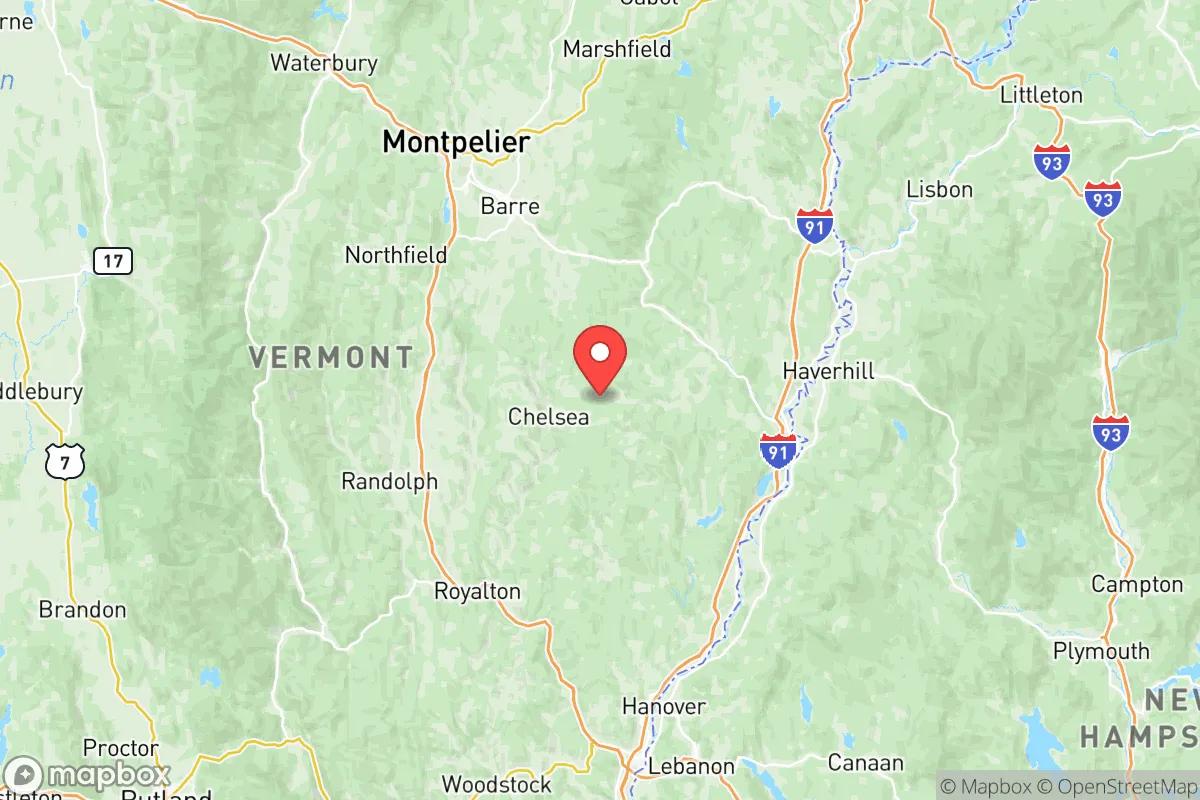
Photo: Wikipedia
Political ClimatePolitical Climate in Orange County
Showing state-level results — no local-only data available.
Local Political AnalysisPolitical Analysis of Orange County
Orange County, Vermont, carries a Cook PVI of D+17, which on paper makes it look like a deep-blue stronghold, but that number hides a lot of nuance. The reality is that this county has been shifting leftward for the last decade, and if you’ve lived here as long as I have, you’ve watched the old independent streak get replaced by a more uniform progressive agenda. The state of Vermont as a whole shares that same D+17 rating, so Orange County is right in lockstep with the state average, but the local flavor is changing faster than most folks realize.
How it compares
Compared to the rest of Vermont, Orange County is actually a bit of a mixed bag when you zoom in. Towns like Randolph and Williamstown used to be solidly purple, with a healthy mix of hunters, farmers, and small business owners who voted on local issues rather than party lines. Now, Randolph is trending blue fast, driven by an influx of remote workers and second-home owners from out of state who bring their coastal politics with them. Meanwhile, Topsham and Corinth still lean more conservative, with precincts that regularly vote against the statewide trend on gun rights and school funding. The swing precincts are in places like Brookfield and Braintree, where you’ll find a real split between old-timers who remember when the county was a Republican stronghold and newcomers who want to turn everything into a climate action plan.
What this means for residents
For those of us who value personal freedoms and limited government, the trajectory is concerning. The county commission and local school boards are increasingly dominated by progressive voices pushing policies like mandatory equity training in schools, strict land-use regulations that make it harder to build a garage or a shed without a permit, and tax hikes to fund social programs that sound good on paper but hit your wallet hard. The state-level push for a single-payer healthcare system and tighter gun control measures—like the 2023 magazine capacity ban—has strong support in Orange County’s urbanized pockets, but it leaves rural residents feeling like their voices don’t matter anymore. If you’re a hunter, a small farmer, or someone who just wants to be left alone, you’re starting to feel like an outsider in your own county.
Culturally, the divide is real. The old Vermont ethos of “live and let live” is being replaced by a more prescriptive, top-down approach to community life. You see it in the way town meetings are run—longer, more contentious, with newcomers arguing for policies that sound nice but ignore the practical realities of rural living. The county’s economy, once rooted in dairy farming and small manufacturing, is now dominated by service jobs tied to tourism and the state government in Montpelier, which is just a short drive north. That shift has brought more progressive voters into the mix, and with them, a push for higher taxes and more regulations that make it harder for traditional businesses to survive.
Looking ahead, I’d expect Orange County to keep drifting left, especially as more people move in from places like New York and Massachusetts. The old guard is aging out, and the younger generation is more aligned with the national Democratic platform. If you’re considering a move here and you value personal liberty, low taxes, and a government that stays out of your business, you’ll want to look closely at the towns that still have a conservative backbone—places like Vershire or West Fairlee. But even those are feeling the pressure. The days of Orange County being a quiet, independent-minded corner of Vermont are fading fast, and that’s a hard truth for those of us who remember what it used to be.

State Political ClimatePolitical Climate in Vermont
State Political AnalysisPolitical Environment in the State
Vermont has long been one of the most reliably Democratic states in the nation, with a Cook Partisan Voting Index of D+17, meaning it votes about 17 points more Democratic than the country as a whole. Over the past 10-20 years, the state has shifted steadily leftward, driven by an influx of out-of-state transplants from places like New York and Massachusetts, and a hollowing out of its rural, working-class base. While the state still elects a Republican governor (Phil Scott, who is a moderate), the legislature is firmly controlled by a progressive supermajority that has pushed through some of the most aggressive policy changes in the country.
Urban vs. rural divide
The political map of Vermont is a textbook case of the urban-rural divide, but with a twist. The state’s population is concentrated in a handful of small cities and their surrounding suburbs, and these areas drive the state’s deep blue lean. Burlington, the largest city, is a progressive stronghold where Democratic and Progressive Party candidates routinely win by 30-40 points. The surrounding Chittenden County, which includes towns like South Burlington, Essex Junction, and Williston, is the engine of the state’s leftward shift. These areas have seen massive growth in young professionals, remote workers, and retirees from out of state, all of whom tend to vote for the most progressive candidates.
In contrast, the more rural and working-class parts of the state—like the Northeast Kingdom (counties such as Orleans and Essex), and the southern tier around Bennington and Rutland—have been trending Republican, but their populations are shrinking. Rutland County flipped from blue to red in the 2020 presidential election and has stayed there, but its declining population means it has less influence every cycle. The divide is stark: in 2024, Chittenden County voted over 75% for the Democratic candidate, while Orleans County voted over 60% for the Republican. The state’s political future is being written in the suburbs of Burlington, not the dairy farms of the Northeast Kingdom.
Policy environment
Vermont’s policy environment is among the most progressive in the country, and it has become a laboratory for left-wing governance. The state has a progressive income tax that tops out at 8.75% for high earners, and property taxes are among the highest in the nation—averaging around 1.8% of home value, which is a heavy burden given the state’s high home prices. The regulatory posture is aggressive: Vermont was the first state to pass a single-payer healthcare system (though it was never fully implemented), and it has some of the strictest environmental regulations in the country, including a ban on fracking and a mandate for renewable energy in new construction.
Education policy is dominated by the teachers’ union, and the state has some of the highest per-pupil spending in the nation, yet test scores remain middling. The state has also passed a universal school meals program and is moving toward universal pre-K. On election law, Vermont has same-day voter registration, no-excuse absentee voting, and automatic voter registration through the DMV—all of which make it easy to vote but have raised concerns about election integrity among conservatives. The state also has a strict gun control regime, including a 2018 law that banned magazines over 10 rounds and raised the purchase age to 21, and a 2023 law that banned carrying firearms in public buildings and on public transportation.
Trajectory & freedom
Vermont is becoming less free by almost any measure, especially for conservatives. The most concerning trend is the erosion of Second Amendment rights. The 2018 gun control law (Act 94) was followed by a 2023 law (Act 45) that further restricted carry rights and created a "red flag" law that allows for the seizure of firearms without a criminal conviction. The state also passed a 2024 law that bans the sale of "assault weapons" and requires a state permit to purchase any firearm—a permit that can be denied based on subjective criteria.
Parental rights have taken a hit as well. In 2023, the state passed a law (Act 1) that codified a "gender-affirming care" mandate, allowing minors to receive puberty blockers and hormone therapy without parental consent in some circumstances, and shielding providers from out-of-state lawsuits. This has sparked a backlash, but the legislature has shown no signs of backing down. On medical autonomy, Vermont was one of the first states to legalize assisted suicide (1999) and recreational marijuana (2018), but it has also mandated COVID-19 vaccines for healthcare workers and school staff, and it has some of the strictest vaccine requirements for schoolchildren in the nation.
Property rights are under pressure from a 2023 law that allows municipalities to impose rent control and from a 2024 law that restricts short-term rentals like Airbnb, which has hurt rural property owners who rely on that income. The tax burden continues to rise, with no serious movement toward relief.
Civil unrest & political movements
Vermont has seen its share of political activism, but it is overwhelmingly from the left. Burlington was the site of large Black Lives Matter protests in 2020, and the city has a long history of anti-war and environmental activism. The state has a "sanctuary" policy that limits cooperation between local law enforcement and federal immigration authorities, and in 2024, the legislature passed a law that prohibits state and local agencies from sharing information with ICE except in narrow circumstances.
On the right, there is a small but vocal movement, centered in rural areas like Newport and St. Johnsbury, that has organized around gun rights and parental rights. In 2023, a group called the Vermont Federation of Sportsmen’s Clubs held a rally at the statehouse that drew about 2,000 people—a significant number for a small state. There have also been "walkout" protests by parents against the gender-affirming care mandate, but these have not translated into electoral success. The state’s election integrity is generally not a major controversy, though some conservatives have raised concerns about the lack of voter ID requirements and the use of universal mail-in ballots during the pandemic.
Projection
Over the next 5-10 years, Vermont is likely to become even more progressive. The demographic trends are clear: the state’s rural, conservative-leaning population is aging and shrinking, while the urban and suburban areas around Burlington are growing, fueled by an influx of out-of-state transplants who are overwhelmingly left-leaning. The state’s housing crisis—driven by restrictive zoning and high construction costs—is pushing young families out, but the people moving in are often wealthy retirees or remote workers who are comfortable with high taxes and progressive policies.
The Republican Party in Vermont is in a state of collapse. The last Republican to win a statewide federal office was Jim Jeffords in 1988 (and he later became an independent). Governor Phil Scott is popular because he is a moderate who has vetoed some of the most extreme bills, but he is term-limited and will be gone by 2028. After him, the GOP has no obvious successor, and the legislature is likely to become even more lopsided. Expect more gun control, more mandates, and higher taxes. The only wildcard is the housing crisis—if it becomes severe enough, it could slow in-migration and give the state a more balanced political future, but that is a long shot.
Bottom line for a new resident: If you are a conservative, Vermont is a tough place to live. You will be in a small minority, your values will be under constant attack in the legislature, and you will pay high taxes for services you may not agree with. The state is beautiful, and the people are generally friendly, but the political climate is hostile to traditional American freedoms. If you are considering a move here, do it with your eyes open: you are moving to a state that is actively moving away from the principles of limited government and personal liberty. The best you can hope for is to find a like-minded community in a rural town like Danville or Poultney, but even there, the state government will be a constant source of frustration.
* Values derived from national, state, county, city and local statistics and may differ in a specific area. Last updated: 2026-05-14T18:12:49.000Z
Narrative content on this page is AI-generated and may contain mistakes. Verify any details that matter before acting on them.
ReloMaps may earn a commission from affiliate links at no extra cost to you.

