
Photo by Luke McKeown on Unsplash
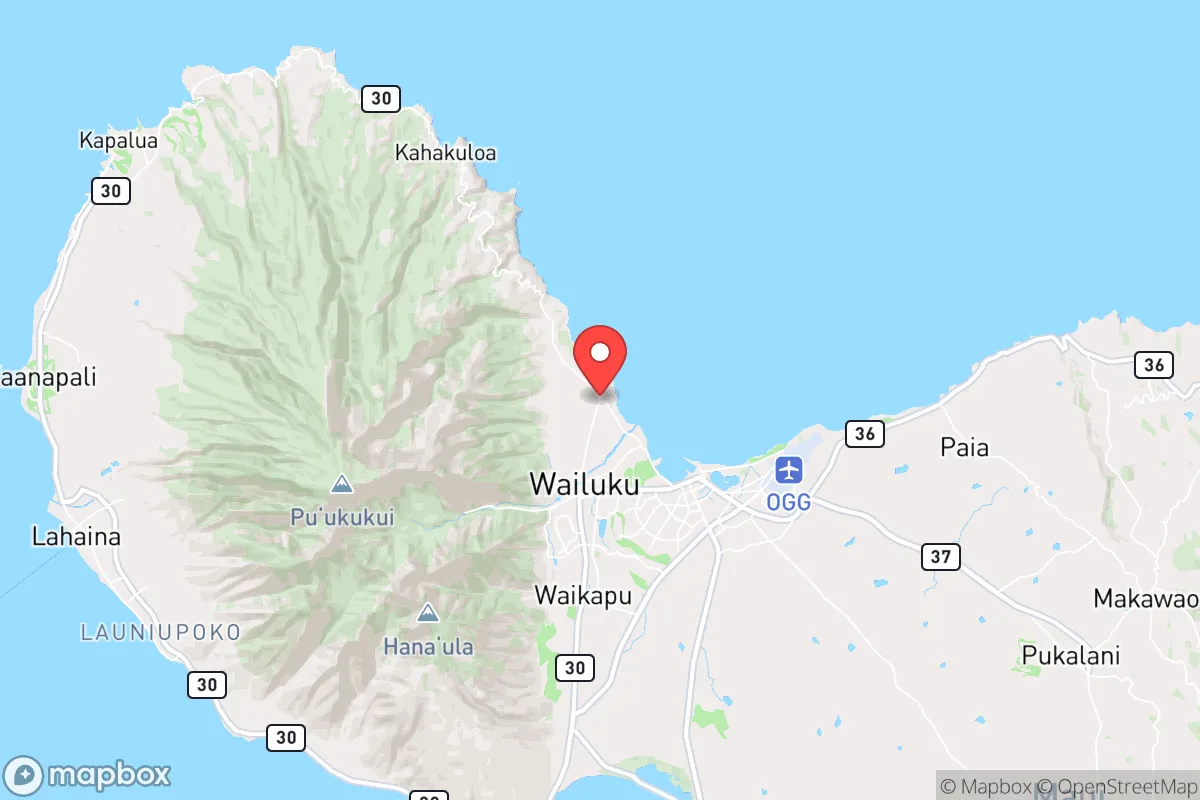
Personal Sovereignty in Waihee Waiehu, HI
Moderate friction. Expect trade-offs in some aspect of personal liberty and independence.
What does Personal Sovereignty tell us?
Personal Sovereignty measures your capacity for self-reliance and independence with minimal government friction. Higher scores mean fewer barriers between you and the way you want to live... but it assumes you have the space you need and good neighbors.
What does this tell us?
Personal Sovereignty measures your capacity for self-reliance and independence with minimal government friction. Higher scores mean fewer barriers between you and the way you want to live... but it assumes you have the space you need and good neighbors.
State Policy
Energy independence: Importer (2% of energy produced in-state)
Personal Liberty
Homesteading

Personal Liberty Analysis
For the individual or family prioritizing personal sovereignty—the ability to live, defend, and provide for oneself without excessive government interference—Waihee Waiehu, on Maui’s north shore, presents a uniquely challenging environment. While the area’s natural beauty and relative isolation from the main tourist corridors offer a sense of retreat, the reality is that Hawaii’s state-level regulatory apparatus exerts a heavy hand over nearly every aspect of daily life. From land use and housing to taxation and self-defense, the trade-offs here are severe: you gain physical distance from the mainland’s political turmoil, but you surrender a significant degree of autonomy to a state government that is deeply interventionist. For a prepper or conservative-minded relocator, this is not a place of frontier freedom, but a managed paradise with strict rules.
Tax burden and regulatory posture: what you pay for the privilege of living here
Hawaii’s tax burden is among the highest in the nation, and Waihee Waiehu is no exception. The state imposes a general excise tax (GET) of 4% on nearly all goods and services, which effectively functions as a hidden sales tax that compounds at every stage of production—meaning a $100 grocery trip can carry a tax load of $10 or more by the time it reaches your table. Property taxes are comparatively low for owner-occupied homes, but the state’s income tax brackets are steep, with a top marginal rate of 11% on income over $200,000. For a self-employed prepper or remote worker, this is a direct hit to your savings and gear budget. The regulatory posture is equally aggressive: building permits, land-use changes, and even minor home improvements require county approval that can take months. The state’s coastal zone management and environmental review laws mean that any construction near the shoreline—common in Waihee Waiehu—faces layers of bureaucratic scrutiny. For someone seeking to build a self-sufficient homestead or a fortified retreat, the permitting process alone can feel like a form of government overreach designed to discourage independent action.
Self-defense and gun law specifics: what you can and cannot own
For the survivalist, Hawaii’s gun laws are among the most restrictive in the United States, and Waihee Waiehu offers no local carve-outs. The state requires a permit to acquire for each firearm purchase, a process that involves fingerprinting, a background check, and a waiting period that can stretch weeks. Concealed carry is effectively impossible for ordinary citizens—the state issues permits only on a “may-issue” basis with a requirement to show “exceptional cause,” and as of 2025, fewer than a handful of permits are active statewide. Open carry is prohibited. Magazine capacity is limited to 10 rounds, and certain semi-automatic rifles are classified as “assault pistols” or subject to additional restrictions. For the prepper who views a firearm as a tool for personal defense and community protection, this is a major sovereignty deficit. You cannot legally keep a standard-capacity AR-15 or carry a sidearm for daily protection. The state’s attitude is one of strict control, and local law enforcement in Maui County generally enforces these laws without leniency. If self-defense is a core pillar of your relocation strategy, Waihee Waiehu will force you to operate within a heavily constrained legal framework.
Self-reliance and homesteading viability: lot sizes, zoning, and off-grid feasibility
The physical landscape of Waihee Waiehu offers some potential for self-reliance, but the legal and practical hurdles are substantial. Residential lots in the area typically range from 0.25 to 1 acre, with a few larger parcels available in the more rural upslope sections. Zoning is predominantly single-family residential (R-1) under Maui County code, which restricts agricultural activities, livestock, and commercial operations. Keeping chickens or a small garden is generally tolerated, but raising goats, pigs, or cattle for meat requires a minimum lot size of one acre and an agricultural zoning designation—hard to secure in this neighborhood. Off-grid feasibility is limited: the county requires connection to the municipal water and sewer systems where available, and solar panels must be grid-tied with county approval. Rainwater catchment is allowed as a supplemental source, but not as a primary system if municipal water is accessible. The climate is forgiving—year-round mild temperatures mean no need for heating or heavy cooling—but the regulatory environment discourages the kind of independent infrastructure a prepper would want. You can grow food, but you cannot easily build a bunker, drill a private well, or disconnect from the grid without running afoul of county codes.
Personal liberties: parental rights, medical autonomy, speech, and property
On issues of personal liberty, Hawaii’s state-level policies lean heavily toward collective mandates over individual choice. Parental rights in education are limited: the state has mandatory vaccination requirements for school attendance (with narrow medical exemptions), and the Department of Education has broad authority over curriculum, including health and sex education. Homeschooling is legal but requires annual notification and submission of a curriculum plan to the local school district—a level of oversight that some conservative families find intrusive. Medical autonomy is similarly constrained: Hawaii has some of the strictest vaccine mandates in the country, and during public health emergencies, the governor has broad powers to mandate treatments or restrict movement. Free speech is protected under the First Amendment, but local zoning and noise ordinances can be used to limit public gatherings or political demonstrations. Property rights are the weakest link: the state’s land use commission and county planning departments have near-total control over what you can do with your land, including restrictions on building size, setbacks, and even paint colors in some historic districts. For the individual who values the right to make decisions for their family and property without government permission, Waihee Waiehu feels less like a sovereign haven and more like a managed community with strict homeowner association-style rules enforced at the county level.
In the broader landscape of American personal sovereignty, Waihee Waiehu ranks low for those who prioritize self-defense, minimal taxation, and regulatory freedom. The area’s strengths—isolation, natural beauty, a mild climate—are real, but they come at the cost of living under one of the most interventionist state governments in the country. For the prepper or conservative relocator, the trade-off is stark: you gain physical distance from mainland chaos, but you surrender significant control over your own life to a state that does not share your values on autonomy. If your definition of sovereignty includes the right to keep and bear arms without a permit, build a self-sufficient homestead without county approval, or raise your children without state-mandated curricula, then Waihee Waiehu is likely a strategic compromise rather than a victory. It is a place to retreat to, not a place to stand your ground.

* Values derived from national, state, county, city and local statistics and may differ in a specific area. Last updated: 2026-04-24T11:37:06.000Z
Narrative content on this page is AI-generated and may contain mistakes. Verify any details that matter before acting on them.
ReloMaps may earn a commission from affiliate links at no extra cost to you.

