
Photo by Luke McKeown on Unsplash
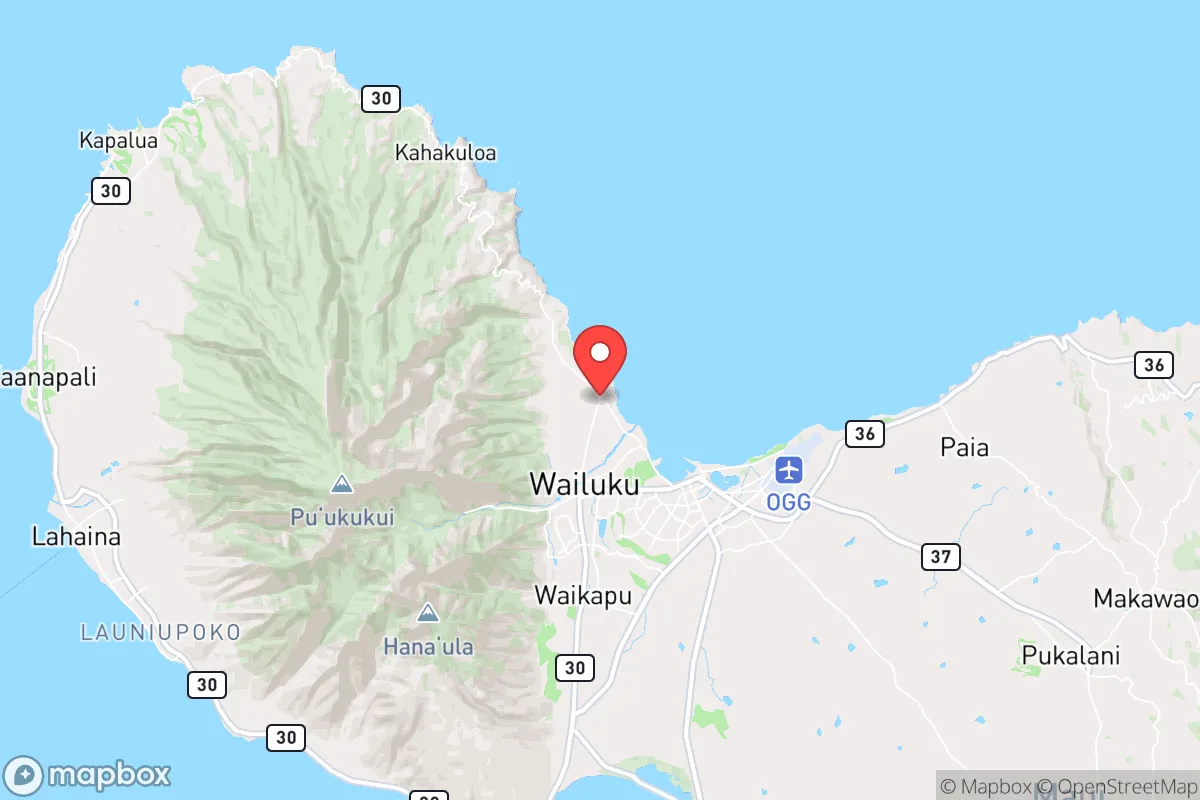
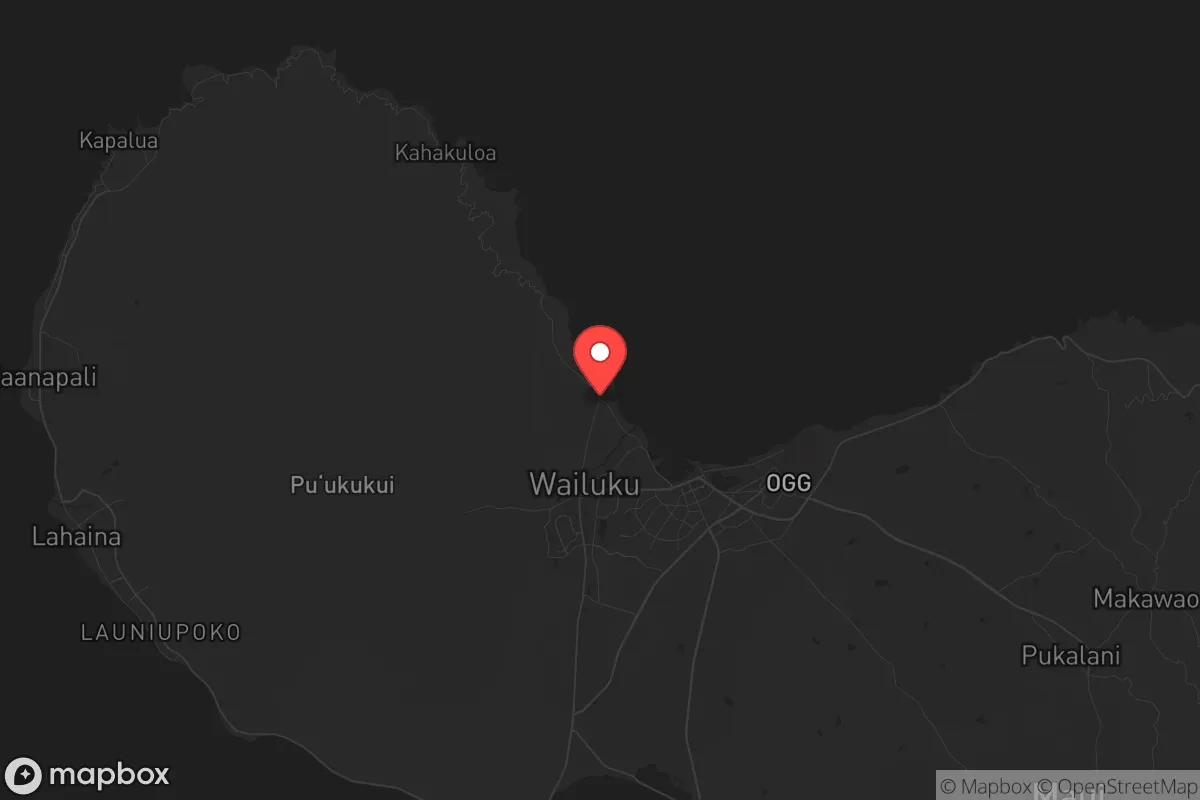
Strategic Assessment of Waihee Waiehu, HI
Workable tactical position. Some exposure to population density or targets, but generally defensible in a crisis.
What does the Strategic Assessment tell us?
Our Strategic Assessment grades tactical survivability of an area. Major population centers, military targets, fallout zones, natural disasters, and border exposure all drive risk — lower exposure means a more defensible position in a crisis.
This is heavily inspired by Joel Skousen's Strategic Relocation book. Highly recommended you checkout the book ($)What does this tell us?
Our Strategic Assessment grades tactical survivability of an area. Major population centers, military targets, fallout zones, natural disasters, and border exposure all drive risk — lower exposure means a more defensible position in a crisis.
This is heavily inspired by Joel Skousen's Strategic Relocation book. Highly recommended you checkout the book ($)Strategic Pillars

Key Distances
Regional Safe Places
Below is our recommended "safe zones" in Hawaii and the surrounding area based on our strategic heuristics. For most people, it's unrealistic to live in a “safe zone” full-time due to work, family or other personal reasons. They tend to be more rural. However, many of these areas are perfect for second homes and retreat properties that double as a vacation home or even a short-term rental.

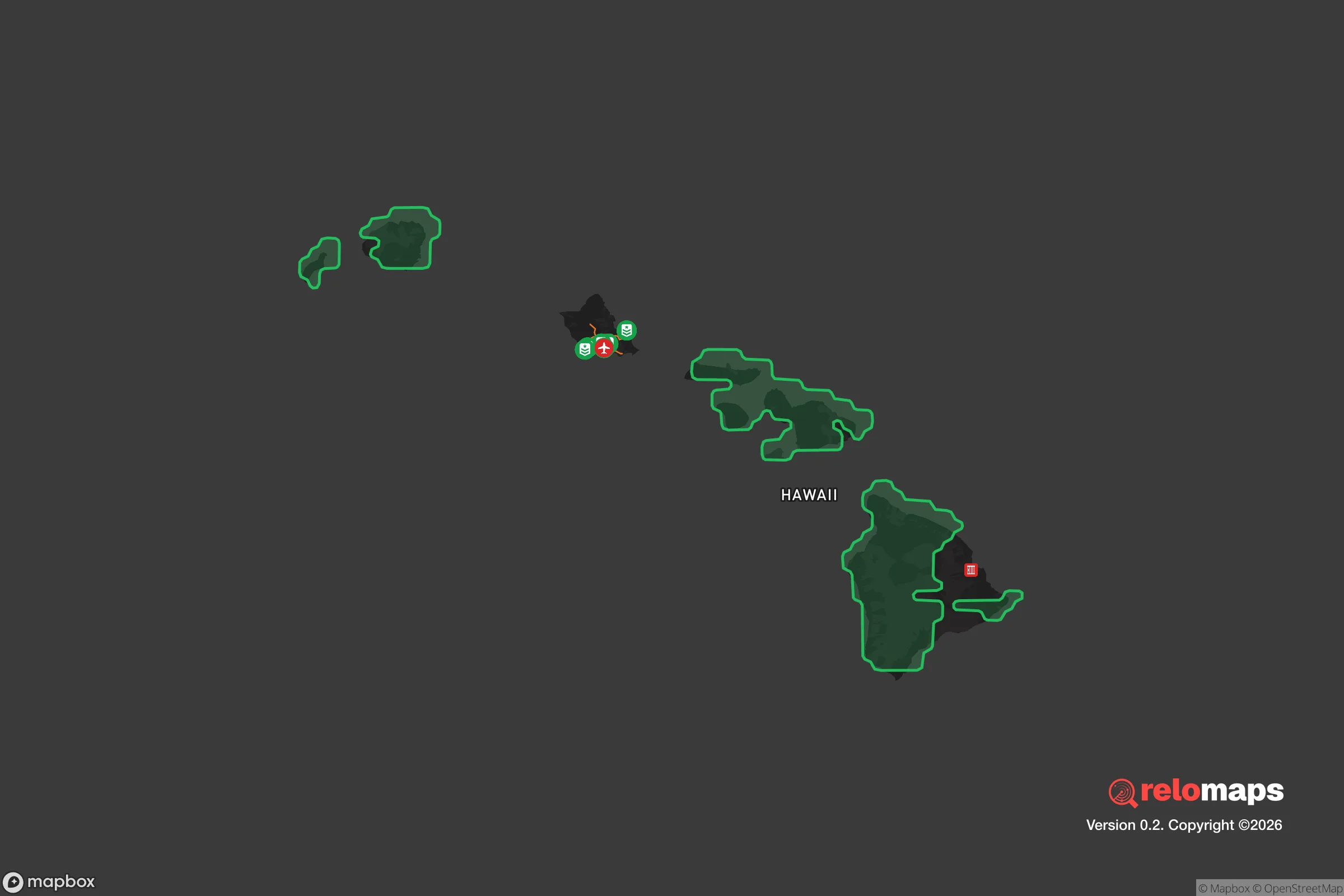


Important Note: For informational purposes only. This does not mean nothing bad ever happens in the green zones. Please use common sense. This is based on public data and modeled with AI. We tried to take a conservative approach but mistakes happen. We update this regularly as new information becomes available.
Solar Generator Recommendations
Backup power matters more here than in safer locations. We've picked three solar generators across budgets and capacity tiers — start with the budget unit if you only need a few essentials, or step up if you want to run a fridge and HVAC for days at a time.

Jackery Portable Power Station Explorer 300
Budget OptionPower on the Go: Weighing only 11 lbs, it's convenient to set up and store with book-sized foldable solar panels

BLUETTI Portable Power Station AC180
Designed for both indoor and outdoor scenarios, AC180 is highly capable as it has a robost capacity and continuous output power.

EF ECOFLOW DELTA Pro Ultra Power Station
Upgraded PickEcoFlow DELTA Pro Ultra is a whole-home energy system designed to grow with your family. Integrated with the Smart Home Panel 2, it scales to meet your evolving energy needs — keeping your home powered, intelligent, and secure through every stage of life.
We earn a commission, at no additional cost to you.
Strategic Assessment Analysis
Waihee Waiehu, on Maui's north shore, offers a resilience profile that is both uniquely strong and sharply limited. Its primary strategic advantage is geographic isolation from the mainland's cascading failure risks, but that same isolation becomes a critical vulnerability if supply chains snap. For a relocator prioritizing low-density living, defensible terrain, and distance from obvious fallout targets, this area presents a mixed picture: excellent natural buffers against civil unrest, but serious exposure to natural disaster and a near-total dependence on external logistics. The key question is whether Maui's remote bubble is a fortress or a trap.
Geographic position and natural advantages for long-term security
Waihee Waiehu sits roughly 5 miles north of Kahului, the island's commercial hub, but feels far more removed. The area is flanked by the West Maui Mountains to the west and the Pacific to the east, with the Waihee Ridge providing a natural barrier that limits access from the south. This topography creates a chokepoint: only a few roads connect the community to central Maui, making it relatively easy to monitor or control movement in a crisis. The prevailing trade winds keep air quality moderate even during vog events from the Big Island, and the elevation—ranging from near sea level to several hundred feet—offers some protection against tsunami inundation compared to flatter coastal zones. For a prepper, the ability to observe approaching threats from elevated ridgelines is a tangible asset. The area's low population density (roughly 4,000 residents spread across a few square miles) means fewer neighbors to compete with for resources during a breakdown, and the strong local agricultural history—sugarcane and taro once dominated—indicates that the soil can support subsistence farming if managed properly.
Risks, exposures, and proximity to fallout-relevant landmarks
The most glaring vulnerability is Waihee Waiehu's position relative to Kahului Harbor and Kahului Airport, both located about 10 miles south. These are the island's only major entry points for fuel, food, and medical supplies. In a national emergency—whether economic collapse, pandemic, or conflict—these facilities become high-value targets for disruption. A determined adversary could interdict shipping with a single mine or missile, and the airport's single runway is a fragile lifeline. Additionally, the harbor's fuel storage tanks are a potential hazard; a major leak or explosion could contaminate groundwater and air for miles downwind. Kahului itself, with a population of 30,000, is the closest concentration of people and potential unrest. While not a dense urban core, it is large enough that civil disorder there could spill northward along the only road. The Pulehuiki Road and Kahekili Highway are the primary evacuation routes, and both are narrow, winding, and prone to landslides after heavy rain. A single blocked road effectively isolates Waihee Waiehu from the rest of the island. Tsunami risk is real but manageable: the 1946 and 1960 Pacific-wide tsunamis caused damage in Kahului but less in Waihee Waiehu due to offshore reef protection. Hurricane risk is moderate—Maui hasn't taken a direct hit since 1992's Hurricane Iniki, but climate models suggest increased storm intensity. Volcanic hazard is low; Haleakala is dormant, not extinct, but an eruption would likely affect the eastern side of the island first.
Practical resilience for a relocator: food, water, energy, and defensibility
Water is the strongest card here. The Waihee River and its tributaries provide a reliable surface water source, and the area's annual rainfall of 70-100 inches means catchment systems are highly effective. Many existing homes already use catchment tanks; a relocator should prioritize a property with a large, well-maintained system and a backup pump. Groundwater is accessible via wells, but drilling permits are regulated and expensive. For food, the climate supports year-round growing: bananas, breadfruit, taro, sweet potatoes, and citrus thrive with minimal input. The ocean offers protein—fishing from the rocky shoreline or a small boat can yield uhu, moi, and octopus. However, hunting opportunities are limited; axis deer are present but not abundant in this immediate area, and feral pigs are more common in the forest reserves to the west. Energy is a weak point. The island grid is fragile and expensive (electricity costs roughly 30-40 cents per kWh, triple the mainland average). Solar is viable—Maui gets 5-6 peak sun hours daily—but battery storage is essential because grid outages are frequent during storms. A generator with a 500-gallon propane tank is a prudent backup, but propane delivery depends on the harbor. Defensibility is decent but not fortress-grade. The terrain offers natural chokepoints, but the community is not walled or gated. A relocator should invest in perimeter awareness—motion lights, cameras, and a good fence—rather than expecting to hold off a determined group. The local population is generally friendly and self-reliant, but in a prolonged crisis, outsiders may be viewed with suspicion. Building relationships with neighbors before a disaster is the single best defensive measure.
The overall strategic picture for Waihee Waiehu is one of calculated trade-offs. It offers genuine refuge from the cascading failures that could overwhelm mainland cities—no interstate highways to block, no major military bases nearby, no dense urban targets. The natural environment provides water, food potential, and defensible geography. But the price of that isolation is extreme dependence on a fragile supply chain for fuel, medicine, ammunition, and manufactured goods. A relocator here must be prepared to operate without resupply for months, not weeks. The community's small size means that in a true collapse, there will be no outside help arriving; you are the help. For a conservative-minded individual or family who values self-sufficiency, low population density, and distance from the chaos of the mainland, Waihee Waiehu is a viable option—but only if you arrive with a full container of supplies, a deep understanding of tropical subsistence, and a realistic acceptance that paradise has its own hard edges.

* Values derived from national, state, county, city and local statistics and may differ in a specific area. Last updated: 2026-04-24T11:37:06.000Z
Narrative content on this page is AI-generated and may contain mistakes. Verify any details that matter before acting on them.
ReloMaps may earn a commission from affiliate links at no extra cost to you.

