
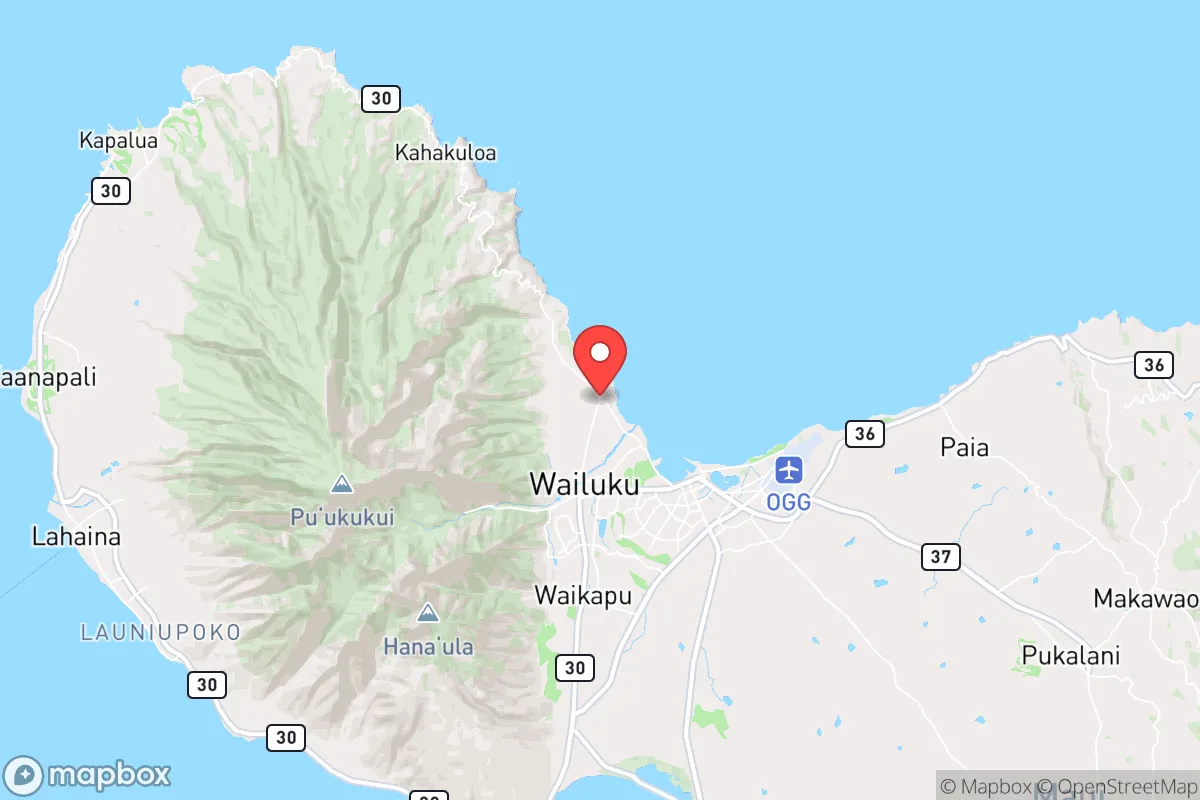
Photo by Luke McKeown on Unsplash
Political ClimatePolitical Climate in Waihee Waiehu, HI
District shown is the primary district for this city’s centroid. Cities may span multiple districts.
Local Political AnalysisPolitical Analysis of Waihee Waiehu, HI
Waihee Waiehu leans heavily Democratic, with a Cook PVI of D+12 that places it among the most liberal-leaning areas in Maui County. This isn't a recent shift—it's been this way for decades, but the flavor of that politics has changed. Back in the 90s, local Democrats here were more about fishing rights, agricultural land use, and keeping development from swallowing up the valley. Now, the energy is coming from a younger, more progressive crowd pushing policies that feel less like local common sense and more like top-down social engineering. If you've lived here long enough, you can feel the difference in town hall meetings and even just chatting with neighbors at the Waihee Store.
How it compares
Drive ten minutes south into Kahului, and you'll find a similar D+12 or even D+14 vibe—lots of state workers, union households, and transplants from the mainland who brought their blue-state voting habits with them. Head north to Paia or Haiku, and the politics get even more progressive, with a strong environmentalist and anti-development streak that can make even modest property improvements a bureaucratic nightmare. The real contrast is across the Pali to Lahaina or upcountry to Kula, where you'll find more independent and conservative-leaning voters—folks who still believe property rights matter and that the county shouldn't dictate what color you paint your fence. Waihee Waiehu sits in the middle of this spectrum: reliably blue, but with a older, local-Japanese and Filipino base that doesn't always line up with the new progressive agenda.
What this means for residents
For a conservative-leaning resident, the biggest concern is how much government reach has expanded in the last five years. The Maui County Council, which holds sway over Waihee Waiehu, has passed stricter short-term rental bans, tighter building codes, and new environmental regulations that make it harder to use your own land the way your family has for generations. There's also a growing push for "equity" policies in county hiring and contracting that feel more like quotas than fairness. Property taxes remain relatively low compared to the mainland, but the county's general excise tax and permit fees keep creeping up. The school board and local community association meetings are increasingly dominated by activists who see every issue—from beach access to park hours—as a chance to impose new rules. If you value personal freedom and minimal interference, you'll find yourself voting against most ballot measures and scratching your head at some of the local ordinances.
Culturally, Waihee Waiehu still holds onto a strong sense of ohana and neighborly trust that predates the current political climate. People here still wave when you pass, and the local church and fishing clubs are more influential than any political party. But there's a quiet frustration among long-time residents that the county government doesn't listen to them the way it used to. The push for a "living wage" ordinance and rent control measures sounds good on paper, but in practice it's driving up costs for small landlords and making it harder for local families to find affordable rentals. If the trend continues, expect more folks to either cash out and move to the mainland or retreat further into the upcountry where the government's reach is a little thinner. For now, Waihee Waiehu remains a beautiful, tight-knit community—but the political winds are blowing in a direction that makes a lot of us uneasy about the next decade.

State Political ClimatePolitical Climate in Hawaii
State Political AnalysisPolitical Environment in the State
Hawaii has been a one-party Democratic stronghold for decades, with Democrats controlling the governorship and supermajorities in both legislative chambers since the early 1960s. The state’s overall partisan lean is roughly D+20 in presidential elections, but that masks a growing conservative undercurrent, particularly on the neighbor islands and in rural Oahu. Over the last 10-20 years, the Democratic coalition has shifted from a moderate, union-driven base to a more progressive, government-expanding machine, while a small but vocal libertarian and conservative movement has emerged in places like Hawaii Kai, Kailua-Kona, and Hilo. The trajectory is one of increasing state control, but with a rising pushback that could reshape the map in the next decade.
Urban vs. rural divide
The political map of Hawaii is starkly divided between the urban core of Honolulu and the rest of the state. Honolulu and its suburbs on Oahu—places like Waikiki, Kapolei, and Mililani—drive the Democratic supermajority, fueled by government workers, union households, and a large Asian-American electorate that leans left on social issues. In contrast, the neighbor islands—Hawaii Island (the Big Island), Maui, Kauai, and Molokai—are more politically mixed. The Big Island’s Puna district is a libertarian hotbed, with a strong homesteading and off-grid movement that votes against zoning and tax increases. Kailua-Kona and Waimea on the Big Island, along with Kihei on Maui, have seen Republican and independent candidates win local races by focusing on property rights and fiscal restraint. The rural-urban divide is widening: Honolulu’s progressive policies on housing, taxes, and land use are increasingly at odds with the neighbor islands’ desire for local control and lower costs.
Policy environment
Hawaii’s policy environment is among the most interventionist in the nation. The state has the highest combined state and local tax burden in the U.S., with a general excise tax (GET) of 4% that applies to nearly all goods and services, plus a progressive income tax topping out at 11%. Property taxes are relatively low, but the state’s land use commission and county zoning boards impose strict controls on development, driving up housing costs. Education policy is heavily centralized: the state has a single, statewide school district, and parents have limited school choice options, with only a small charter school program and no voucher system. Healthcare is dominated by a few large insurers, and the state mandates employer-sponsored coverage. Election laws are moderately restrictive: Hawaii has no voter ID law, same-day registration, and universal mail-in voting, which has raised concerns about ballot security among conservatives. The state also has some of the nation’s strictest gun laws, including a permit-to-purchase requirement, a ban on assault weapons, and a 10-day waiting period.
Trajectory & freedom
Hawaii is becoming less free across multiple dimensions. In 2023, the legislature passed Act 4, which expanded the state’s red flag law to allow family members to petition for gun confiscation without a criminal conviction. In 2024, Act 46 imposed new restrictions on short-term rentals, effectively banning them in many residential zones on Oahu, a direct blow to property rights. On the medical autonomy front, Hawaii has some of the nation’s most permissive vaccine mandates for schoolchildren and healthcare workers, with no religious or philosophical exemptions for many vaccines. Parental rights took a hit in 2022 when the state passed Act 36, which prohibits schools from notifying parents if a student changes their gender identity or pronouns without the student’s consent. On the positive side for conservatives, the state’s homestead exemption was increased in 2023, offering some property tax relief, and a 2024 bill to create a school choice tax credit failed but gained significant traction. The overall trend is toward more government control over housing, education, and personal decisions.
Civil unrest & political movements
Hawaii has a history of civil unrest tied to land rights and indigenous sovereignty. The Mauna Kea protests of 2019, which blocked construction of the Thirty Meter Telescope, were a major flashpoint, uniting Native Hawaiian activists, environmentalists, and libertarians against state and corporate power. The movement has since evolved into a broader push for Hawaiian sovereignty, with some groups advocating for secession or a return to a kingdom-style government. On the right, the Hawaii Republican Party is small but active, with a strong presence in the Hawaii County Council and the state House. The Hawaii Libertarian Party has also grown, particularly in Puna and Kona, where candidates have won local office by opposing zoning and taxes. Immigration politics are less visible than on the mainland, but the state has a sanctuary policy that limits cooperation with federal immigration enforcement. Election integrity is a growing concern: the 2020 and 2022 elections saw allegations of ballot harvesting and voter roll irregularities, though no major court cases have changed outcomes. A new resident would notice the strong presence of protest culture in Honolulu, especially around the state capitol, and the quieter but determined activism on the neighbor islands.
Projection
Over the next 5-10 years, Hawaii is likely to become more progressive and more expensive, driving further out-migration of conservatives and middle-class families. The state’s population has been declining since 2016, with net out-migration of about 10,000 people per year, many of them moving to lower-cost, lower-tax states like Texas, Nevada, and Idaho. The remaining population is aging and increasingly reliant on government services, which will push for higher taxes and more regulation. However, the neighbor islands could become a conservative counterweight: as Honolulu becomes more unaffordable, more libertarian and conservative families are moving to the Big Island and Maui, where land is cheaper and local government is more responsive. The 2024 election saw a Republican win the mayor’s race in Hawaii County for the first time in decades, a sign of this shift. A new resident moving in now should expect to see continued battles over housing, taxes, and parental rights, with the state government in Honolulu pushing left and the neighbor islands pushing back. The next decade will likely see more ballot initiatives and local ordinances aimed at rolling back state overreach, but the Democratic supermajority in the legislature will remain a formidable obstacle.
Bottom line for a new resident: If you value low taxes, property rights, school choice, and gun rights, Hawaii will be a challenging place to live, especially on Oahu. The neighbor islands offer more breathing room, but you’ll still face a state government that is deeply interventionist. The best strategy is to target rural areas like Puna, Kona, or Hana on Maui, where local politics are more aligned with conservative values, and to get involved in county-level races to push back against Honolulu’s agenda. The state’s natural beauty and unique culture are unmatched, but the political climate requires constant vigilance and a willingness to fight for your freedoms.
* Values derived from national, state, county, city and local statistics and may differ in a specific area. Last updated: 2026-04-24T11:37:06.000Z
Narrative content on this page is AI-generated and may contain mistakes. Verify any details that matter before acting on them.
ReloMaps may earn a commission from affiliate links at no extra cost to you.

