
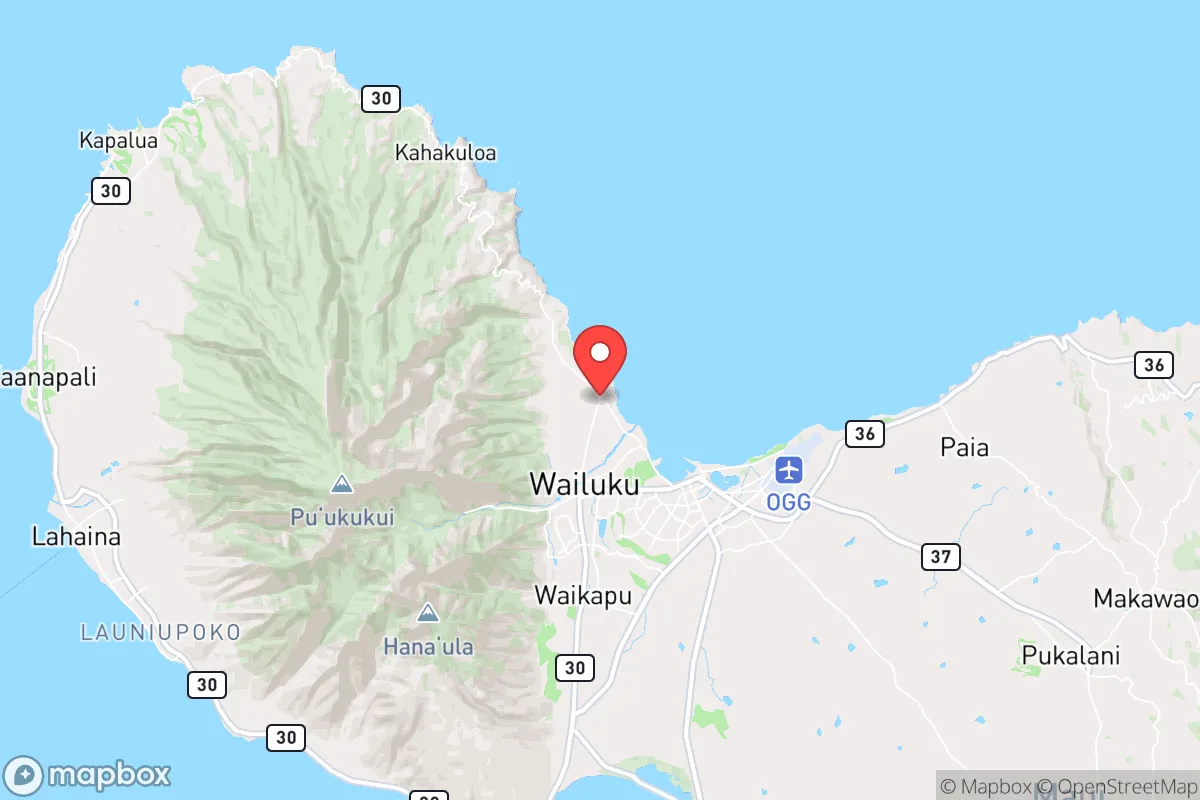
Photo by Luke McKeown on Unsplash
Demographics of Waihee Waiehu, HI
Affluence Level in Waihee Waiehu, HI
An upper-middle-class area. Household wealth, education levels, and homeownership run ahead of national benchmarks.
People of Waihee Waiehu, HI
The people of Waihee Waiehu, Hawaii, today number 8,364, forming a tight-knit, predominantly Asian and Native Hawaiian community on Maui’s north shore. The population is notably stable and family-oriented, with a low foreign-born share of 1.4% and a high proportion of residents who have deep generational roots in the area. Distinctive identity markers include a strong sense of local place, a high rate of homeownership, and a demographic profile that is 28.8% East/Southeast Asian, 16.5% White, 9.9% Hispanic, and a significant Native Hawaiian and Pacific Islander presence not captured in the provided data. This is not a transient or rapidly diversifying community; it is a settled, multi-generational enclave where change comes slowly.
How the city was settled and grew
Waihee Waiehu’s human history begins not with colonial settlement but with Native Hawaiians, who established ahupuaʻa (traditional land divisions) along the Waihee and Waiehu streams, cultivating taro and fishing the rich coastal waters. The area’s modern population wave started in the late 19th and early 20th centuries, driven by the sugar plantation economy. The Waihee Sugar Company, later part of Hawaiian Commercial & Sugar, drew immigrant laborers from East Asia—primarily Japanese, Chinese, and Filipino workers—who settled in plantation camps that evolved into today’s neighborhoods. Lower Waiehu and Waihee Village were built around these camps, with Japanese families forming the backbone of the local workforce. By the mid-20th century, the plantation system declined, but the descendants of these laborers remained, creating a stable, multi-ethnic community centered on family land and local fishing. The area never experienced a large wave of mainland American or European settlement; its growth was organic, tied to the sugar industry and the subsequent shift toward service and tourism jobs in Kahului and Wailuku.
Modern era (post-1965)
After the 1965 Immigration and Nationality Act, Waihee Waiehu saw only modest demographic change, unlike many mainland U.S. cities. The foreign-born population remains very low at 1.4%, indicating that nearly all residents are either native-born or have been in Hawaii for generations. The post-1965 period instead saw domestic in-migration from other Hawaiian islands and a small influx of mainland retirees and remote workers, drawn by the area’s relative affordability compared to West Maui. These newcomers settled primarily in Waiehu Heights and newer subdivisions along Waiehu Beach Road, where single-family homes on larger lots became available. The East/Southeast Asian population (28.8%) remains the largest single group, concentrated in the older core neighborhoods of Waihee Village and Lower Waiehu, while White residents (16.5%) are more dispersed, with a noticeable presence in the coastal and hillside areas. The Hispanic population (9.9%) is a growing but still small segment, often working in service industries in nearby Kahului. The Black population (0.3%) and Indian subcontinent population (0.0%) are negligible, reflecting the area’s lack of attraction for those groups. The community has not tribalized into distinct ethnic enclaves; rather, it remains a blended, intermarried local culture where Native Hawaiian and Asian traditions dominate daily life.
The future
The population of Waihee Waiehu is heading toward slow, organic growth, with a likely trajectory of gradual homogenization rather than rapid diversification. The low foreign-born share and high rate of multi-generational residence suggest that new immigration will remain minimal. The East/Southeast Asian and Native Hawaiian populations are expected to remain the demographic core, while the White share may increase slightly as more mainland retirees and remote workers discover the area’s lower cost of living relative to Kihei or Lahaina. The Hispanic population is likely to grow modestly, driven by service-sector employment in the broader Maui economy, but will not reach a critical mass that reshapes the community’s character. The biggest demographic pressure is not ethnic change but generational turnover: younger residents often leave for Oahu or the mainland for education and jobs, while older residents age in place. This could lead to a slightly older, more settled population over the next 10–20 years, with new arrivals mostly filling retirement or remote-work niches rather than transforming the area’s identity.
For someone moving in now, Waihee Waiehu offers a stable, culturally rooted community where change is incremental and local traditions hold strong. It is not a place of rapid growth or ethnic flux, but a settled, family-oriented enclave with a deep sense of place. New residents—especially those from the mainland—should expect to integrate into a community where Asian and Native Hawaiian heritage shapes daily life, and where the pace of life is slower and more insular than in Maui’s tourist zones. The area is becoming a quiet, affordable refuge for those who value continuity over change.

* Values derived from national, state, county, city and local statistics and may differ in a specific area. Last updated: 2026-04-24T11:37:06.000Z
Narrative content on this page is AI-generated and may contain mistakes. Verify any details that matter before acting on them.
ReloMaps may earn a commission from affiliate links at no extra cost to you.

