
Photo by Karsten Winegeart on Unsplash
Personal Sovereignty in Waimea, HI
Moderate friction. Expect trade-offs in some aspect of personal liberty and independence.
What does Personal Sovereignty tell us?
Personal Sovereignty measures your capacity for self-reliance and independence with minimal government friction. Higher scores mean fewer barriers between you and the way you want to live... but it assumes you have the space you need and good neighbors.
What does this tell us?
Personal Sovereignty measures your capacity for self-reliance and independence with minimal government friction. Higher scores mean fewer barriers between you and the way you want to live... but it assumes you have the space you need and good neighbors.
State Policy
Energy independence: Importer (2% of energy produced in-state)
Personal Liberty
Homesteading

Personal Liberty Analysis
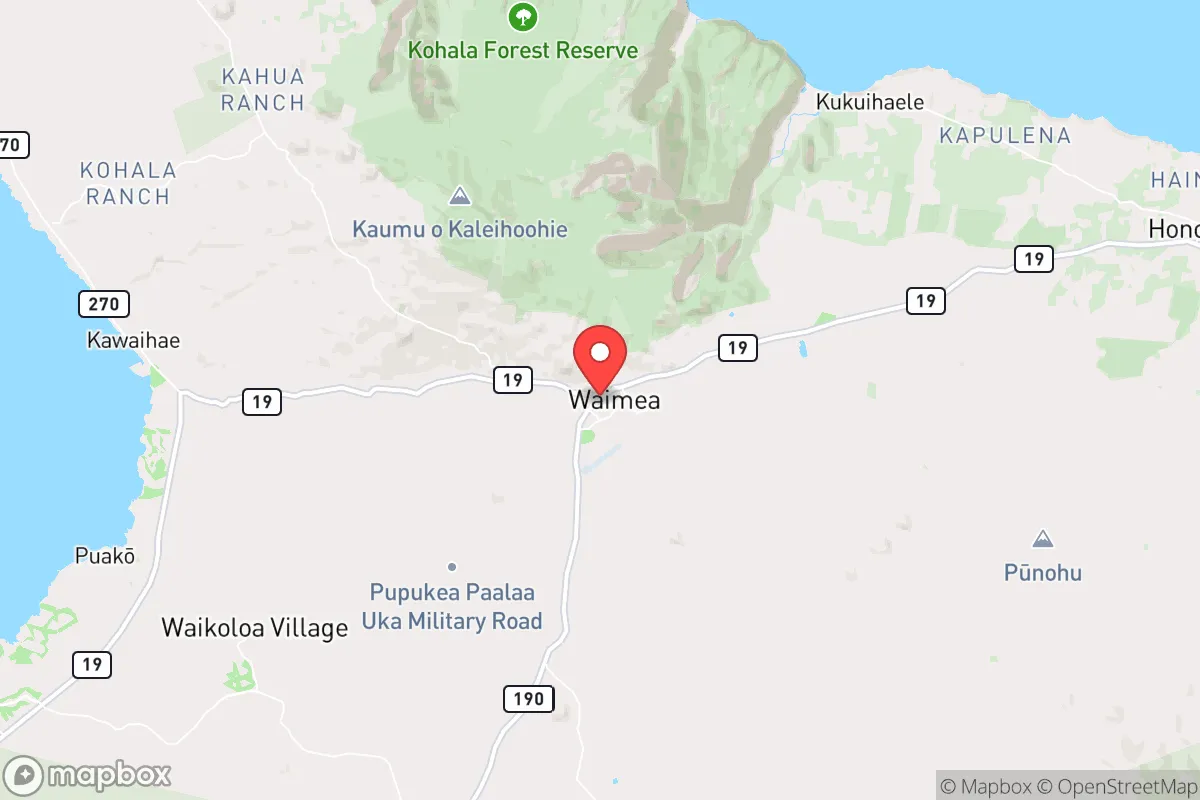
Waimea, on the Big Island of Hawaii, presents a complex picture for personal sovereignty that demands careful scrutiny from those prioritizing autonomy and self-reliance. While the island's rural character and strong local community offer genuine opportunities for a life less entangled with urban systems, the overarching legal and regulatory framework of Hawaii state government imposes significant constraints on individual freedoms, particularly in areas of taxation, self-defense, and property use. For the conservative-leaning individual or family evaluating Waimea as a potential relocation destination, the trade-off between a physically remote, self-sufficient lifestyle and a politically restrictive state environment is the central strategic calculation.
Tax burden and regulatory posture for individuals and families
Hawaii's state-level tax and regulatory environment is among the most intrusive in the nation, and Waimea residents are fully subject to it. The state imposes a progressive income tax with rates reaching 11% on higher earners, which directly reduces the financial autonomy of those working remotely or running local businesses. Property taxes, while relatively low compared to mainland states (around 0.3% of assessed value), are paired with a general excise tax (GET) of 4% applied to nearly all goods and services—including rent and business transactions—which acts as a hidden consumption tax that erodes purchasing power. For the prepper mindset, this means every dollar earned and spent is taxed at multiple points, reducing the capital available for self-reliance investments like land improvements, food storage, or alternative energy systems. Additionally, Hawaii's land use commission and county zoning regulations are notoriously strict, with statewide land use laws that classify most rural land as "agricultural" or "conservation", limiting what structures can be built and how property can be used without lengthy permitting processes. This regulatory posture is a direct challenge to the ideal of unfettered property rights and self-directed living.
Self-defense and gun law specifics in Hawaii
For those concerned with the right to keep and bear arms as a cornerstone of personal sovereignty, Hawaii is among the most restrictive states in the union. The state operates under a "may-issue" concealed carry framework, meaning local police chiefs have near-total discretion to deny permits, and as of 2024, permits are rarely granted to ordinary citizens. Open carry is effectively prohibited. Furthermore, Hawaii maintains a firearm registration system and requires permits to purchase both handguns and long guns, with waiting periods and background checks that can take weeks. The state also bans "assault weapons" and large-capacity magazines, and there is no state preemption—meaning counties can enact their own stricter ordinances. For the survivalist, this means that Waimea, despite its remote location, offers no legal sanctuary for firearms ownership as a tool of self-defense or community defense. The practical implication is that any prepper relocation to Waimea must accept that the legal ability to arm oneself is severely curtailed, and reliance on other forms of security—such as community networks, dogs, or non-lethal measures—becomes necessary. This is a significant sovereignty deficit compared to states like Alaska or Texas.
Self-reliance and homesteading viability in Waimea
On the positive side of the sovereignty ledger, Waimea's physical environment and land-use patterns offer real potential for self-reliance. The area is characterized by large agricultural lots, often 1 to 5 acres or more, which are zoned for farming and ranching. This allows for substantial food production—raising livestock, growing vegetables, and establishing orchards—which directly supports a prepper's goal of reducing dependence on supply chains. The climate, with moderate temperatures and reliable rainfall on the windward side, permits year-round growing. However, off-grid living faces significant hurdles. County building codes and state health department regulations require permits for rainwater catchment systems, composting toilets, and solar installations, and non-compliance can result in fines or liens. The cost of land in Waimea is high relative to mainland rural areas, often $100,000 to $200,000 per acre for improved parcels, which limits the ability to acquire large acreage for complete self-sufficiency. For the strategic relocator, Waimea offers a viable base for a semi-self-reliant lifestyle—growing food, raising animals, and living in a tight-knit community—but full off-grid autonomy is legally and practically constrained by state and county oversight.
Personal liberties: parental rights, medical autonomy, speech, and property
Hawaii's state government has a strong record of asserting authority over personal and family decisions, which is a key concern for those prioritizing parental rights and medical autonomy. The state has mandatory vaccination requirements for school attendance with limited exemptions, and during the COVID-19 pandemic, Hawaii maintained some of the longest-lasting travel restrictions and quarantine mandates in the country. This pattern suggests a government willing to impose public health measures that override individual choice. Parental rights in education are also limited, as Hawaii has a single statewide school district with centralized curriculum control, though homeschooling is legal with notification requirements. On property rights, as noted, zoning and land use laws are restrictive, and the state's county-level planning departments have broad authority to deny building permits based on aesthetic or environmental criteria. Free speech protections exist under the First Amendment, but the state's political culture leans heavily progressive, meaning conservative viewpoints—particularly on issues like firearms, land use, or pandemic response—can face social ostracism in local forums. For the individualist, Waimea's small-town atmosphere can be a double-edged sword: tight community bonds can support mutual aid, but they can also enforce conformity to prevailing local norms.
In the broader context of personal sovereignty across the United States, Waimea represents a distinctly mixed proposition. The physical environment—remote, rural, agriculturally productive—provides a foundation for self-reliance that is rare in most of the country. The community culture, rooted in ranching and farming traditions, values hard work and neighborly assistance. However, the state-level legal framework imposes some of the heaviest burdens on gun rights, property use, and tax freedom in the nation. For the strategic relocator with a survivalist or prepper mindset, Waimea is best understood as a high-cost, high-reward sovereignty environment where personal autonomy must be built through practical self-sufficiency on the ground, while accepting that legal and political freedoms are significantly constrained. It is not a haven for those seeking maximum individual liberty under the law, but it can be a viable base for those willing to navigate the regulatory landscape in exchange for a life deeply connected to the land and a resilient local community.

* Values derived from national, state, county, city and local statistics and may differ in a specific area. Last updated: 2026-04-24T00:08:45.000Z
Narrative content on this page is AI-generated and may contain mistakes. Verify any details that matter before acting on them.
ReloMaps may earn a commission from affiliate links at no extra cost to you.

