
Photo by Karsten Winegeart on Unsplash
Demographics of Waimea, HI
Affluence Level in Waimea, HI
A middle-class area roughly in line with national averages across income, home values, education, and employment.
People of Waimea, HI
Waimea, Hawaii, today is a community of 10,242 residents defined by its deep-rooted paniolo (cowboy) culture and a distinctive demographic profile that sets it apart from much of the state. The population is predominantly multiethnic, with the largest single group being East/Southeast Asian at 24.1%, followed by White residents at 19.9%, and a significant Native Hawaiian and other Pacific Islander presence not captured in the provided data. With a foreign-born population of just 7.5% and a high college-educated rate of 39.9%, Waimea is a relatively stable, educated, and culturally cohesive town where ranching heritage and a strong sense of place remain central to daily life.
How the city was settled and grew
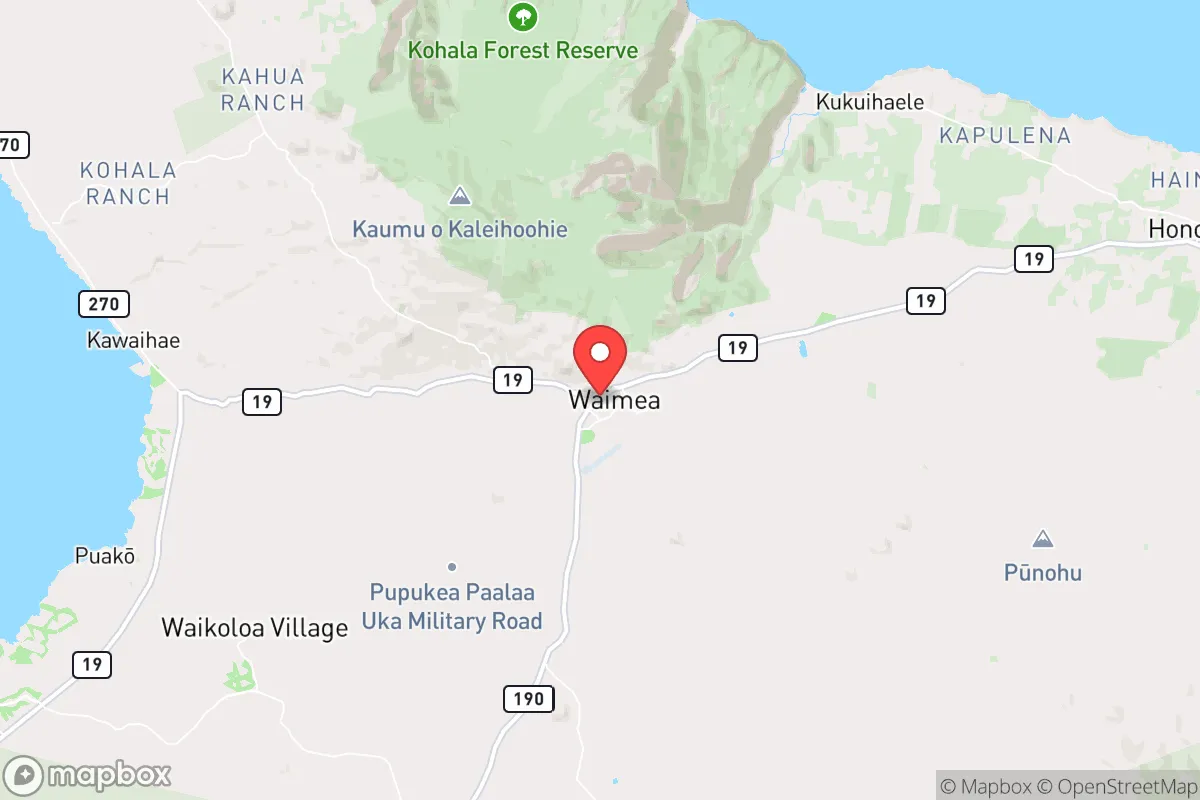
Waimea’s human history begins with Native Hawaiians, who established settlements in the lush, upland plains of the Kamuela area long before Western contact. The name “Waimea” means “reddish water,” referencing the iron-rich streams that flow from the Kohala Mountains. The first major demographic shift came in the early 19th century with the arrival of Anglo-American missionaries and, more consequentially, the establishment of the Parker Ranch in 1847. This massive cattle operation, founded by John Palmer Parker, became the economic engine of the region and drew a unique workforce. The original paniolo were Native Hawaiian cowboys trained by Mexican vaqueros, creating a blended ranching culture that remains Waimea’s signature identity. By the late 1800s, the ranch also brought in Portuguese, Chinese, and Japanese laborers, who settled in distinct pockets. The historic Waimea town core, centered around the intersection of Mamalahoa Highway and Kawaihae Road, became the commercial and social hub for these early ranching families. The Pu‘ukapu and Waiki‘i areas, both within the ranch’s vast acreage, housed many of the Native Hawaiian and mixed-ancestry cowboys and their families, establishing a pattern of ranch-adjacent living that persists today.
Modern era (post-1965)
After the 1965 Immigration and Nationality Act, Waimea did not experience the same surge of new Asian immigration seen in Honolulu or Hilo. Instead, the town’s modern demographic story is one of domestic in-migration and the gradual diversification of its ranching economy. The 1970s and 1980s saw an influx of White professionals from the U.S. mainland, drawn by the area’s rural beauty, cooler climate, and the growing prestige of the Parker Ranch. These newcomers largely settled in newer subdivisions carved from former ranch land. The Waimea Hills subdivision, developed in the 1970s, became a concentration for many of these mainland transplants, offering larger lots and panoramic views. Meanwhile, the long-established East/Southeast Asian community—descendants of the original plantation-era Japanese and Chinese laborers—remained concentrated in the older, more central neighborhoods like Waimea Homesteads, a residential area created by the Hawaiian Homes Commission Act. The Hispanic population, at 8.2%, is a smaller but notable presence, largely composed of families working in the agricultural and service sectors, with a visible cluster in the Kawaihae Road corridor leading down to the coast. The Black population is recorded at 0.0%, reflecting the town’s limited draw for that demographic. The Indian subcontinent population is also 0.0%, meaning the Asian share of 24.1% is entirely East and Southeast Asian—primarily Japanese, Chinese, and Filipino families with deep local roots.
The future
Waimea’s population is heading toward gradual homogenization rather than rapid diversification. The foreign-born share of 7.5% is low, suggesting that international immigration will not be a major driver of change. Instead, the town is likely to see continued in-migration of affluent mainland retirees and remote workers, attracted by the climate and the cachet of “cowboy country.” This trend is already pushing up property values and creating pressure on longtime residents, particularly Native Hawaiian and mixed-ancestry families in the Waimea Homesteads and Pu‘ukapu areas. The East/Southeast Asian community, which is largely third- and fourth-generation, is expected to remain stable but may see younger members moving to Oahu or the mainland for education and careers. The next 10-20 years will likely see Waimea become whiter and wealthier, with the paniolo culture becoming more of a marketed heritage than a lived reality for most. The Hispanic population may grow modestly through natural increase and labor demand in the agricultural sector, but it is unlikely to shift the town’s overall character.
For a conservative-leaning individual or family considering a move to Waimea, the bottom line is this: you are moving into a stable, culturally cohesive community where ranching heritage, outdoor life, and a strong sense of local identity still matter. The population is not fragmenting into tribal enclaves but is instead slowly gentrifying, with wealthier newcomers reshaping the town’s economic base. The schools are strong, the crime rate is low, and the pace of life is deliberate. If you value a place where neighbors know each other and the landscape remains largely undeveloped, Waimea offers that—but be prepared for a community that is quietly becoming more exclusive, not more diverse.

* Values derived from national, state, county, city and local statistics and may differ in a specific area. Last updated: 2026-04-24T00:08:45.000Z
Narrative content on this page is AI-generated and may contain mistakes. Verify any details that matter before acting on them.
ReloMaps may earn a commission from affiliate links at no extra cost to you.

