
Photo by Karsten Winegeart on Unsplash
Strategic Assessment of Waimea, HI
Strong survivability profile. Good buffer from population centers, with manageable environmental and tactical risks.
What does the Strategic Assessment tell us?
Our Strategic Assessment grades tactical survivability of an area. Major population centers, military targets, fallout zones, natural disasters, and border exposure all drive risk — lower exposure means a more defensible position in a crisis.
This is heavily inspired by Joel Skousen's Strategic Relocation book. Highly recommended you checkout the book ($)What does this tell us?
Our Strategic Assessment grades tactical survivability of an area. Major population centers, military targets, fallout zones, natural disasters, and border exposure all drive risk — lower exposure means a more defensible position in a crisis.
This is heavily inspired by Joel Skousen's Strategic Relocation book. Highly recommended you checkout the book ($)Strategic Pillars

Key Distances
Regional Safe Places
Below is our recommended "safe zones" in Hawaii and the surrounding area based on our strategic heuristics. For most people, it's unrealistic to live in a “safe zone” full-time due to work, family or other personal reasons. They tend to be more rural. However, many of these areas are perfect for second homes and retreat properties that double as a vacation home or even a short-term rental.

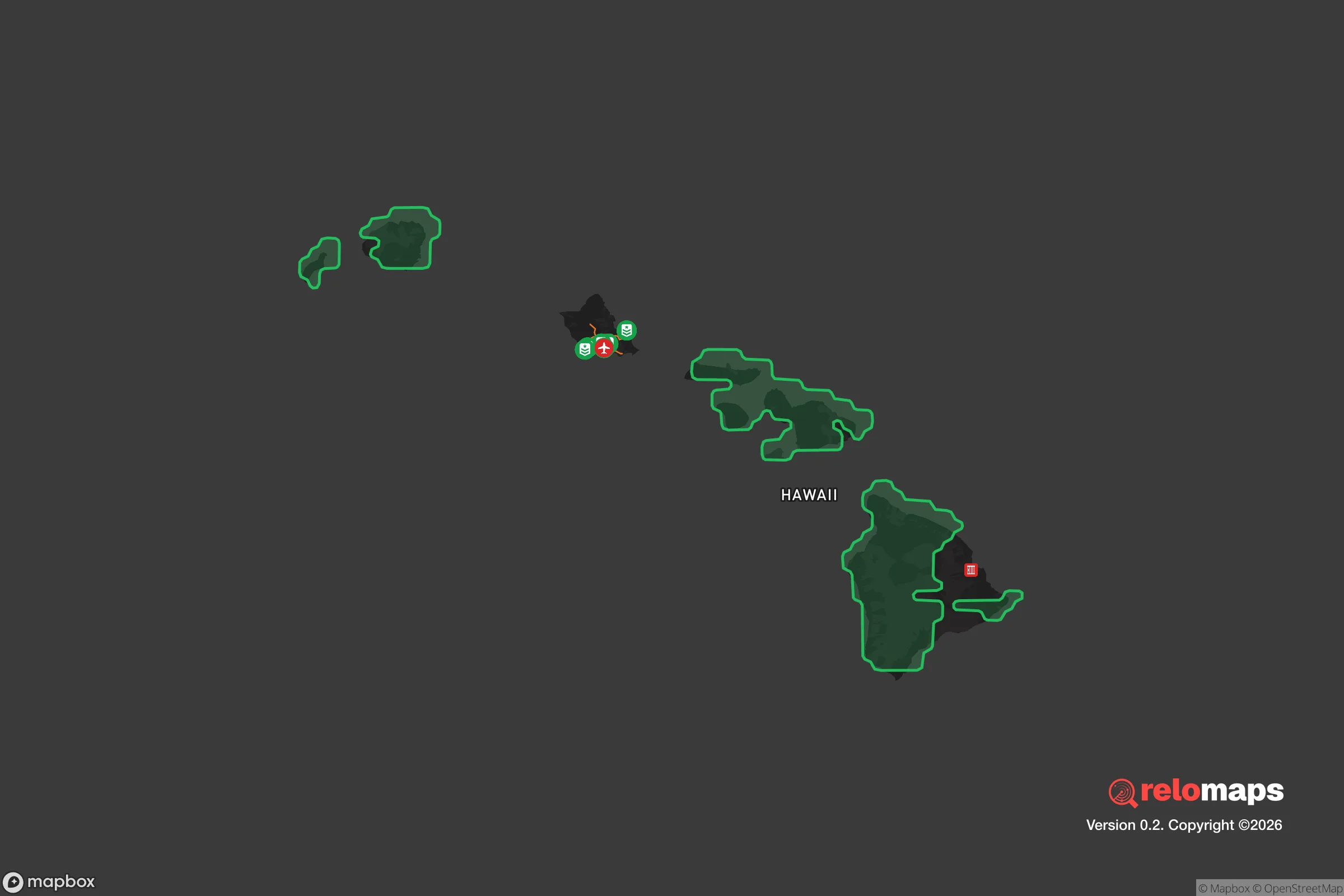


Important Note: For informational purposes only. This does not mean nothing bad ever happens in the green zones. Please use common sense. This is based on public data and modeled with AI. We tried to take a conservative approach but mistakes happen. We update this regularly as new information becomes available.
Solar Generator Recommendations
Backup power matters more here than in safer locations. We've picked three solar generators across budgets and capacity tiers — start with the budget unit if you only need a few essentials, or step up if you want to run a fridge and HVAC for days at a time.

Jackery Portable Power Station Explorer 300
Budget OptionPower on the Go: Weighing only 11 lbs, it's convenient to set up and store with book-sized foldable solar panels

BLUETTI Portable Power Station AC180
Designed for both indoor and outdoor scenarios, AC180 is highly capable as it has a robost capacity and continuous output power.

EF ECOFLOW DELTA Pro Ultra Power Station
Upgraded PickEcoFlow DELTA Pro Ultra is a whole-home energy system designed to grow with your family. Integrated with the Smart Home Panel 2, it scales to meet your evolving energy needs — keeping your home powered, intelligent, and secure through every stage of life.
We earn a commission, at no additional cost to you.
Strategic Assessment Analysis
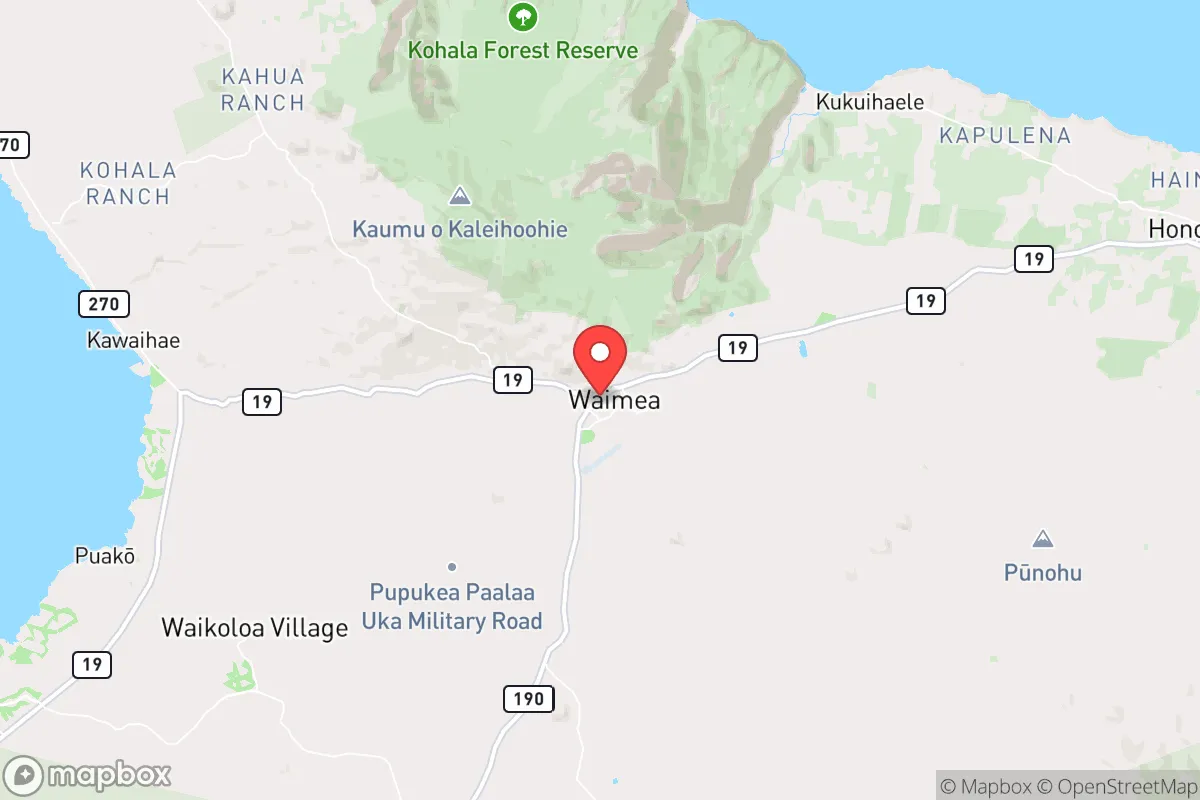
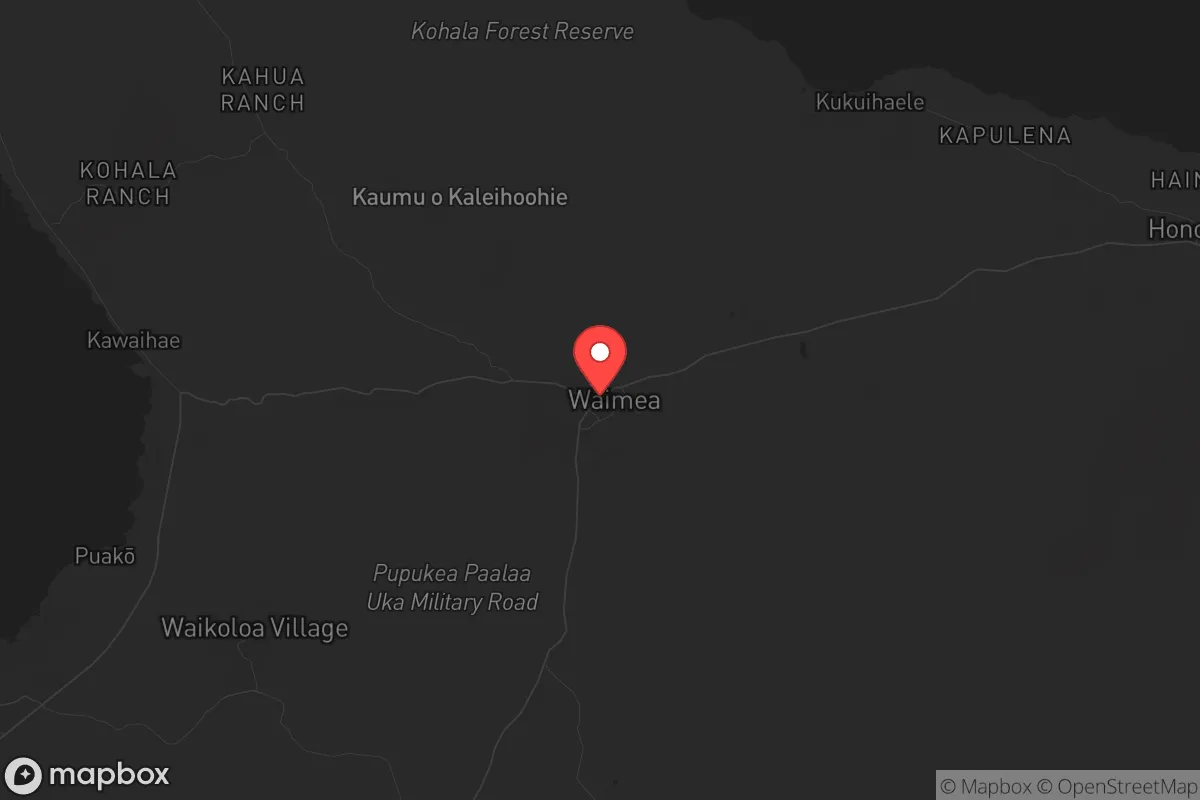
Waimea, on the Big Island of Hawaiʻi, offers a strategic resilience profile that is rare in the modern United States: it sits at a high elevation (2,676 feet) on the shoulder of Mauna Kea, far from the tsunami-prone coastlines of Hilo or Kona, yet within a 30-minute drive of essential port and medical infrastructure. Its location on the island’s interior plateau provides natural insulation from both the volcanic hazards of Kīlauea and the storm surge risks that plague coastal communities, while its small population—roughly 9,000—means lower density and less competition for resources in a crisis. For a relocator prioritizing long-term survivability over convenience, Waimea’s combination of elevation, isolation, and access to working ranchland makes it a serious candidate for a retreat location, provided you understand the trade-offs inherent in island life.
Geographic position and natural advantages for long-term survival
Waimea’s primary strategic asset is its elevation and microclimate. Unlike the humid, rain-soaked windward side or the arid, lava-rock leeward coast, Waimea sits in a cool, grassy saddle that averages 60–70°F year-round—comfortable and agriculturally productive. The area is home to Parker Ranch, one of the largest cattle ranches in the United States, covering over 130,000 acres. This means locally sourced protein and open grazing land are immediately available, a critical advantage over any urban or suburban location where food supply chains are fragile. The volcanic soil, while rocky, supports pasture and some vegetable crops, and the consistent trade winds provide natural ventilation and reduce wildfire risk compared to the drier leeward slopes. From a defensibility standpoint, Waimea’s position on the Saddle Road (Route 200) offers only two primary access routes: one from Hilo to the east and one from Kona to the west. Both are easily monitored and, in a grid-down scenario, could be controlled with minimal manpower. The surrounding terrain—open ranchland interspersed with gulches and forest—offers good visibility and limited cover for anyone approaching from the lowlands.
Risks, exposures, and proximity to fallout-relevant landmarks
No location is without vulnerabilities, and Waimea has several that a prepper must weigh. The most obvious is its island geography: Waimea is 2,500 miles from the nearest continental landmass. In a national emergency—whether economic collapse, civil unrest, or a pandemic—the supply of fuel, medicine, and manufactured goods will cease or become prohibitively expensive. The ports of Hilo (45 minutes east) and Kawaihae (20 minutes west) are the only lifelines, and both are vulnerable to disruption from storms, labor strikes, or military quarantine. The Big Island’s active volcanoes—Mauna Loa and Kīlauea—pose a low but real risk of lava flows or vog (volcanic smog) that can affect air quality and agriculture. Mauna Loa’s 2022 eruption sent lava within a few miles of the Saddle Road, temporarily cutting the main route between Hilo and Kona. While Waimea itself is not in a lava zone, the road network is fragile. Additionally, the island hosts Pōhakuloa Training Area, a U.S. Army base just 15 miles south of Waimea, which stores live ordnance and conducts regular training exercises. In a worst-case scenario—civil war, foreign invasion, or federal collapse—this facility could become a target or a contested asset. The proximity to a military installation is a double-edged sword: it provides a potential source of security and supply, but also a likely flashpoint for conflict. Finally, the island’s reliance on tourism means that a collapse in travel would devastate the local economy, potentially leading to unemployment and social strain among the local population.
Practical resilience for a relocator: food, water, energy, and defensibility
For a single individual or family serious about self-sufficiency, Waimea offers a workable baseline but requires significant upfront investment. Water is the most critical concern. Waimea receives about 30–40 inches of rain annually, less than Hilo’s 130 inches but enough to support catchment systems. Most rural homes already use rainwater catchment tanks, and the county allows for greywater reuse. However, during drought years—which are becoming more common with climate shifts—tanks can run dry. A well is possible but expensive due to the volcanic rock. For energy, the island’s grid is isolated and expensive (electricity costs roughly 30–40 cents per kWh, among the highest in the U.S.). Solar is a no-brainer: Waimea gets over 250 sunny days per year, and net metering is available, though the utility (Hawaiʻi Electric Light) has been known to cap new connections. Battery storage is essential, as the grid is prone to outages from storms or volcanic activity. For food, the Parker Ranch connection is real: local beef, dairy, and eggs are available at farmers’ markets and through CSA programs. Growing your own vegetables is possible but requires soil amendment and pest management—the island has feral pigs, rats, and invasive insects that will destroy unprotected crops. Defensibility is good but not fortress-level. The open terrain means you can see threats coming from a distance, but it also means you are visible. A property with a long driveway, fencing, and a clear line of sight to the road is ideal. The local population is generally friendly and community-oriented, but the island has a small but real crime problem—property crime and break-ins occur, especially in rural areas. Building relationships with neighbors is not optional; it is the primary security strategy.
The overall strategic picture for Waimea is one of high potential paired with high logistical risk. For a relocator who values isolation, agricultural self-sufficiency, and a temperate climate far from the chaos of mainland urban centers, it is one of the best options in the United States. The island’s distance from the mainland is both its greatest strength and its greatest weakness: it insulates you from the immediate fallout of a societal collapse, but it also makes you dependent on a fragile supply chain for anything you cannot produce yourself. If you arrive with a container of tools, seeds, medical supplies, and solar equipment, and you are willing to integrate into the local ranching and farming community, Waimea can serve as a long-term redoubt. If you arrive expecting to buy your way into security without building relationships or learning the land, the isolation will become a trap. Waimea rewards preparation and punishes complacency—which, for the right kind of relocator, is exactly the point.

* Values derived from national, state, county, city and local statistics and may differ in a specific area. Last updated: 2026-04-24T00:08:45.000Z
Narrative content on this page is AI-generated and may contain mistakes. Verify any details that matter before acting on them.
ReloMaps may earn a commission from affiliate links at no extra cost to you.

