
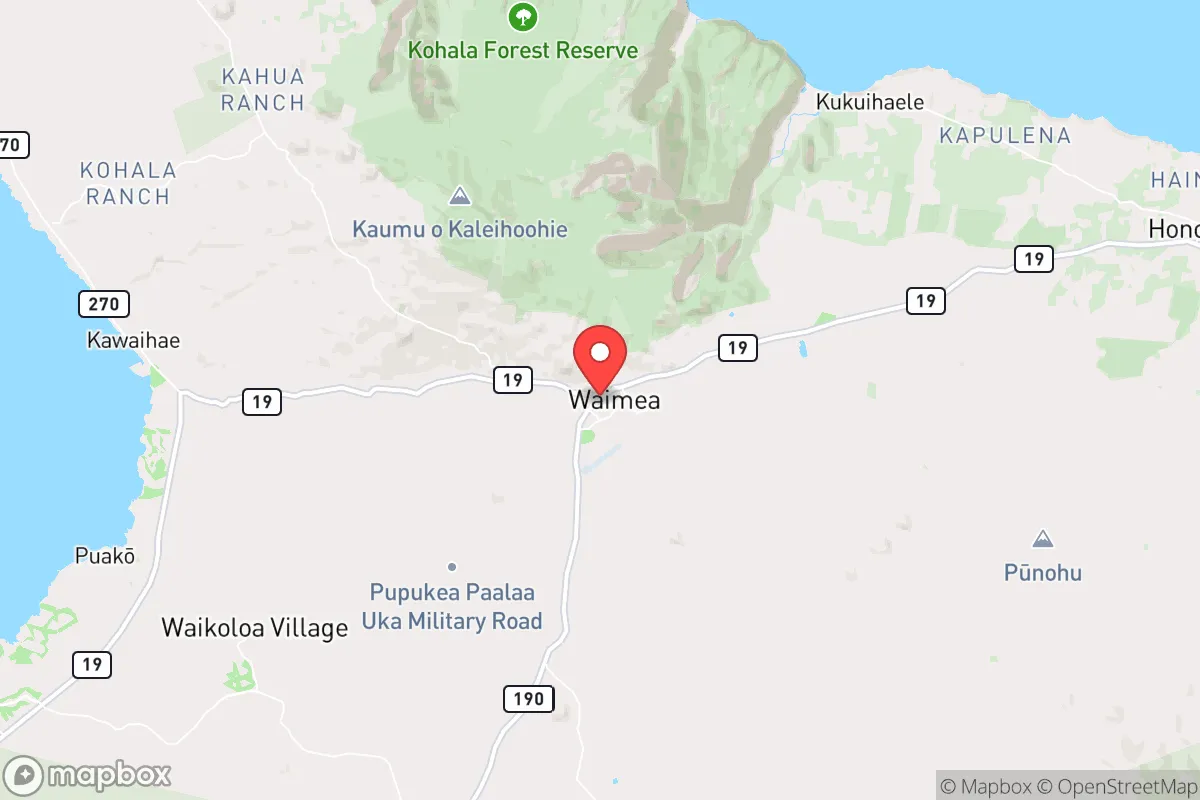
Photo by Karsten Winegeart on Unsplash
Political ClimatePolitical Climate in Waimea, HI
District shown is the primary district for this city’s centroid. Cities may span multiple districts.
Local Political AnalysisPolitical Analysis of Waimea, HI
Waimea, on the Big Island’s lush Kohala coast, has historically been a place where folks value their independence and quiet way of life, but the political winds have shifted noticeably in recent years. The area now carries a Cook PVI of D+12, meaning it leans about 12 points more Democratic than the national average—a stark change from the more balanced, live-and-let-live attitude that defined the community a couple of decades ago. You can feel it in local chatter and at town meetings: a growing push for progressive policies that many long-time residents worry are eroding the personal freedoms and local control that made Waimea special. If you’re considering a move here, it’s worth understanding how this shift plays out in daily life and what it might mean for your family’s rights down the road.
How it compares
Waimea’s D+12 rating puts it in a different political universe than most of the rest of the Big Island. Head south to Kailua-Kona or up the coast to Hawi, and you’ll find a more mixed bag—folks there still lean conservative on many issues, especially around property rights and government spending. But Waimea itself, especially the core around Parker Ranch and the schools, has become a stronghold for progressive activism. Compare that to places like Hilo, which has long been a Democratic bastion, and you see a pattern: the rural, agricultural heart of the island is being pulled toward the same urban-style politics that have caused headaches in Honolulu. It’s a real contrast from even ten years ago, when Waimea was known for its independent voters who’d split tickets and vote for the person, not the party.
What this means for residents
For those of us who’ve been here a while, the biggest concern is how this political tilt translates into real-world overreach. You’re seeing it in things like stricter land-use regulations that make it harder to build a simple workshop or keep a few chickens without a permit. There’s also a growing push for higher property taxes to fund programs that sound good on paper but often come with strings attached—like mandates on what you can do with your own acreage. The local school board and county council have become battlegrounds where progressive activists are pushing for curriculum changes and policies that many parents find intrusive. If you value the freedom to raise your kids without government telling you how, or to run a small business without a mountain of red tape, this trend is something to watch closely. The next few elections will be critical—if the D+12 margin holds or widens, expect more of the same.
One thing that sets Waimea apart culturally is its deep ranching and paniolo (Hawaiian cowboy) heritage, which has always fostered a self-reliant, no-nonsense attitude. That tradition is still alive in the older generation and among many local families, but it’s being slowly crowded out by newcomers who bring mainland-style progressive politics with them. You’ll hear talk of “sustainability” and “equity” at community events, but often it feels like code for more government control over how you use your land, what you can build, and even what you can say. The real Waimea—the one where neighbors helped each other without a county form—is still here, but it’s fighting for air. If you’re looking for a place where personal freedom and common sense still matter, keep an eye on local elections and get involved early. The direction this town takes in the next five years will tell you everything about whether it’s still the Waimea we grew up in.

State Political ClimatePolitical Climate in Hawaii
State Political AnalysisPolitical Environment in the State
Hawaii is a one-party Democratic state where Republicans haven’t held the governor’s office since 2010, and the legislature has been under supermajority Democratic control for decades. The state leans roughly 30 points left in presidential elections—Joe Biden won it by 29 points in 2020—but that top-line number masks a deep urban-rural split and a growing conservative undercurrent, especially on the neighbor islands. Over the last 20 years, the Democratic grip has tightened as progressive transplants from the mainland and native Hawaiian sovereignty movements have pushed the party further left, while rural Oahu and the outer islands have become more reliably Republican in local races.
Urban vs. rural divide
The political map of Hawaii is defined by the contrast between Honolulu on Oahu and everything else. Honolulu and its suburbs—Waikiki, Manoa, Kaneohe—drive the state’s Democratic supermajority, with precincts routinely voting 70-80% Democratic. The city’s economy is tied to tourism, military contracting, and government jobs, all of which lean heavily on federal spending and progressive social policies. On the other side, the neighbor islands—Hawaii Island (the Big Island), Maui, Kauai, and especially Lanai and Molokai—are more mixed. The Big Island’s Puna district, for example, is a libertarian-leaning area where gun rights and property rights are taken seriously, and local Republicans often win county council seats. Maui’s upcountry region (Kula, Makawao) is a conservative stronghold, while Kauai’s north shore (Hanalei, Princeville) is more progressive but still less reliably blue than Honolulu. The rural-urban divide is stark: outside of Honolulu, many precincts vote Republican for state legislature and county offices, even if they go Democratic for president.
Policy environment
Hawaii’s policy environment is among the most interventionist in the nation. The state has the highest combined state and local tax burden in the country, driven by a 4% general excise tax (applied to nearly everything, including rent and services) and a progressive income tax that tops out at 11% for high earners. Property taxes are relatively low—around 0.3% of assessed value—but the state’s land use commission and county zoning boards make it nearly impossible to build new housing, driving up costs. Education policy is dominated by a single statewide school district, the Hawaii Department of Education, which has been criticized for top-down control and low test scores. The state has universal mail-in voting, automatic voter registration, and same-day registration, which Democrats argue increases access but conservatives see as ripe for fraud. Healthcare is heavily regulated, with a state-run insurance exchange and a mandate that employers provide coverage. Gun laws are among the strictest in the nation: a permit-to-purchase system, a ban on "assault weapons," a 10-round magazine limit, and a requirement that all firearm sales go through a licensed dealer. There is no right-to-carry outside the home; concealed carry permits are issued only with "good cause" and are rarely granted.
Trajectory & freedom
Hawaii is becoming less free across multiple dimensions. In 2023, the legislature passed Act 2, which expanded the state’s red flag law to allow family members and law enforcement to petition for temporary firearm seizure without a criminal conviction. In 2024, the governor signed Act 46, which banned the sale of flavored tobacco products and restricted vaping. On the housing front, Act 240 (2023) created a statewide rent control pilot program in Honolulu, capping annual rent increases at 5% plus inflation—a move that landlords argue will reduce supply. On the positive side for conservatives, the state has resisted some of the most extreme progressive policies: there is no statewide sanctuary law for illegal immigrants (though Honolulu has a "welcoming city" ordinance), and the legislature has repeatedly killed bills to legalize recreational marijuana. Parental rights have been a flashpoint: in 2024, the legislature passed Act 78, which requires schools to adopt "culturally responsive" curricula that include LGBTQ+ history, but stopped short of mandating gender-affirming care for minors without parental consent. The overall trajectory is toward more regulation, higher taxes, and less personal autonomy, especially on the gun and housing fronts.
Civil unrest & political movements
Hawaii has a history of civil unrest tied to native Hawaiian sovereignty, which is a cross-cutting issue that unites some conservatives and progressives against the federal government. The most visible flashpoint in recent years was the 2019 protest against the Thirty Meter Telescope on Mauna Kea, which drew thousands of native Hawaiians and environmental activists in a blockade that lasted months. That movement was largely left-wing, but it also attracted libertarian and conservative voices who opposed federal land control. On the right, the Hawaii Republican Party has been revitalized by the "Aloha GOP" movement, which focuses on local issues like property rights, fishing access, and opposition to the state’s land use commission. Election integrity has been a minor issue: in 2020, Hawaii had one of the highest mail-in ballot return rates in the nation, but there were no major fraud allegations. Immigration politics are muted because Hawaii has a relatively small foreign-born population (about 18%), but the state does have a "sanctuary" policy in Honolulu that limits cooperation with ICE. The most visible political movement is the growing push for native Hawaiian self-governance, which has bipartisan support but is seen by some conservatives as a threat to property rights and equal treatment under the law.
Projection
Over the next 5-10 years, Hawaii will likely become more Democratic and more regulated. Demographic trends favor the left: the native Hawaiian population is aging, while younger transplants from California and the Pacific Northwest are moving in for tech jobs and remote work, bringing progressive politics with them. The state’s housing crisis will continue to push out middle-class families, making the electorate more affluent and more liberal. The Republican Party is unlikely to win statewide office unless it can tap into the growing frustration with the cost of living and the state’s regulatory overreach—issues that could flip some rural precincts but won’t overcome the urban Democratic machine. The most likely scenario is that Hawaii becomes a one-party state in practice, with Democrats holding supermajorities in both chambers and the governor’s office indefinitely. For a conservative moving in, expect higher taxes, stricter gun laws, and a political culture that is hostile to traditional values. The only silver lining is that the state’s isolation and small population mean that national culture wars are less intense here than on the mainland—you won’t see the same level of street protests or school board battles that you’d find in Texas or Florida.
Bottom line for a new resident: If you’re moving to Hawaii as a conservative, you’re moving into a state where your vote for president or governor won’t matter, but your voice in local county council races and state house districts—especially on the neighbor islands—can still make a difference. The cost of living and regulatory environment are hostile to traditional family values and economic freedom, but the natural beauty and slower pace of life can be worth the trade-off if you’re willing to adapt. Just don’t expect the political climate to shift in your favor anytime soon.
* Values derived from national, state, county, city and local statistics and may differ in a specific area. Last updated: 2026-04-24T00:08:45.000Z
Narrative content on this page is AI-generated and may contain mistakes. Verify any details that matter before acting on them.
ReloMaps may earn a commission from affiliate links at no extra cost to you.

