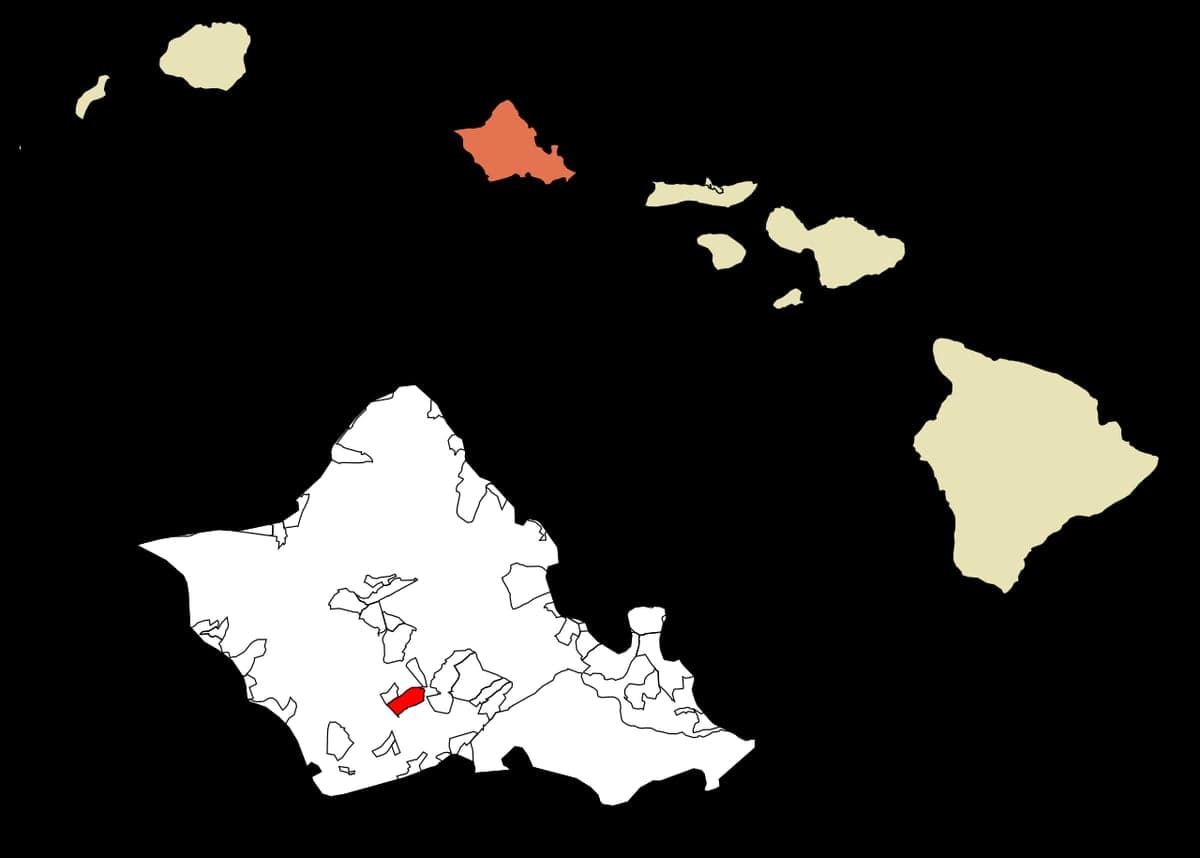
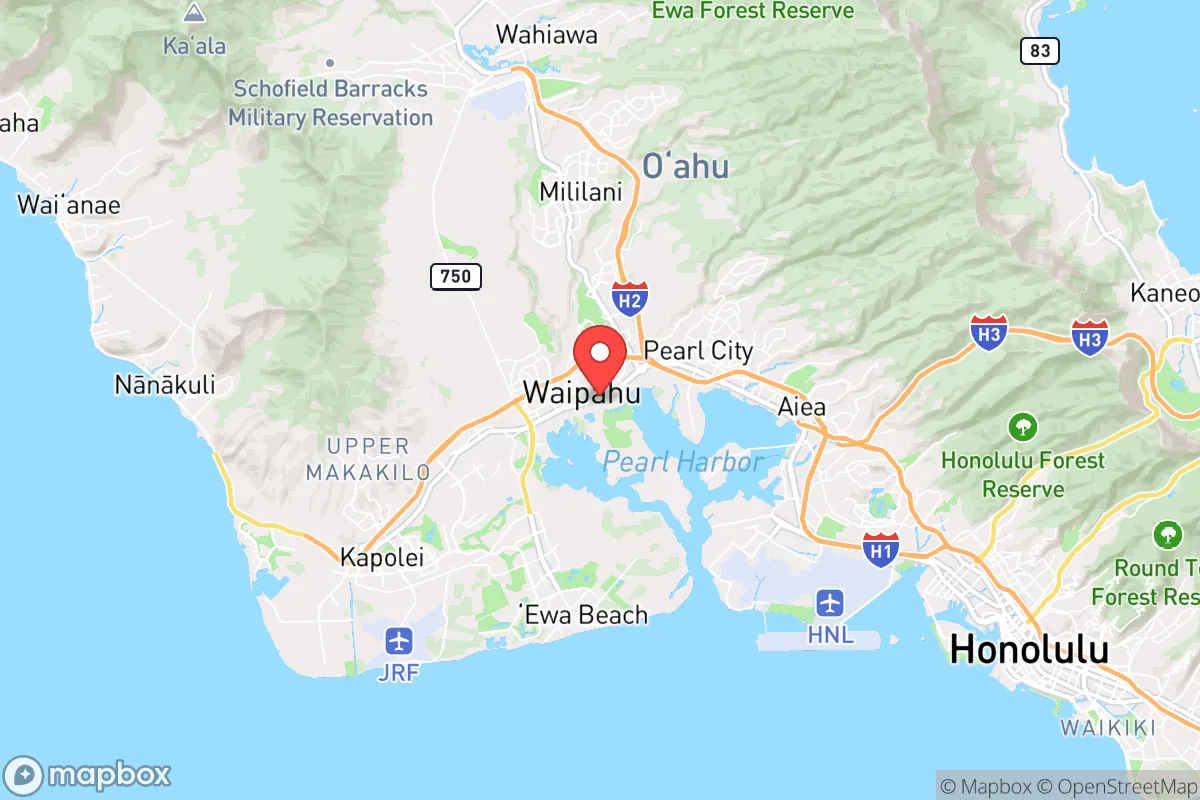
Photo: Wikipedia
Personal Sovereignty in Waipahu, HI
Moderate friction. Expect trade-offs in some aspect of personal liberty and independence.
What does Personal Sovereignty tell us?
Personal Sovereignty measures your capacity for self-reliance and independence with minimal government friction. Higher scores mean fewer barriers between you and the way you want to live... but it assumes you have the space you need and good neighbors.
What does this tell us?
Personal Sovereignty measures your capacity for self-reliance and independence with minimal government friction. Higher scores mean fewer barriers between you and the way you want to live... but it assumes you have the space you need and good neighbors.
State Policy
Energy independence: Importer (2% of energy produced in-state)
Personal Liberty
Homesteading

Personal Liberty Analysis
Waipahu, Hawaii, presents a complex environment for personal sovereignty, where the state’s overarching regulatory framework significantly constrains individual autonomy. For a conservative-leaning individual or family with a survivalist mindset, the trade-offs are stark: you gain a tight-knit community and a strategic Pacific location, but you lose substantial control over your property, self-defense options, and daily choices. The state government’s reach into personal freedoms is among the most extensive in the nation, making Waipahu a location where you must carefully weigh the value of community resilience against the reality of diminished personal liberty.
Tax burden and regulatory posture: How Hawaii’s policies affect your wallet and choices
Hawaii’s tax burden is the highest in the United States, and Waipahu residents feel this acutely. The state imposes a general excise tax (GET) of 4% on nearly all business transactions, which effectively acts as a hidden sales tax on goods and services, including groceries and rent. Property taxes in Waipahu are relatively low compared to the mainland—around 0.3% of assessed value—but the state’s income tax is steep, with a top marginal rate of 11% on income over $200,000. For a prepper focused on financial independence, this means every dollar earned is heavily taxed before you can allocate it to supplies, land, or emergency funds. The regulatory posture is equally burdensome: Hawaii’s land use commission tightly controls zoning, and building permits can take months or years to approve. This makes any attempt to modify a property for self-sufficiency—such as adding a workshop, rainwater catchment, or solar panels—a bureaucratic ordeal. The state’s “Aloha Spirit” often masks a deeply interventionist government that prioritizes centralized planning over individual initiative.
Self-defense and gun law specifics: What you can and cannot do in Waipahu
Hawaii’s gun laws are among the most restrictive in the nation, and Waipahu residents face severe limitations on self-defense. The state requires a permit to acquire a firearm, a registration for each weapon, and a license to carry—which is effectively impossible to obtain for ordinary citizens. As of 2026, Hawaii remains a “may-issue” jurisdiction for concealed carry, meaning local police chiefs have near-total discretion to deny permits, and they rarely grant them. Open carry is prohibited. For a survivalist, this means your ability to defend your home or family with a firearm is heavily curtailed. The state also bans “assault weapons” and high-capacity magazines, and imposes a 14-day waiting period on all purchases. Ammunition sales are tracked, and you must be 21 to buy a handgun. In practice, Waipahu residents who prioritize self-defense must rely on less-lethal options like pepper spray or tasers, or invest in home security systems and community watch networks. The legal climate strongly discourages any armed response to threats, which is a critical consideration for those who view personal protection as a fundamental right.
Self-reliance and homesteading viability: Lot sizes, zoning, and off-grid feasibility in Waipahu
Waipahu is a dense suburban community on Oahu, and the reality of homesteading here is challenging. Typical residential lots are small—often 5,000 to 7,000 square feet—and zoning is strictly residential, with no allowances for livestock, large gardens, or commercial activity. The city and county of Honolulu enforces a “minimum lot size” of 5,000 square feet for single-family homes, but most lots are already built out. Off-grid living is nearly impossible due to county codes that require connection to municipal water and sewer systems. Rainwater catchment is not permitted as a primary water source in most residential zones, and solar panels require permits and grid-tie agreements. For a prepper seeking true self-reliance, Waipahu offers limited options. You can grow a small vegetable garden, install a few solar panels (with approval), and store emergency supplies, but you cannot raise chickens, keep goats, or drill a well. The state’s “Right to Farm” laws are weak, and neighbors can easily file nuisance complaints against any agricultural activity. If homesteading is a priority, you would need to look at rural areas on the Big Island or Kauai, not suburban Waipahu.
Personal liberties: Parental rights, medical autonomy, speech, and property in Hawaii
Hawaii’s approach to personal liberties is mixed, with strong protections for some rights and severe restrictions on others. Parental rights are generally respected, but the state mandates a comprehensive vaccination schedule for school attendance, with limited exemptions. Medical autonomy is constrained by Hawaii’s strict health regulations; for example, raw milk sales are illegal, and alternative medicine practitioners face heavy licensing requirements. Free speech is protected under the First Amendment, but Hawaii’s “Hate Crime” laws are broad, and public criticism of government policies can sometimes draw legal scrutiny in a state where political dissent is often socially discouraged. Property rights are the weakest point: the state’s land use commission can impose conservation easements, and the county can restrict building permits based on environmental impact. Eminent domain is used aggressively for infrastructure projects, and property owners have limited recourse. For a conservative individual, the cumulative effect is a sense that the state prioritizes collective goals over individual autonomy, making Waipahu a place where you must be prepared to navigate a system that does not fully trust its citizens to make their own decisions.
Overall, Waipahu offers a low level of personal sovereignty compared to mainland alternatives, particularly in the Mountain West or rural South. The combination of high taxes, restrictive gun laws, limited homesteading potential, and heavy regulation creates an environment where individual autonomy is constantly negotiated with the state. For a survivalist or prepper, the strategic value of Hawaii’s location—remote from mainland crises, with a strong local community—must be weighed against the daily friction of living under a government that actively limits your ability to prepare, defend, and provide for yourself. If you value maximum personal freedom, Waipahu is likely not your best option. But if you are willing to work within the system and focus on community-based resilience, it can still be a viable, if constrained, place to live.

* Values derived from national, state, county, city and local statistics and may differ in a specific area. Last updated: 2026-04-24T00:04:23.000Z
Narrative content on this page is AI-generated and may contain mistakes. Verify any details that matter before acting on them.
ReloMaps may earn a commission from affiliate links at no extra cost to you.

