Photo: Wikipedia
Political ClimatePolitical Climate in Waipahu, HI
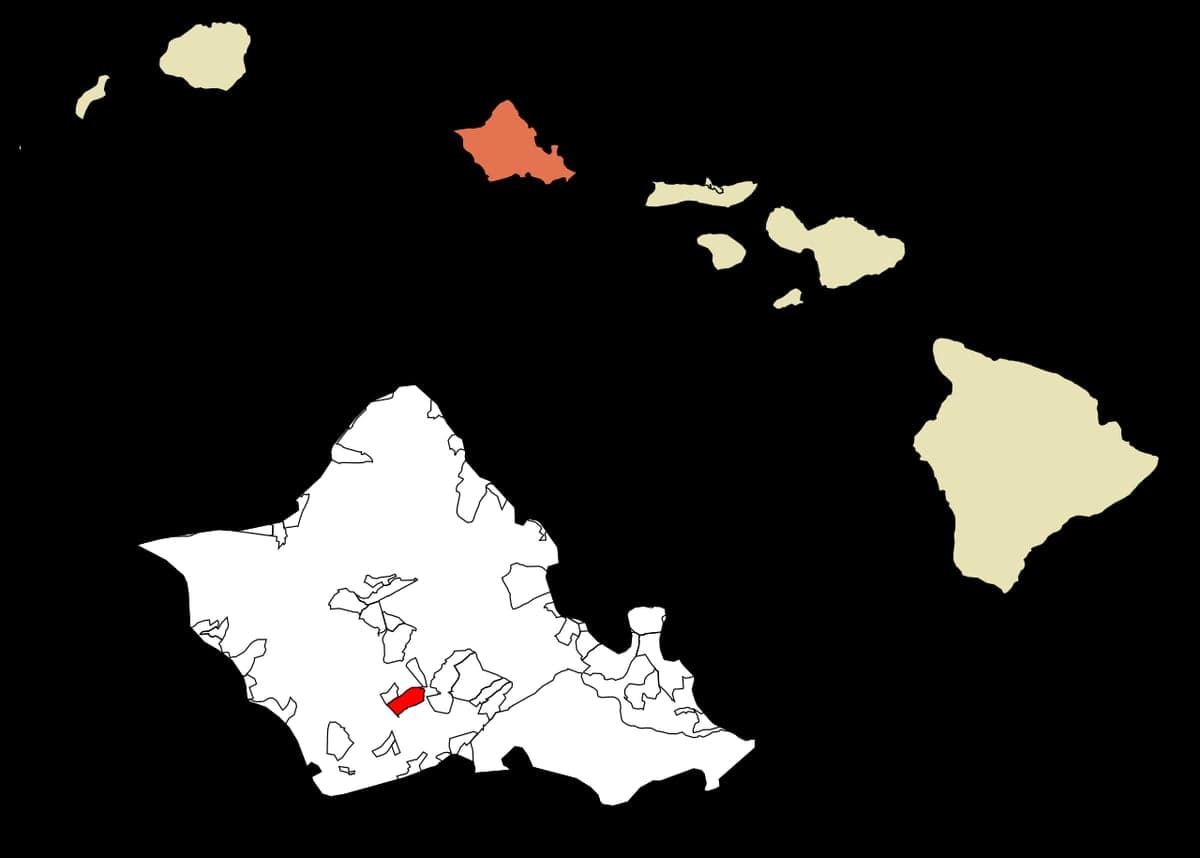
District shown is the primary district for this city’s centroid. Cities may span multiple districts.
Local Political AnalysisPolitical Analysis of Waipahu, HI
Waipahu leans heavily Democratic, with a Cook PVI of D+13, and that number has only gotten more lopsided over the last decade. If you’ve been here a while, you remember when this was a more balanced, working-class town where folks kept their politics to themselves and focused on family and the sugar mill. Now, the local machine is solidly progressive, and the shift has been steady—each election cycle brings a little more government involvement in daily life, from housing mandates to business regulations. The trajectory is clear: Waipahu is moving further left, and it’s not slowing down.
How it compares
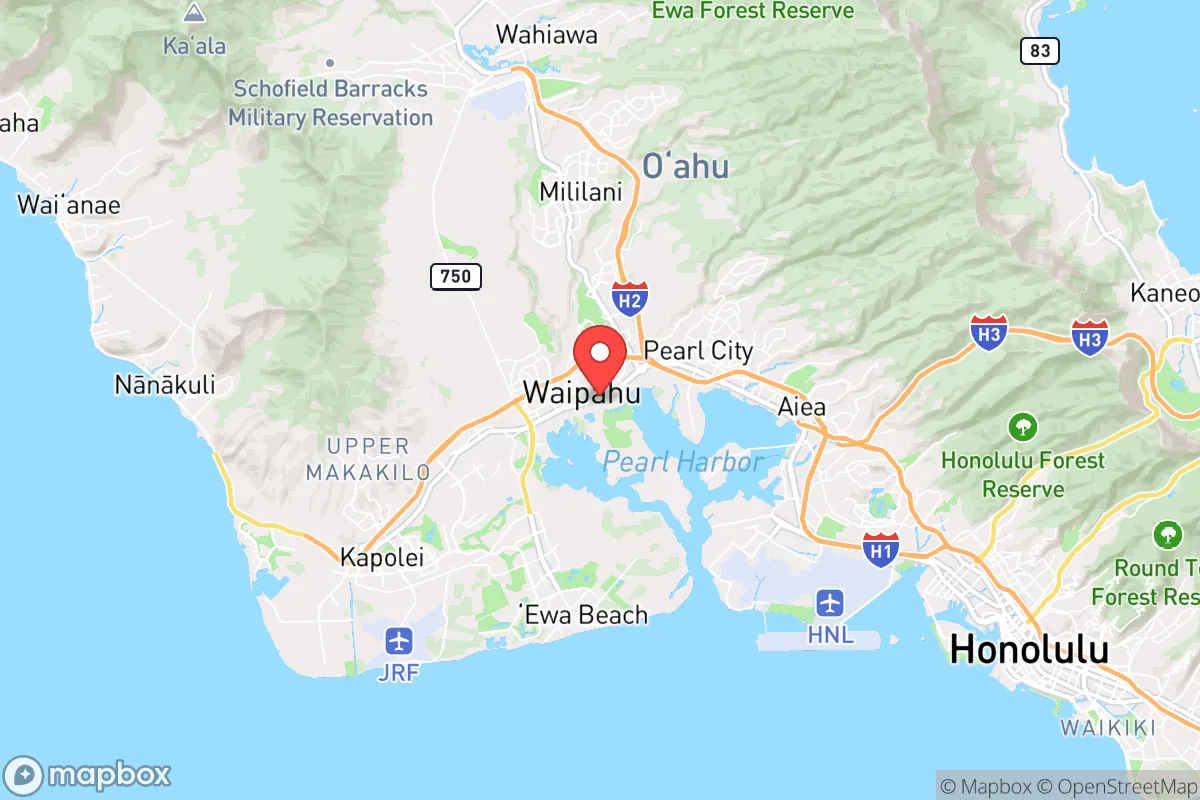
Drive 15 minutes east to Mililani, and you’ll find a similar shade of blue—maybe even a touch deeper, with more transplants pushing the same agenda. But head west toward Kapolei or Ewa Beach, and you start to see a different story. Those areas have a stronger mix of military families and folks who moved out here specifically to get away from the Honolulu-style politics. Kapolei still votes blue, but it’s closer to D+5 or D+6, and you’ll hear more talk about property rights and school choice. Up north in Wahiawa, near Schofield Barracks, the lean is even more moderate—almost purple in some precincts. Waipahu, by contrast, feels like an echo chamber for progressive policies, especially compared to the more independent-minded communities just a few miles away.
What this means for residents
For the average family here, the political climate translates into a lot of top-down decisions that don’t always match local needs. You’ve got county and state mandates on everything from short-term rentals to building codes, and it feels like every year there’s a new fee or permit requirement that makes it harder to run a small business or fix up your own home. The school board and city council races are dominated by candidates who push for more social programs and stricter environmental rules, which sounds good on paper but often means higher taxes and less flexibility for homeowners. If you value personal freedom—like deciding what to do with your own property or how to educate your kids—you’ll find yourself increasingly at odds with the local government’s direction.
One thing that stands out culturally is the strong union presence, especially from the hotel and public-sector unions. They’ve got a tight grip on local politics, and it’s rare to see a candidate win without their backing. That means policies tend to favor government employees and large developers over the small-business owner or the guy trying to start a trade. The old Waipahu, where neighbors helped each other without a permit or a committee, is fading. Looking ahead, unless there’s a real shift in voter turnout—maybe from younger families moving in who are tired of the red tape—expect more of the same: more regulations, more taxes, and less room for the kind of independent, do-it-yourself spirit that built this town.

State Political ClimatePolitical Climate in Hawaii
State Political AnalysisPolitical Environment in the State
Hawaii has been a one-party Democratic stronghold for decades, with Democrats controlling the governorship and supermajorities in both legislative chambers since the early 1960s. The state’s overall partisan lean is roughly D+20 to D+25 in presidential elections, though this masks a growing conservative undercurrent on the neighbor islands and in rural Oahu. Over the past 10-20 years, the dominant coalition has shifted from a more moderate, union-driven Democratic machine to a younger, more progressive faction that prioritizes environmental regulation, social justice, and government expansion. This trajectory has left many long-time residents feeling increasingly alienated, as the state’s cost of living and regulatory burden have skyrocketed while personal freedoms have quietly eroded.
Urban vs. rural divide
The political map of Hawaii is starkly divided between the urban core of Honolulu on Oahu and the rest of the state. Honolulu and its suburbs, including Waipahu and Kaneohe, drive the state’s Democratic lean, with precincts routinely voting 70-80% for Democratic candidates. These areas are dense, diverse, and heavily reliant on government jobs and tourism, making them natural strongholds for progressive policies. In contrast, the neighbor islands — Hilo and Kailua-Kona on the Big Island, Kahului on Maui, and Lihue on Kauai — are more politically mixed. Rural precincts in Puna (Big Island) and Haiku (Maui) have shown surprising Republican strength, often voting 55-60% for GOP candidates in local races. The 2022 gubernatorial election saw Republican candidate Duke Aiona win 33% of the vote statewide, but he carried several rural precincts on the Big Island and Maui with over 45%. This urban-rural split is widening as Honolulu’s progressive politics push conservative-leaning residents to the neighbor islands or out of state entirely.
Policy environment
Hawaii’s policy environment is defined by high taxes, heavy regulation, and a government that touches nearly every aspect of daily life. The state has the highest combined state and local tax burden in the nation, with a general excise tax of 4.5% that applies to nearly all goods and services, plus some of the highest property taxes on the mainland (though relatively low for homeowners). Income tax rates are progressive, topping out at 11%, and the state has no right-to-work law, meaning union membership is effectively mandatory in many sectors. Education policy is centralized and union-dominated; the state has a single school district, making it difficult for parents to choose alternatives or hold schools accountable. Healthcare is heavily regulated, with a state-run insurance exchange and strict certificate-of-need laws that limit competition. Election laws are moderately restrictive — no-excuse absentee voting is allowed, but same-day registration is not, and voter ID is not required. The state’s regulatory posture is hostile to new housing and business development, with lengthy permitting processes and strict environmental reviews that have contributed to the state’s housing crisis.
Trajectory & freedom
Hawaii is becoming less free by nearly every measure, particularly in the areas of property rights, gun rights, and medical autonomy. In 2022, the legislature passed Act 207, which severely restricted short-term rentals statewide, effectively stripping property owners of their right to rent out their homes. In 2023, the state enacted some of the nation’s strictest gun laws, including a ban on carrying firearms in most public places and a requirement for liability insurance for gun owners. On medical freedom, Hawaii was one of the first states to mandate COVID-19 vaccines for all public school students, a policy that remains in place despite the end of the emergency. Parental rights have been weakened by a 2023 law that allows minors to consent to gender-affirming care without parental notification. On the positive side, the state has a strong homestead exemption that protects primary residences from creditors, and property tax rates for owner-occupied homes remain relatively low. However, the overall trend is toward greater government control over personal decisions, from housing to healthcare to education.
Civil unrest & political movements
Hawaii has a history of organized protest, but the political landscape is shifting. The most visible flashpoint in recent years was the Thirty Meter Telescope (TMT) protests on Mauna Kea in 2019, which drew thousands of Native Hawaiian activists and their allies, effectively halting construction. This movement has evolved into a broader push for Hawaiian sovereignty and land rights, with some factions advocating for secession or a return to a independent Hawaiian nation. On the right, the Hawaii Republican Party remains weak, but grassroots groups like the Hawaii Firearms Coalition and Hawaii Parents for Educational Choice have grown in response to the state’s overreach. Immigration politics are relatively quiet, as Hawaii’s geographic isolation limits illegal immigration, but the state has sanctuary policies that limit cooperation with federal immigration enforcement. Election integrity has been a minor issue, with the state’s all-mail voting system drawing criticism from conservatives who worry about ballot security. The most visible political tension is between the progressive establishment in Honolulu and the growing libertarian-leaning sentiment on the neighbor islands, where residents feel ignored and overtaxed.
Projection
Over the next 5-10 years, Hawaii is likely to become more progressive and more expensive, driving further out-migration of conservatives and middle-class families. Demographic trends are unfavorable: the state’s population has been declining since 2016, with net out-migration of roughly 10,000-15,000 people per year, many of them to lower-cost, lower-tax states like Texas, Nevada, and Idaho. The remaining population is aging and increasingly reliant on government services, which will only strengthen the Democratic machine. The neighbor islands may see a slight rightward shift as more conservatives relocate there, but they lack the population to flip any statewide races. The most likely scenario is that Hawaii becomes a one-party state in practice, with the only real political battles occurring within the Democratic primary. For a conservative-leaning newcomer, this means accepting that your vote will have little impact on state policy and that your personal freedoms will continue to be constrained by a government that sees itself as the primary arbiter of your life.
Bottom line for a new resident: If you value low taxes, personal autonomy, and a government that stays out of your life, Hawaii is a challenging place to live. The natural beauty and unique culture are undeniable, but they come at the cost of living under one of the most progressive and interventionist state governments in the country. You will pay more in taxes, have fewer choices in education and healthcare, and face significant restrictions on your property rights and gun ownership. If you can afford the financial and personal trade-offs, the islands offer a lifestyle unmatched anywhere else. But if you’re looking for a place where your values are reflected in public policy, you’ll find more alignment in states like Texas, Florida, or Idaho.
* Values derived from national, state, county, city and local statistics and may differ in a specific area. Last updated: 2026-04-24T00:04:23.000Z
Narrative content on this page is AI-generated and may contain mistakes. Verify any details that matter before acting on them.
ReloMaps may earn a commission from affiliate links at no extra cost to you.

