Photo: Wikipedia
Strategic Assessment of Waipahu, HI
Meaningful friction. Expect exposure to either population pressure, blast zones, or natural disaster risk. Consider buying a retreat property.
What does the Strategic Assessment tell us?
Our Strategic Assessment grades tactical survivability of an area. Major population centers, military targets, fallout zones, natural disasters, and border exposure all drive risk — lower exposure means a more defensible position in a crisis.
This is heavily inspired by Joel Skousen's Strategic Relocation book. Highly recommended you checkout the book ($)What does this tell us?
Our Strategic Assessment grades tactical survivability of an area. Major population centers, military targets, fallout zones, natural disasters, and border exposure all drive risk — lower exposure means a more defensible position in a crisis.
This is heavily inspired by Joel Skousen's Strategic Relocation book. Highly recommended you checkout the book ($)Strategic Pillars

Key Distances
Regional Safe Places
Below is our recommended "safe zones" in Hawaii and the surrounding area based on our strategic heuristics. For most people, it's unrealistic to live in a “safe zone” full-time due to work, family or other personal reasons. They tend to be more rural. However, many of these areas are perfect for second homes and retreat properties that double as a vacation home or even a short-term rental.

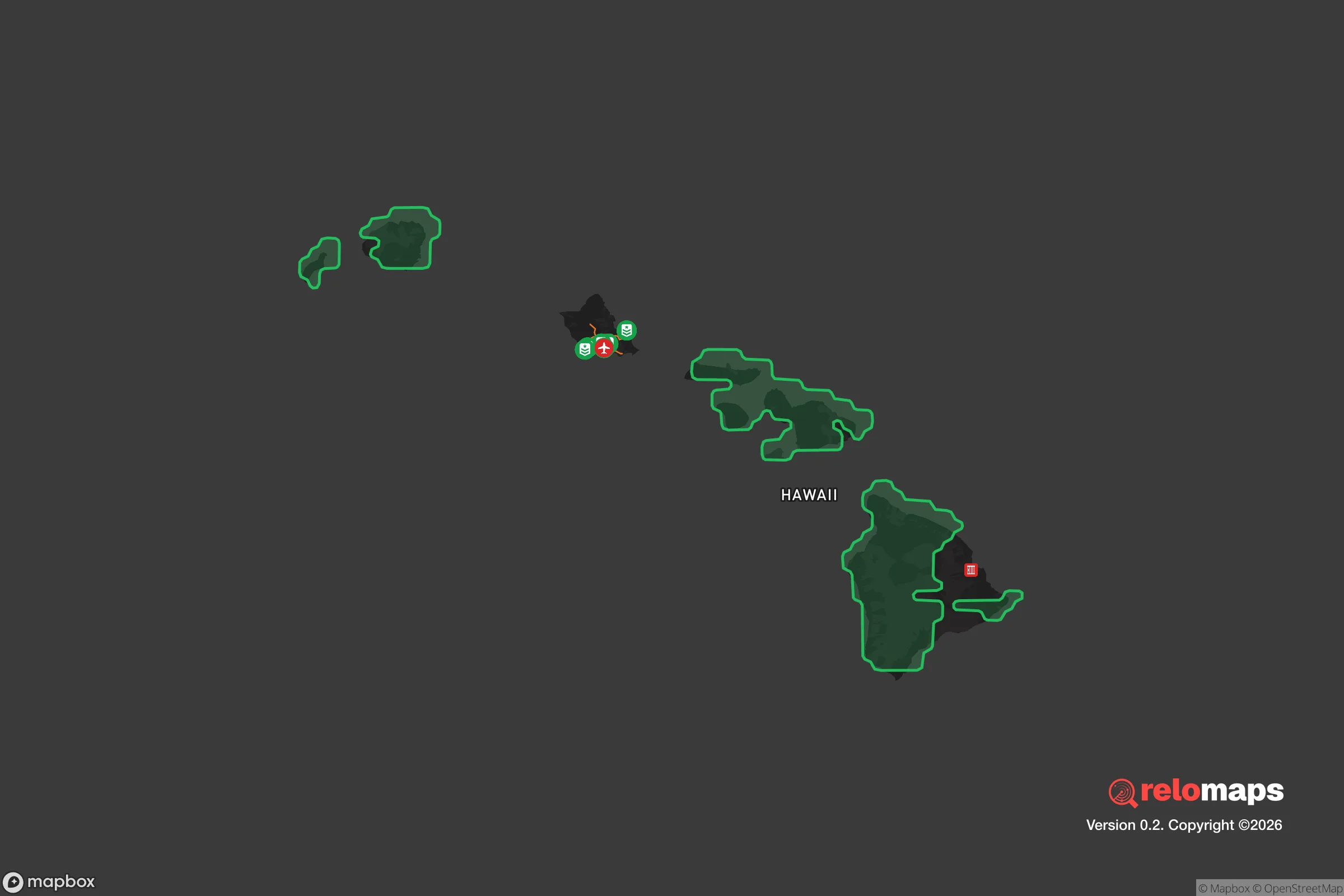


Important Note: For informational purposes only. This does not mean nothing bad ever happens in the green zones. Please use common sense. This is based on public data and modeled with AI. We tried to take a conservative approach but mistakes happen. We update this regularly as new information becomes available.
Solar Generator Recommendations
Backup power matters more here than in safer locations. We've picked three solar generators across budgets and capacity tiers — start with the budget unit if you only need a few essentials, or step up if you want to run a fridge and HVAC for days at a time.

Jackery Portable Power Station Explorer 300
Budget OptionPower on the Go: Weighing only 11 lbs, it's convenient to set up and store with book-sized foldable solar panels

BLUETTI Portable Power Station AC180
Designed for both indoor and outdoor scenarios, AC180 is highly capable as it has a robost capacity and continuous output power.

EF ECOFLOW DELTA Pro Ultra Power Station
Upgraded PickEcoFlow DELTA Pro Ultra is a whole-home energy system designed to grow with your family. Integrated with the Smart Home Panel 2, it scales to meet your evolving energy needs — keeping your home powered, intelligent, and secure through every stage of life.
We earn a commission, at no additional cost to you.
Strategic Assessment Analysis
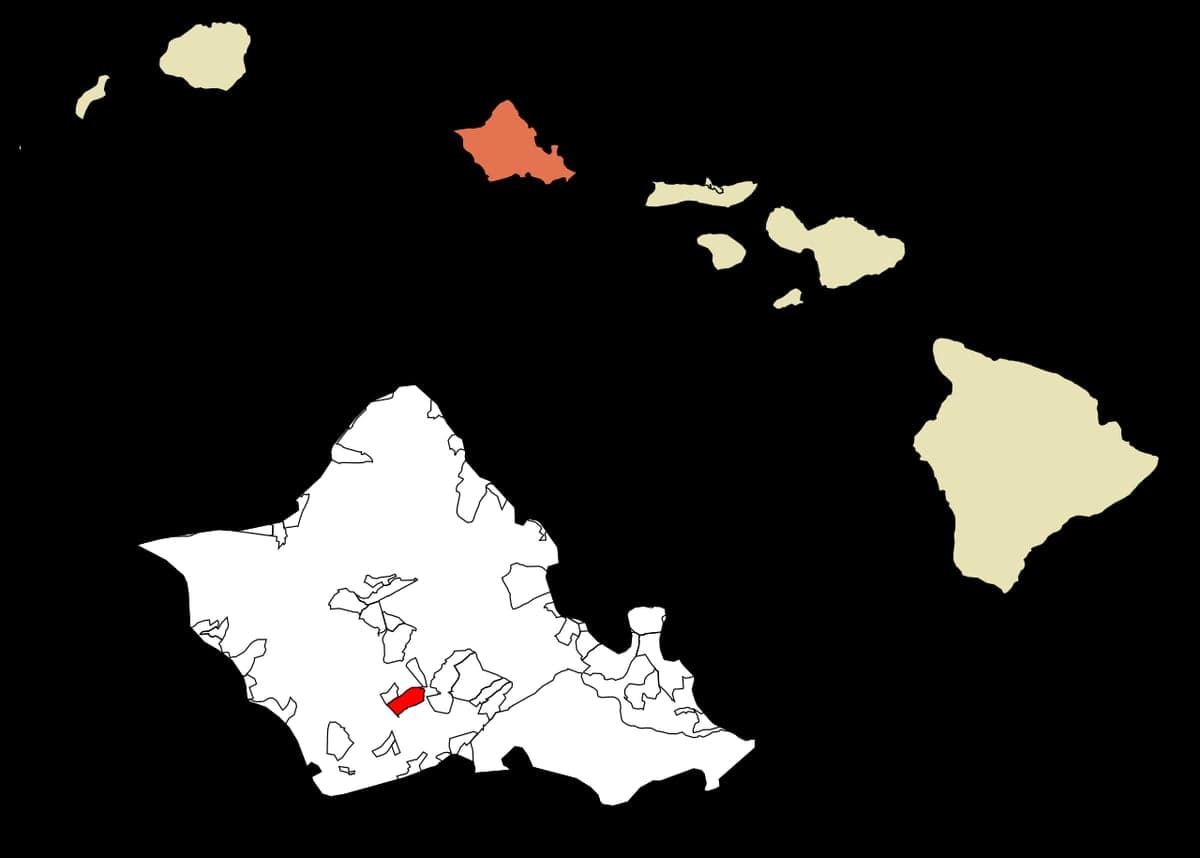
Waipahu, Hawaii, presents a complex strategic picture for the conservative prepper or survivalist. Its location on the leeward side of Oahu offers some natural advantages, but its proximity to Honolulu and Pearl Harbor introduces severe vulnerabilities that cannot be ignored. For those serious about long-term resilience, Waipahu is a location that demands careful, sober assessment rather than romanticized island living.
Geographic position and natural advantages for a survival scenario
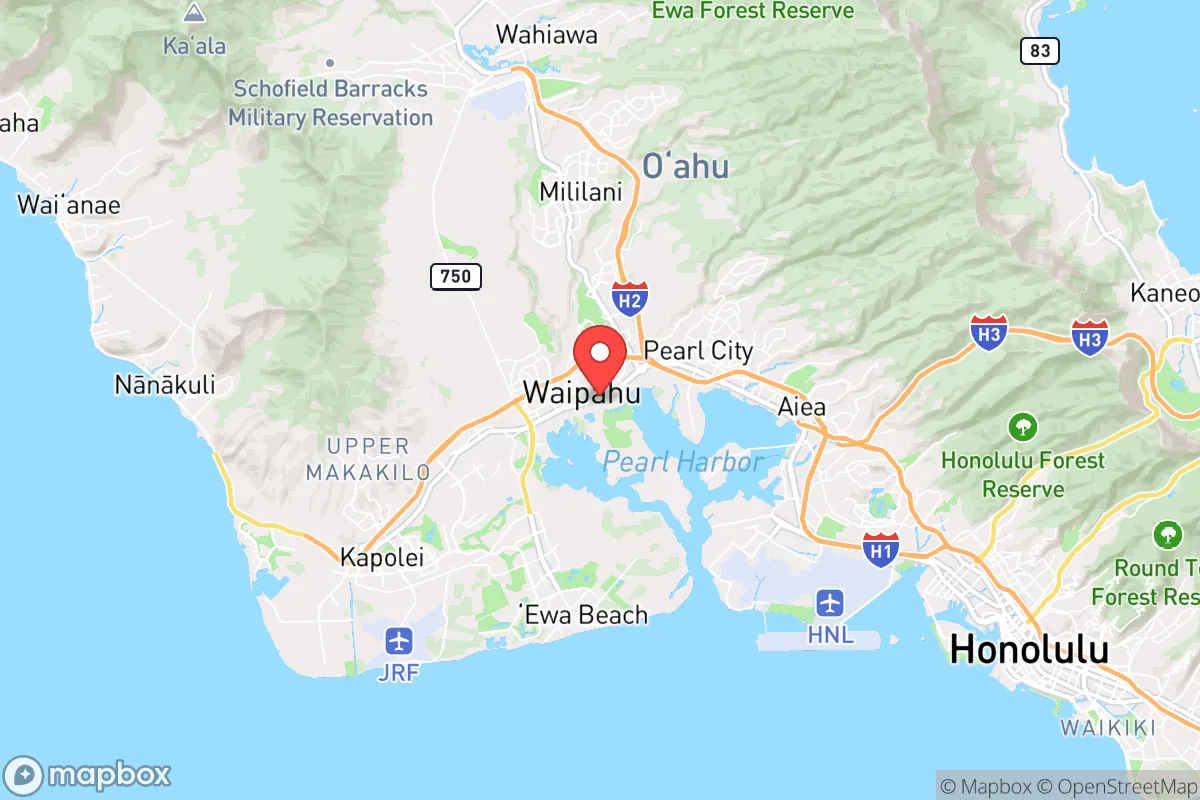
Waipahu sits roughly 15 miles northwest of downtown Honolulu, nestled at the base of the Waianae Range. This position provides a few genuine strategic benefits. The leeward side of Oahu receives significantly less rainfall than the windward coast, which means more consistent solar exposure for off-grid energy systems and less risk of flooding in a major storm. The nearby Waianae Mountains create a natural barrier that could slow movement from the urban core, offering a modest buffer zone if civil unrest erupts in Honolulu. The area also has access to the Pearl Harbor aquifer, one of the island's largest freshwater sources, though tapping it legally and practically is another matter. For a relocator, the elevation gain as you move mauka (toward the mountains) provides some terrain advantage and cooler temperatures, which reduces heat stress in a grid-down scenario. The proximity to both the coast and the mountains means diversified foraging and hunting opportunities, though these are heavily regulated in normal times. In a collapse, the terrain could support small-scale subsistence if you know what you're doing.
Risks, exposures, and proximity to fallout-relevant landmarks
The downsides are substantial and cannot be sugarcoated. Waipahu is within a 10-mile radius of Joint Base Pearl Harbor-Hickam, one of the most strategically vital military installations in the Pacific. In any major conflict involving the United States, this base is a first-strike target. A nuclear detonation at Pearl Harbor would render Waipahu uninhabitable due to fallout, with prevailing trade winds pushing contamination directly over the area. Even a conventional attack or sabotage event at the fuel storage tanks or ammunition depots would create a massive secondary hazard zone. Beyond military risk, Waipahu sits in a tsunami inundation zone for the southern and western portions of the community. The 1946 and 1960 tsunamis caused significant damage here, and a major seismic event in the Aleutian Trench could send a wave across the Pacific in under five hours. The population density is another concern: Waipahu has over 40,000 residents packed into roughly 2.5 square miles. That density means any disease outbreak, food shortage, or civil disturbance will escalate rapidly. The H-1 freeway, the main artery connecting Waipahu to Honolulu, is a single chokepoint that would gridlock instantly in an evacuation scenario. There is no meaningful secondary route for mass movement.
Practical resilience for a relocator: food, water, energy, and defensibility
For the individual or family serious about self-sufficiency, Waipahu presents a mixed bag. Water is the most critical vulnerability. The municipal supply depends on electric pumps and treatment plants that would fail within hours of a grid collapse. Rainwater catchment is possible but limited by the leeward climate—you're looking at 20-30 inches of rain annually, far less than windward areas. A household would need at least 1,000 gallons of stored water to get through a two-week disruption, and that's just for drinking and basic hygiene. Food resilience is equally challenging. The soil in Waipahu is largely volcanic clay mixed with former sugarcane plantation land, which is nutrient-depleted and often contaminated with residual pesticides. Raised beds with imported soil are the only viable option for gardening, and that requires space many lots don't have. The local farmers' markets and grocery stores are entirely dependent on just-in-time shipping from the mainland; a port closure would empty shelves in under a week. Energy independence is more feasible. The consistent sun allows for a robust solar panel and battery setup, and many homes already have photovoltaic systems due to Hawaii's high electricity costs. A 5kW system with 20kWh of battery storage could run a refrigerator, lights, and communication gear indefinitely. Defensibility is poor in the flat, dense neighborhoods of central Waipahu. The best option is to secure a property on the mauka slopes, where limited road access and terrain provide natural chokepoints. A home with a concrete or CMU construction, metal roof, and reinforced doors and windows is non-negotiable. The local police presence is thin—the Honolulu Police Department's Waipahu substation has limited staffing, and response times in a crisis would stretch to hours or never come at all.
The overall strategic picture for Waipahu is one of calculated risk with a low ceiling on long-term viability. It works as a temporary staging point for someone who needs to be on Oahu for work or family obligations, but it is not a location for a permanent retreat. The combination of military target proximity, tsunami risk, population density, and logistical dependence on the mainland creates too many single points of failure. If you are committed to Hawaii, the Big Island or Kauai offer far better strategic depth. For the conservative prepper who values distance from urban centers and military targets, Waipahu is a place to pass through, not to dig in.

* Values derived from national, state, county, city and local statistics and may differ in a specific area. Last updated: 2026-04-24T00:04:23.000Z
Narrative content on this page is AI-generated and may contain mistakes. Verify any details that matter before acting on them.
ReloMaps may earn a commission from affiliate links at no extra cost to you.

