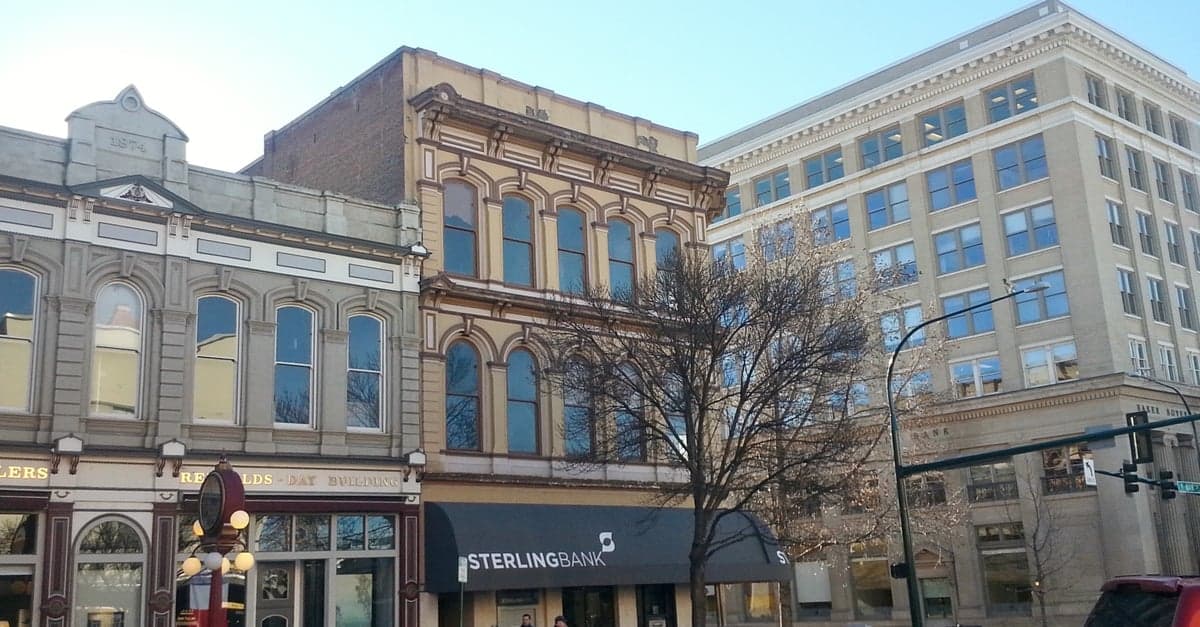
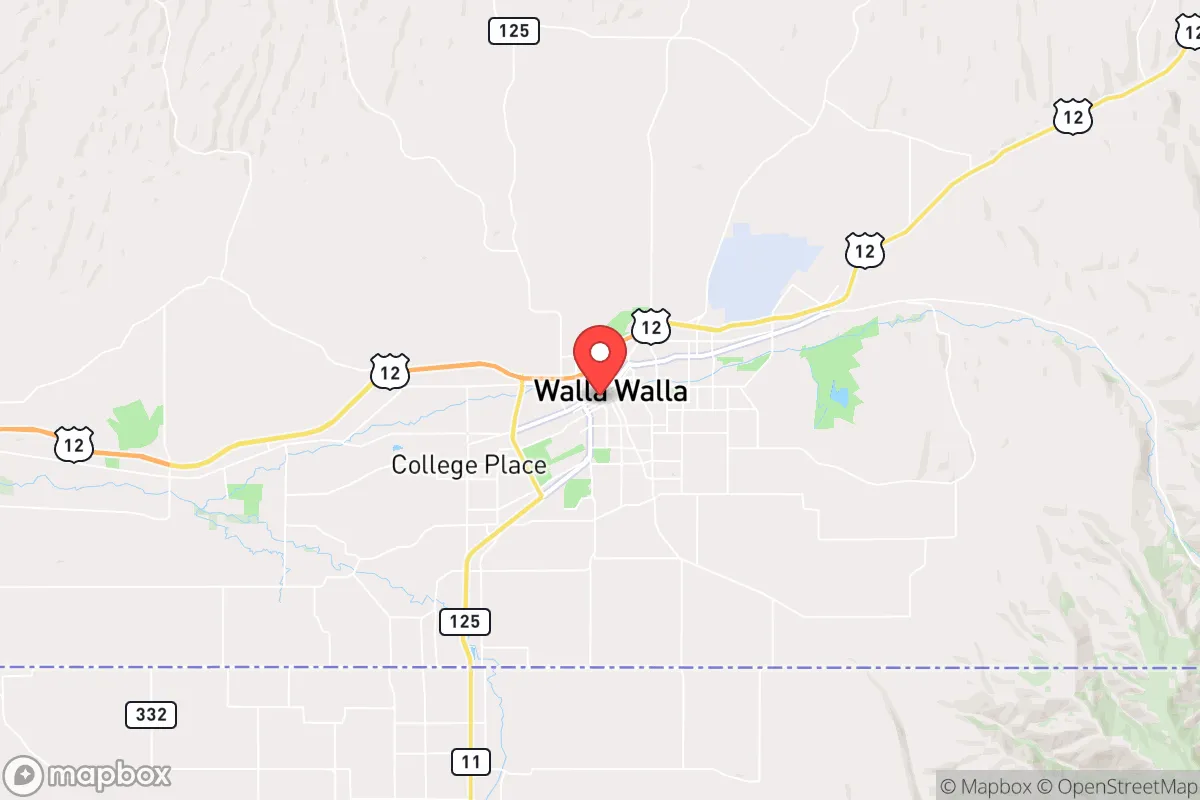
Photo: Wikipedia
Demographics of Walla Walla, WA
Affluence Level in Walla Walla, WA
A middle-class area roughly in line with national averages across income, home values, education, and employment.
People of Walla Walla, WA
The people of Walla Walla, Washington, today form a community of 33,766 that is predominantly white (65.7%) with a substantial Hispanic minority (24.3%), a small Black population (2.6%), and modest East/Southeast Asian (2.0%) and Indian subcontinent (0.3%) communities. The city is notably less diverse than the national average, with a foreign-born share of just 3.4% and a college-educated rate of 28.9%, reflecting its agricultural and working-class roots. Distinctive identity markers include a strong sense of small-town independence, a deep connection to the region's wine and wheat industries, and a conservative-leaning political culture that shapes local governance and social norms.
How the city was settled and grew
Walla Walla's population history begins with the indigenous Cayuse, Nez Perce, and Walla Walla peoples, who inhabited the region for millennia before European contact. The first permanent non-Native settlers arrived in the 1830s as Protestant missionaries, including Marcus Whitman, whose mission near present-day Whitman College drew a small cluster of families. The real population surge came after the 1855 Walla Walla Treaty Council and subsequent land cessions, which opened the fertile valley to American homesteaders. By the 1860s, the city became a supply hub for miners heading to Idaho and Montana gold fields, attracting merchants, laborers, and speculators. The arrival of the Northern Pacific Railroad in 1875 cemented Walla Walla as a regional trade center, and the population grew steadily through the early 20th century, driven by wheat farming, fruit orchards, and later the sweet onion industry. The historic Downtown Core and Eastgate neighborhoods were built during this boom, with Italian, German, and Scandinavian immigrants forming tight-knit enclaves around the railroad depots and packing sheds. The city's population peaked at around 28,000 in the 1950s before suburbanization drew residents to newer developments like College Place (a separate town just west of the city limits) and the South Avenue corridor.
Modern era (post-1965)
The 1965 Hart-Cellar Act had a muted effect on Walla Walla compared to larger cities, as the area's agricultural economy already relied on seasonal migrant labor from Mexico. The Hispanic population grew steadily from the 1970s onward, with many families settling in the Eastgate and Pleasant Street neighborhoods, near the onion and wheat processing facilities. By 2020, the Hispanic share reached 24.3%, making it the largest minority group by far. Domestic in-migration during this period was modest, with most new white residents arriving from other parts of eastern Washington and Oregon, drawn by lower housing costs and the expanding wine industry. The city's Black population remains small at 2.6%, concentrated in the Downtown Core and near the state penitentiary, which has historically employed a diverse workforce. East/Southeast Asian communities (2.0%) are largely tied to Whitman College and the medical sector, with families living near the College Place border and the West Alder Street area. The Indian subcontinent population (0.3%) is almost entirely composed of professionals at the local hospital and the university. Suburbanization has been limited, with most new housing built in the Northwest Walla Walla and South 9th Avenue areas, attracting white families seeking newer homes while older neighborhoods like Eastgate have become more Hispanic and working-class.
The future
Walla Walla's population is projected to grow slowly, reaching roughly 37,000 by 2040, driven primarily by natural increase among the Hispanic population and modest in-migration from the Seattle and Portland metros. The city is not homogenizing but rather tribalizing into distinct enclaves: the Hispanic community is consolidating in Eastgate and Pleasant Street, while white residents are increasingly concentrated in Northwest Walla Walla and newer subdivisions near College Place. The immigrant community is plateauing, as the foreign-born share (3.4%) has remained flat for a decade, with most Hispanic growth now coming from U.S.-born children rather than new arrivals. The East/Southeast Asian and Indian subcontinent populations are likely to remain small, as the city lacks the tech or manufacturing sectors that attract these groups to larger metros. The next 10-20 years will see a gradual increase in Hispanic political and economic influence, but the city's overall character will remain predominantly white and conservative, with a growing cultural divide between the older agricultural base and newer wine-tourism arrivals.
For someone moving in now, Walla Walla is becoming a place where demographic change is slow and neighborhood boundaries are hardening along ethnic and class lines. The city offers a stable, low-crime environment with a strong sense of local identity, but newcomers should expect limited diversity and a population that is more rooted than transient. The best fit is likely for those seeking a conservative, family-oriented community with affordable housing and a connection to agriculture, rather than a dynamic, multicultural urban center.

* Values derived from national, state, county, city and local statistics and may differ in a specific area. Last updated: 2026-04-19T05:54:00.000Z
Narrative content on this page is AI-generated and may contain mistakes. Verify any details that matter before acting on them.
ReloMaps may earn a commission from affiliate links at no extra cost to you.

