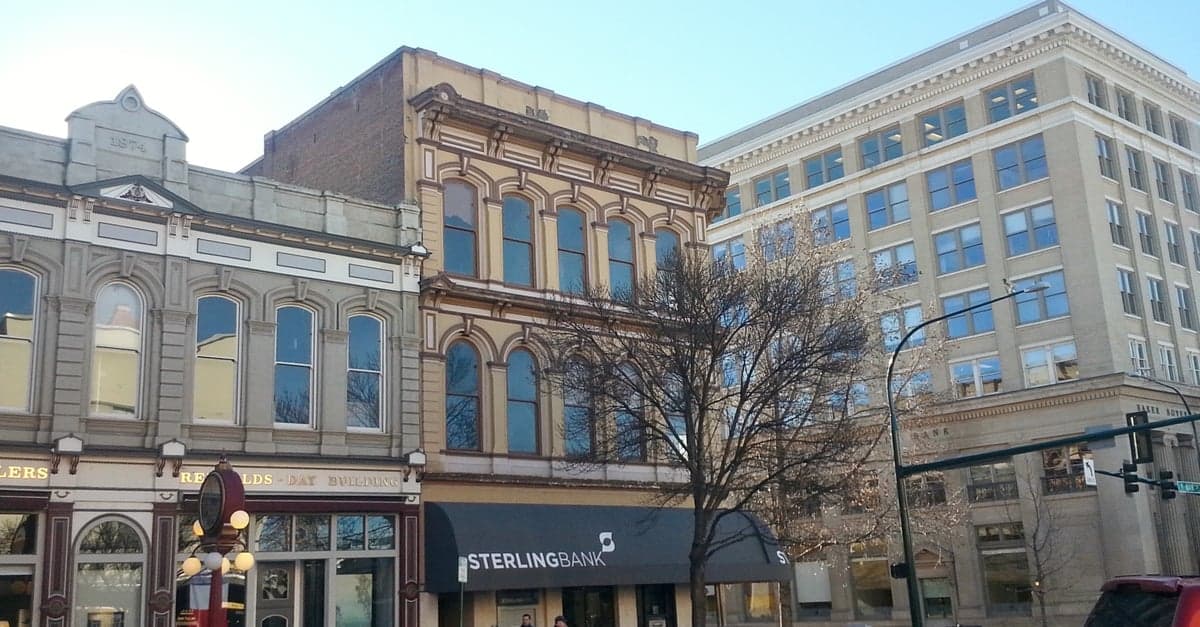
Photo: Wikipedia
Personal Sovereignty in Walla Walla, WA
Viable for self-reliance. Generally workable, though some barriers may limit total independence.
What does Personal Sovereignty tell us?
Personal Sovereignty measures your capacity for self-reliance and independence with minimal government friction. Higher scores mean fewer barriers between you and the way you want to live... but it assumes you have the space you need and good neighbors.
What does this tell us?
Personal Sovereignty measures your capacity for self-reliance and independence with minimal government friction. Higher scores mean fewer barriers between you and the way you want to live... but it assumes you have the space you need and good neighbors.
State Policy
Energy independence: Importer (55% of energy produced in-state)
Personal Liberty
Homesteading

Personal Liberty Analysis
Walla Walla offers a notably higher degree of personal sovereignty than most of Washington state, largely because its rural character and Eastern Washington location insulate it from the more intrusive policies of the Seattle-dominated state government. While you cannot escape Olympia’s reach entirely, the local culture and practical realities here create a buffer zone where self-reliance is not just tolerated but expected. For a prepper or survivalist-minded individual, Walla Walla represents a strategic compromise: access to fertile land and a like-minded community, with the understanding that state-level overreach remains a constant, low-grade threat you must plan around.
Tax burden and regulatory posture in Walla Walla
Washington state has no income tax, which is a significant advantage for anyone seeking to keep more of what they earn. However, the state’s reliance on high property taxes and a sales tax that can exceed 9% in some areas means the overall burden is still substantial. Walla Walla County’s property tax rate is roughly 1.1% of assessed value, which is moderate for the state but higher than many parts of the Mountain West. The regulatory posture here is a mixed bag: the city itself has a relatively hands-off approach to small-scale business and property use, but state-level environmental and land-use regulations—particularly the Growth Management Act—can complicate anything from building a shed to clearing brush for fire safety. For a prepper, the key takeaway is that Walla Walla’s local government is generally pragmatic and pro-property rights, but you must budget for state-imposed compliance costs, especially if you plan to develop raw land or run a home-based enterprise.
Self-defense and gun law specifics in Walla Walla
Washington state has become increasingly hostile to gun rights in recent years, and Walla Walla sits squarely within that legal framework. The state bans so-called "assault weapons" and high-capacity magazines, requires a 10-day waiting period for all firearm purchases, and mandates a background check for every sale, including private transfers. Constitutional carry is not permitted; you must obtain a concealed pistol license, which requires a fingerprint-based background check and a fee. That said, Walla Walla County is a Second Amendment sanctuary, and local law enforcement has publicly stated they will not enforce certain state gun laws they deem unconstitutional. In practice, this means the local sheriff’s office is unlikely to assist state agents in confiscation efforts, and the community overwhelmingly supports armed self-defense. For a prepper, the strategic reality is that you can own and carry firearms here with relative local acceptance, but you must navigate a hostile state legal environment—meaning you should keep a low profile, avoid traveling to Western Washington with restricted items, and consider legal trusts or other structures to protect your assets.
Self-reliance and homesteading viability in Walla Walla
This is where Walla Walla truly shines for the self-reliant individual. The surrounding agricultural land is some of the most fertile in the Pacific Northwest, and zoned agricultural parcels of 5 to 20 acres are still available at reasonable prices—often under $10,000 per acre. The city’s zoning code allows for backyard chickens, small livestock, and substantial vegetable gardens even within city limits, though you’ll need a permit for larger structures like barns or workshops. Off-grid feasibility is high: the region gets over 20 inches of rain annually, so rainwater catchment is viable, and many rural properties already have wells. Solar potential is excellent, with over 200 sunny days per year, and the local utility, Columbia REA, is cooperative with net metering. However, Washington’s building codes and environmental regulations can be a headache for off-grid construction—you’ll need to navigate septic permits, wetland buffers, and the state’s strict energy code, which can add months and thousands of dollars to a project. For a survivalist, the land itself is a major asset, but you must approach development with patience and a willingness to work within—or carefully around—the regulatory framework.
Personal liberties in Walla Walla: parental rights, medical autonomy, speech, and property
Parental rights are generally respected in Walla Walla, with a school district that is more traditional than progressive. The local school board has resisted some of the more controversial state mandates around curriculum and gender ideology, though state law still overrides local control on many issues. Medical autonomy is a mixed picture: Washington state has some of the most restrictive vaccine mandates in the country, and the state health department has broad emergency powers that were aggressively used during the pandemic. However, Walla Walla’s medical community is small and community-oriented, and many local doctors are willing to work with patients on alternative treatment plans. Free speech is protected by the First Amendment, but the state’s hate crime laws and social media regulations create a chilling effect for certain political expressions. Property rights are the strongest liberty here: Walla Walla County has a robust culture of private property ownership, and local officials are generally hostile to eminent domain abuse or overzealous code enforcement. For a prepper, the key vulnerability is medical autonomy—you should plan for the possibility of state-level health mandates and consider building relationships with out-of-state providers or stocking essential medications.
Overall, Walla Walla offers a level of personal sovereignty that is rare in Washington state, but it is not a libertarian paradise. The local culture is deeply conservative and self-reliant, the land is productive, and the community is tight-knit. However, you are still subject to the whims of a state government that has shown a consistent appetite for expanding its control over firearms, medical decisions, and land use. For a survivalist or prepper, Walla Walla is a strong choice if you are willing to invest in legal protections, maintain a low profile, and build local alliances. It is not a place to hide from the state—it is a place to build a resilient life while the state’s reach is still manageable. Compared to the chaos of Seattle or Portland, Walla Walla feels like a sanctuary; compared to Idaho or Montana, it feels like a compromise. For the right person, that compromise is worth it.

* Values derived from national, state, county, city and local statistics and may differ in a specific area. Last updated: 2026-04-19T05:54:00.000Z
Narrative content on this page is AI-generated and may contain mistakes. Verify any details that matter before acting on them.
ReloMaps may earn a commission from affiliate links at no extra cost to you.

