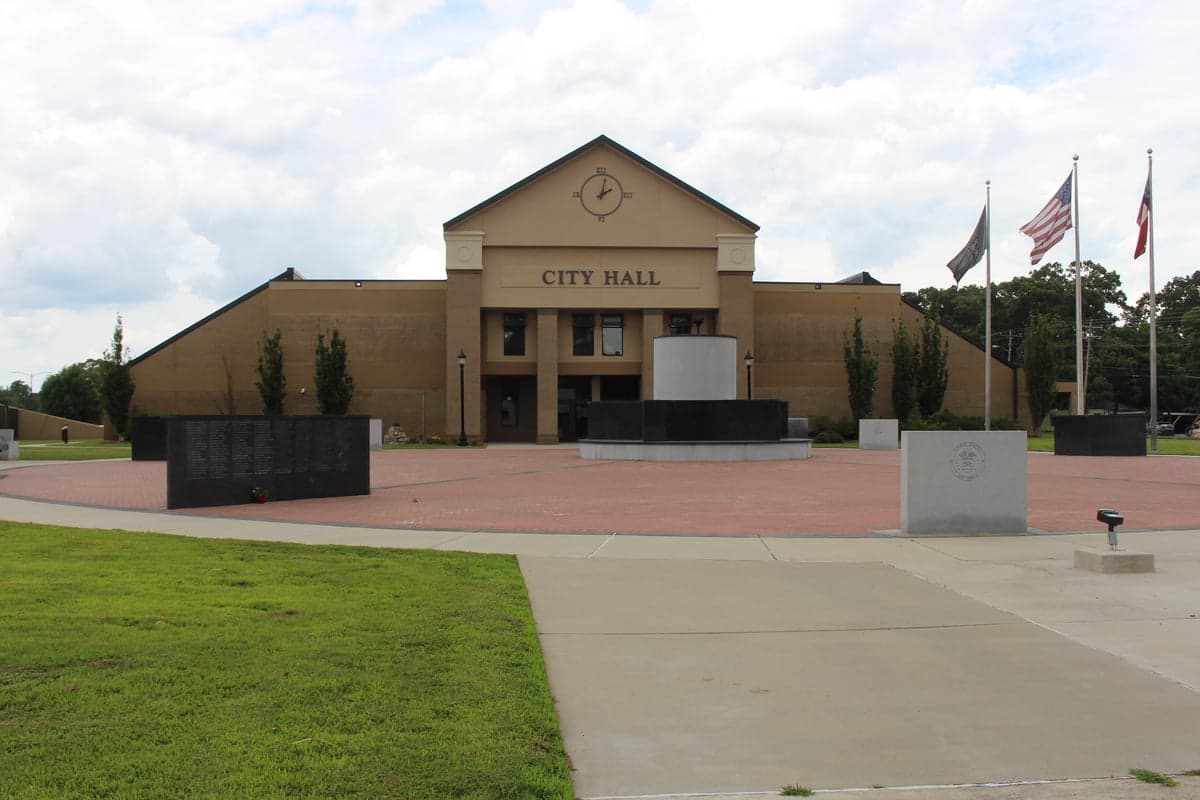
Photo: Wikipedia
Political ClimatePolitical Climate in Warner Robins, GA
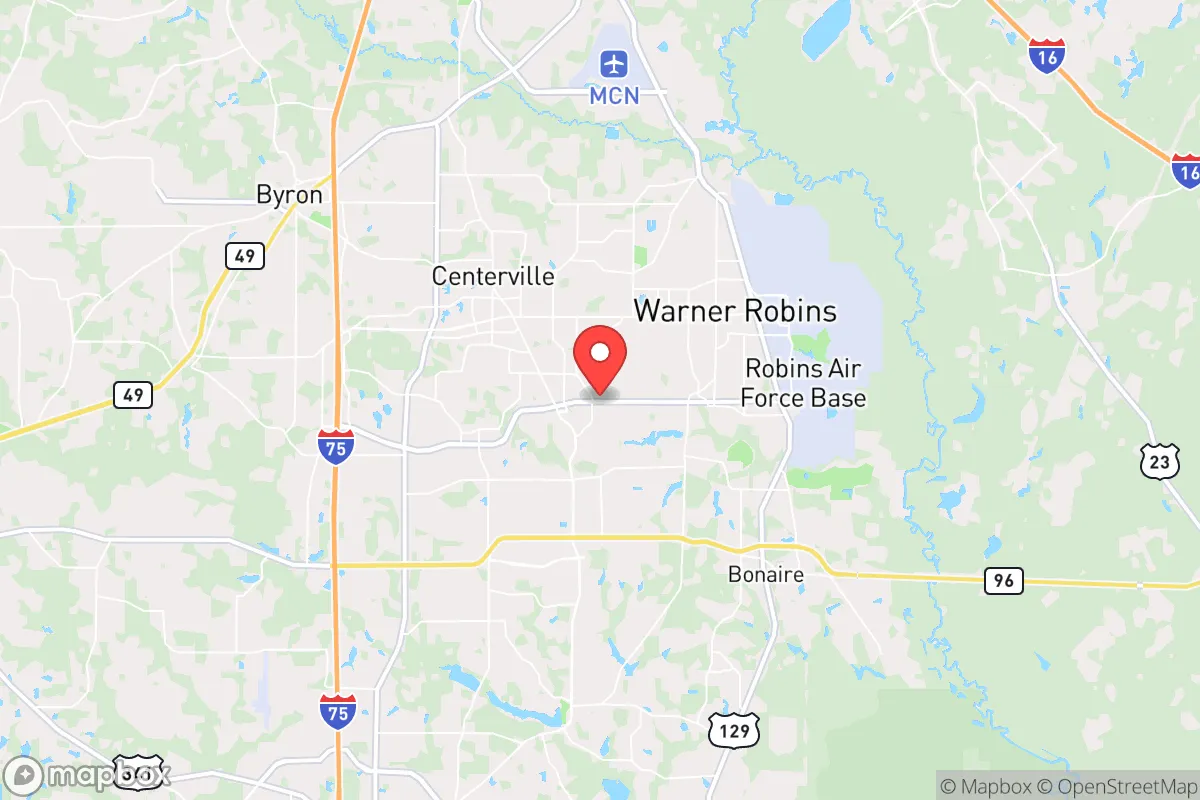
District shown is the primary district for this city’s centroid. Cities may span multiple districts.
Local Political AnalysisPolitical Analysis of Warner Robins, GA
Warner Robins has long been a solid conservative stronghold, and that hasn't changed much. The Cook Partisan Voting Index (PVI) of R+15 tells you the story right there — this area leans heavily Republican, and it's been that way for as long as I can remember. You don't see the wild swings you get in places like Atlanta or even Macon, which is just up the road and has been trending more blue in recent years. The political trajectory here is steady, with most folks voting for smaller government, lower taxes, and a common-sense approach to things. There's a real sense that people here want to be left alone to live their lives without a bunch of unnecessary rules from folks who don't know the area.
How it compares
Compared to the rest of Georgia, Warner Robins is a bit of an island of red in a sea that's slowly turning purple. Drive 20 minutes north to Macon, and you'll see a different political vibe — more progressive, more government-heavy policies, and a lot more talk about things like defunding the police or pushing green energy mandates that don't make sense for a working-class town. Head south to Perry or Unadilla, and you're back in deep red territory, but Warner Robins sits right in the middle. It's not as rural as those smaller towns, but it's not as urbanized as Macon either. That middle ground keeps the politics grounded. You don't see the kind of radical shifts you get in Atlanta's suburbs, where things have gotten pretty liberal over the past decade. Here, it's still about personal responsibility, not government handouts.
What this means for residents
For folks living here, the conservative lean means you're not constantly fighting against new taxes or overreaching regulations. The city council and county commissioners generally keep their hands off your business. You won't see the kind of zoning fights or mask mandates that plagued other parts of the state during the pandemic. Property taxes stay reasonable, and there's no push for things like rent control or heavy-handed environmental rules that would drive up costs for small businesses. The downside? If you're hoping for big government-funded projects or rapid social change, you'll be disappointed. But for most of us, that's a feature, not a bug. The local schools focus on basics, not indoctrination, and the police are respected, not vilified. It's a place where you can still own a gun without someone calling the cops on you for exercising your rights.
Culturally, Warner Robins is a military town at heart, thanks to Robins Air Force Base. That brings a certain discipline and respect for authority that keeps things stable. You won't find a lot of the progressive activism you see in college towns or big cities. The biggest policy debates here are usually about infrastructure — roads, water, and keeping the base running smoothly — not about social experiments. That said, there's been a slow creep of outside influence, especially as people move in from more liberal areas. Some of the newer developments are starting to see a few more "diversity and inclusion" initiatives in local government, which raises an eyebrow. It's not a crisis yet, but it's something to keep an eye on. For now, though, Warner Robins remains a place where common sense still rules, and that's worth holding onto.

State Political ClimatePolitical Climate in Georgia
State Political AnalysisPolitical Environment in the State
Georgia has shifted from a reliably conservative stronghold to a genuine battleground state over the past two decades, with its partisan lean now hovering around a coin-flip in presidential elections — Joe Biden won it by just 0.2% in 2020, and Donald Trump lost it by a similar margin in 2024. The dominant coalition is a tense standoff between a deeply entrenched Republican legislature and a rapidly growing, diversifying metro Atlanta population that has turned the state purple. For a conservative considering relocation, the key question is whether the state’s structural advantages — a GOP-controlled General Assembly, right-to-work laws, and a business-friendly tax climate — can hold the line against the demographic and cultural forces reshaping the Atlanta region.
Urban vs. rural divide
The political map of Georgia is a textbook study in urban-rural polarization. Metro Atlanta’s core counties — Fulton, DeKalb, Cobb, Gwinnett — now vote overwhelmingly Democratic, with Fulton delivering nearly 75% of its vote to Biden in 2020. This is a dramatic flip from the 1990s, when Cobb and Gwinnett were GOP bastions. The Atlanta suburbs have been transformed by an influx of out-of-state professionals, many from blue states, who have turned places like Roswell and Sandy Springs into reliably Democratic turf. Meanwhile, the rest of the state remains deeply red. Rural south Georgia — counties like Colquitt, Thomas, and Lowndes — vote Republican by 30-40 point margins, as do the exurban and small-town counties north of Atlanta, such as Pickens and Gilmer. The wild card is the state’s second-largest metro, Augusta, which leans Democratic but is less lopsided than Atlanta, and the coastal region around Savannah, which has become more competitive as retirees and remote workers move in. The 2024 election saw Trump flip a handful of rural counties that had drifted toward Biden in 2020, but the Atlanta suburbs continued their leftward march, making the overall map even more polarized.
Policy environment
Georgia’s policy environment is a mixed bag for conservatives. On the plus side, the state has a flat income tax rate of 5.49% (down from 6% in 2022), a right-to-work law that keeps unions weak, and a regulatory climate that ranks among the top 10 in the nation for business. The General Assembly has passed permitless carry for firearms (2022), a six-week abortion ban (2019, upheld after the Dobbs decision), and a Parents’ Bill of Rights (2022) that affirms parental authority over education and medical decisions. However, the state also has a high sales tax burden — the average combined state and local rate is over 7.5% — and property taxes can be steep in fast-growing counties like Forsyth and Cherokee. On education, Georgia has a robust school choice program, including the Georgia Promise Scholarship Act (2024), which provides $6,500 per student for private school or homeschooling expenses. But the state’s public schools remain a concern for many conservatives, particularly in metro Atlanta districts where critical race theory and LGBTQ+ curriculum debates have been flashpoints. Election integrity is a bright spot: Georgia requires voter ID, has cleaned up its voter rolls (removing over 100,000 inactive registrations in 2023), and passed SB 202 in 2021, which limits ballot drop boxes and shortens the runoff election window. These measures have drawn fire from the left but are widely supported by conservatives who want to ensure election security.
Trajectory & freedom
On balance, Georgia is becoming more free in several key areas, but the trend is fragile. The permitless carry law (HB 218) was a major expansion of Second Amendment rights, and the Parents’ Bill of Rights (SB 449) gave families more leverage against school boards. The state also passed a law in 2023 banning transgender surgeries and hormone treatments for minors (SB 140), which has been a rallying point for social conservatives. However, the expansion of government power is visible in other areas. The state’s COVID-era emergency powers were used to shut down businesses and mandate masks, and while those powers have since been curtailed by the legislature, the memory lingers. Property rights have been tested by the expansion of the Atlanta BeltLine and transit-oriented development, which has used eminent domain in some cases. The biggest threat to freedom, in my view, is the cultural and political shift in metro Atlanta, where local governments are increasingly adopting progressive policies — sanctuary city resolutions, defunding police rhetoric, and zoning changes that favor high-density development over single-family neighborhoods. If the state legislature loses its Republican supermajority in the next decade, these local trends could become state policy.
Civil unrest & political movements
Georgia has seen its share of political turbulence. The 2020 election cycle brought massive protests in Atlanta over the death of George Floyd, with some demonstrations turning violent and resulting in property damage along the city’s commercial corridors. The “Stop Cop City” movement — a campaign to block the construction of a police training facility in Atlanta’s South River Forest — has been a persistent source of conflict, with activists occupying the site and clashing with law enforcement. On the right, the Georgia Republican Party has been energized by election integrity concerns, with groups like the Georgia Election Integrity Coalition pushing for stricter voter roll maintenance and ballot security. The 2024 election saw a surge in poll watcher activity and legal challenges to absentee ballot procedures. Immigration politics are also a flashpoint: while Georgia is not a border state, the influx of migrants into metro Atlanta has led to tensions over sanctuary policies in DeKalb and Fulton counties, where local officials have resisted cooperating with ICE. The state legislature has responded with bills like HB 1105 (2024), which requires local law enforcement to honor ICE detainers. For a new resident, the most visible sign of political division is the stark contrast between the “Stop Cop City” graffiti in Atlanta and the “Back the Blue” signs in the suburbs.
Projection
Over the next 5-10 years, Georgia is likely to remain a battleground, but the trajectory favors conservatives in the short term and progressives in the long term. The 2024 election showed that Trump can still win rural and exurban votes by large margins, but the Atlanta suburbs are growing faster than the rest of the state. The 2030 census will likely shift political power further toward the metro area, which could flip the state’s congressional delegation and eventually the legislature. However, the in-migration pattern is not uniformly blue: many newcomers are conservatives fleeing high-tax states like California and New York, and they are settling in exurban counties like Forsyth, Paulding, and Barrow, which are becoming reliably red. The wild card is whether the Republican Party can hold the center — if it fractures over social issues or election integrity disputes, Democrats could consolidate the growing suburban vote. For now, the state’s political structure is stable, but the foundation is shifting.
For a conservative moving to Georgia, the bottom line is this: you will find a state that respects your gun rights, keeps taxes relatively low, and protects parental authority, but you will also live in a place where the political culture is increasingly contested. If you settle in the exurbs or rural areas, you will be surrounded by like-minded neighbors. If you move to the Atlanta suburbs, you will need to engage in local politics to defend your values. Georgia is not Texas or Florida — it is a purple state where every election matters, and where the fight over the state’s future is happening right now. If you are willing to be part of that fight, it is a great place to live. If you want a guaranteed conservative environment, look further south or west.
* Values derived from national, state, county, city and local statistics and may differ in a specific area. Last updated: 2026-04-24T06:30:35.000Z
Narrative content on this page is AI-generated and may contain mistakes. Verify any details that matter before acting on them.
ReloMaps may earn a commission from affiliate links at no extra cost to you.

