
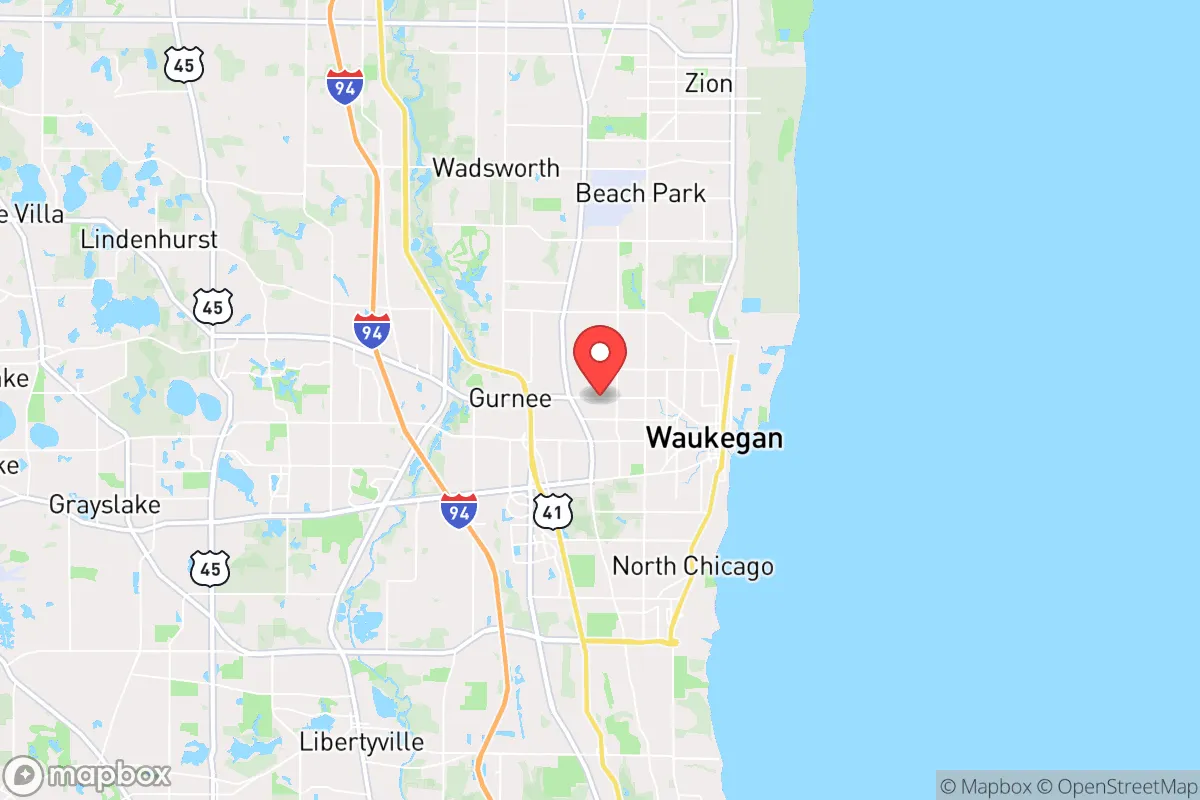
Photo: Wikipedia
Personal Sovereignty in Waukegan, IL
Viable for self-reliance. Generally workable, though some barriers may limit total independence.
What does Personal Sovereignty tell us?
Personal Sovereignty measures your capacity for self-reliance and independence with minimal government friction. Higher scores mean fewer barriers between you and the way you want to live... but it assumes you have the space you need and good neighbors.
What does this tell us?
Personal Sovereignty measures your capacity for self-reliance and independence with minimal government friction. Higher scores mean fewer barriers between you and the way you want to live... but it assumes you have the space you need and good neighbors.
State Policy
Energy independence: Importer (45% of energy produced in-state)
Personal Liberty
Homesteading

Personal Liberty Analysis
Waukegan, Illinois, presents a challenging environment for personal sovereignty, where state-level overreach significantly constrains individual autonomy despite some local practical advantages. As a strategic relocation analysis for those prioritizing self-reliance and minimal government intrusion, the city sits within a state that actively curtails gun rights, imposes heavy tax burdens, and asserts broad regulatory control over daily life. While Lake County offers some rural pockets and larger lot options, the overarching legal and fiscal framework in Illinois makes Waukegan a location where personal sovereignty is constantly negotiated against state power, not freely exercised. For the survivalist or prepper mindset, this means navigating a system designed to limit independence, requiring careful consideration of whether the trade-offs are acceptable.
Tax burden and regulatory posture: How Illinois restricts financial autonomy
Illinois imposes one of the heaviest tax burdens in the nation, directly undermining financial self-reliance. The state’s flat income tax rate of 4.95% applies to all income, with no deductions for prepping supplies or homestead investments. Property taxes in Lake County are among the highest in the U.S., with effective rates often exceeding 2.5% of assessed home value—meaning a $250,000 home can carry an annual tax bill of $6,250 or more. This is a direct drain on resources that could otherwise fund food storage, land improvements, or defensive equipment. Sales tax in Waukegan is 9.5% (state + county + city), further eroding purchasing power for bulk supplies. Regulatory posture is equally aggressive: Illinois mandates strict building codes, environmental permits for any land modification, and a state-level Department of Natural Resources that controls water usage and septic system approvals. For someone seeking to build a self-sufficient homestead, every step—from installing a well to constructing a root cellar—requires permits, inspections, and fees. The state’s pension debt and fiscal instability suggest these burdens will only increase, making long-term financial sovereignty here a constant uphill battle.
Self-defense and gun law specifics: Navigating Illinois’ restrictive firearm framework
Illinois is one of the most restrictive states for gun owners, directly challenging the right to self-defense. The state requires a Firearm Owner’s Identification (FOID) card for mere possession of firearms or ammunition, a process that involves fingerprinting, background checks, and wait times that can stretch months. Concealed carry requires a separate license (CCL) with 16 hours of training, and Illinois does not recognize permits from most other states—a major concern for those relocating with existing firearms. The state also bans “assault weapons” and high-capacity magazines under the Protect Illinois Communities Act (PICA), passed in 2023, which criminalizes possession of many common rifles like the AR-15 and limits magazines to 10 rounds for long guns and 15 for handguns. Registration of existing banned items is required, creating a de facto gun registry. In Waukegan specifically, local ordinances may impose additional restrictions, such as bans on discharging firearms within city limits (even for target practice) and strict storage requirements. For the prepper, this means defensive capabilities are legally hobbled: no suppressors, no short-barreled rifles without NFA tax stamps, and no ability to carry in many public places (including libraries, parks, and government buildings). Self-defense in the home is protected under Castle Doctrine, but Illinois does not have a “Stand Your Ground” law, imposing a duty to retreat in public spaces. This legal environment forces reliance on less-lethal options and situational awareness, rather than robust firearm-based defense.
Self-reliance and homesteading viability: Lot sizes, zoning, and off-grid feasibility
Homesteading and off-grid living in Waukegan face significant practical and legal hurdles. The city’s zoning code is dense and restrictive: residential lots in most neighborhoods are small (typically 5,000 to 10,000 square feet), with strict limits on outbuildings, livestock, and agricultural activity. Keeping chickens is allowed only with a permit and limited to four hens (no roosters), and larger livestock like goats or pigs is prohibited entirely. Off-grid systems are effectively illegal: Illinois requires connection to municipal water and sewer where available, and solar panels must comply with building codes and utility interconnection agreements. Rainwater collection is permitted but limited to 500 gallons per property, and any well drilling requires a permit from the Lake County Health Department, with strict water quality testing. Composting toilets are not recognized as primary sanitation, and burning trash or yard waste is banned. For those seeking true self-reliance—growing food, harvesting water, generating power independently—Waukegan’s regulatory environment is hostile. However, rural areas within Lake County, such as unincorporated parts near the Wisconsin border, offer larger lots (1-5 acres) with fewer restrictions, though still subject to state-level environmental and building codes. The cost of such land is high (often $50,000–$100,000 per acre), and property taxes remain oppressive. For the prepper, the best option is to look outside city limits, but even then, Illinois’ regulatory reach makes true off-grid living a legal gray area at best.
Personal liberties: Parental rights, medical autonomy, speech, and property
Personal liberties in Waukegan are heavily shaped by state-level policies that prioritize government authority over individual choice. Parental rights are under constant pressure: Illinois mandates comprehensive sex education in public schools, including LGBTQ+ topics, with no opt-out for parents who object. The state also has a “Safe-T” Act that eliminated cash bail, which some argue reduces accountability for crimes affecting families. Medical autonomy is severely limited: Illinois has no religious or philosophical exemptions for vaccine mandates, and during public health emergencies, the governor can mandate treatments or restrictions without legislative approval. The state also expanded Medicaid and telehealth, but for those seeking alternative or holistic medicine, licensing laws restrict access to unlicensed practitioners. Speech is protected under the First Amendment, but Illinois has broad hate speech laws and social media regulations that can chill expression. Property rights are perhaps the most constrained: the state’s eminent domain powers are broad, and local governments can impose historic preservation overlays, tree preservation ordinances, and wetland restrictions that limit what owners can do with their land. For the prepper, this means that even if you own property, you may not control it—government can dictate landscaping, building materials, and even the color of your house. The cumulative effect is a system that treats individuals as subjects of the state, not sovereign agents.
Overall, Waukegan ranks low for personal sovereignty compared to states like Texas, Florida, or Idaho, where gun laws are permissive, taxes are lower, and zoning is more flexible. The city offers some practical advantages—proximity to Lake Michigan for water, access to Chicago for supplies, and a diverse community—but these are outweighed by the legal and fiscal constraints imposed by Illinois. For the survivalist or prepper, Waukegan is a location to be approached with caution, best suited for those who can navigate the regulatory maze and are willing to accept limited autonomy in exchange for urban amenities. A more sovereignty-friendly alternative would be to look at rural counties in Wisconsin or Indiana, where state-level policies align more closely with self-reliance and minimal government overreach. In Waukegan, personal sovereignty is not a given; it is something that must be constantly defended against an encroaching state apparatus.

* Values derived from national, state, county, city and local statistics and may differ in a specific area. Last updated: 2026-04-29T21:23:45.000Z
Narrative content on this page is AI-generated and may contain mistakes. Verify any details that matter before acting on them.
ReloMaps may earn a commission from affiliate links at no extra cost to you.

