
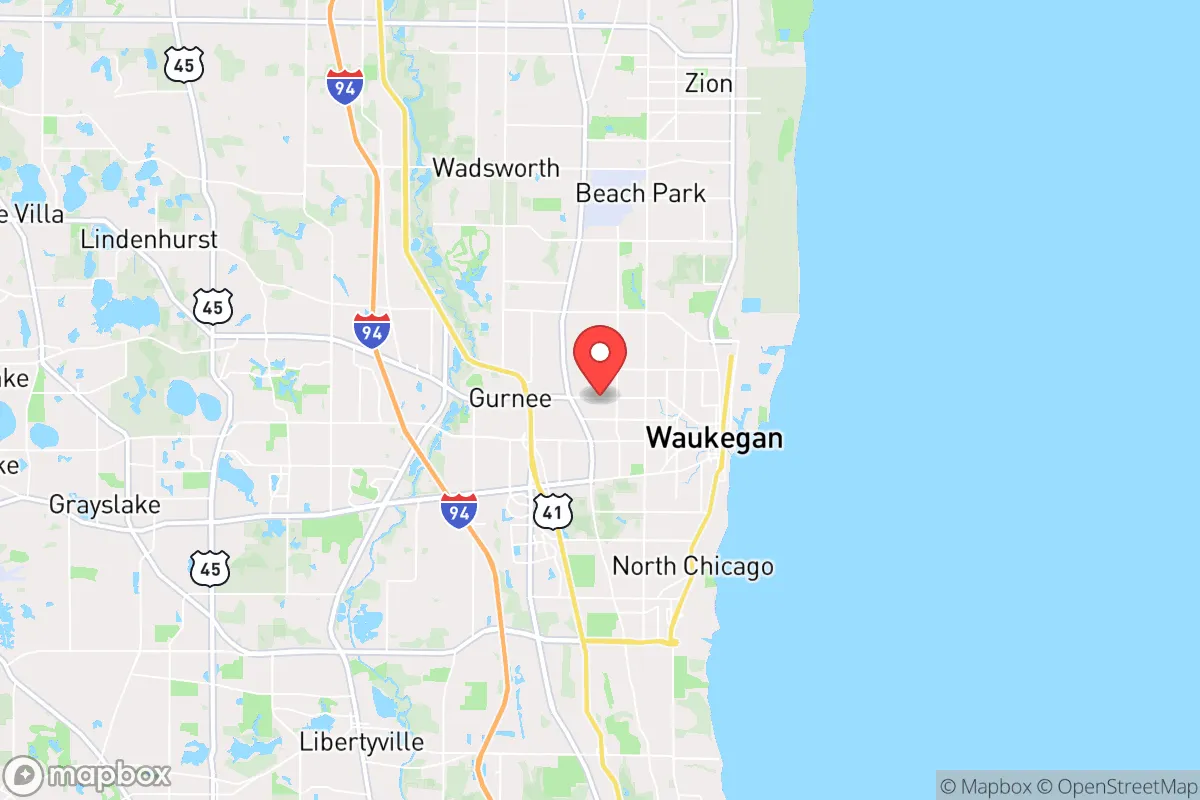
Photo: Wikipedia
Quality of Life in Waukegan, IL
Above-average quality of iife. The area offers a reasonable cost of living, decent mobility, and a mix of neighborhood amenities.
What does Quality of Life tell us?
Quality of Life blends cost of living, nearby amenities, socioeconomic signals, and neighborhood character. City-level scores represent the whole municipality; individual neighborhoods can differ.
What does this tell us?
Quality of Life blends cost of living, nearby amenities, socioeconomic signals, and neighborhood character. City-level scores represent the whole municipality; individual neighborhoods can differ.
Cost of Living
15% below national average
The Real Cost of Living in Waukegan, IL for 2026
| Tier | Individual | Family (4) |
|---|---|---|
| Survival | $19k | $35k |
| Comfortable | $35k | $51k |
| Luxury | $117k+ | $181k+ |
| Elite (Top 5%) | $138k+ | $213k+ |
139%
The Area Signal
A metric tracking the socioeconomic signals of the area.
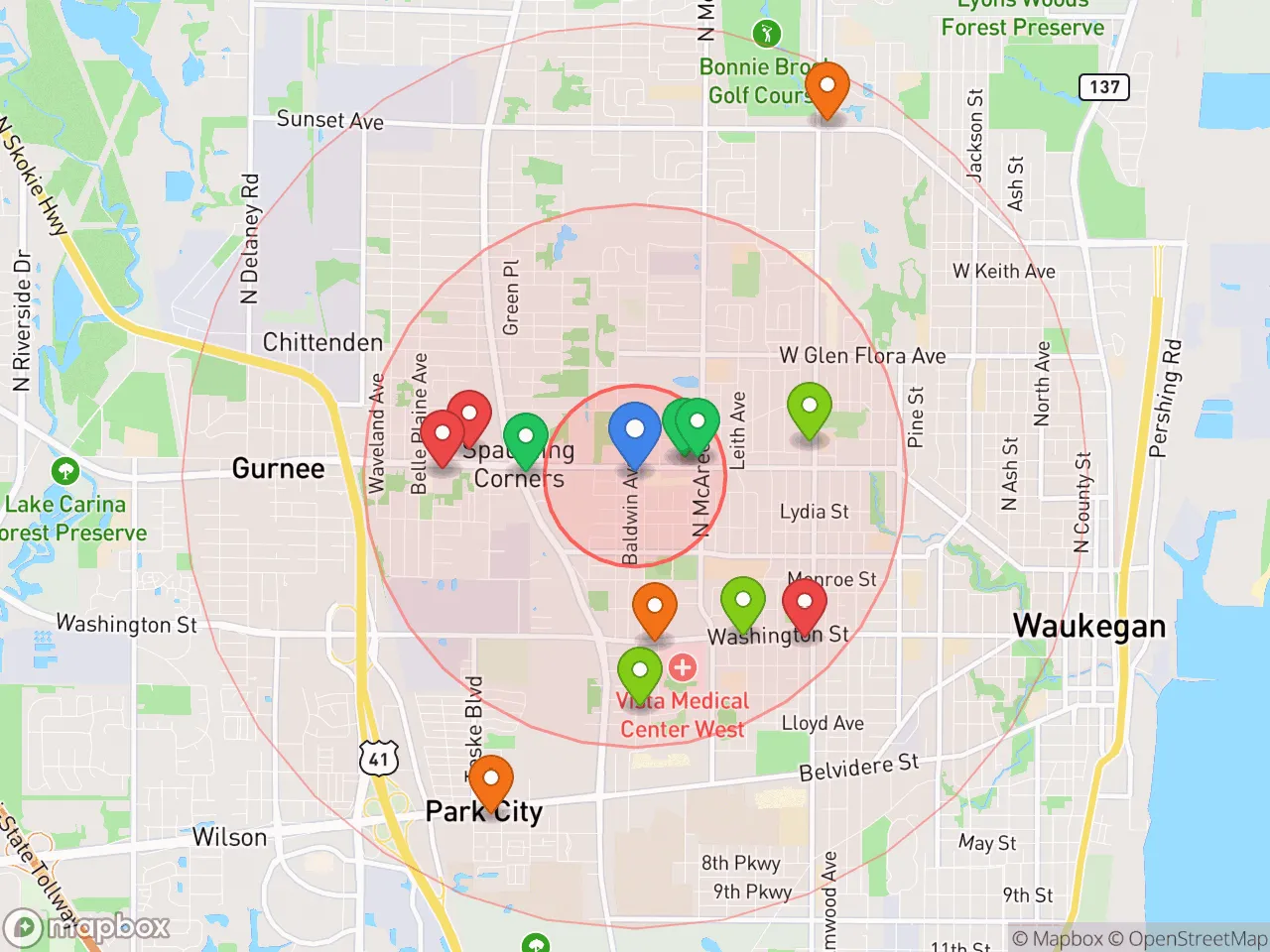
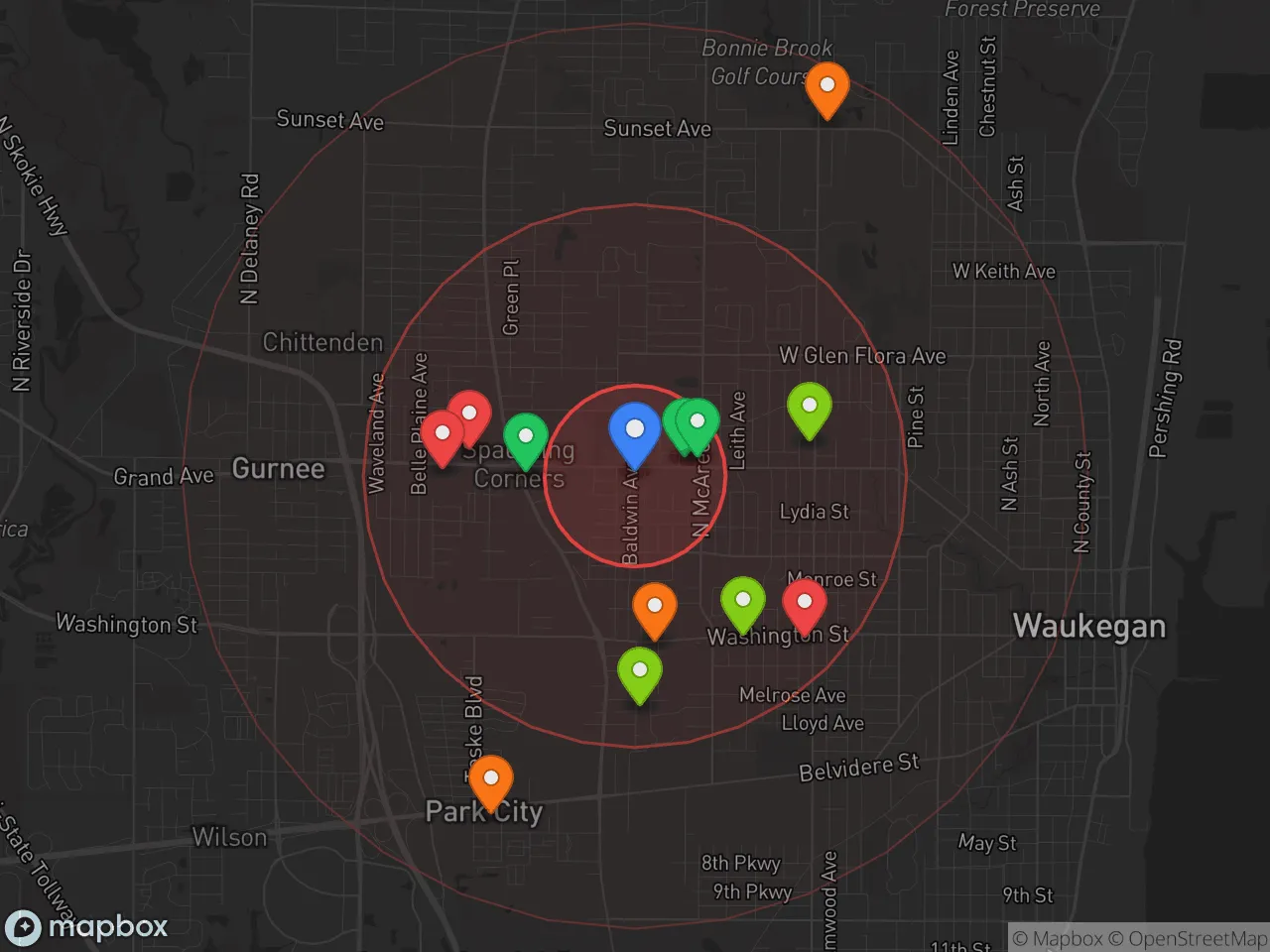
Hobbies
Explore the areaGroceries
6 within 10 miles
Gas
20 within 10 miles
Hospital
15 within 20 miles
Airport
ORD — O'Hare International
Post Office
USPS — Waukegan, IL
Critical Amenities
Quality-of-Life Analysis
Waukegan, Illinois, presents a notably affordable quality of life relative to the broader Chicago metropolitan area, with a cost of living index of 85 (where 100 equals the U.S. average). The city's population is a mix of working-class families, long-term residents, and a growing number of first-time homebuyers drawn by housing costs that are roughly half those of nearby Lake Forest or Highland Park. While Waukegan is not an affluent community by regional standards, its economic diversity and lakefront location on Lake Michigan create a distinct, accessible lifestyle for those who prioritize value over prestige.
Cost of living, housing affordability, and how it compares to nearby suburbs
Waukegan’s housing market is among the most affordable in Lake County. The median home value sits at $177,600, compared to a Lake County median exceeding $350,000. Median rent is $1,163, well below the Chicago metro average of roughly $1,500. This price gap is the primary driver for many relocations: a buyer can purchase a three-bedroom home in Waukegan for what a one-bedroom condo costs in neighboring Libertyville or Gurnee. The average commute of 26.4 minutes is slightly shorter than the Chicago metro average of 30 minutes, aided by direct access to I-94 and Metra Union Pacific North Line service to downtown Chicago (about 70 minutes). However, property taxes in Lake County are among the highest in Illinois, with effective rates near 2.2% of assessed value, meaning the monthly carrying cost on that $177,600 home can be $400–$500 in taxes alone. Renters face less tax exposure but should expect annual increases of 3–5%, in line with regional trends.
Schools, amenities, and what daily life is like for families
Daily life in Waukegan centers on its lakefront parks, historic downtown, and a growing food scene anchored by Mexican and Puerto Rican restaurants along Belvidere Road and Grand Avenue. The city’s public school system, Waukegan Community Unit School District 60, serves roughly 15,000 students and has faced chronic underfunding and below-average test scores; many families opt for private or charter options, such as Cristo Rey St. Martin College Prep or the Waukegan School of Arts. For amenities, the Waukegan Municipal Beach and the 2.5-mile lakefront trail provide free or low-cost recreation, while the Genesee Theatre (a restored 1927 venue) hosts national touring acts. The city lacks a major full-service grocery within its core—residents often drive to Gurnee for Jewel-Osco or Mariano’s—but a new mixed-use development at the former Lakehurst Mall site is adding retail and dining. Healthcare access is solid, with Vista Medical Center East providing emergency and inpatient care, though specialists are concentrated in Libertyville and Lake Forest.
Waukegan is best suited for budget-conscious buyers and renters who value lake proximity and urban energy over top-tier schools or low taxes. First-time homebuyers priced out of the North Shore corridor will find the most attainable entry point here, while long-term renters benefit from the lowest median rent in Lake County. Those who thrive in Waukegan are typically comfortable with a working-class, multicultural environment—the city is over 50% Hispanic and 20% Black—and are willing to navigate a slower pace of municipal services and occasional infrastructure gaps in exchange for a mortgage or rent that leaves room in the monthly budget. For professionals commuting to Chicago, the trade-off is a longer train ride than from closer suburbs, but a far lower housing cost per square foot. It is not a community for those seeking elite schools or luxury retail, but for practical, value-driven households, Waukegan remains one of the most livable affordable options on the Illinois shore of Lake Michigan.

Crime in Waukegan, IL
Crime rates similar to the national median for U.S. locations.
Violent CrimeViolent Crime Analysis
Property CrimeProperty Crime Analysis
Crime Analysis
Waukegan, Illinois, presents a challenging safety landscape for residents and prospective movers. The city's violent crime rate of 374.3 incidents per 100,000 people and property crime rate of 1,548.1 per 100,000 place it significantly above national averages, a situation exacerbated by the progressive criminal justice policies prevalent in Lake County and the broader Chicago metropolitan area. These policies, which prioritize leniency for offenders over public safety, contribute to a higher likelihood of repeat offenses and reduced accountability, making Waukegan a location where caution is warranted.
Crime in context
Waukegan's violent crime rate is roughly 7% higher than the national average, while its property crime rate exceeds the national figure by approximately 12%. Compared to the state of Illinois, which itself struggles with elevated crime rates in its urban centers, Waukegan's numbers are notably worse. The city's proximity to Chicago and its status as a Lake County hub mean it is subject to the same regional trends of under-prosecution and soft-on-crime judicial philosophies. For context, the national violent crime rate sits around 350 per 100,000, and the property crime rate near 1,400 per 100,000, making Waukegan's figures a clear outlier in a negative direction. The presence of progressive district attorneys in the region, who often advocate for reduced sentencing and alternative programs, directly correlates with higher recidivism and diminished deterrence, leaving residents more exposed to criminal activity.
What residents experience
Daily life in Waukegan is marked by a tangible awareness of property crime, with theft, burglary, and motor vehicle theft being common occurrences. Residents report that car break-ins and package thefts are routine, particularly in areas near downtown and along major corridors like Belvidere Road. Violent crime, while less frequent than property crime, is concentrated in specific neighborhoods and often linked to gang activity and drug-related disputes. The city's police department has implemented community policing initiatives, but these efforts are undermined by a justice system that frequently releases offenders without meaningful consequences. For families and individuals, this means a heightened need for home security systems, vigilant neighborhood watch participation, and avoidance of certain areas after dark. The cumulative effect is a community where trust in public safety institutions is eroded, and personal precaution becomes a daily necessity.
Neighborhood-level variation is significant in Waukegan. Areas west of Green Bay Road and near the lakefront tend to see lower crime rates, while the central and eastern parts of the city, particularly around the downtown core and near the industrial zones, experience higher concentrations of both violent and property crime. The Bowen Park and Washington Park neighborhoods are often cited by residents as areas requiring extra caution. Prospective residents should research specific block-level data and consult local police reports, as the city's overall statistics mask pockets of relative safety and heightened risk. Ultimately, Waukegan's crime profile is a direct reflection of the broader regional failure to prioritize public safety over progressive criminal justice ideology, making it a location that demands careful consideration and proactive safety measures.
* Values derived from national, state, county, city and local statistics and may differ in a specific area. Last updated: 2026-04-29T21:23:45.000Z
Narrative content on this page is AI-generated and may contain mistakes. Verify any details that matter before acting on them.
ReloMaps may earn a commission from affiliate links at no extra cost to you.

