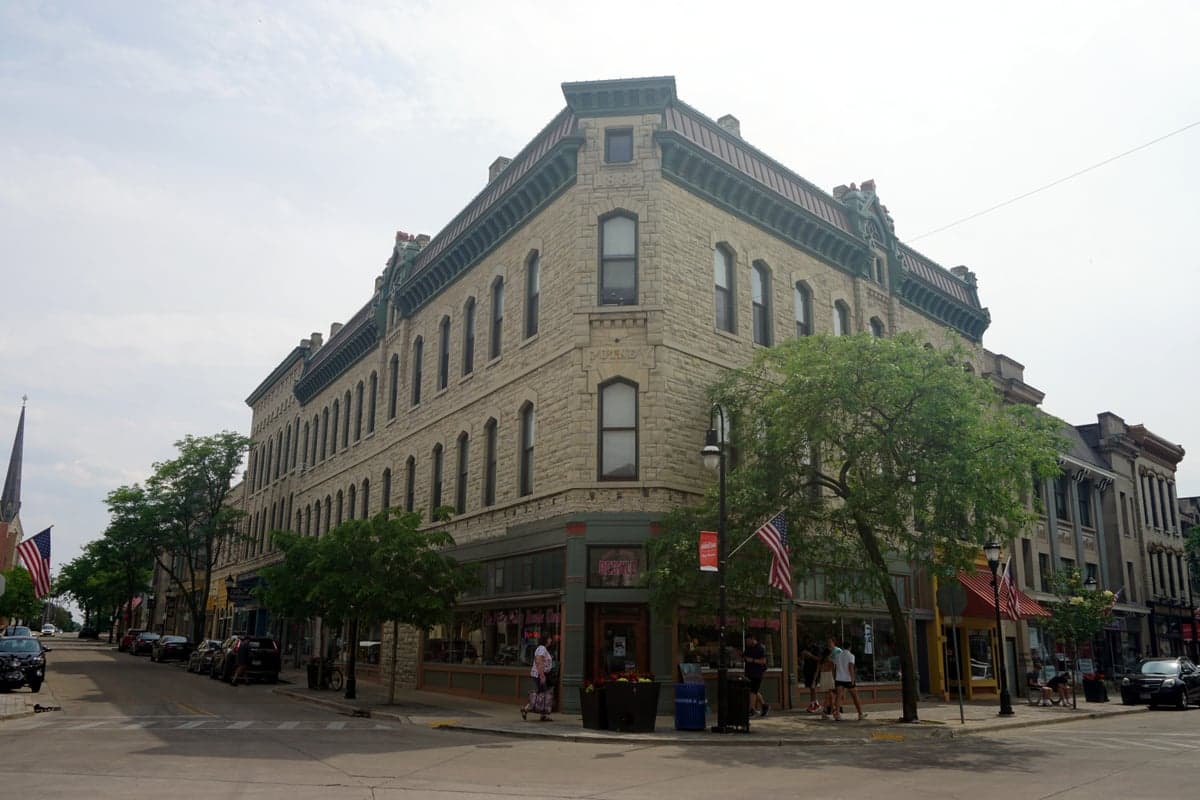
Photo: Wikipedia
Quality of Life in Waukesha, WI
A high quality of life with strong walkability, manageable living costs, healthy neighborhood signals, and solid amenity access.
What does Quality of Life tell us?
Quality of Life blends cost of living, nearby amenities, socioeconomic signals, and neighborhood character. City-level scores represent the whole municipality; individual neighborhoods can differ.
What does this tell us?
Quality of Life blends cost of living, nearby amenities, socioeconomic signals, and neighborhood character. City-level scores represent the whole municipality; individual neighborhoods can differ.
Cost of Living
2% above national average
The Real Cost of Living in Waukesha, WI for 2026
| Tier | Individual | Family (4) |
|---|---|---|
| Survival | $19k | $35k |
| Comfortable | $56k | $82k |
| Luxury | $124k+ | $193k+ |
| Elite (Top 5%) | $146k+ | $227k+ |
100%
The Area Signal
A metric tracking the socioeconomic signals of the area.
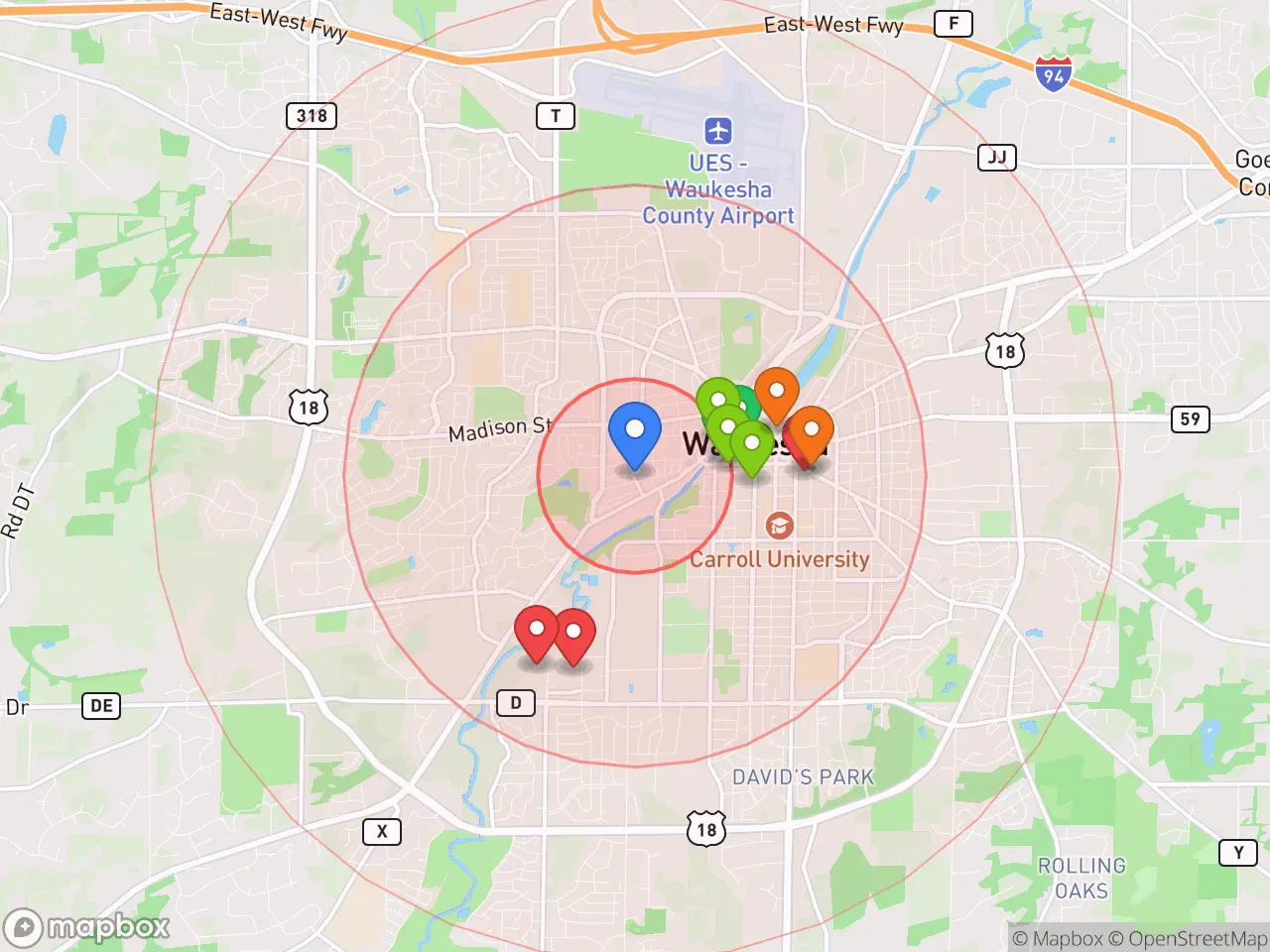
Hobbies
Explore the areaGroceries
7 within 10 miles
Gas
20 within 10 miles
Hospital
20 within 20 miles
Airport
ORD — O'Hare International
Post Office
USPS — Waukesha, WI
Critical Amenities
Quality-of-Life Analysis
Waukesha, Wisconsin, presents a quality of life defined by above-average affluence, strong family-oriented demographics, and a blend of suburban comfort with access to urban employment. The city’s cost of living index sits at 102 (just 2% above the national average), yet its median household income of roughly $72,000 significantly outpaces the national median, attracting professionals, skilled tradespeople, and families seeking stable, well-resourced communities. The population skews toward married couples and homeowners, with a median age around 40, reflecting a mature, settled population that values schools, safety, and local amenities over nightlife or rapid urban change.
Cost of living, housing affordability, and value compared to Milwaukee
Waukesha offers a notable affordability advantage over nearby Milwaukee and the national average, particularly in housing. The median home value of $286,600 is roughly 15% lower than the Milwaukee metro median, while the median rent of $1,183 is about 10% cheaper than comparable suburban rentals in Brookfield or Mequon. For buyers, this means a typical 3-bedroom home in Waukesha costs roughly $50,000 less than a similar property in Milwaukee’s closer-in suburbs, making it a strong value play for commuters. The average commute of 21.6 minutes is notably shorter than the national average of 26 minutes, and well under the 30-minute-plus commutes common in Chicago or Madison suburbs. This combination of below-market housing costs and a reasonable drive to Milwaukee’s job centers (downtown is about 20 minutes east via I-94) makes Waukesha a practical choice for dual-income households. Property taxes in Waukesha County are moderate for Wisconsin, averaging about 1.8% of assessed value, which is competitive with surrounding Waukesha County communities like Pewaukee or New Berlin.
What daily life is like for families: schools, parks, and local amenities
Daily life in Waukesha revolves around a well-maintained public school system, extensive park access, and a walkable downtown core. The Waukesha School District consistently ranks in the top 20% of Wisconsin districts, with three of its four high schools earning above-average state test scores and a graduation rate above 93%. The city operates over 30 parks, including the 200-acre Minooka Park with its hiking trails, disc golf, and seasonal sledding hill, and the Fox River runs through town, offering kayaking and fishing access. Downtown Waukesha features a compact, pedestrian-friendly main street with independent restaurants, a farmers market (May–October), and the Waukesha Civic Theatre. For daily errands, residents rely on the Fox River Shopping Center and the Shoppes at Fox River, which provide grocery, pharmacy, and big-box retail within a 10-minute drive. The city’s rhythm is distinctly suburban: weekdays are dominated by school drop-offs and commutes, while weekends see families at youth sports leagues (Waukesha has one of the highest youth soccer participation rates in the state) or at Frame Park’s splash pad and concert series. Nightlife is limited to a handful of breweries and sports bars, not a club scene.
Waukesha is best suited for families, early retirees, and professionals who prioritize affordable homeownership, short commutes, and strong public schools over urban density or cultural variety. Singles and young professionals without children may find the social scene limited, but for those raising children or seeking a quiet, well-serviced base within easy reach of Milwaukee’s employment and entertainment, Waukesha delivers a balanced, low-stress lifestyle. The city’s combination of below-average commute times, housing costs that undercut the metro average, and a robust park and school system makes it a standout choice in southeastern Wisconsin for value-oriented households.

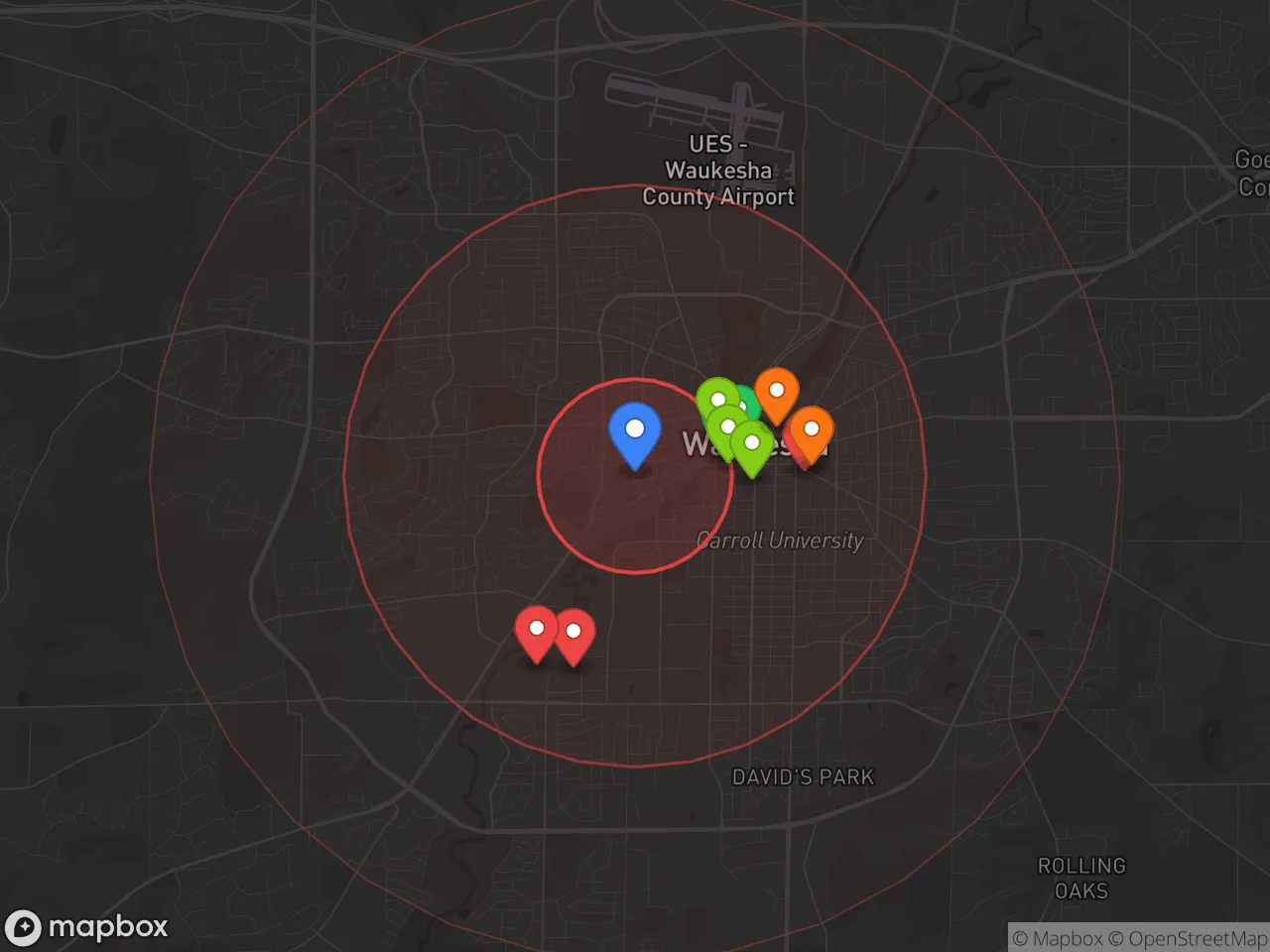
Crime in Waukesha, WI
Lower crime rates than 88% of comparable U.S. locations.
Violent CrimeViolent Crime Analysis
Property CrimeProperty Crime Analysis
Crime Analysis
Waukesha, Wisconsin, presents a mixed safety profile that demands close scrutiny. The city’s violent crime rate of 106.2 incidents per 100,000 residents is notably lower than the national average, but its property crime rate of 859.6 per 100,000 exceeds the national median. However, the broader context of Waukesha’s location within a large, liberal-leaning metropolitan area raises significant concerns. Progressive judicial and prosecutorial philosophies in nearby Milwaukee County and the surrounding region, which prioritize offender rehabilitation over strict accountability, have been linked to higher recidivism and a greater number of criminals on the street. This ideological environment directly undermines public safety and justice for victims, making Waukesha’s crime statistics less reassuring than they might first appear.
Crime in context
When compared to state and national benchmarks, Waukesha’s violent crime rate is a clear positive: it is roughly 60% lower than the U.S. average of 270 per 100,000 and well below Wisconsin’s state rate of approximately 290 per 100,000. This is largely attributable to Waukesha’s status as a relatively affluent, suburban community. However, the property crime rate of 859.6 per 100,000 is a different story. It sits above the national average of 800 per 100,000 and is significantly higher than the Wisconsin state average of around 650 per 100,000. This elevated property crime rate is a direct consequence of the region’s lenient justice policies. Progressive district attorneys in the Milwaukee metro area routinely offer plea deals and diversion programs for property offenders, reducing the deterrent effect of prosecution and allowing repeat offenders to remain active in the community. For a family or business owner in Waukesha, this means a higher risk of burglary, theft, or vehicle break-in than the state norm would suggest.
What residents experience
Daily life in Waukesha is generally safe from violent confrontation, but residents must remain vigilant against property crime. The most common incidents include theft from vehicles, package theft, and bicycle theft, particularly in areas near downtown and the Fox River trail system. The city’s police department is responsive, but the broader judicial environment works against them. Offenders arrested in Waukesha are often processed through Waukesha County’s court system, which has historically been more conservative than Milwaukee’s. However, the influence of progressive ideology from the larger metro area—including bail reform policies and reduced sentencing guidelines—has begun to seep into local practices. This has led to a perception among long-term residents that the justice system is increasingly sympathetic to offenders at the expense of public safety. For example, a 2023 case involving a repeat property offender receiving a deferred prosecution agreement sparked local outrage, as the individual was arrested again for theft within weeks.
Neighborhood-level variation is significant. The safest areas are the established residential neighborhoods west of Grand Avenue and north of Sunset Drive, where violent crime is virtually nonexistent. In contrast, the downtown core and areas near the Waukesha County Transit Center see higher concentrations of property crime and occasional drug-related incidents. The city’s southeastern quadrant, closer to the Milwaukee County line, also experiences elevated crime rates due to its proximity to more troubled urban areas. Prospective residents should prioritize homes in the western and northern parts of the city, and always verify specific street-level crime data through the Waukesha Police Department’s online crime map. The combination of a low violent crime rate and a high property crime rate, set against a backdrop of progressive metro-area justice policies, means that Waukesha requires a cautious, informed approach to safety.
* Values derived from national, state, county, city and local statistics and may differ in a specific area. Last updated: 2026-04-21T10:22:50.000Z
Narrative content on this page is AI-generated and may contain mistakes. Verify any details that matter before acting on them.
ReloMaps may earn a commission from affiliate links at no extra cost to you.

