Photo: Wikipedia
Demographics of Waxahachie, TX
Affluence Level in Waxahachie, TX
A middle-class area roughly in line with national averages across income, home values, education, and employment.
People of Waxahachie, TX
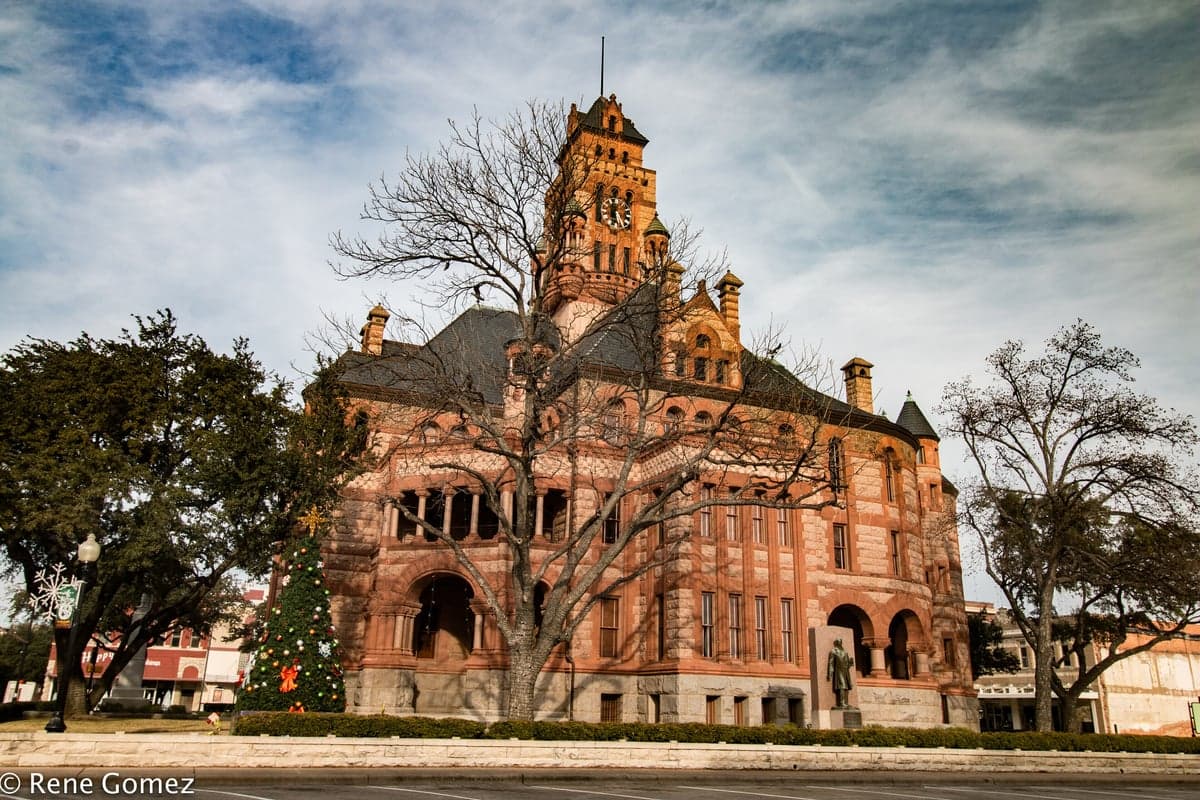
The people of Waxahachie, TX today number 43,591, forming a community that is 55.1% White, 24.4% Hispanic, 15.1% Black, and 0.8% East/Southeast Asian, with a foreign-born population of just 3.5%. The city retains a distinctly small-town, family-oriented character despite its growth as a Dallas-Fort Worth exurb, with a strong sense of local identity rooted in its historic courthouse square and annual events like the Scarborough Renaissance Festival. With 28.1% of adults holding a college degree, the population is moderately educated, and the city’s demographic profile reflects a mix of long-standing Black and White families alongside a growing Hispanic community.
How the city was settled and grew
Waxahachie was founded in 1850 by Emory W. Rogers, who donated land for a county seat on the site of a former Native American trading post. The original settlers were primarily Anglo-American farmers from the Upper South—Tennessee, Kentucky, and Missouri—drawn by the fertile blackland prairie soil for cotton cultivation. By the 1880s, the arrival of the Houston and Texas Central Railroad transformed Waxahachie into a regional cotton-processing hub, attracting a wave of African American laborers and sharecroppers who settled in the Eastside neighborhood, historically known as the city’s Black community. The West End Historic District grew as the enclave of the White merchant and planter class, with Victorian homes built during the cotton boom. A smaller wave of German and Czech immigrants arrived in the late 19th century, settling in the North Grove area and establishing farms and small businesses. The population remained overwhelmingly native-born and rural through the mid-20th century, with cotton’s decline after World War II leading to economic stagnation and outmigration.
Modern era (post-1965)
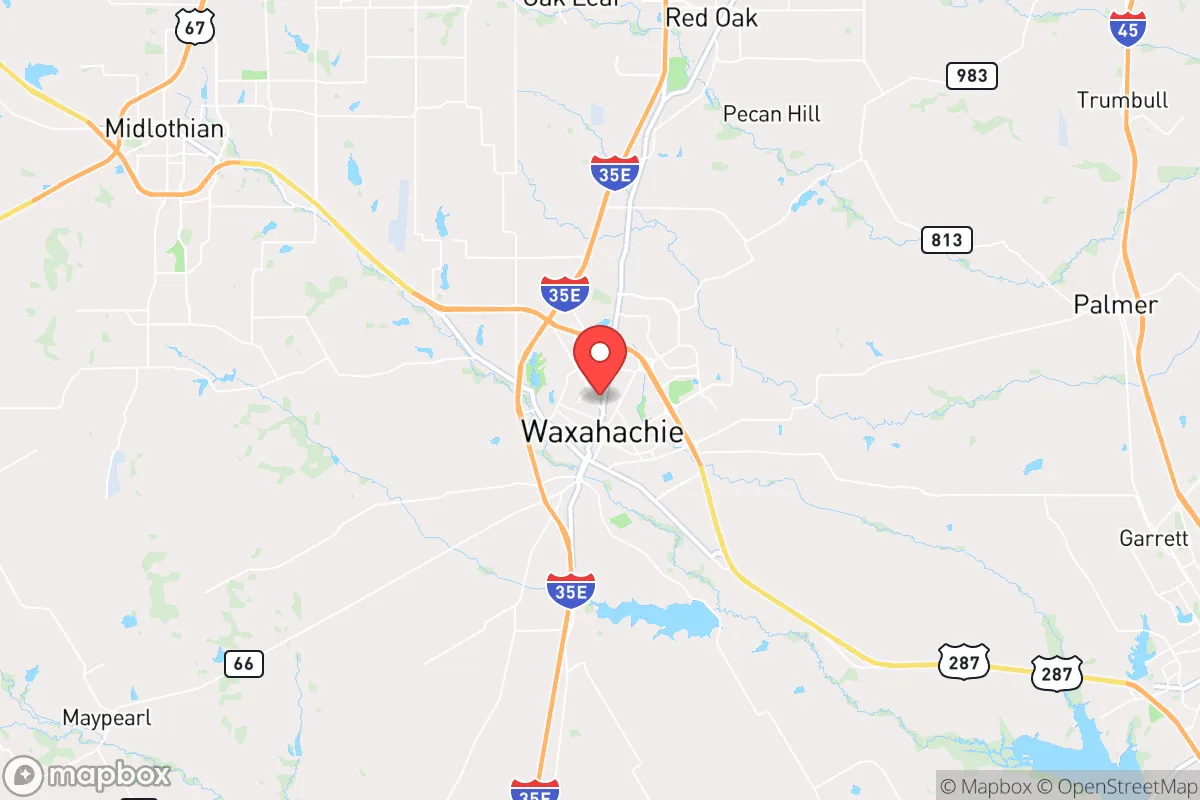
After the 1965 Hart-Cellar Act, Waxahachie saw minimal direct immigration—its 3.5% foreign-born share is well below the national average—but the city experienced significant domestic in-migration starting in the 1990s as Dallas-Fort Worth suburban sprawl pushed south along Interstate 35E. The North Waxahachie area, including subdivisions like Waterford Estates, absorbed the bulk of new White and Hispanic families moving from Dallas County for cheaper housing and better schools. The Hispanic population grew from roughly 8% in 1990 to 24.4% today, concentrated in the Southwest Crossing and Ferris Creek neighborhoods, where many work in construction, warehousing, and service jobs tied to the I-35 corridor. The Black population, historically centered in Eastside, has become more dispersed, with middle-class Black families moving into newer subdivisions like Bristol Park in the city’s southeast. The East/Southeast Asian community remains tiny at 0.8%, with no Indian subcontinent population recorded, reflecting Waxahachie’s limited draw for high-skilled immigrant professionals compared to larger DFW suburbs like Plano or Irving.
The future
Waxahachie’s population is projected to continue growing at a moderate pace, driven by ongoing exurban expansion and the development of the Grove at Waxahachie master-planned community, which targets families seeking larger lots and lower taxes than Dallas County. The city is likely to become slightly more diverse, with the Hispanic share expected to approach 30% by 2035 as younger Hispanic families age into homeownership and new arrivals from Texas’s Rio Grande Valley settle in the area. The White population, while still a majority, is slowly declining as a share of the total, and the Black population is stabilizing around 15% as outmigration to other DFW suburbs balances new arrivals. The foreign-born share is unlikely to rise sharply given the lack of major employers or refugee resettlement programs. Rather than tribalizing into distinct enclaves, Waxahachie’s neighborhoods are becoming more mixed, though Eastside remains predominantly Black and Southwest Crossing heavily Hispanic. The city’s political character—conservative and family-focused—is reinforced by the influx of suburban Republicans from Dallas County.
For someone moving to Waxahachie now, the city offers a stable, moderately diverse community where long-time residents and newcomers coexist without sharp ethnic or economic divides. The population is becoming more Hispanic and slightly more suburban, but the core identity remains that of a traditional Texas county seat where most people are native-born, own their homes, and value local schools and community events. The lack of significant immigrant or high-skilled professional influx means Waxahachie will likely retain its small-town feel even as it grows, making it a predictable choice for families seeking affordability and safety over cosmopolitan diversity.

* Values derived from national, state, county, city and local statistics and may differ in a specific area. Last updated: 2026-05-16T22:50:22.000Z
Narrative content on this page is AI-generated and may contain mistakes. Verify any details that matter before acting on them.
ReloMaps may earn a commission from affiliate links at no extra cost to you.

