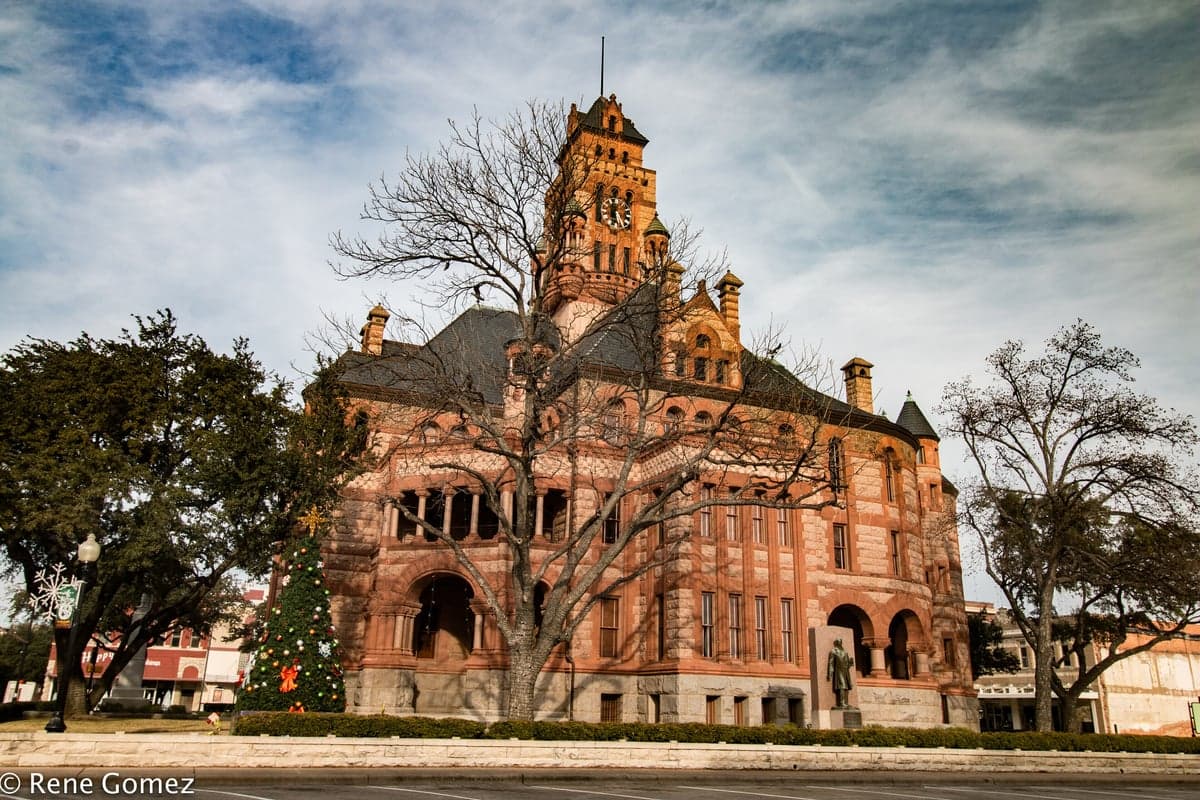
Photo: Wikipedia
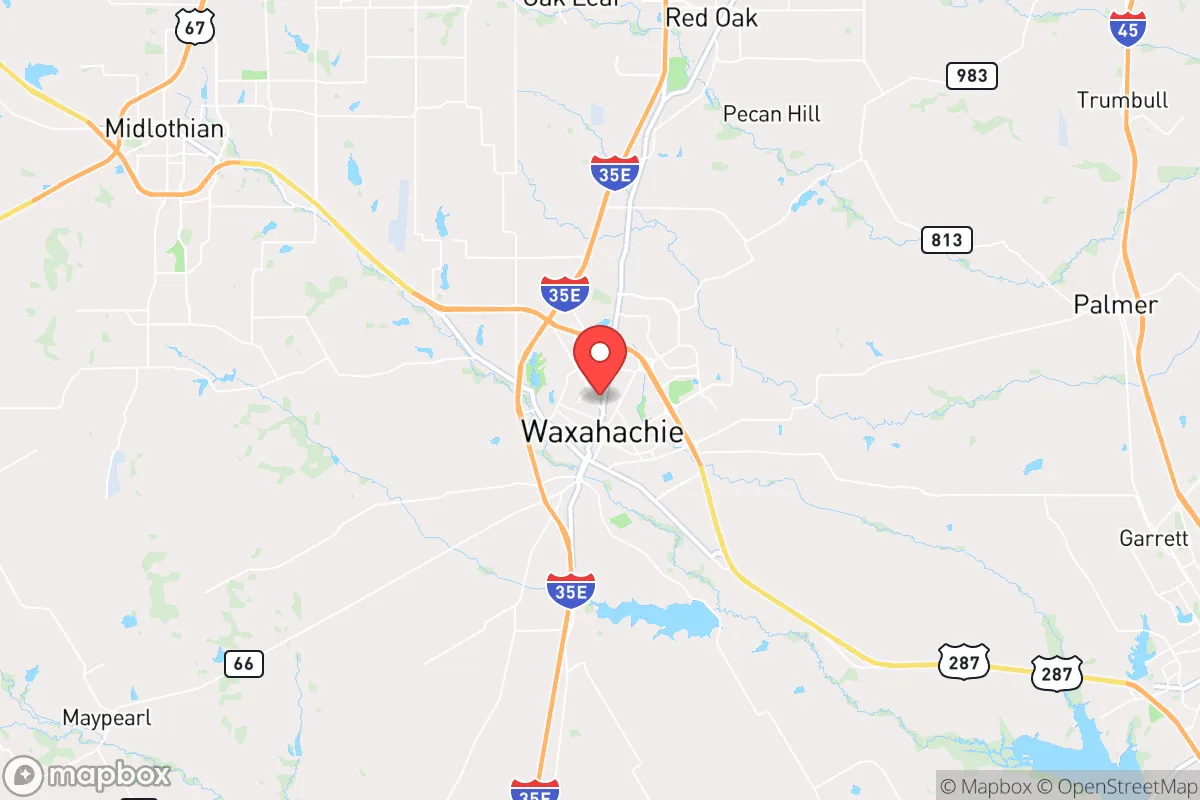
Political ClimatePolitical Climate in Waxahachie, TX
District shown is the primary district for this city’s centroid. Cities may span multiple districts.
Local Political AnalysisPolitical Analysis of Waxahachie, TX
Waxahachie has long been a reliably conservative stronghold, and that hasn't changed much even as the Dallas-Fort Worth metroplex creeps closer. The Cook Partisan Voting Index (PVI) for the area sits at R+14, which is a full ten points more Republican than the state of Texas as a whole (R+4). That gap isn't just a number on a map—it reflects a real, lived difference in how people here think about government, personal freedom, and the pace of change. While Texas itself has seen some urban centers drift leftward, Waxahachie has held its ground, and for folks who value limited government and local control, that’s a reassuring sign.
How it compares
To really understand Waxahachie’s political climate, you have to look at what’s happening around it. Drive thirty minutes north and you hit the southern suburbs of Dallas—places like DeSoto and Lancaster—where the politics shift noticeably blue. Head east toward Ennis or west toward Midlothian, and you’ll find communities that are still conservative, but not quite as rock-ribbed as Ellis County. Waxahachie sits right in the middle of that tension. The county itself votes overwhelmingly Republican in most races, and local officials tend to prioritize low taxes, Second Amendment rights, and school choice. Compare that to the state level, where the R+4 PVI means there’s more of a tug-of-war—especially in the state legislature—over things like property tax caps, energy regulation, and education curriculum. In Waxahachie, the conversation is less about compromise and more about holding the line.
What this means for residents
For someone living here, the political climate translates directly into daily life. You’re less likely to see the kind of government overreach that pops up in bigger cities—things like mask mandates that drag on, zoning rules that tell you what you can do with your own land, or tax hikes disguised as “investments.” The local school board and city council tend to be responsive to conservative voices, and there’s a general expectation that government should stay out of your business unless absolutely necessary. That said, there are signs of change. As more people move down from Dallas and Fort Worth looking for cheaper housing, some bring different ideas with them. You’ll see it in local elections—a few more contested races, a little more noise about “diversity initiatives” or “sustainability plans.” It’s not a takeover by any means, but it’s something to keep an eye on. If you value a community where personal responsibility and local control still mean something, Waxahachie is still a good bet—but it’s worth paying attention to who’s running for office and what they’re promising.
Culturally, Waxahachie holds onto its small-town roots in a way that feels genuine. The annual Scarborough Renaissance Festival draws crowds, but it’s the everyday stuff—the county fair, the Friday night lights, the local diners where everybody knows your name—that sets the tone. Policy-wise, you’ll find a strong emphasis on property rights and a general skepticism of state-level mandates. There’s a sense here that the best government is the one closest to the people, and that’s a perspective that’s becoming harder to find in Texas’s fast-growing suburbs. If the trend toward progressive ideology continues to creep into the region, Waxahachie will likely be one of the last places to bend—and that’s exactly how most folks here want it.

State Political ClimatePolitical Climate in Texas
State Political AnalysisPolitical Environment in the State
Texas has been a reliably Republican state for decades, with a Cook PVI of R+4, but the political landscape is far from monolithic. The dominant coalition is a mix of rural conservatives, suburban moderates, and a growing number of transplants from blue states, creating a dynamic where the GOP still holds all statewide offices but the margins are tightening. Over the last 10-20 years, the state has shifted from a solid red stronghold to a more competitive battleground, driven by explosive growth in the suburbs of Dallas-Fort Worth, Houston, and Austin, while rural areas like the Panhandle and East Texas remain deeply conservative. The 2020 and 2022 cycles saw Democrats make gains in the suburbs, but Republicans have held the line with aggressive redistricting and a strong ground game in smaller counties.
Urban vs. rural divide
The political map of Texas is a story of two worlds. The major metros—Austin, Houston, Dallas, San Antonio, and El Paso—are Democratic strongholds, with Austin and El Paso being the most liberal. In 2024, Travis County (Austin) voted +40 D, while El Paso County was +30 D. Meanwhile, rural counties like Loving County (the least populated in the state) and King County routinely vote +80 R. The real battleground is the suburbs: places like Collin County (north of Dallas) and Fort Bend County (southwest of Houston) have flipped from reliably red to competitive. Collin County, once a GOP fortress, voted +5 R in 2024, down from +20 R a decade ago. This suburban shift is driven by educated professionals and families moving from California and New York, who bring moderate-to-liberal views on social issues but still favor low taxes. The rural-urban divide is stark: drive 30 minutes outside any major city, and you’ll see Trump signs on every other porch, while the city centers are plastered with Beto O’Rourke or local progressive candidates.
Policy environment
Texas’s policy environment is a mixed bag for conservatives. On the plus side, there’s no state income tax, a right-to-work law, and a regulatory climate that’s friendly to business and property rights. The state has some of the strongest Second Amendment protections in the country, with permitless carry (HB 1927, 2021) and no red-flag laws. However, property taxes are high—averaging 1.6% of home value—and the state relies heavily on sales and property taxes to fund services. Education policy is a flashpoint: the state has a school voucher battle every session, with Governor Greg Abbott pushing for Education Savings Accounts (ESAs) while rural Republicans and Democrats block them. In 2023, the legislature passed a ban on gender transition procedures for minors (SB 14) and a law requiring school libraries to remove books deemed “sexually explicit” (HB 900), which conservatives see as protecting parental rights. Healthcare is a sore spot: Texas has the highest uninsured rate in the nation (18%), and the state refused to expand Medicaid under the ACA, which conservatives view as a win for fiscal discipline but critics say leaves rural hospitals struggling. Election laws tightened after 2020 with SB 1 (2021), which banned drive-through voting, restricted mail-in ballot access, and empowered poll watchers—a move that drew national criticism but was popular with the GOP base.
Trajectory & freedom
On the freedom front, Texas is a tale of two trends. Personal liberty has expanded in key areas: constitutional carry (HB 1927) passed in 2021, and the state has a strong castle doctrine and stand-your-ground law. Parental rights were bolstered with the 2023 ban on gender transition procedures for minors and a law requiring parental consent for school medical services. Property rights got a boost with the 2021 law limiting eminent domain for private developers (SB 421). But there are concerning signs of government overreach. The state’s abortion ban (SB 8, 2021, and the trigger law after Dobbs) is one of the strictest, with no exceptions for rape or incest, which some conservatives see as a moral stand but others worry about government intrusion into private medical decisions. The border security push under Operation Lone Star has led to state troopers arresting migrants and deploying razor wire, which supporters say is necessary but critics call an overreach of state power. On the flip side, the state has resisted federal vaccine mandates and COVID-19 restrictions, with Governor Abbott banning vaccine passports (2021) and limiting local mask mandates. Overall, Texas is moving toward more freedom on guns and parental rights, but the state’s heavy-handed approach to abortion and border enforcement shows that “freedom” here is selective—it depends on whose rights you’re talking about.
Civil unrest & political movements
Texas has seen its share of political flashpoints. The 2020 protests in Austin and Houston over George Floyd’s death were large but mostly peaceful, though Austin saw property damage and a controversial police budget cut that was later restored. The “Save Our Children” movement, focused on school curriculum and library books, has been active in suburbs like Keller and Southlake, where parents packed school board meetings to oppose critical race theory and LGBTQ+ content. Immigration politics are a constant: the border city of El Paso has seen migrant surges, and Governor Abbott’s busing of migrants to New York and Chicago has been a national story. The Texas Nationalist Movement (Texit) is a fringe but vocal group pushing for secession, though it has no real political power. Election integrity remains a hot topic: the 2020 election saw Trump win Texas by 5.5 points, but conspiracy theories about fraud in Harris County (Houston) led to a 2021 audit that found no widespread issues. Still, the GOP base remains skeptical, and the 2022 primary saw a purge of Republicans who voted for impeachment of Attorney General Ken Paxton. A new resident would notice the political polarization in everyday life: bumper stickers, yard signs, and even church sermons often take on a partisan edge, especially in the suburbs.
Projection
Over the next 5-10 years, Texas will likely remain Republican at the state level but become more competitive. The in-migration of 1,000+ people per day, mostly from California and New York, is slowly turning the suburbs blue. Counties like Hays (south of Austin) and Denton (north of Dallas) are trending Democratic, and if the trend continues, the GOP could lose the state House by 2030. However, the rural vote is not shrinking fast enough to flip the state, and the GOP’s redistricting advantage will keep the U.S. House delegation red. The biggest wildcard is the Hispanic vote: Texas’s Hispanic population is growing, but it’s not monolithic—South Texas counties like Zapata and Starr have shifted right, with Trump winning some of them in 2024. If the GOP can hold onto Hispanic voters, the state stays red. If not, Texas becomes a swing state. For a new resident, expect the culture war to intensify: school boards, city councils, and county commissions will be battlegrounds for parental rights, library books, and transgender policies. The state’s economy will keep booming, but the political climate will feel more like a pressure cooker.
For a conservative moving to Texas, the bottom line is this: you’ll find a state that largely respects your gun rights, keeps taxes low, and fights federal overreach, but you’ll also see creeping progressive influence in the suburbs and cities. The key is picking the right location—stick to the exurbs and rural areas if you want a reliably red environment, or accept that the suburbs are becoming purple. The state’s trajectory is toward more competition, not less, so expect to stay politically engaged if you want to keep Texas the way it is.
* Values derived from national, state, county, city and local statistics and may differ in a specific area. Last updated: 2026-05-16T22:50:22.000Z
Narrative content on this page is AI-generated and may contain mistakes. Verify any details that matter before acting on them.
ReloMaps may earn a commission from affiliate links at no extra cost to you.

