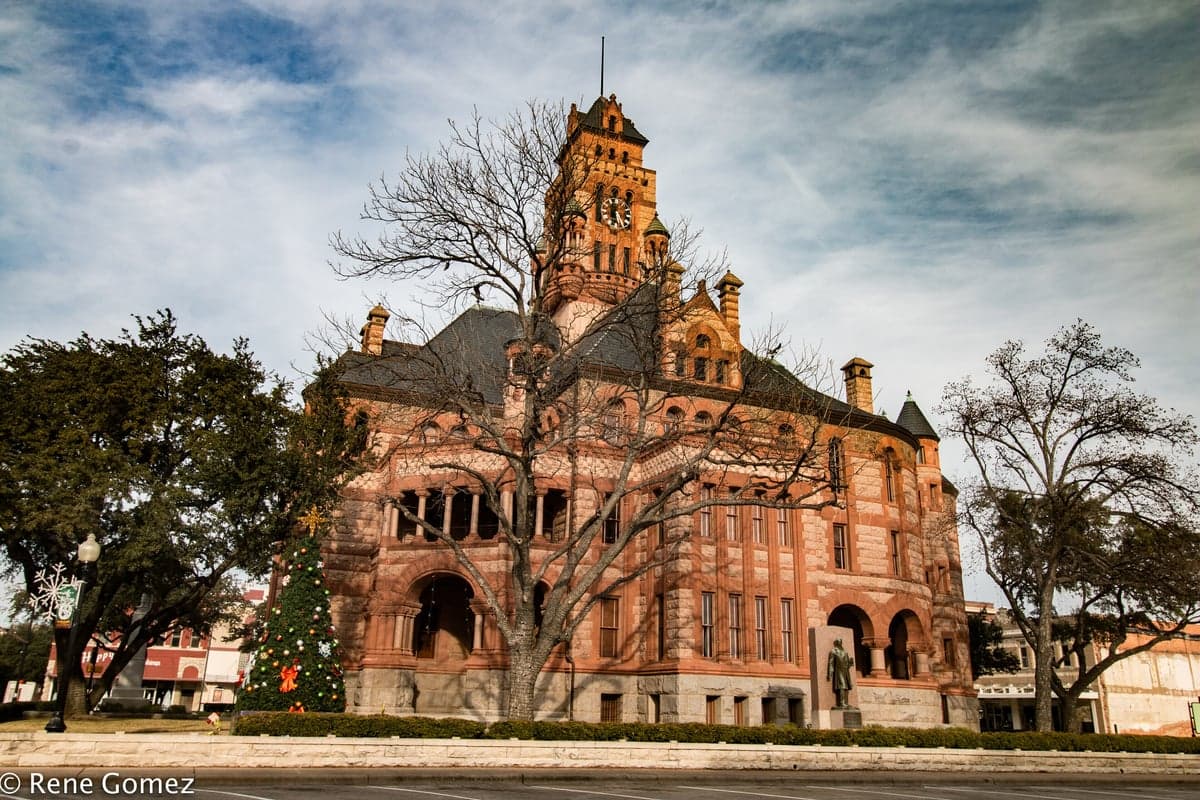
Photo: Wikipedia
Strategic Assessment of Waxahachie, TX
Meaningful friction. Expect exposure to either population pressure, blast zones, or natural disaster risk. Consider buying a retreat property.
What does the Strategic Assessment tell us?
Our Strategic Assessment grades tactical survivability of an area. Major population centers, military targets, fallout zones, natural disasters, and border exposure all drive risk — lower exposure means a more defensible position in a crisis.
This is heavily inspired by Joel Skousen's Strategic Relocation book. Highly recommended you checkout the book ($)What does this tell us?
Our Strategic Assessment grades tactical survivability of an area. Major population centers, military targets, fallout zones, natural disasters, and border exposure all drive risk — lower exposure means a more defensible position in a crisis.
This is heavily inspired by Joel Skousen's Strategic Relocation book. Highly recommended you checkout the book ($)Strategic Pillars

Key Distances
Regional Safe Places
Below is our recommended "safe zones" in Texas and the surrounding area based on our strategic heuristics. For most people, it's unrealistic to live in a “safe zone” full-time due to work, family or other personal reasons. They tend to be more rural. However, many of these areas are perfect for second homes and retreat properties that double as a vacation home or even a short-term rental.

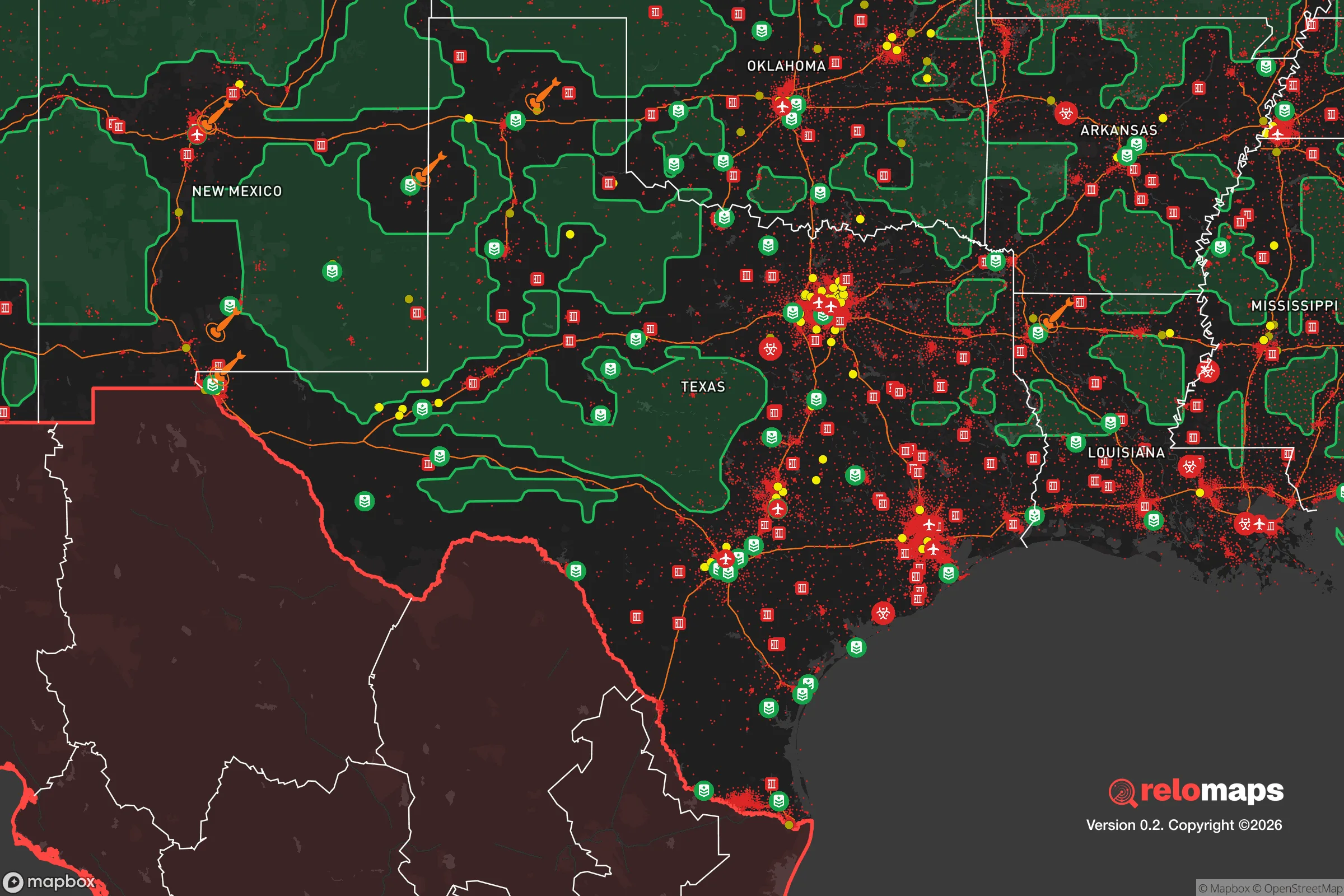


Important Note: For informational purposes only. This does not mean nothing bad ever happens in the green zones. Please use common sense. This is based on public data and modeled with AI. We tried to take a conservative approach but mistakes happen. We update this regularly as new information becomes available.
Solar Generator Recommendations
Backup power matters more here than in safer locations. We've picked three solar generators across budgets and capacity tiers — start with the budget unit if you only need a few essentials, or step up if you want to run a fridge and HVAC for days at a time.

Jackery Portable Power Station Explorer 300
Budget OptionPower on the Go: Weighing only 11 lbs, it's convenient to set up and store with book-sized foldable solar panels

BLUETTI Portable Power Station AC180
Designed for both indoor and outdoor scenarios, AC180 is highly capable as it has a robost capacity and continuous output power.

EF ECOFLOW DELTA Pro Ultra Power Station
Upgraded PickEcoFlow DELTA Pro Ultra is a whole-home energy system designed to grow with your family. Integrated with the Smart Home Panel 2, it scales to meet your evolving energy needs — keeping your home powered, intelligent, and secure through every stage of life.
We earn a commission, at no additional cost to you.
Strategic Assessment Analysis
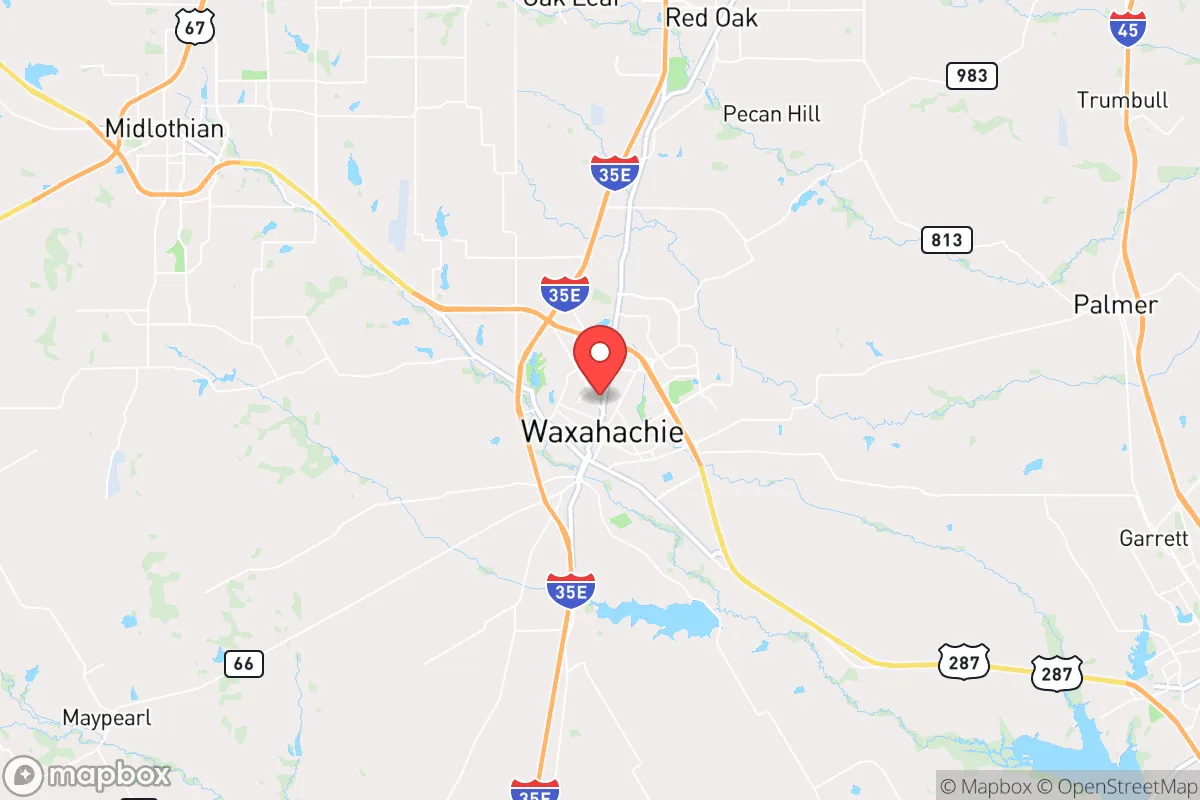
Waxahachie offers a compelling strategic position for those prioritizing resilience and self-sufficiency, sitting roughly 30 miles south of Dallas-Fort Worth in a corridor that balances proximity to metro resources with enough distance to avoid the worst of urban collapse scenarios. The city’s location along the I-35E corridor and its status as the Ellis County seat provide a logistical anchor for preppers and families seeking a defensible base that isn’t completely isolated from supply chains or medical infrastructure. For a conservative audience concerned with civic unrest, mass casualty events, and systemic fragility, Waxahachie presents a mixed but workable picture — one that rewards careful planning and a clear-eyed understanding of its vulnerabilities.
Geographic position and natural advantages for long-term survival
Waxahachie sits on the Blackland Prairie, a region of fertile, deep clay soils that historically supported cotton and grain farming — a significant advantage for anyone serious about food independence. The area’s rolling terrain and scattered woodlots offer some natural cover and defensibility, though it is not mountainous or heavily forested like East Texas. The Trinity River watershed lies to the west, and the North Bosque River runs nearby, providing surface water sources that could be tapped with proper filtration and rights. The local aquifer, the Trinity Group, is a reliable groundwater source for wells, though depths vary and drilling costs should be factored into any prepper property search. The climate is humid subtropical, with hot summers and mild winters, meaning year-round gardening is feasible with season extension techniques. The region’s average annual rainfall of about 37 inches supports rain catchment systems, though drought periods are not uncommon. For a relocator, the key natural advantage is the combination of arable land, accessible groundwater, and a growing season long enough to sustain a family through most disruptions — provided you secure acreage outside the city limits, where zoning and water rights are more favorable.
Risks, exposures, and proximity to fallout-relevant landmarks
The most significant strategic weakness of Waxahachie is its proximity to the Dallas-Fort Worth metroplex, a population center of over 7 million people that would become a catastrophic liability during a mass casualty event, pandemic, or civil unrest scenario. I-35E is a primary evacuation route and a likely chokepoint for refugees fleeing the city, which could turn Waxahachie into a bottleneck for both human traffic and resource competition. The city is also within 50 miles of the Comanche Peak Nuclear Power Plant near Glen Rose, a potential fallout hazard in the event of a meltdown or targeted attack. Additionally, the Union Pacific rail line running through Waxahachie carries hazardous materials, including crude oil and chemicals, which pose a secondary risk of derailment or sabotage. On the positive side, Ellis County is not a known target for strategic strikes, and the area lacks major military installations, dams, or government hubs that would draw direct attention. The real danger is the human wave — the mass movement of desperate populations from Dallas-Fort Worth southward along I-35E and US-287. For a prepper, this means the first 72 hours after a major event are critical: either you have a secure, stocked position with a clear perimeter, or you risk being overrun. The city’s own population of roughly 50,000 is manageable, but the surrounding county’s 200,000-plus residents create a density that complicates long-term isolation.
Practical resilience for a relocator: food, water, energy, and defensibility
For a family or individual serious about self-reliance, Waxahachie’s practical resilience depends heavily on property choice and advance preparation. The city itself has municipal water and power, but these systems are vulnerable to grid failure, cyberattack, or contamination events. A well-equipped rural property within 15-20 minutes of Waxahachie — say, near the communities of Maypearl, Italy, or Forreston — offers a better balance of access and security. Drilling a private well (typically 200-400 feet deep in this area) and installing a solar array with battery storage are essential investments; the region averages over 200 sunny days per year, making solar a viable primary or backup power source. Rainwater catchment is also practical, with metal roofs and first-flush diverters providing a clean supply for drinking and irrigation. For food, the local soil supports vegetables, fruit trees (peaches, plums, figs), and small livestock like chickens, goats, and rabbits. The Ellis County Agricultural Extension office offers soil testing and crop guidance, a resource often overlooked by preppers. Defensibility is moderate: the flat to gently rolling terrain offers limited natural chokepoints, but a well-placed property with a long driveway, perimeter fencing, and clear sightlines can be hardened. The local gun culture is strong, with several gun shops and ranges in the area, and Texas’s constitutional carry law means you can legally defend your home without a permit. However, the lack of natural barriers like mountains or dense forests means you’ll rely more on community networks and situational awareness than on terrain advantage. Building relationships with like-minded neighbors — through churches, local homesteading groups, or the Ellis County Preparedness Network — is arguably the most important resilience factor here.
The overall strategic picture for Waxahachie is one of cautious viability for the conservative prepper. It offers a realistic middle ground: close enough to metro resources for supply runs and medical care during stable times, but far enough to avoid the immediate blast radius of urban collapse. The risks are real — the I-35E corridor is a double-edged sword, and the nuclear plant to the west demands a radiation monitoring plan and a stockpile of potassium iodide. But for those willing to invest in a well, solar, and a defensible rural property, Waxahachie provides a workable base of operations. The key is to treat it as a launch point, not a fortress — a place to build skills, store supplies, and cultivate a network, while always keeping a bug-out plan for deeper rural Texas if the situation deteriorates beyond local containment. In a world of increasing uncertainty, Waxahachie earns a solid B+ as a relocation target for the prepared mind.

* Values derived from national, state, county, city and local statistics and may differ in a specific area. Last updated: 2026-05-16T22:50:22.000Z
Narrative content on this page is AI-generated and may contain mistakes. Verify any details that matter before acting on them.
ReloMaps may earn a commission from affiliate links at no extra cost to you.

