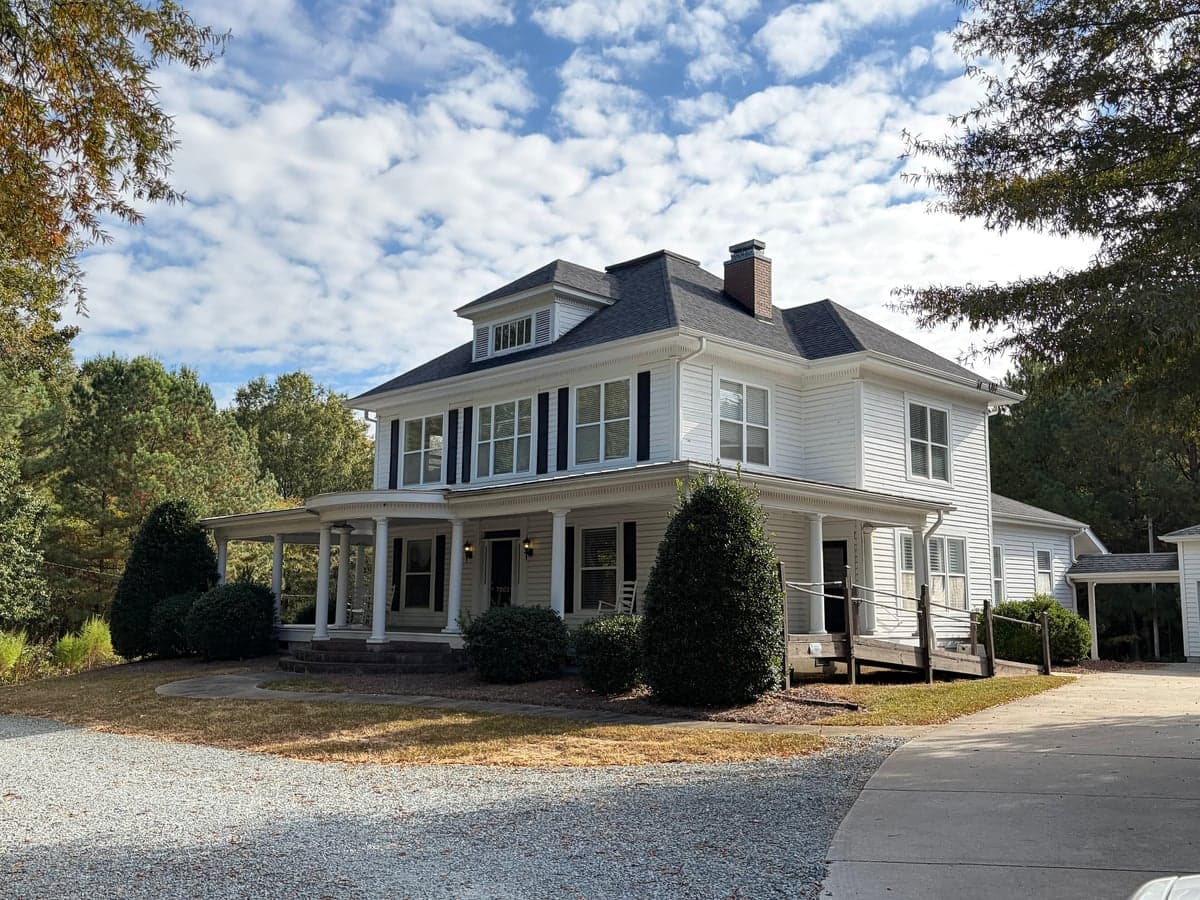
Photo: Wikipedia
Personal Sovereignty in Weddington, NC
Viable for self-reliance. Generally workable, though some barriers may limit total independence.
What does Personal Sovereignty tell us?
Personal Sovereignty measures your capacity for self-reliance and independence with minimal government friction. Higher scores mean fewer barriers between you and the way you want to live... but it assumes you have the space you need and good neighbors.
What does this tell us?
Personal Sovereignty measures your capacity for self-reliance and independence with minimal government friction. Higher scores mean fewer barriers between you and the way you want to live... but it assumes you have the space you need and good neighbors.
State Policy
Energy independence: Importer (15% of energy produced in-state)
Personal Liberty
Homesteading

Personal Liberty Analysis
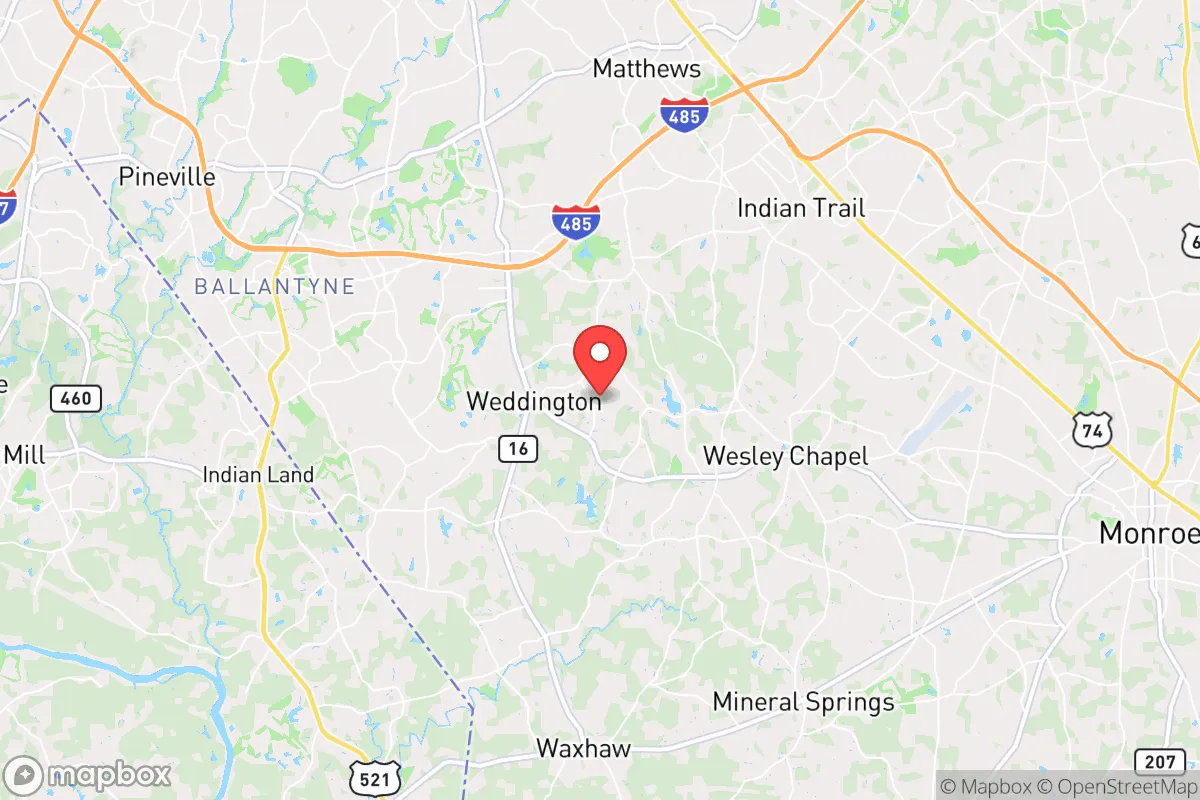
Weddington, North Carolina, offers a notably high degree of personal sovereignty, rooted in the state’s strong preemption laws, a light regulatory touch in Union County, and a culture that prizes self-reliance. For individuals and families who prioritize autonomy—whether in defending their home, raising their children, or building a self-sufficient lifestyle—Weddington provides a legal and practical environment where government intervention is minimal compared to most suburban enclaves in the Southeast. The town’s governance is deliberately lean, and the surrounding county’s ethos aligns with a “leave you alone unless necessary” philosophy, making it a strategic choice for those seeking maximum personal latitude within a stable, low-crime community.
Tax burden and regulatory posture in Union County
Weddington’s tax and regulatory environment is among the most favorable in the Charlotte metro for those seeking to keep more of their earnings and avoid bureaucratic friction. North Carolina has a flat state income tax rate of 4.5% as of 2026, with scheduled reductions toward 3.99% by 2027, and Union County’s property tax rate is approximately $0.57 per $100 of assessed value—well below the state average and significantly lower than Mecklenburg County’s $0.82 rate just across the line. There is no local city property tax in Weddington itself, as the town contracts services rather than operating a full municipal bureaucracy. The effective total property tax rate for a Weddington homeowner is roughly 0.57% of assessed value, which on a $600,000 home amounts to about $3,420 annually—roughly half what a comparable property in Charlotte would cost. Sales tax in Union County is 7.25%, the state minimum, and there are no special local option taxes for transit or schools. Business regulation is similarly light: Union County does not impose local business privilege licenses beyond the state’s minimal requirements, and home-based businesses are permitted by right in most residential zoning districts as long as they do not generate significant traffic or noise. The town’s zoning code is straightforward, with no overlay districts, historic preservation ordinances, or design review boards that would constrain how a homeowner modifies their property. For a reader who values keeping taxes low and regulatory hurdles minimal, Weddington represents a deliberate low-touch jurisdiction.
Self-defense and gun law specifics in Weddington
Weddington sits in a state with some of the strongest self-defense protections in the country, and local enforcement culture fully respects those rights. North Carolina is a “shall issue” state for concealed carry permits, meaning the Union County Sheriff’s Office must issue a permit to any qualified applicant who passes a background check and completes a firearms safety course—no discretion, no subjective “good cause” requirement. North Carolina also has a Stand Your Ground law, codified in G.S. 14-51.2, which eliminates any duty to retreat before using deadly force when lawfully present in any place, including public spaces. This is not a “castle doctrine” state that limits self-defense to the home; the protection extends to vehicles, workplaces, and sidewalks. Open carry of handguns is legal without a permit for anyone 18 or older who can legally possess a firearm, and long guns are unrestricted. Weddington itself has no local gun ordinances—the town defers entirely to state preemption, which prohibits cities and counties from enacting any firearm regulations stricter than state law. There are no waiting periods, no magazine capacity limits, and no firearm registration requirements. The Union County Sheriff’s Office processes concealed carry permits efficiently, typically within 45 days, and the county has a strong culture of lawful gun ownership. For a family prioritizing the ability to defend themselves without bureaucratic obstacles, Weddington offers a legal framework that is as permissive as any in the eastern United States.
Self-reliance and homesteading viability: lot sizes, zoning, and off-grid feasibility
Weddington’s residential zoning and lot size requirements create genuine opportunities for self-reliance, though the degree varies by subdivision. The town’s minimum lot size in the predominant R-40 district is 40,000 square feet—just under one acre—and many neighborhoods feature lots of one to three acres, with some estate areas offering five acres or more. This acreage is sufficient for substantial vegetable gardens, small orchards, chicken coops, and even a single horse or two goats under Union County’s animal ordinances, which allow up to four domestic fowl and two large livestock animals per acre without a special permit. Rainwater collection is unrestricted, and there are no county or town ordinances prohibiting solar panel installation on residential rooftops—though homeowners’ associations (HOAs) in some subdivisions may impose aesthetic restrictions, so a buyer should verify HOA covenants before purchasing. Composting toilets and graywater systems are permitted under North Carolina’s plumbing code for single-family residences, provided they meet state health department standards, and several Weddington-area properties already use septic systems rather than municipal sewer, which gives a homeowner more control over waste management. Off-grid feasibility is realistic on larger parcels: a property with a well, septic, and solar panels could operate independently of utility grids for extended periods, though the town does require connection to the electrical grid for new construction. For a family that wants to grow food, keep animals, and reduce reliance on external systems, Weddington’s zoning and lot sizes provide a legal foundation that is rare in a metro-area suburb.
Personal liberties: parental rights, medical autonomy, speech, and property
Weddington’s location in Union County places it within a legal and cultural environment that strongly emphasizes parental rights, medical freedom, and property autonomy. North Carolina law gives parents broad authority over their children’s education, medical decisions, and upbringing, with no state-level mandates for childhood vaccinations beyond the standard school-entry requirements, which include a religious exemption option. Union County Public Schools does not require masks, vaccines, or COVID-19 testing for student attendance, and the school board has consistently voted to maintain parental opt-out rights for sex education and sensitive health surveys. Medical autonomy for adults is similarly robust: North Carolina does not have a state vaccine passport system, and there are no mandates for COVID-19 or influenza vaccines for general employment or public access. Telehealth and direct-primary-care arrangements are legal and growing in the region, giving residents options outside the traditional insurance-based system. Free speech and religious exercise are protected by both state law and local culture; Weddington has no noise ordinances that restrict amplified speech beyond reasonable hours, and there are no local hate speech or “bias incident” ordinances that could chill political or religious expression. Property rights are further strengthened by North Carolina’s right-to-farm law, which protects agricultural activities from nuisance lawsuits if a farm has been operating for more than one year—relevant for anyone keeping livestock or running a small farm stand on their Weddington acreage. The town also does not impose rental registration or occupancy limits beyond the state building code, giving property owners full control over how they use their land.
Overall, Weddington offers a sovereignty profile that is markedly higher than most Charlotte-area suburbs and competitive with rural North Carolina counties, while retaining proximity to a major metro economy. The combination of low taxes, minimal local regulation, strong self-defense laws, and zoning that supports genuine self-reliance makes it a strategic relocation choice for individuals and families who prioritize personal freedom. For a reader weighing autonomy against convenience, Weddington delivers the best of both: the legal and practical infrastructure for a self-directed life, within 25 minutes of Charlotte’s jobs, airports, and healthcare. It is not a libertarian enclave in the strict sense—there are HOAs in some neighborhoods, and the town does enforce basic building codes—but for someone who wants to live largely unbothered by government, with the ability to defend, provide for, and educate their family on their own terms, Weddington ranks among the top options in the Carolinas.

* Values derived from national, state, county, city and local statistics and may differ in a specific area. Last updated: 2026-08-16T20:34:13.000Z
Narrative content on this page is AI-generated and may contain mistakes. Verify any details that matter before acting on them.
ReloMaps may earn a commission from affiliate links at no extra cost to you.

