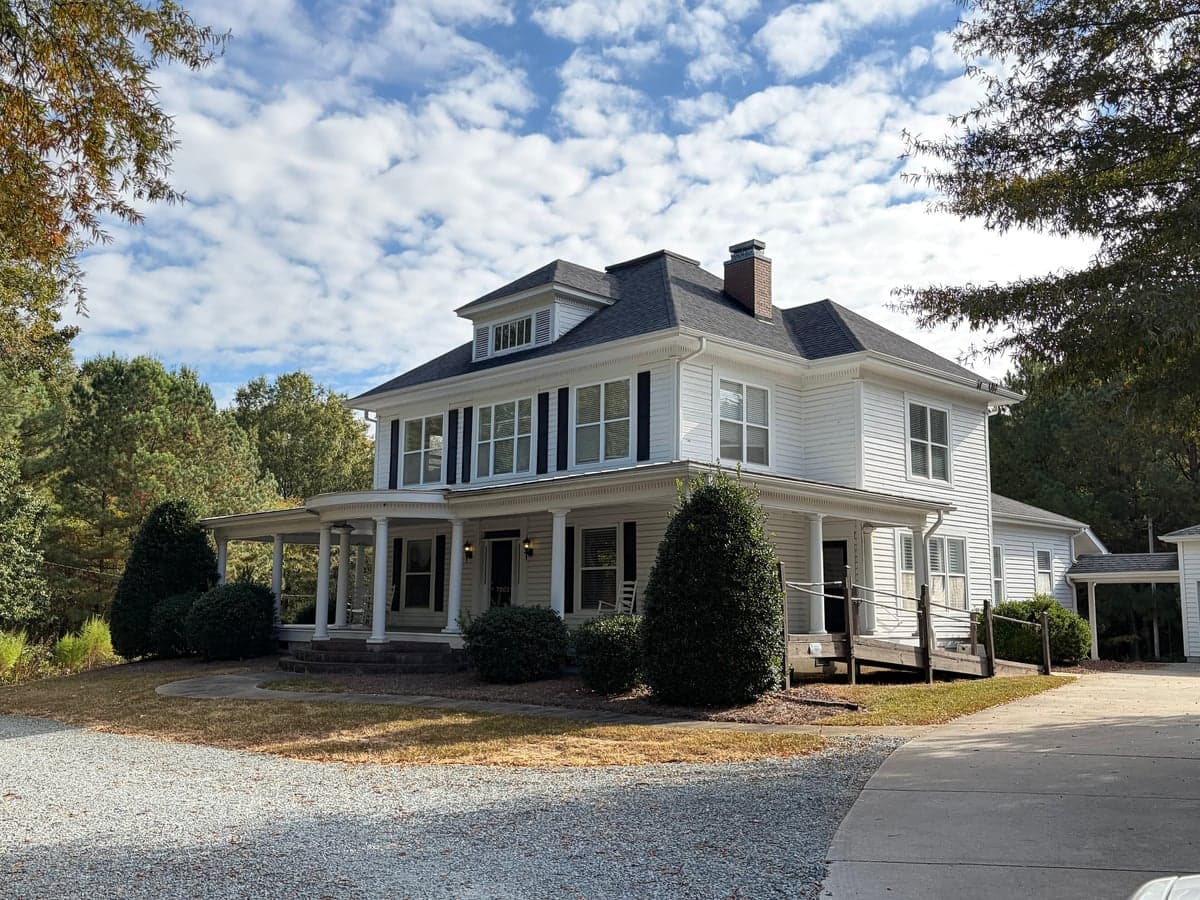
Photo: Wikipedia
Strategic Assessment of Weddington, NC
Meaningful friction. Expect exposure to either population pressure, blast zones, or natural disaster risk. Consider buying a retreat property.
What does the Strategic Assessment tell us?
Our Strategic Assessment grades tactical survivability of an area. Major population centers, military targets, fallout zones, natural disasters, and border exposure all drive risk — lower exposure means a more defensible position in a crisis.
This is heavily inspired by Joel Skousen's Strategic Relocation book. Highly recommended you checkout the book ($)What does this tell us?
Our Strategic Assessment grades tactical survivability of an area. Major population centers, military targets, fallout zones, natural disasters, and border exposure all drive risk — lower exposure means a more defensible position in a crisis.
This is heavily inspired by Joel Skousen's Strategic Relocation book. Highly recommended you checkout the book ($)Strategic Pillars

Key Distances
Regional Safe Places
Below is our recommended "safe zones" in North Carolina and the surrounding area based on our strategic heuristics. For most people, it's unrealistic to live in a “safe zone” full-time due to work, family or other personal reasons. They tend to be more rural. However, many of these areas are perfect for second homes and retreat properties that double as a vacation home or even a short-term rental.

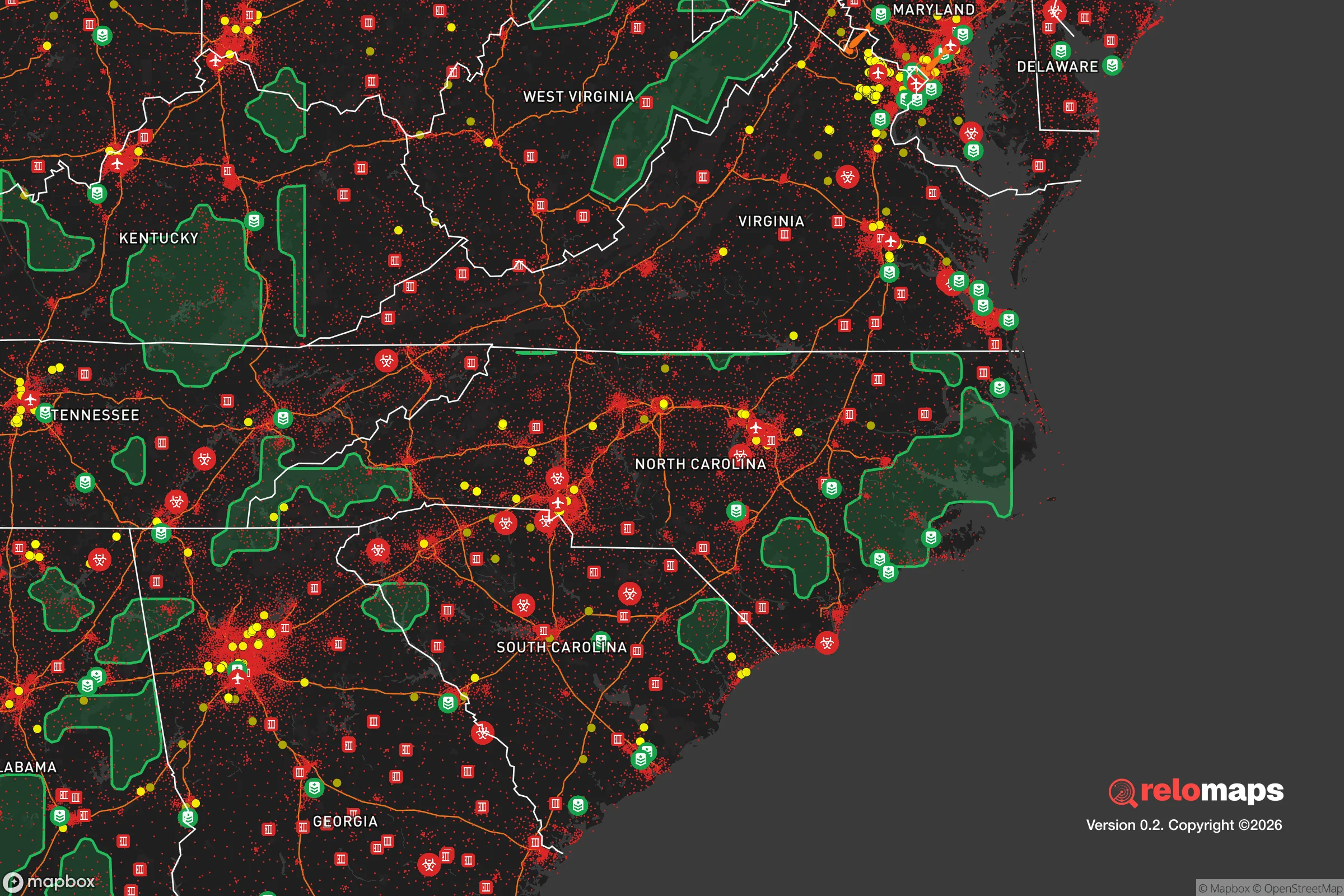


Important Note: For informational purposes only. This does not mean nothing bad ever happens in the green zones. Please use common sense. This is based on public data and modeled with AI. We tried to take a conservative approach but mistakes happen. We update this regularly as new information becomes available.
Solar Generator Recommendations
Backup power matters more here than in safer locations. We've picked three solar generators across budgets and capacity tiers — start with the budget unit if you only need a few essentials, or step up if you want to run a fridge and HVAC for days at a time.

Jackery Portable Power Station Explorer 300
Budget OptionPower on the Go: Weighing only 11 lbs, it's convenient to set up and store with book-sized foldable solar panels

BLUETTI Portable Power Station AC180
Designed for both indoor and outdoor scenarios, AC180 is highly capable as it has a robost capacity and continuous output power.

EF ECOFLOW DELTA Pro Ultra Power Station
Upgraded PickEcoFlow DELTA Pro Ultra is a whole-home energy system designed to grow with your family. Integrated with the Smart Home Panel 2, it scales to meet your evolving energy needs — keeping your home powered, intelligent, and secure through every stage of life.
We earn a commission, at no additional cost to you.
Strategic Assessment Analysis
Weddington, North Carolina, presents a compelling case for the relocation-minded reader who prioritizes long-term stability and strategic positioning over urban convenience. Its primary resilience advantage stems from a combination of low natural disaster risk, a location that is close enough to major economic hubs for access but far enough to avoid their most acute vulnerabilities, and a community structure that supports a degree of self-sufficiency. For a family or individual thinking seriously about disaster readiness, Weddington offers a rare balance: the infrastructure and economic buffer of a Charlotte exurb without the density, traffic, or target profile of a major metro area.
Geographic position and natural advantages for long-term stability
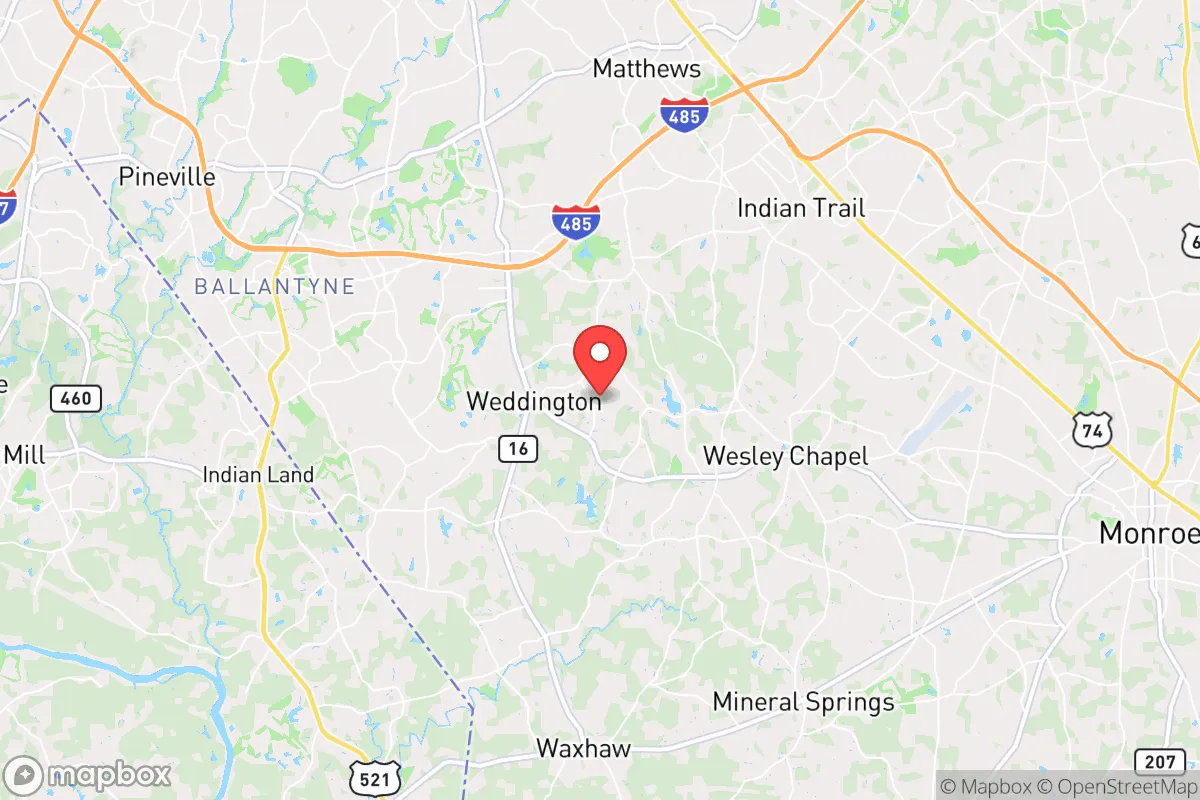
Weddington sits in southern Union County, roughly 25 miles southeast of Charlotte. This placement is significant. The area is inland enough to be insulated from hurricane storm surge and the worst of coastal flooding, yet it avoids the seismic or wildfire risks common in the western part of the state. The local topography is gently rolling Piedmont terrain, which provides natural drainage and reduces the risk of standing floodwater compared to flatter coastal plains. The Catawba River system, while not immediately adjacent, feeds the region's water table and supports a reliable groundwater supply for wells—a critical factor for anyone evaluating long-term water independence. The climate is temperate, with four distinct seasons but no extreme temperature swings that would stress off-grid energy or food systems. For a relocator, this means fewer "reset" events: no annual hurricane rebuilds, no wildfire evacuations, and no deep freezes that collapse infrastructure for weeks.
Risks, exposures, and proximity to fallout-relevant landmarks
No strategic assessment is honest without addressing the downsides. Weddington's primary risk is its proximity to Charlotte, a major financial center and transportation hub. In a national-level disruption—whether economic collapse, grid failure, or geopolitical conflict—Charlotte is a high-probability target for both physical and cyber threats. Weddington sits within the blast-radius-adjacent zone for any large-scale event aimed at the city's banking infrastructure or airport (Charlotte Douglas International). Additionally, the area is within roughly 100 miles of two nuclear power plants: Catawba Nuclear Station (about 30 miles southwest) and McGuire Nuclear Station (about 40 miles northwest). While both have strong safety records, any major incident at either would place Weddington in a downwind risk zone depending on weather patterns. On the natural hazard side, the region experiences occasional tornadoes and severe thunderstorms, but these are typically isolated and not the kind of widespread, grid-crippling events seen in the Plains or Gulf Coast. The real risk here is not acute disaster but systemic fragility: Weddington is a bedroom community, meaning most residents commute to Charlotte for work. A prolonged disruption to the Charlotte economy or transportation network would ripple through the local population quickly.
Practical resilience for a relocator: food, water, energy, and defensibility
For the reader serious about self-sufficiency, Weddington offers a mixed but workable profile. Water: The area is not water-scarce. Annual rainfall averages around 45 inches, and the water table is accessible for private wells in most parts of the county. Municipal water is provided by Union County Public Works, which draws from the Catawba River, but a well-equipped property is a realistic goal here. Food: Union County still has significant agricultural land, and local farms, farmers markets, and CSAs are common. The growing season runs from April to October, supporting a wide range of vegetables, fruits, and livestock. For a family looking to establish a substantial garden or small homestead, the soil and climate are cooperative. Energy: Duke Energy dominates the grid, which is reliable under normal conditions but vulnerable to cascading failures in a regional event. Solar is a viable supplement—the area gets about 215 sunny days per year, slightly above the national average—and local ordinances are generally favorable for residential solar installations. Battery backup or a generator is a practical addition for anyone wanting to ride out a multi-day outage. Defensibility: Weddington is not a fortress. It is a suburban-to-rural transition zone with good road access (Highway 74, I-485 nearby) but also multiple egress routes, which is a double-edged sword. In a crisis, the same roads that allow you to leave also allow others to enter. The community is low-density enough that a well-chosen property with some acreage and a setback from main roads offers meaningful privacy and security. The local law enforcement presence (Union County Sheriff's Office) is professional and responsive, but in a prolonged disruption, residents would largely be on their own—which is exactly the scenario the prepared relocator is planning for.
The overall strategic picture for Weddington is one of moderate, not extreme, resilience. It is not a remote bunker location, nor is it a high-risk urban core. It occupies a middle ground that may be ideal for the relocator who wants to maintain professional and social connections to Charlotte while building a home base that can withstand most common disruptions. The key trade-off is access versus vulnerability: you are close enough to benefit from Charlotte's hospitals, supply chains, and job market, but close enough also to be affected by its crises. For a family that invests in a well, solar capacity, food storage, and a defensible property layout, Weddington offers a realistic path to a prepared lifestyle without the isolation or extreme climate challenges of more remote alternatives. It is a sensible, not sensational, choice—and for the strategic thinker, that is often the best kind.

* Values derived from national, state, county, city and local statistics and may differ in a specific area. Last updated: 2026-08-16T20:34:13.000Z
Narrative content on this page is AI-generated and may contain mistakes. Verify any details that matter before acting on them.
ReloMaps may earn a commission from affiliate links at no extra cost to you.

