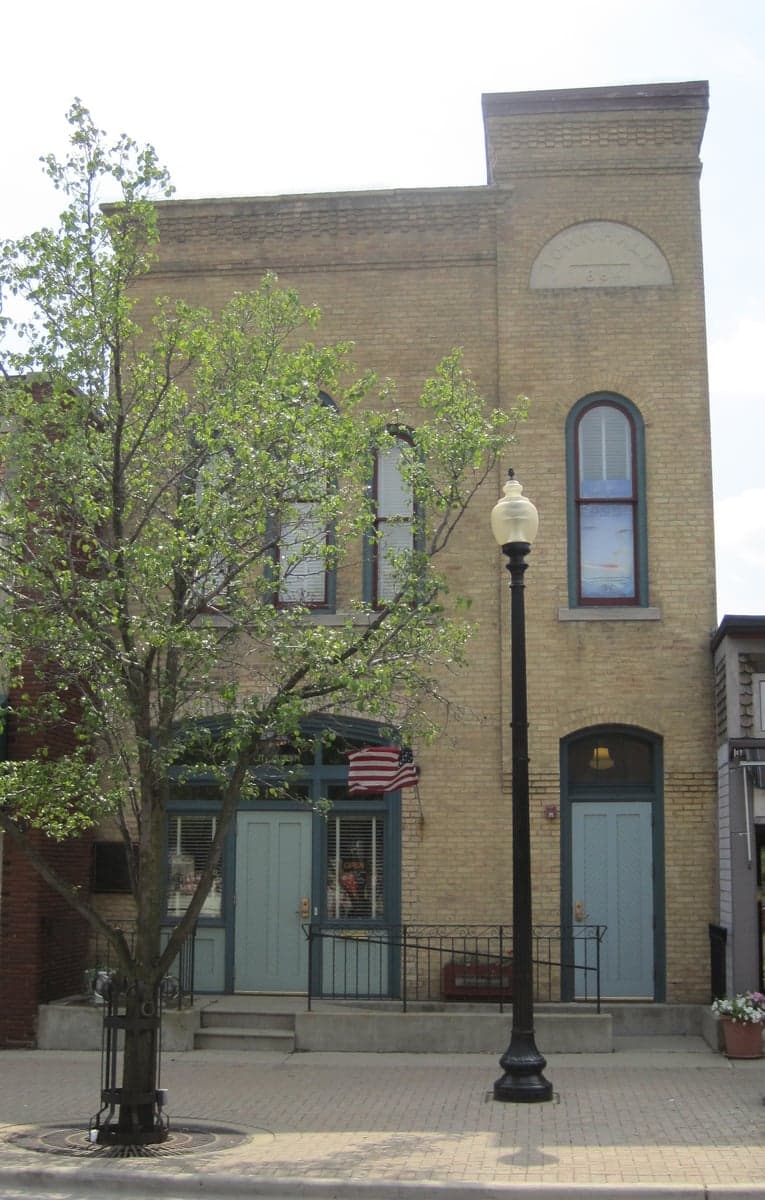
Photo: Wikipedia
Strategic Assessment of West Chicago, IL
Multiple tactical vulnerabilities. Population density, target proximity, or disaster risk are likely compounding. A retreat property and exit planning is required.
What does the Strategic Assessment tell us?
Our Strategic Assessment grades tactical survivability of an area. Major population centers, military targets, fallout zones, natural disasters, and border exposure all drive risk — lower exposure means a more defensible position in a crisis.
This is heavily inspired by Joel Skousen's Strategic Relocation book. Highly recommended you checkout the book ($)What does this tell us?
Our Strategic Assessment grades tactical survivability of an area. Major population centers, military targets, fallout zones, natural disasters, and border exposure all drive risk — lower exposure means a more defensible position in a crisis.
This is heavily inspired by Joel Skousen's Strategic Relocation book. Highly recommended you checkout the book ($)Strategic Pillars

Key Distances
Regional Safe Places
Below is our recommended "safe zones" in Illinois and the surrounding area based on our strategic heuristics. For most people, it's unrealistic to live in a “safe zone” full-time due to work, family or other personal reasons. They tend to be more rural. However, many of these areas are perfect for second homes and retreat properties that double as a vacation home or even a short-term rental.
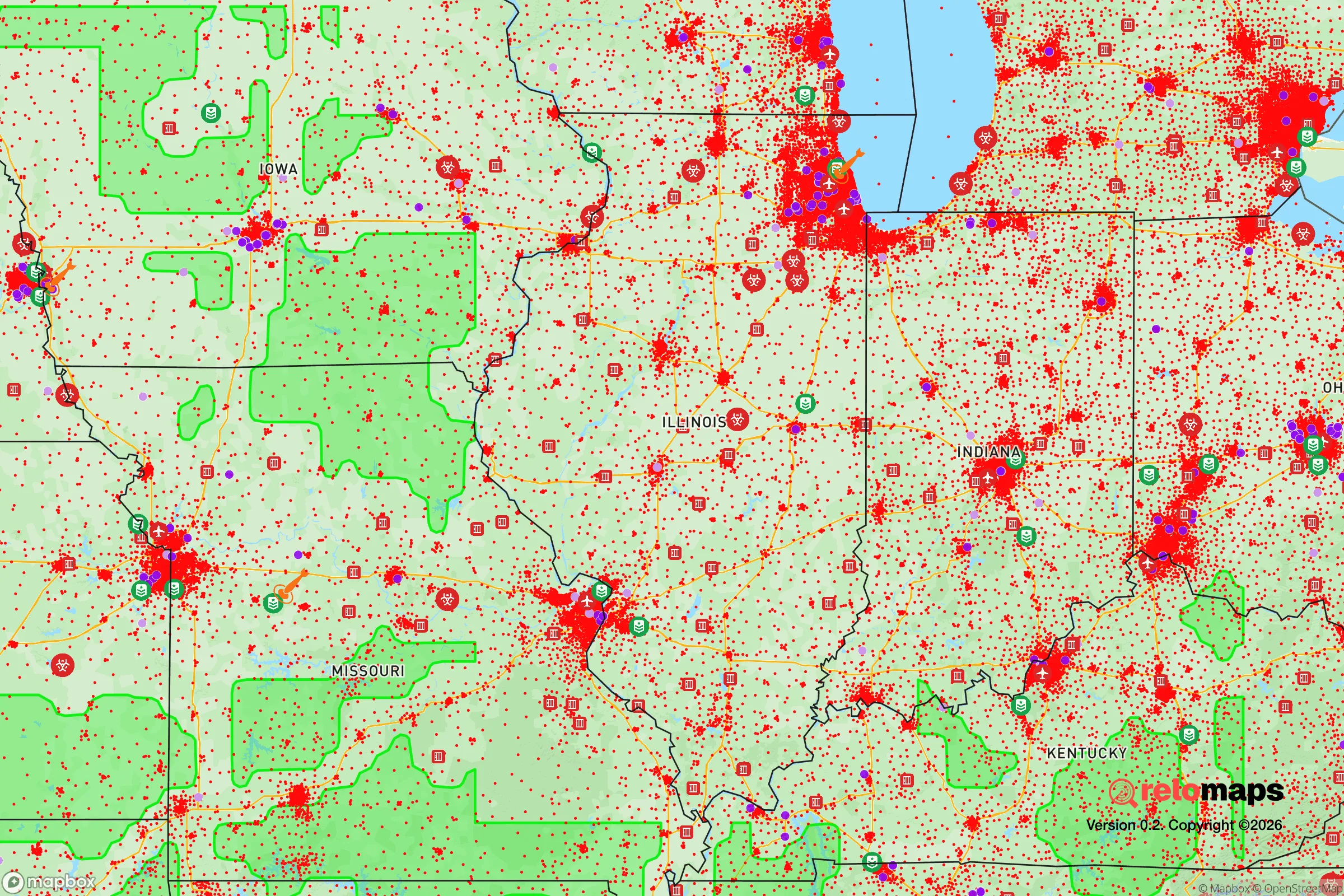
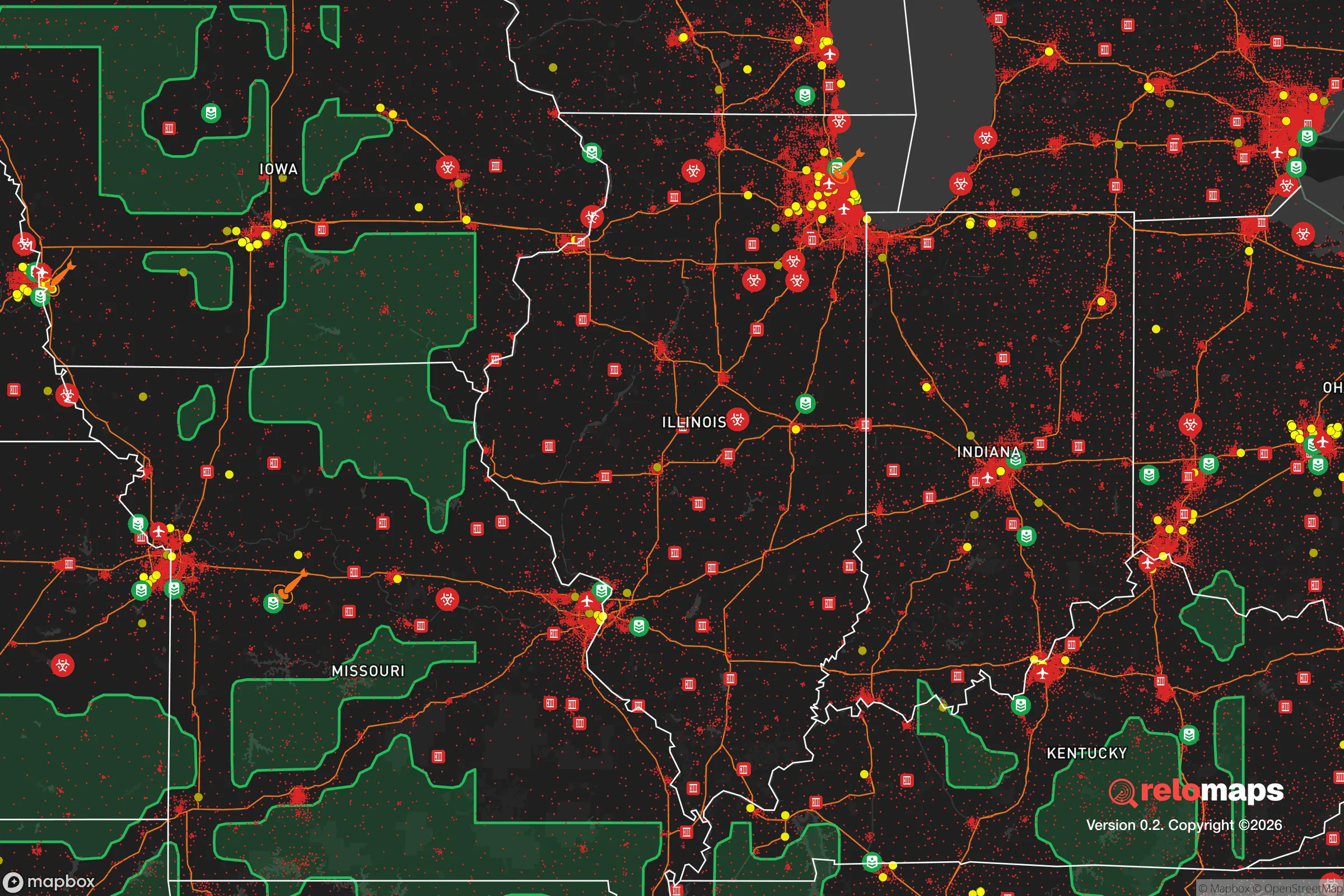


Important Note: For informational purposes only. This does not mean nothing bad ever happens in the green zones. Please use common sense. This is based on public data and modeled with AI. We tried to take a conservative approach but mistakes happen. We update this regularly as new information becomes available.
Solar Generator Recommendations
Backup power matters more here than in safer locations. We've picked three solar generators across budgets and capacity tiers — start with the budget unit if you only need a few essentials, or step up if you want to run a fridge and HVAC for days at a time.

Jackery Portable Power Station Explorer 300
Budget OptionPower on the Go: Weighing only 11 lbs, it's convenient to set up and store with book-sized foldable solar panels

BLUETTI Portable Power Station AC180
Designed for both indoor and outdoor scenarios, AC180 is highly capable as it has a robost capacity and continuous output power.

EF ECOFLOW DELTA Pro Ultra Power Station
Upgraded PickEcoFlow DELTA Pro Ultra is a whole-home energy system designed to grow with your family. Integrated with the Smart Home Panel 2, it scales to meet your evolving energy needs — keeping your home powered, intelligent, and secure through every stage of life.
We earn a commission, at no additional cost to you.
Strategic Assessment Analysis
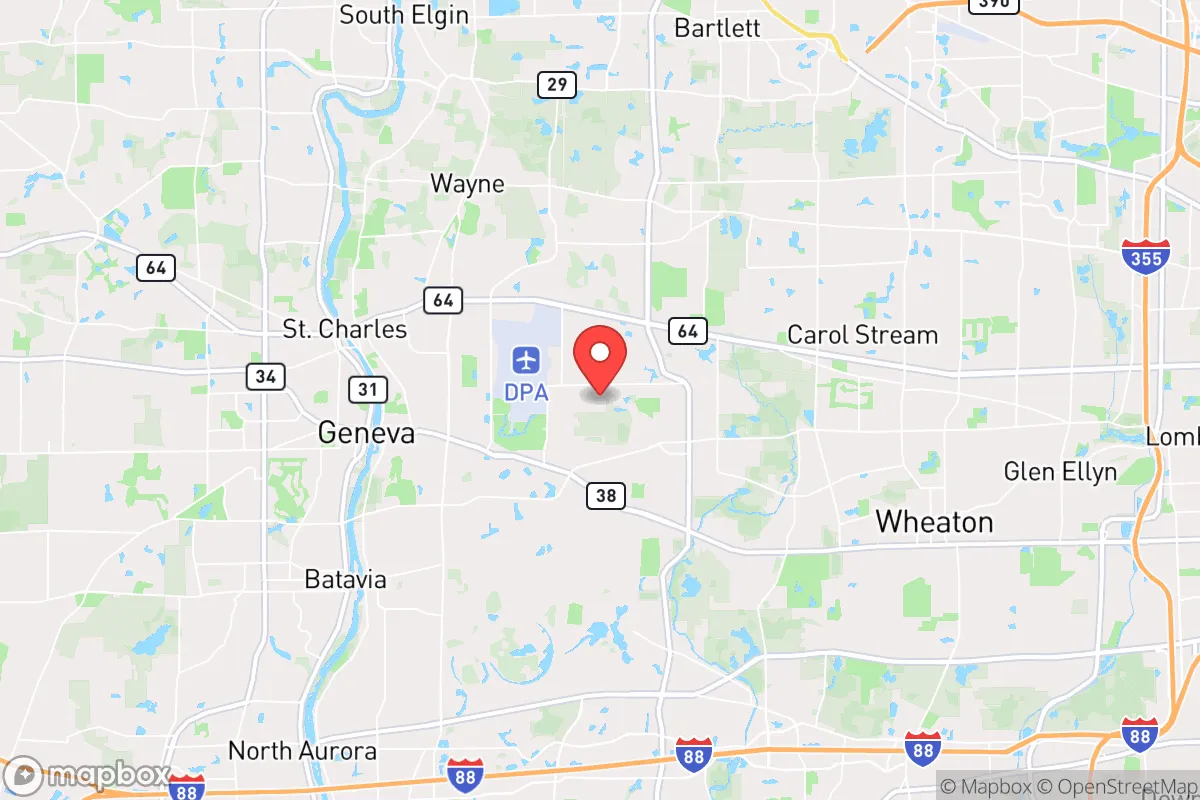
West Chicago, Illinois, offers a surprisingly strategic position for a relocator weighing disaster readiness and self-sufficiency, provided you understand its trade-offs. Located roughly 35 miles west of downtown Chicago, the city sits on the edge of the sprawling metropolitan area, giving you access to regional resources while maintaining a distinct small-city character. Its resilience profile is a mixed bag: strong in terms of local governance and infrastructure, but exposed to the vulnerabilities that come with proximity to a major urban center and its associated critical infrastructure.
Geographic position and natural advantages for self-sufficiency
West Chicago’s location in DuPage County places it on the western fringe of the Chicago metro, a zone that transitions from dense suburbia to more rural farmland as you head further west. The area sits on relatively flat, well-drained glacial till, which means flooding risks are moderate compared to riverfront communities. The DuPage River runs through the city, but the floodplain is largely confined to parkland and open space, not dense residential areas. The region’s natural advantages include a temperate climate with four distinct seasons, reliable annual rainfall (around 36 inches), and a growing season long enough for serious gardening—roughly 160 days from last frost to first frost. The soil is fertile, a legacy of the prairie, and many residents already maintain vegetable gardens or participate in community agriculture. For a relocator focused on self-sufficiency, the ability to grow food locally is a real plus, and the area’s numerous forest preserves—like the nearby Pratt’s Wayne Woods and the West Chicago Prairie—offer foraging and hunting opportunities, though you’ll need to navigate state regulations. The biggest natural advantage is the absence of major natural disaster threats: no hurricanes, no earthquakes, no wildfires of significance, and tornadoes, while possible, are less frequent and less intense than in the Great Plains. The region’s primary natural risk is winter storms, which can knock out power for days, but the local infrastructure is well-adapted to snow and ice.
Risks, exposures, and proximity to fallout-relevant landmarks
The most significant risk for West Chicago is its proximity to Chicago and the critical infrastructure that serves the region. The city is about 10 miles from the Fermi National Accelerator Laboratory (Fermilab) in Batavia, a major particle physics research facility. While Fermilab is not a nuclear power plant, it does contain radioactive materials and has a history of environmental remediation. More directly, West Chicago is within 30 miles of the Braidwood Generating Station, a nuclear power plant in Will County, and the Dresden Generating Station in Grundy County. Both are operational, and while the Nuclear Regulatory Commission rates them as safe, any major incident would place West Chicago in the plume exposure pathway. The city is also within 40 miles of O’Hare International Airport, a major transportation hub and potential target for man-made threats. The presence of large rail yards, chemical storage facilities, and industrial corridors along the I-88 and I-290 corridors adds to the risk profile. For a relocator thinking about fallout or man-made disasters, the key takeaway is that West Chicago is not remote—it’s embedded in a region with high-value targets. The city’s water supply comes from Lake Michigan via the DuPage Water Commission, a centralized system that is vulnerable to contamination or disruption. The electrical grid is part of the PJM Interconnection, which is generally reliable but has faced strain during extreme weather events. The area’s defensibility is limited: it’s a suburban grid of streets, not a rural homestead, and evacuation routes (primarily I-88, I-290, and Route 59) can become congested quickly. The city’s police and fire departments are well-funded and professional, but they are not equipped for large-scale civil defense scenarios.
Practical resilience for a relocator: food, water, energy, and defensibility
For a relocator serious about self-sufficiency, West Chicago offers a mixed picture. Food resilience is moderate: the city has several grocery stores, including a Jewel-Osco and a Walmart, but these are dependent on just-in-time supply chains. Local farmers’ markets operate seasonally, and the DuPage County area has a strong network of community-supported agriculture (CSA) programs. Growing your own food is feasible—many homes have yards large enough for vegetable gardens, and the city allows backyard chickens (with a permit). However, the soil in some areas has historical contamination from the city’s past as a center for radium processing (the former Lindsay Light & Chemical site), so you should test your soil before planting. Water resilience is a concern: the city’s water comes from Lake Michigan, treated and piped in. In a grid-down scenario, you would need your own well or stored water. Most homes in West Chicago are on municipal water, not private wells, so drilling a new well is expensive and may not be permitted. Rainwater collection is legal in Illinois but regulated, and you’d need a system to store enough for drinking and irrigation. Energy resilience is improving: the grid is reliable but not immune to outages. Solar panels are increasingly common, and net metering is available through ComEd. Battery storage is a smart investment, as natural gas generators can be noisy and require fuel. The area’s defensibility is low—it’s a typical suburban layout with open streets, no natural chokepoints, and a population density that makes it hard to secure a perimeter. However, the community is generally law-abiding, and the local police are responsive. For a relocator, the best strategy is to choose a home on a cul-de-sac or with a large lot, ideally with a basement for shelter and storage. The city’s proximity to rural areas (like Kane and DeKalb counties) means you can drive 20 minutes west and find farmland, hunting land, and more defensible properties—but that’s not West Chicago itself.
Overall, West Chicago is a reasonable choice for a relocator who wants to stay close to Chicago’s economic opportunities while maintaining a baseline of resilience. It’s not a bug-out location or a self-sufficient homestead, but it offers a solid foundation for a prepared household. The key is to acknowledge the risks—proximity to nuclear plants, centralized water and power, and limited defensibility—and mitigate them through personal preparedness: stored water, backup power, a garden, and a plan for evacuation if needed. For a family or individual who values community, infrastructure, and access to resources, West Chicago works as a strategic base. For someone seeking true independence and low risk, you’ll want to look further west, past the Fox River, where the population thins and the land opens up. But if you’re willing to trade some vulnerability for convenience and opportunity, West Chicago is a solid, if not exceptional, choice.

* Values derived from national, state, county, city and local statistics and may differ in a specific area. Last updated: 2026-08-10T03:24:24.000Z
Narrative content on this page is AI-generated and may contain mistakes. Verify any details that matter before acting on them.
ReloMaps may earn a commission from affiliate links at no extra cost to you.

