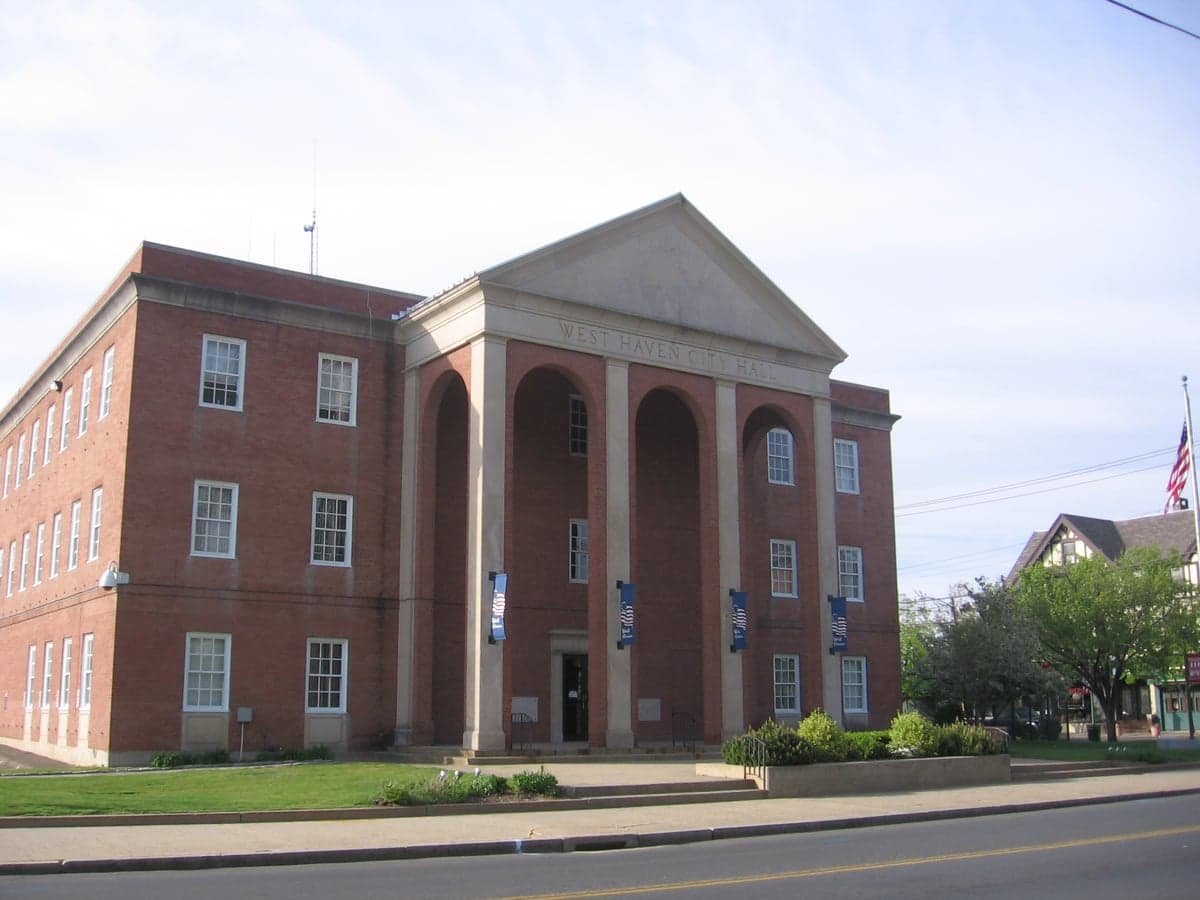
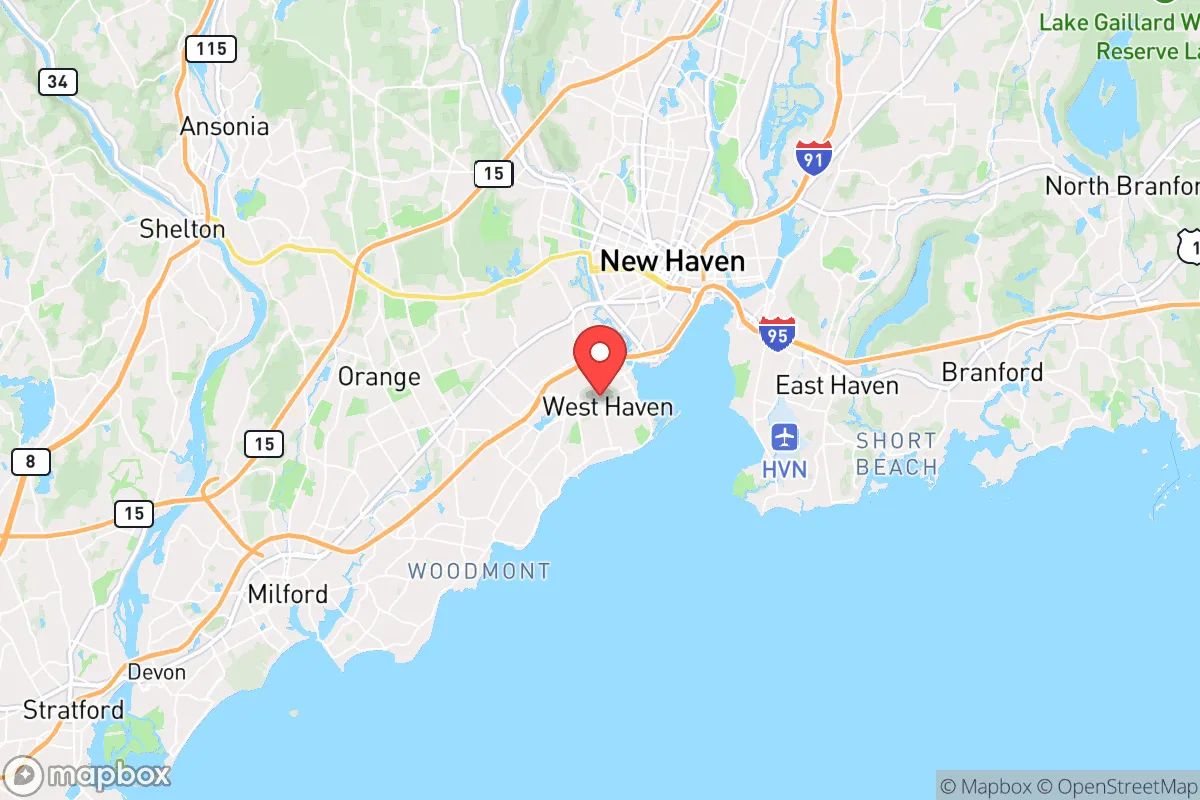
Photo: Wikipedia
Demographics of West Haven, CT
Affluence Level in West Haven, CT
A below-average socioeconomic profile. Incomes, home values, and educational attainment trail the U.S., with higher poverty and unemployment.
People of West Haven, CT
West Haven, Connecticut, is a densely settled coastal city of 55,147 residents where no single ethnic group holds a majority. Its population is a layered mix of older Italian and Irish Catholic families, a substantial Black and Hispanic community, and growing pockets of East/Southeast Asian and Indian-subcontinent households. The city’s identity is shaped by its blue-collar roots, its proximity to New Haven, and a recent demographic shift that has transformed it from a nearly all-white suburb into one of the most diverse municipalities in New Haven County.
How the city was settled and grew
West Haven’s early history was tied to its coastal location and its role as a farming and oystering outpost of New Haven. The area was originally part of the New Haven Colony, settled in the 1640s by English Puritans who established small farms along the shore. The first distinct neighborhood to emerge was Allingtown, named after the Alling family, which became a small village center for farmers and mill workers. By the mid-19th century, the arrival of the railroad spurred the development of West Haven Green as a commercial hub, and the town began attracting Irish immigrants who worked on the railroad and in the oyster beds. The late 1800s and early 1900s brought a wave of Italian immigrants, who settled heavily in the Savin Rock and Beach Street areas, building the amusement park and beachfront economy that defined the city for decades. German and Polish families also arrived during this period, filling factory jobs at the Armstrong Rubber Company and other industrial plants. By 1950, West Haven was overwhelmingly white, with Italian and Irish Catholics forming the dominant cultural and political bloc.
Modern era (post-1965)
The 1965 Hart-Cellar Act and the broader suburbanization of New Haven reshaped West Haven’s population dramatically. The city incorporated in 1961, and as New Haven’s Black population grew and white flight accelerated, Black families began moving into West Haven’s more affordable housing stock, particularly in the Campbell Avenue and Dexter Street corridors. By 1980, the Black share of the population had risen to roughly 12%, and it has since climbed to 18.2%. The Hispanic population, initially Puerto Rican, began arriving in the 1970s and 1980s, settling in the Ocean Avenue and Ella Grasso Boulevard areas. Today, the Hispanic share stands at 26.5%, with a growing Dominican and Mexican presence. The Asian population, at 2.8%, is largely Vietnamese and Filipino, concentrated in the West Shore neighborhood near the University of New Haven. The Indian-subcontinent population, at 1.9%, is a more recent arrival, drawn by tech and healthcare jobs in the New Haven region, and is scattered but visible in the Allingtown area near the university. The white population, now 46.7%, has aged and shrunk, with many younger white families moving to outer suburbs like Orange and Milford.
The future
West Haven’s population is trending toward a tri-ethnic balance of white, Hispanic, and Black residents, with smaller but stable Asian and Indian communities. The city is not homogenizing; rather, it is tribalizing into distinct enclaves. The white population continues to decline slowly, while the Hispanic share is growing through both immigration and higher birth rates. The Black population is plateauing, as younger Black families move to cheaper inland towns. The East/Southeast Asian and Indian communities are small but growing, driven by the University of New Haven’s expansion and proximity to Yale-New Haven Hospital. The foreign-born share of 10.5% is moderate for Connecticut but rising. Over the next 10-20 years, West Haven will likely become a majority-minority city, with Hispanics becoming the largest single group. The city’s affordable housing stock and coastal location will continue to attract immigrants and younger families, but the aging white population and slow job growth may limit overall population growth.
For someone moving in now, West Haven offers a genuinely diverse, working-class city with strong neighborhood identities and a convenient location near New Haven. It is not a homogenizing suburb but a place where distinct ethnic and racial communities coexist, often in separate neighborhoods. The city’s future is one of continued diversification, with Hispanic growth leading the way, and a slow but steady influx of Asian and Indian families. It is a good fit for those who value diversity and affordability over suburban uniformity.

* Values derived from national, state, county, city and local statistics and may differ in a specific area. Last updated: 2026-04-19T07:03:44.000Z
Narrative content on this page is AI-generated and may contain mistakes. Verify any details that matter before acting on them.
ReloMaps may earn a commission from affiliate links at no extra cost to you.

