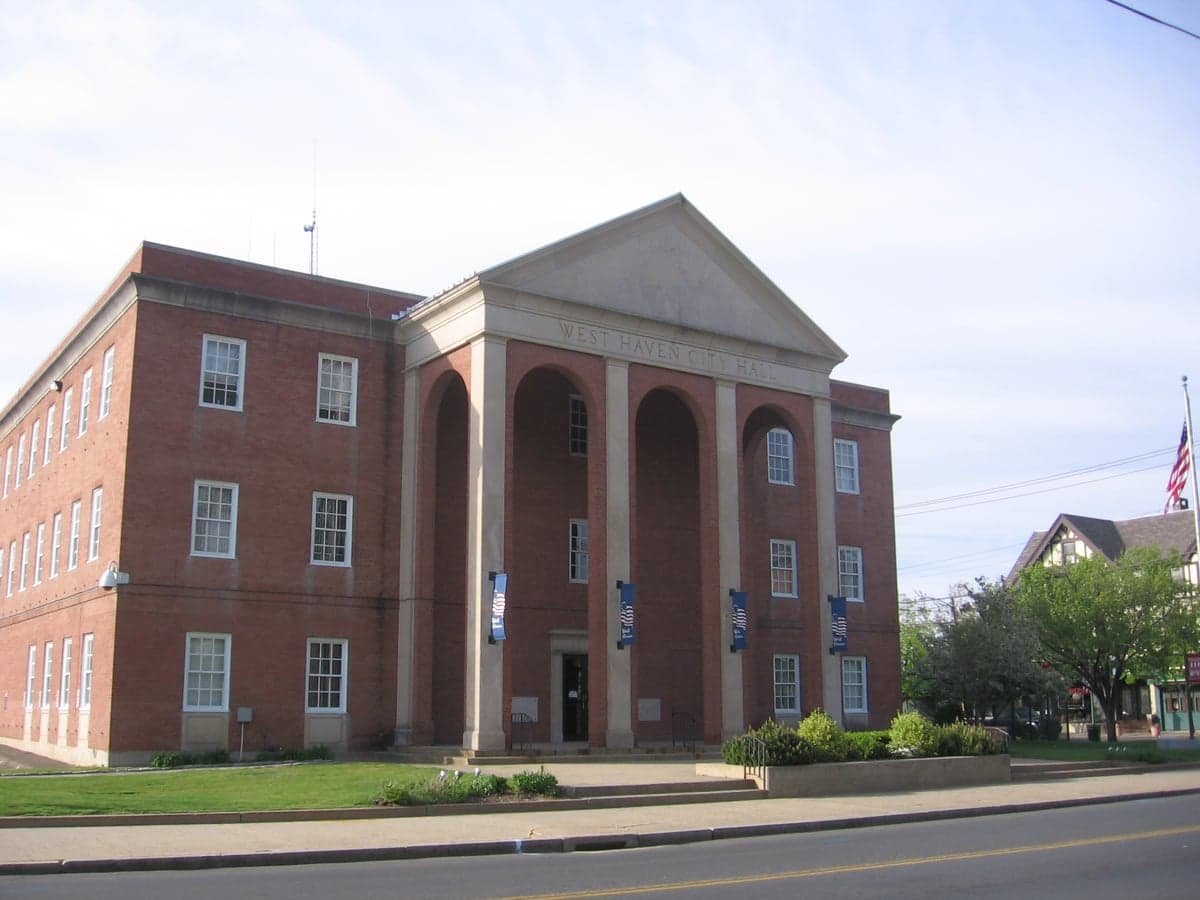
Photo: Wikipedia
Political ClimatePolitical Climate in West Haven, CT
District shown is the primary district for this city’s centroid. Cities may span multiple districts.
Local Political AnalysisPolitical Analysis of West Haven, CT
West Haven, Connecticut, has been a reliably blue city for decades, and that hasn't changed much. With a Cook Partisan Voting Index of D+8, it's a solidly Democratic stronghold, meaning local elections are rarely competitive for conservatives. The city has voted for the Democratic presidential candidate by double digits in every election since 2000, and the trend line is only getting steeper as the national party shifts further left. If you're a conservative or even a moderate who values fiscal restraint and personal liberty, you're likely in the minority here, and that minority is getting smaller.
How it compares
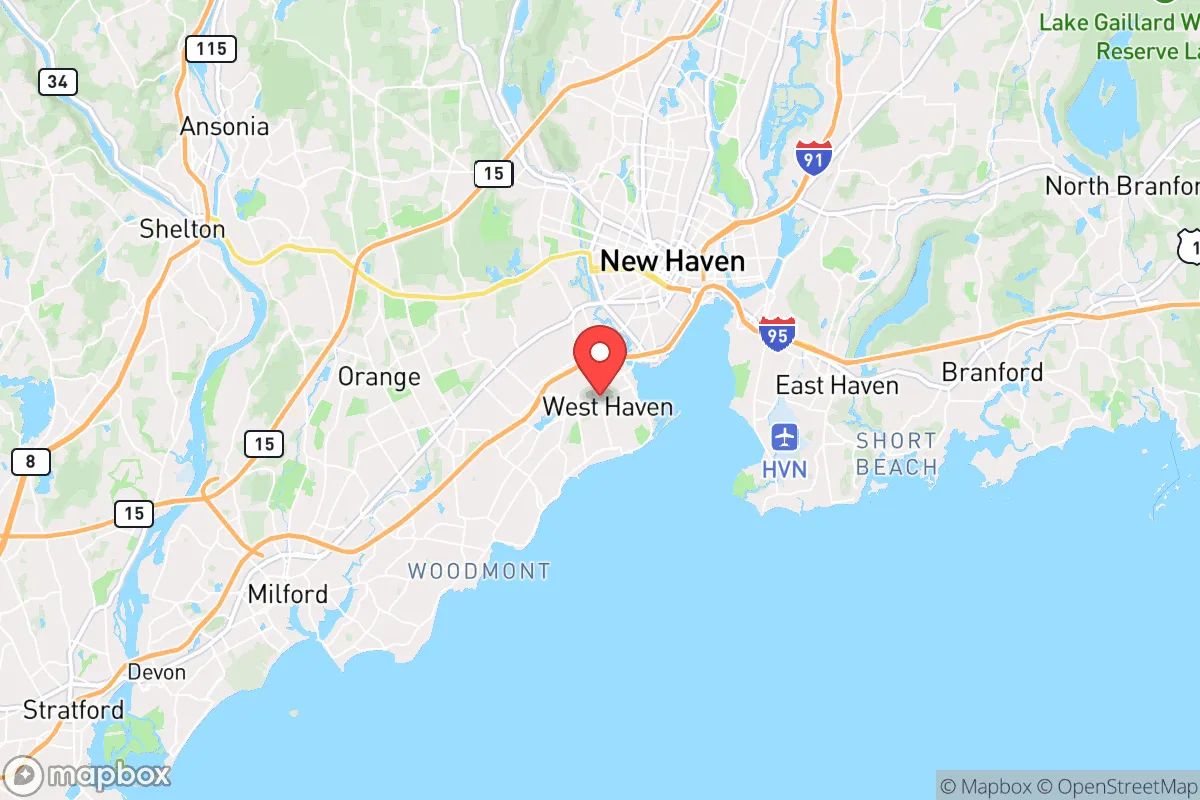
West Haven sits in a political bubble that's quite different from its immediate neighbors. Drive ten minutes north to Milford, and you'll find a much more balanced electorate—Milford voted for Trump in 2016 and only barely went for Biden in 2020. Head east to Orange, and you're in a town that's reliably Republican at the local levelched. But West Haven is sandwiched between New Haven to the north, a deep-blue college town with a D+25 PVI, and the more conservative shoreline towns of Westbrook and Old Saybrook. The contrast is stark: West Haven's politics are closer to New Haven's than to its own suburban neighbors. That means local policies—from zoning to taxes to public safety—tend to reflect the priorities of a dense, urban, and increasingly progressive electorate.
What this means for residents
For a conservative living here, the practical impact is that your vote in local elections rarely moves the needle. The city council and mayor's office have been under Democratic control for as long as anyone can remember, and that one-party rule has consequences. Property taxes have climbed steadily—West Haven's mill rate is among the highest in New Haven County—while the city's pension obligations balloon. There's been a push for more "equity" initiatives in schools and city hiring, which often means quotas and DEI training that can feel like government overreach into how people think and speak. The police department has faced calls to defund or redirect resources, though that hasn't fully materialized yet. If you value low taxes, limited government, and the freedom to run your business or raise your family without bureaucratic interference, West Haven is becoming a tougher place to do that.
On the cultural side, West Haven has a proud blue-collar history—it was a manufacturing hub for decades—but that identity is fading. The city has embraced progressive social policies, including sanctuary city protections for undocumented immigrants and a push for more affordable housing mandates that override local zoning. These moves are popular with the base but can feel like the government is picking winners and losers. The long-term trajectory is clear: as the state's Democratic supermajority in Hartford continues to pass laws that preempt local control—on everything from gun rights to school curriculum to energy mandates—West Haven's local leaders are happy to go along. If you're looking for a place where your voice as a conservative or libertarian-leaning resident actually counts, you might want to look at towns like North Haven or Wallingford, where the political balance is closer to even and the culture is more live-and-let-live.

State Political ClimatePolitical Climate in Connecticut
State Political AnalysisPolitical Environment in the State
Connecticut has shifted from a classic swing state to a reliably Democratic stronghold over the past two decades, with Democrats now holding every statewide office and supermajorities in both legislative chambers. The state voted for Hillary Clinton by 14 points in 2016, Joe Biden by 20 points in 2020, and Kamala Harris by roughly the same margin in 2024, but that top-line number masks a deeply divided electorate where the urban core of Hartford, New Haven, and Bridgewater pulls the state left while the eastern half and Litchfield Hills remain competitive or outright Republican. For a conservative considering relocation, the reality is that Connecticut’s political trajectory has been one of steady leftward drift, driven by wealthy suburbanites in Fairfield County and a dominant public-sector union apparatus in Hartford.
Urban vs. rural divide
The political map of Connecticut is a textbook case of the urban-rural chasm. The three major cities — Hartford, New Haven, and Bridgeport — routinely deliver 70-80% of their votes to Democrats, powered by large minority populations, union households, and a heavy concentration of government employees. These three cities alone account for roughly 15% of the statewide vote, enough to offset Republican margins in the rest of the state. The suburbs of Fairfield County, particularly Greenwich, Stamford, and Westport, have moved sharply left since 2016 as wealthy professionals abandoned the GOP over Trump, turning what were once swing towns into safe Democratic turf. The eastern half of the state — Litchfield County, the Quiet Corner around Windham, and the shoreline east of New Haven — remains the GOP’s base, with towns like Litchfield, Woodstock, and Old Saybrook routinely voting Republican by 10-20 points. The 2022 gubernatorial race saw Democrat Ned Lamont win by 13 points statewide, but he lost 100 of the state’s 169 towns, mostly in the east and northwest. The divide is stark: drive 20 minutes outside Hartford and you’re in Trump country, but those rural towns lack the population to counterbalance the urban machine.
Policy environment
Connecticut’s policy environment is a cautionary tale for conservatives. The state has the highest combined state and local tax burden in the nation, with an income tax that tops out at 6.99% and property taxes that average over 2% of home value annually — among the highest in the country. The sales tax is 6.35%, and there’s a 1% surcharge on prepared food and beverages. The regulatory posture is aggressively pro-labor: Connecticut is one of a handful of states with a paid family and medical leave program funded by a payroll tax, and it has a $15 minimum wage indexed to inflation. Education policy is dominated by the teachers’ unions, which have successfully blocked meaningful school choice expansion; there is no universal voucher program, and charter schools are capped. On healthcare, the state runs its own exchange and has expanded Medicaid under the Affordable Care Act. Election laws are among the most liberal in the country: no-excuse absentee voting, early voting (passed in 2022), and automatic voter registration at the DMV. For a conservative, the policy environment feels like a one-party state where the legislature routinely overrides local zoning to force affordable housing mandates — the 2023 “Fair Share” housing law is a prime example of Hartford overriding local control.
Trajectory & freedom
On the freedom index, Connecticut is moving in the wrong direction for conservatives. The most alarming recent trend is the erosion of Second Amendment rights: in 2023, the legislature passed a sweeping gun control package that banned open carry, raised the purchasing age to 21, and expanded the state’s assault weapons ban to include more semi-automatic rifles. The law also imposed strict liability on gun manufacturers, effectively inviting lawsuits against the industry. On parental rights, the state passed a law in 2021 that prohibits schools from notifying parents if a child changes their gender identity or pronouns — a direct blow to parental authority. Medical freedom took a hit with the 2022 mandate that all schoolchildren receive the HPV vaccine, overriding religious exemptions. Property rights are under assault from the aforementioned affordable housing mandates, which allow developers to bypass local zoning in towns that don’t meet state-set affordable housing targets. On the tax front, the state enacted a “millionaire’s tax” in 2015 that has since been made permanent, and there’s perennial talk of a statewide property tax. The only bright spot for liberty-minded residents is that Connecticut has no state-level rent control and no income tax on Social Security benefits — but that’s cold comfort when the overall trajectory is one of expanding government control over daily life.
Civil unrest & political movements
Connecticut’s political activism is dominated by the left, but there are visible conservative flashpoints. The 2020 Black Lives Matter protests in New Haven and Hartford were large and occasionally violent, with property damage in downtown New Haven that led to a curfew. The state’s sanctuary city policies — Hartford, New Haven, and Bridgeport all limit cooperation with ICE — have created tension with federal immigration enforcement, though the state as a whole has not seen the kind of border crisis that plagues southern states. On the right, the most organized movement is the Second Amendment community, which turned out thousands for rallies at the state capitol in 2023 to oppose the gun control package. The “CT Freedom Alliance” and local Republican town committees have been active in school board races, particularly in Fairfield and Southbury, where parents organized against critical race theory and mask mandates. Election integrity remains a live issue: the 2020 election saw widespread use of no-excuse absentee ballots due to a COVID-era executive order, and while the legislature made that permanent in 2022, Republicans continue to raise concerns about ballot harvesting and the lack of voter ID requirements. The most visible flashpoint for a new resident would be the constant tension between local control and state mandates — whether it’s zoning, education, or public health, Hartford’s reach is long and resented in the rural towns.
Projection
Over the next 5-10 years, Connecticut’s political trajectory is likely to continue leftward, but with a growing backlash in the exurbs and rural areas. The state is losing population — roughly 100,000 residents between 2020 and 2024 — and those leaving are disproportionately higher-income taxpayers moving to Florida, Texas, and the Carolinas. The remaining population is older, more dependent on government services, and more concentrated in the urban centers, which reinforces the Democratic majority. However, the 2024 election showed cracks: Trump improved his margin in Litchfield County and the eastern shoreline, and Republican candidates for state legislature flipped a handful of seats in the Naugatuck Valley and the Quiet Corner. The wild card is the growing Hispanic population in Bridgeport and Waterbury, which has historically voted Democratic but is showing signs of shifting right on cultural issues like education and crime. If that trend accelerates, Connecticut could become a more competitive state by 2032, but for the immediate future, expect continued one-party rule in Hartford, more tax increases, and further erosion of local control. A conservative moving in now should expect to be in the minority politically, with limited ability to change state-level policy, but with significant influence in their local town government — which is where the real battles over zoning, schools, and taxes will be fought.
The bottom line for a conservative considering Connecticut: you’re moving into a state where your vote for president or governor will almost certainly be wasted, but where your voice in town hall matters enormously. The property taxes will hurt, the gun laws will chafe, and the school curriculum may frustrate you, but the quality of life — good schools, low crime in the suburbs, beautiful coastline, and proximity to New York — is real. If you can afford the taxes and are willing to fight the local battles, Connecticut’s rural towns and shoreline communities offer a lifestyle that’s hard to beat. Just don’t expect the state government to have your back — it won’t.
* Values derived from national, state, county, city and local statistics and may differ in a specific area. Last updated: 2026-04-19T07:03:44.000Z
Narrative content on this page is AI-generated and may contain mistakes. Verify any details that matter before acting on them.
ReloMaps may earn a commission from affiliate links at no extra cost to you.

