Photo: Wikipedia
Political ClimatePolitical Climate in West Valley City, UT
District shown is the primary district for this city’s centroid. Cities may span multiple districts.
Local Political AnalysisPolitical Analysis of West Valley City, UT
West Valley City has long been a reliably conservative stronghold, with a Cook PVI of R+10 that reflects its solid Republican lean in federal elections. But if you've lived here as long as I have, you've watched the political ground shift under your feet—not dramatically, but steadily, like a slow erosion. The city still votes red, but the margins are tightening, and there's a growing unease among long-time residents about where the trajectory is heading. We're not talking about a blue wave, but more like a creeping tide of progressive influence that's starting to lap at the edges of our community values.
How it compares
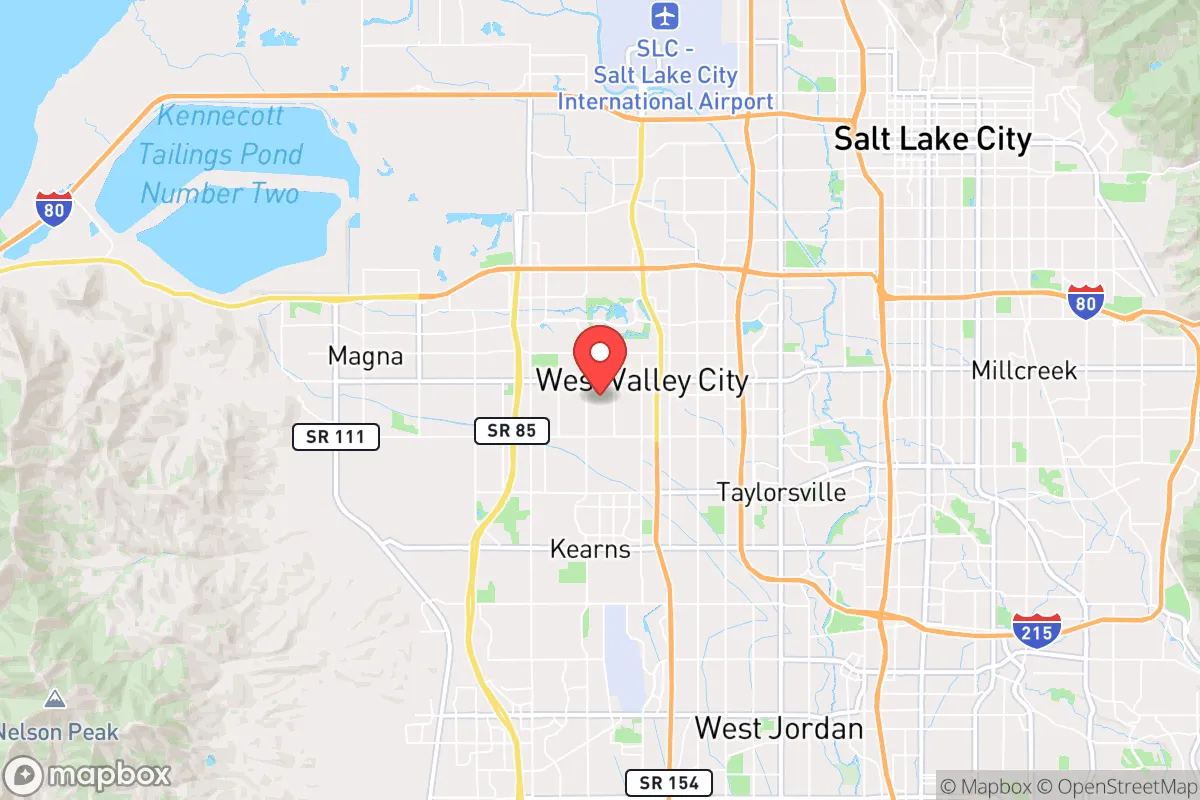
To understand West Valley City's political climate, you have to look at the map. Drive 15 minutes east to Salt Lake City proper, and you're in a deep-blue urban enclave where progressive policies on housing, taxes, and social issues are the norm. That's a world away from here. But then head west or south to places like Herriman or Eagle Mountain, and you'll find communities that are even more conservative—think R+15 or R+20 territory. West Valley City sits in the middle, a kind of political buffer zone. We're not as red as the outer suburbs, but we're not as blue as the city core. That makes us a bellwether, and frankly, it's a little unsettling. The concern is that as Salt Lake City's progressive policies—like higher density zoning and expanded government programs—spill over, they'll start to reshape our local ordinances and tax burdens. We're already seeing more talk about "equity" initiatives in school board meetings and city council sessions, which feels like a foot in the door for bigger government overreach.
What this means for residents
For folks who value personal freedom and limited government, the trend here is a yellow flag. Property taxes have crept up, and there's been pressure to adopt stricter building codes and environmental regulations that sound good on paper but end up costing homeowners and small businesses real money. The city council, while still majority conservative, has seen a few new faces who are more willing to entertain progressive ideas—like expanded public transit subsidies and "inclusive" community programs that often come with strings attached. What this means for you as a resident is that you need to stay engaged. Show up to those city council meetings. Vote in local primaries. Because the real battles aren't about presidential races; they're about whether your neighborhood stays zoned for single-family homes or gets rezoned for high-density apartments, or whether your kids' school curriculum starts emphasizing social activism over core academics. The R+10 lean gives us a buffer, but it's not a guarantee.
Culturally, West Valley City still feels like a place where people wave to their neighbors and leave their garage doors open on summer evenings. But there's a subtle shift in the air—more yard signs for candidates who talk about "systemic change," more community events that feel less about local tradition and more about national talking points. The biggest policy distinction I'd point to is how our city handles land use and business regulation. We've historically been pro-growth and pro-business, with a light touch on permitting and zoning. That's under threat. If you're considering moving here, know that the political climate is still friendly to conservative values, but it's not static. Keep an eye on the school board and city council races—those are the front lines of the fight to keep West Valley City from drifting into the kind of over-regulated, high-tax environment that's pushing people out of other parts of the Wasatch Front.

State Political ClimatePolitical Climate in Utah
State Political AnalysisPolitical Environment in the State
Utah is a deeply red state, with Republicans holding every statewide office and supermajorities in both legislative chambers, but the political climate is far more complex than a simple partisan label suggests. The state has voted Republican in every presidential election since 1968, with margins typically exceeding 20 points, yet the dominant political culture is shaped by a unique blend of conservative social values, a powerful libertarian streak, and a rapidly growing urban corridor that is beginning to show cracks in the monolithic red facade. Over the last 15 years, the Wasatch Front—from Provo up through Salt Lake City to Ogden—has seen a noticeable shift toward a more moderate, business-friendly conservatism, while the rural counties and the southern half of the state have only hardened their Republican allegiance.
Urban vs. rural divide
The political map of Utah is essentially a story of two distinct regions. The Wasatch Front, home to over 80% of the state's population, is where the real political action happens. Salt Lake County, once reliably red, has become a purple battleground; in 2020, Joe Biden won the county by 12 points, a dramatic shift from 2012 when Mitt Romney carried it by 16 points. This is driven largely by Salt Lake City proper, which is a blue island in a red state, and the growing suburbs like Sandy and Draper that are trending toward moderate Republicanism. Meanwhile, Utah County, anchored by Provo and the massive Brigham Young University, remains a conservative stronghold, but even there, the margins are shrinking as younger, more secular professionals move in. Drive south of Nephi or west of the Wasatch Range, and you enter a different world entirely. Rural counties like San Juan, Carbon, and Emery vote Republican by margins of 40 to 60 points, and places like St. George in Washington County are booming with conservative retirees and families fleeing California, making it one of the fastest-growing and most reliably red metros in the nation.
Policy environment
Utah's policy environment is a textbook example of conservative governance with a pragmatic twist. The state has a flat income tax rate of 4.65%, no inheritance tax, and a sales tax that hovers around 6.1% but can climb with local options. Property taxes are low by national standards, and the state has a constitutional requirement for a balanced budget. On education, Utah has a robust school choice program, including a new universal school voucher system passed in 2023 that gives every student access to state-funded education savings accounts. Healthcare policy is market-driven, with no state-level individual mandate and a limited Medicaid expansion that includes a work requirement waiver. Election laws are among the most secure in the nation: Utah requires voter ID, has automatic voter registration tied to DMV visits, and conducts all-mail elections with signature verification. The state also has a unique "county clerk" system that has avoided the major election integrity controversies seen elsewhere. On social issues, Utah has a trigger law banning abortion with exceptions for rape, incest, and life of the mother, and it has passed some of the strongest parental rights laws in the country, including a 2023 bill requiring schools to notify parents of any curriculum changes involving sexuality or gender identity.
Trajectory & freedom
Utah's trajectory on personal freedom is a mixed bag, and this is where the state's conservative reputation gets interesting. On the positive side for liberty-minded residents, Utah has expanded gun rights significantly: it is a constitutional carry state, meaning no permit is required to carry a concealed firearm, and in 2021 it passed a law prohibiting local governments from enacting stricter gun ordinances than the state. Property rights are strongly protected, with a 2022 law limiting the ability of HOAs to restrict solar panels and xeriscaping. Parental rights have been a major focus, with the 2023 "Parental Rights in Education" bill giving parents explicit authority over their children's medical and educational decisions. However, there are concerning trends. The state's powerful liquor control commission still operates a state-run monopoly on alcohol sales, and while beer can be sold in grocery stores, wine and spirits require a state store visit. More troubling for conservatives is the growing influence of the Church of Jesus Christ of Latter-day Saints on policy; while the church has historically been a conservative force, its recent support for the federal Respect for Marriage Act and its push for moderate immigration reform have created friction with more libertarian and evangelical elements. The 2024 legislative session saw a bill to ban "conversion therapy" for minors pass with bipartisan support, which some conservatives view as government overreach into private medical decisions.
Civil unrest & political movements
Utah is not known for widespread civil unrest, but there are visible political flashpoints. The most organized activist movements are on the right, particularly the "Utah Patriot" groups that emerged during the COVID-19 pandemic to protest mask mandates and business closures. These groups remain active, now focusing on school board elections and local zoning battles. On the left, the "Utah Rising" coalition has organized around environmental issues, particularly opposition to the proposed Uinta Basin Railway, which would transport crude oil through the state. Immigration politics are a simmering issue, with the state's large refugee resettlement program—Utah has one of the highest per-capita refugee acceptance rates in the nation—creating tension between humanitarian impulses and concerns about resource strain. There have been no major sanctuary city movements, but Salt Lake City declared itself a "welcoming city" in 2017, which has been a point of contention with the state legislature. Election integrity controversies have been minimal, but the 2020 election saw a small but vocal group of activists questioning the all-mail voting system, leading to a 2021 law that strengthened signature verification and ballot tracking. The most visible political flashpoint for a new resident would likely be the ongoing battle over public lands, with the state suing the federal government for control of vast tracts of BLM land, a fight that unites rural conservatives and libertarians against federal overreach.
Projection
Looking ahead five to ten years, Utah's political climate is likely to become more polarized, not less. The Wasatch Front will continue to trend purple, with Salt Lake County becoming reliably Democratic in presidential elections and Utah County shifting from deep red to light red. This will create a growing tension between the urban corridor and the rural and southern parts of the state, which will only harden their conservative identity. The in-migration of Californians, while often conservative-leaning, is also bringing more secular and libertarian voters who may not align with the traditional LDS-influenced social conservatism. This could lead to a split within the Republican Party itself, with a more pragmatic, business-friendly wing in the cities and a more populist, culturally conservative wing in the rural areas. On policy, expect continued battles over education funding, with school choice advocates pushing for even more expansion, and over land use, as the state's rapid growth strains infrastructure and sparks NIMBY conflicts. The biggest wild card is the LDS Church's evolving political stance; if it continues to moderate on social issues, it could alienate its more conservative members and reshape the state's political landscape. Someone moving in now should expect to find a state that remains solidly red but is increasingly divided between a moderate, urban conservatism and a more traditional, rural conservatism, with the balance of power slowly shifting toward the urban centers.
For a conservative-leaning individual or family considering relocation, Utah offers a strong foundation of low taxes, secure elections, and robust parental rights, but it is not a libertarian paradise. The state's government is active in areas like alcohol regulation and education curriculum, and the growing influence of the Wasatch Front's moderate wing means that some cultural battles are being fought in the legislature rather than at the local level. If you value a community where traditional values are still the norm, where the schools are safe and choice-friendly, and where the economy is booming, Utah is an excellent choice. Just be aware that the political climate is not monolithic—you'll find more ideological diversity in Salt Lake City than in St. George, and the state's trajectory suggests that diversity will only increase. The bottom line: Utah is a good bet for conservatives who want a stable, family-friendly environment, but keep an eye on the Wasatch Front, because that's where the future of the state's politics is being written.
* Values derived from national, state, county, city and local statistics and may differ in a specific area. Last updated: 2026-05-03T20:33:37.000Z
Narrative content on this page is AI-generated and may contain mistakes. Verify any details that matter before acting on them.
ReloMaps may earn a commission from affiliate links at no extra cost to you.

