Photo: Wikipedia
Demographics of Weymouth Town, MA
Affluence Level in Weymouth Town, MA
An upper-middle-class area. Household wealth, education levels, and homeownership run ahead of national benchmarks.
People of Weymouth Town, MA
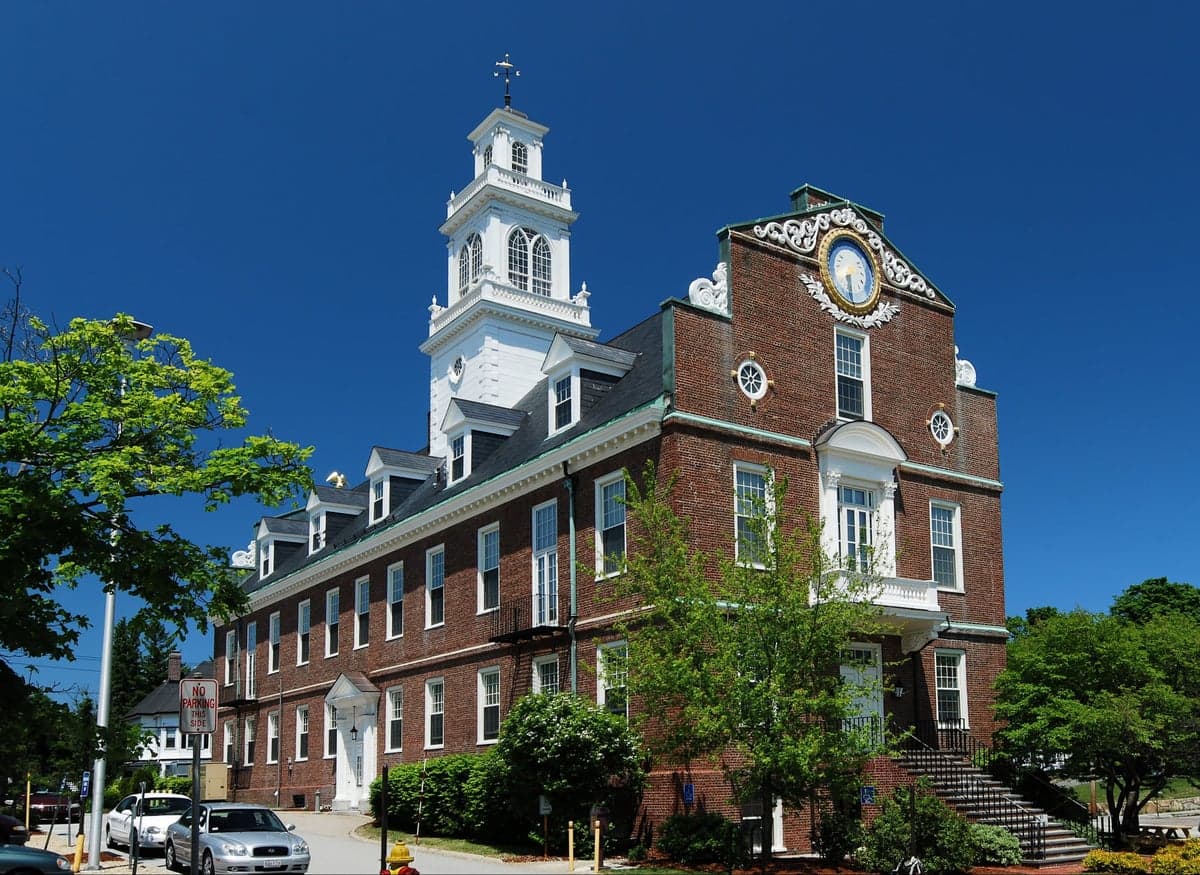
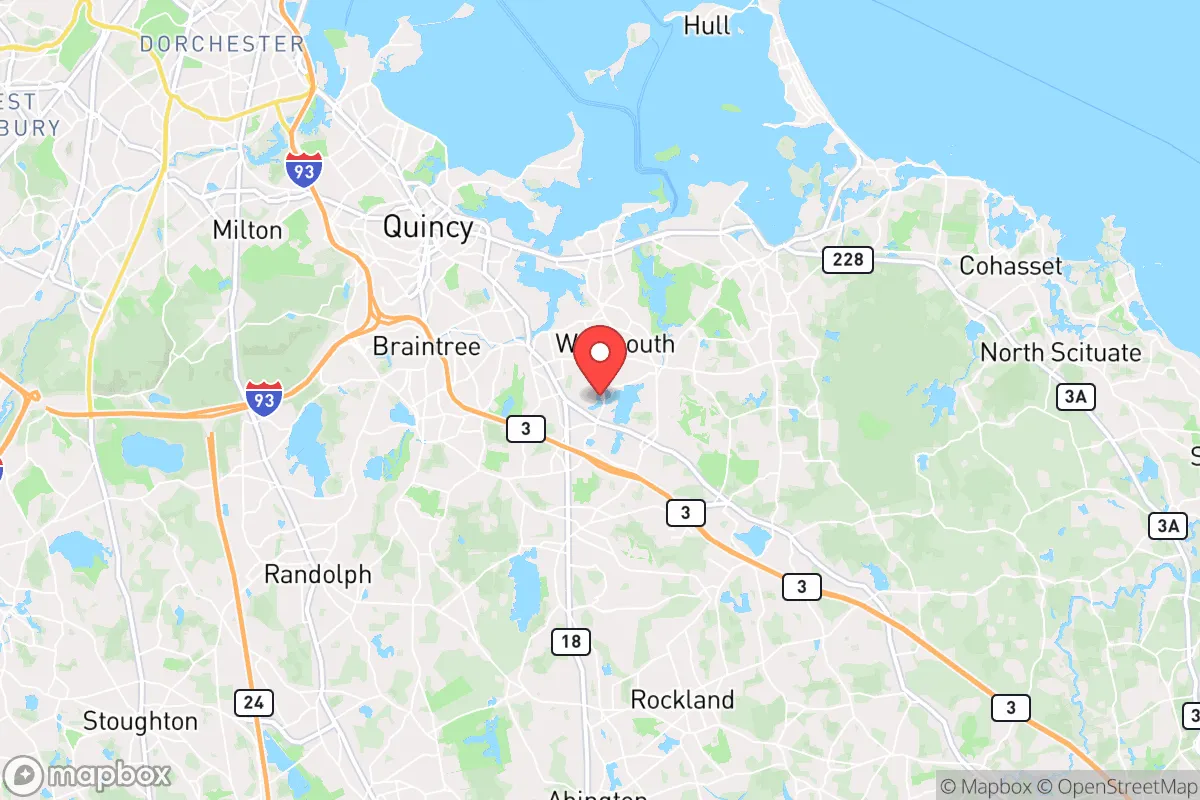
Weymouth Town, Massachusetts, is a densely settled suburban city of 57,786 residents, where the population is overwhelmingly white (79.2%) but has grown more diverse in recent decades through modest waves of East/Southeast Asian, Indian-subcontinent, and Black households. The city’s character is defined by its historic village centers—North Weymouth, South Weymouth, East Weymouth, and Weymouth Landing—each with distinct housing stock and community identities. Despite its suburban feel, Weymouth retains a strong sense of local pride rooted in its shipbuilding and manufacturing past, and it now serves as a more affordable alternative to Boston for families and professionals seeking commuter-rail access to the city.
How the city was settled and grew
Weymouth was first settled in 1622 as Wessagusset, making it the second-oldest English settlement in Massachusetts after Plymouth. The original population consisted of Puritan farmers and fishermen from England, drawn by the sheltered harbor and fertile coastal plains. By the 18th century, shipbuilding and maritime trade anchored the economy, with distinct neighborhoods emerging around the three main harbors: North Weymouth (the shipbuilding hub), South Weymouth (farming and later shoe manufacturing), and East Weymouth (fishing and coastal trade). The 19th century brought Irish immigrants fleeing the Great Famine, who settled heavily in Weymouth Landing (the commercial and rail center) and in the mill-worker housing of South Weymouth. Italian immigrants followed in the early 1900s, clustering in North Weymouth and around the shoe factories. By 1950, Weymouth was a predominantly white, working-class suburb of Boston, with a population of about 40,000 and a strong Catholic identity shaped by its Irish and Italian roots.
Modern era (post-1965)
The 1965 Hart-Cellar Act opened immigration from Asia and Latin America, but Weymouth’s foreign-born population remains low at just 5.6%—well below the state average. The most notable post-1965 shift has been the arrival of East/Southeast Asian families (4.6% of the population), primarily Chinese and Vietnamese, who have concentrated in South Weymouth and Weymouth Landing, drawn by affordable multi-family homes and proximity to the commuter rail. Indian-subcontinent residents (2.4%)—largely professionals in tech and healthcare—have settled in East Weymouth and the newer subdivisions near Route 3. The Black population (5.1%) includes both African American families moving from Boston and a smaller number of Caribbean immigrants, with clusters in North Weymouth and the Jackson Square area. Hispanic residents (4.6%) are a mix of Puerto Rican and Central American families, dispersed across the city but with a slight concentration in South Weymouth. The white population has declined from over 95% in 1980 to 79.2% today, driven by both out-migration of older families to further suburbs and the gradual in-movement of minority households. College-educated residents now make up 43.0% of adults, reflecting the city’s shift from a blue-collar manufacturing base to a commuter bedroom for Boston’s knowledge economy.
The future
Weymouth’s population is slowly diversifying, but the pace is moderate compared to neighboring Quincy or Boston. The East/Southeast Asian and Indian-subcontinent communities are growing steadily, driven by the city’s relatively affordable housing stock (median home value around $520,000 in 2025) and the commuter rail’s 20-minute trip to South Station. The white population is aging and declining slightly, as younger white families often move to newer suburbs like Hanover or Norwell for larger lots. The Hispanic and Black shares are expected to rise gradually, but Weymouth lacks the ethnic enclave infrastructure—ethnic grocery stores, religious institutions, language-specific services—that accelerates clustering in other cities. The next 10-20 years will likely see Weymouth become a more diverse but still majority-white suburb, with the main demographic story being the replacement of retiring white homeowners by younger Asian and Indian families in neighborhoods like South Weymouth and East Weymouth. The city is not tribalizing into distinct enclaves; rather, it is experiencing a slow, organic integration across its historic villages.
For someone moving in now, Weymouth offers a stable, safe, and increasingly diverse community with strong schools and a direct rail link to Boston. The population is becoming more educated and more Asian and Indian, but the city’s core identity remains rooted in its Irish-Italian working-class heritage. It is not a rapidly changing or polarized place—rather, it is a steady, middle-class suburb where demographic shifts are gradual and largely absorbed without friction. New residents will find a city that values its history while quietly accommodating the next generation of families.

* Values derived from national, state, county, city and local statistics and may differ in a specific area. Last updated: 2026-05-01T15:48:24.000Z
Narrative content on this page is AI-generated and may contain mistakes. Verify any details that matter before acting on them.
ReloMaps may earn a commission from affiliate links at no extra cost to you.

