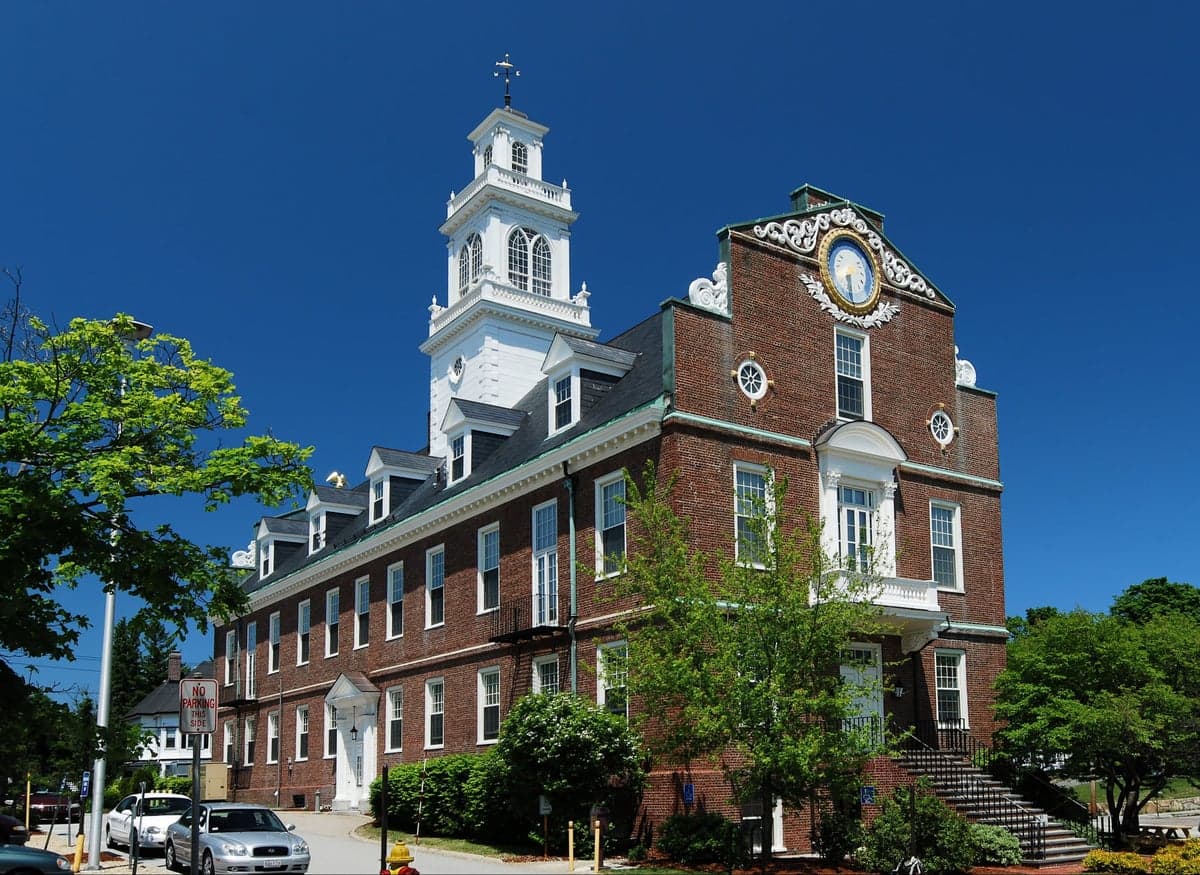
Photo: Wikipedia
Quality of Life in Weymouth Town, MA
A high quality of life with strong walkability, manageable living costs, healthy neighborhood signals, and solid amenity access.
What does Quality of Life tell us?
Quality of Life blends cost of living, nearby amenities, socioeconomic signals, and neighborhood character. City-level scores represent the whole municipality; individual neighborhoods can differ.
What does this tell us?
Quality of Life blends cost of living, nearby amenities, socioeconomic signals, and neighborhood character. City-level scores represent the whole municipality; individual neighborhoods can differ.
Cost of Living
69% above national average
The Real Cost of Living in Weymouth Town, MA for 2026
| Tier | Individual | Family (4) |
|---|---|---|
| Survival | $30k | $56k |
| Comfortable | $100k | $147k |
| Luxury | $156k+ | $242k+ |
| Elite (Top 5%) | $184k+ | $285k+ |
68%
The Area Signal
A metric tracking the socioeconomic signals of the area.
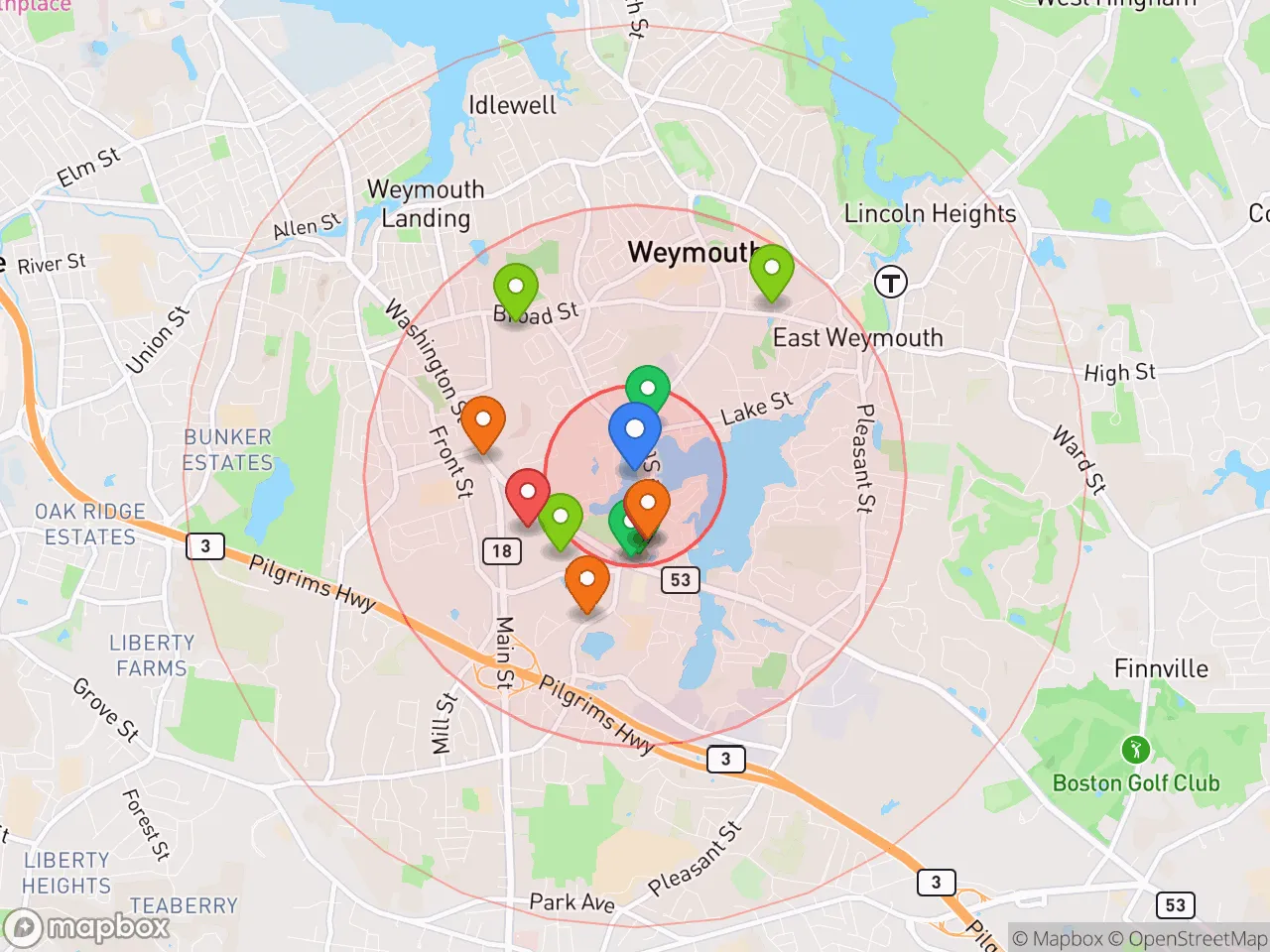
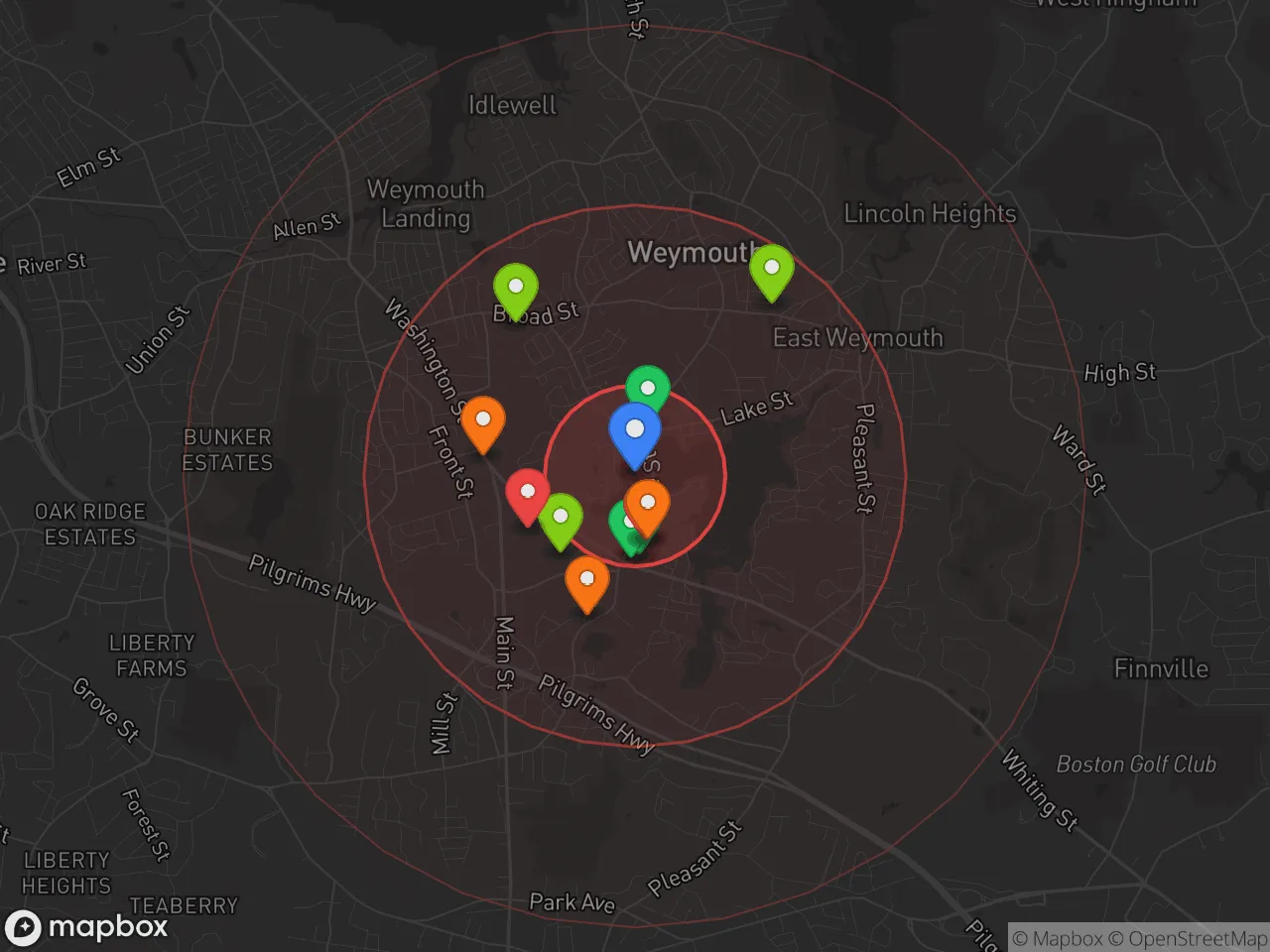
Hobbies
Explore the areaGroceries
6 within 10 miles
Gas
20 within 10 miles
Hospital
20 within 20 miles
Airport
PDX — Portland International Jetport
Post Office
USPS — Weymouth Town, MA
Critical Amenities
Quality-of-Life Analysis
Weymouth Town, Massachusetts, presents a quality of life defined by solidly upper-middle-class affluence and a predominantly family-oriented, commuter-driven population. With a cost of living index of 169—well above the national baseline of 100—the town attracts professionals and families who prioritize proximity to Boston, strong public schools, and coastal access over lower expenses. The median household income comfortably exceeds state averages, supporting a community where homeowners and long-term renters coexist in a stable, suburban environment.
Cost of living, housing affordability, and how Weymouth compares to nearby towns
Weymouth’s cost of living is 69% higher than the U.S. average, driven largely by housing. The median home value of $516,200 is significantly more affordable than in neighboring Hingham ($800,000+) or Scituate ($700,000+), but it is notably higher than in Brockton or Taunton to the west. The median rent of $1,861 is competitive for the South Shore, undercutting Quincy’s average of roughly $2,200 while offering similar access to the Red Line and commuter rail. For buyers, the trade-off is clear: a single-family home in Weymouth costs about 30% less than in coastal Hingham, but property taxes (around $5,500 annually on the median home) and high utility costs keep monthly expenses elevated. Renters face a tight market, with vacancy rates below 3%, making early lease commitments essential. Overall, Weymouth offers a relative value proposition for those priced out of Boston’s core suburbs but unwilling to sacrifice commute time or school quality.
What daily life is like for families: schools, amenities, and commute realities
Daily life in Weymouth revolves around its strong public school system, which serves roughly 6,000 students across eight elementary schools, two middle schools, and Weymouth High School. The district consistently earns above-average ratings for academic performance, with a graduation rate near 92%. For recreation, the town offers over 20 parks, the 2.5-mile Webb Memorial State Park waterfront, and the South Shore Hospital—a major employer and healthcare anchor. The average commute of 34.8 minutes is a defining feature: most residents drive to the Weymouth Landing or South Weymouth commuter rail stations for a 25-minute ride to South Station, or take the MBTA bus to the Quincy Adams Red Line station. Traffic on Route 3 and Route 18 is heavy during peak hours, pushing many to leave by 6:30 a.m. to secure parking. Evening life is low-key, with local restaurants and bars clustered around Weymouth Landing and Columbian Square, while major shopping and dining are a 10-minute drive to South Shore Plaza in Braintree.
Families with school-aged children and professionals working in Boston or along the Route 128 tech corridor will thrive in Weymouth. The town’s blend of solid schools, manageable commute times, and relative housing affordability compared to coastal neighbors makes it a pragmatic choice for those who value stability over urban excitement. Empty-nesters downsizing from larger homes in Hingham or Cohasset also find Weymouth appealing for its walkable village centers and lower property taxes. However, singles and young renters seeking nightlife or walkability may find the town too car-dependent and quiet, with most social activity requiring a drive to Quincy or Boston. For the right household—one that prioritizes space, schools, and a 35-minute train ride to the city—Weymouth delivers a balanced, if unglamorous, quality of life.

Crime in Weymouth Town, MA
Generally safer than 71% of comparable U.S. locations.
Violent CrimeViolent Crime Analysis
Property CrimeProperty Crime Analysis
Crime Analysis
Weymouth Town, Massachusetts, presents a mixed safety profile for potential residents. With a violent crime rate of 235.8 per 100,000 residents and a property crime rate of 813.5 per 100,000, the town is safer than many national averages but faces challenges common to communities within the Greater Boston metro area. The presence of progressive judicial and prosecutorial policies in Massachusetts, which often prioritize rehabilitation over incarceration, means that repeat offenders and those charged with non-violent crimes may cycle through the system more quickly, a factor that can elevate property crime and create a perception of reduced accountability for public safety.
Crime in context
Weymouth’s violent crime rate of 235.8 per 100,000 is roughly 36% lower than the national average of about 370 per 100,000, but it is significantly higher than the safest small towns in the state. Property crime in Weymouth, at 813.5 per 100,000, is about 20% below the national average of roughly 1,950 per 100,000. However, these figures must be weighed against the broader regional environment. Massachusetts as a whole has some of the most progressive criminal justice reforms in the country, including the 2018 Criminal Justice Reform Act, which reduced mandatory minimums and expanded diversion programs. While these policies aim to reduce mass incarceration, they also mean that property offenders and some violent offenders may face shorter sentences or avoid jail entirely, contributing to higher recidivism rates in metro-area suburbs like Weymouth compared to more conservative jurisdictions.
What residents experience
Residents of Weymouth most frequently encounter property crimes such as larceny, motor vehicle theft, and vandalism, particularly in commercial corridors along Route 3A and near the South Weymouth commuter rail station. The town’s proximity to Boston and Quincy means it is a target for regional property crime rings. Violent crime is less common but does occur, often concentrated in the downtown area and near public housing complexes. The Norfolk County District Attorney’s office, which prosecutes Weymouth cases, has adopted progressive policies including a presumption against seeking cash bail for non-violent offenses and a focus on restorative justice. For residents, this translates into a higher likelihood that a burglar or car thief caught locally will be released quickly, potentially re-offending in the same neighborhood. Community policing efforts by the Weymouth Police Department, including a dedicated neighborhood response unit, help mitigate this, but the underlying judicial philosophy remains a concern for those prioritizing strict law enforcement.
Neighborhood-level safety varies notably within Weymouth. The eastern sections near the Hingham line and the area around Great Esker Park are generally considered safer, with lower crime density. In contrast, the North Weymouth and South Weymouth neighborhoods, particularly near the MBTA stations and the former South Weymouth Naval Air Station redevelopment, see higher rates of property crime and occasional violent incidents. Prospective residents should research specific street-level crime maps and consider that the town’s overall statistics mask pockets where the impact of progressive justice policies is felt more acutely. For those moving from areas with tougher sentencing, the adjustment to a system that often prioritizes offender rehabilitation over public safety can be jarring, making a thorough review of local crime reports and neighborhood forums essential.
* Values derived from national, state, county, city and local statistics and may differ in a specific area. Last updated: 2026-05-01T15:48:24.000Z
Narrative content on this page is AI-generated and may contain mistakes. Verify any details that matter before acting on them.
ReloMaps may earn a commission from affiliate links at no extra cost to you.

