Photo: Wikipedia
Political ClimatePolitical Climate in Weymouth Town, MA
District shown is the primary district for this city’s centroid. Cities may span multiple districts.
Local Political AnalysisPolitical Analysis of Weymouth Town, MA
Weymouth Town, Massachusetts, has a Cook PVI of D+15, meaning it leans heavily Democratic in federal elections, but that number doesn't tell the whole story for those of us who’ve lived here a while. This town used to be a classic working-class, union Democrat stronghold—think your neighbors who worked at the shipyard or the Fore River plant, folks who voted blue but kept their own counsel on social issuescars and property rights. Over the last decade, though, the political center of gravity has shifted noticeably leftward, driven by an influx of commuters from Boston and younger families who bring a more progressive, government-first mindset. The old-school, live-and-let-live ethos is getting squeezed, and if you value personal freedoms and limited government, it’s worth paying attention to where this is heading.
How it compares
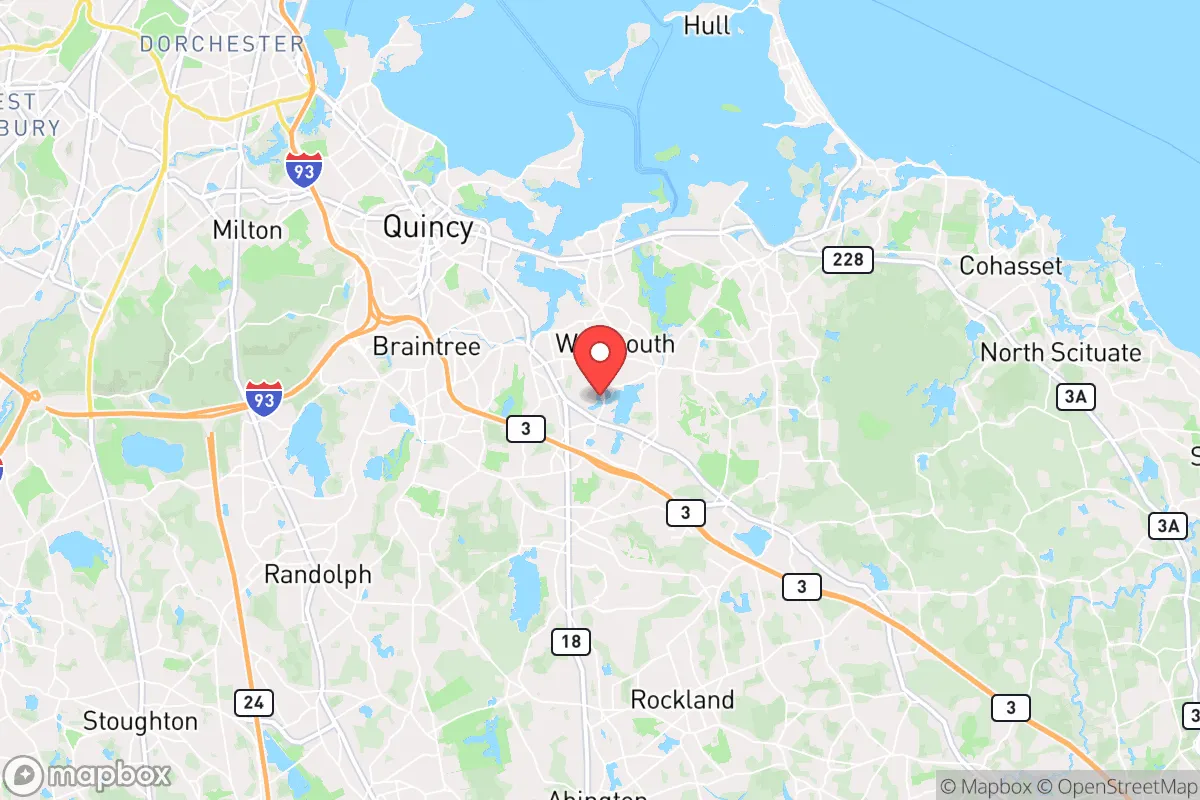
To understand Weymouth’s political drift, you have to look at the towns around it. Head south to Hanover or Norwell, and you’ll find communities that still lean more conservative—places where the local tax votes tend to fail and the school committees push back on state mandates. Drive north into Quincy, and you get a similar blue-collar Democratic base, but Quincy’s politics are more pragmatic and less ideological than what you see in Weymouth now. The real contrast is with Hingham to the east, which has a more moderate, fiscally conservative Republican streak, especially on local zoning and property rights. Weymouth used to be the middle ground, but it’s increasingly mirroring the politics of Boston’s outer suburbs—more density, more regulations, and a growing appetite for government solutions to everyday problems. The D+15 PVI masks a town that’s becoming less independent and more aligned with the state’s progressive machinery.
What this means for residents
For a long-time resident, the biggest red flag is how local government has started reaching into areas that used to be left to families and small businesses. The push for stricter zoning laws and mandated affordable housing quotas under the state’s MBTA Communities Act is a prime example—Weymouth is being forced to plan for high-density development near transit stations, whether residents want it or not. That means less control over your own property values and neighborhood character. You’re also seeing increased school spending initiatives that pass easily, even as the tax burden climbs, and a local council that’s more willing to adopt state-level progressive policies on everything from energy mandates to public health orders. If you’re someone who believes in personal responsibility and minimal government interference, the trend is concerning: more rules, more oversight, and less room for individual choice in how you live, work, and raise your family.
Culturally, Weymouth is still a place where people wave from their porches and the VFW hall is packed on Friday nights, but the political undercurrent is shifting. The old guard—the guys who remember when the town voted for Reagan and still flew the Gadsden flag on their boats—is aging out. The new voices are younger, more educated, and more comfortable with government as a tool for social change. You’ll see more “In This House We Believe” signs than “Don’t Tread on Me” flags these days. The local paper’s letters page is full of debates over climate action plans and equity initiatives, not the old fights over potholes and school budgets. If you’re considering moving here, know that the political climate is becoming less tolerant of dissenting views, especially on issues like taxes, property rights, and personal freedoms. The town’s trajectory is toward a more progressive, government-involved future, and that’s something to weigh carefully if you value your autonomy.

State Political ClimatePolitical Climate in Massachusetts
State Political AnalysisPolitical Environment in the State
Massachusetts has been a one-party Democratic stronghold for decades, but the real story is how far left the state has moved even from its own moderate past. The state hasn't voted Republican in a presidential election since 1984, and in 2024, Kamala Harris carried it by over 25 points. The dominant coalition is a blend of coastal liberals from Greater Boston, unionized public-sector workers, and a growing population of out-of-state transplants who bring progressive voting habits with them. Over the last 10-20 years, the state has shifted from a "live and let live" New England independence to a more aggressive, government-driven progressivism that now touches nearly every aspect of daily life.
Urban vs. rural divide
The political map of Massachusetts is a tale of two worlds. Greater Boston — including Boston proper, Cambridge, Somerville, and Brookline — is the engine of the state's leftward tilt. These areas vote 80-90% Democratic and drive statewide elections. The I-495 belt and the western suburbs like Worcester and Springfield are more mixed but still lean blue. The true red pockets are in the central and western parts of the state: Plymouth County towns like Middleborough and Carver, and the Berkshires' rural towns like Great Barrington and Lee show occasional Republican strength, but they lack the population to shift statewide races. Cape Cod and the Islands are a curious mix — wealthy second-home owners who vote Republican nationally but support local Democrats on social issues. The urban-rural divide here is less about culture war and more about density: the closer you are to Boston, the more likely you are to support expansive government programs and strict regulations.
Policy environment
Massachusetts has one of the highest tax burdens in the nation. The state income tax is a flat 5%, but a 2022 ballot question added a 4% surtax on income over $1 million — the so-called "Millionaire's Tax" — which now funds education and transportation. Property taxes are moderate compared to other high-cost states, but they vary wildly by town; Boston has a low rate but sky-high assessments, while rural towns like Adams have higher rates on lower values. The regulatory environment is dense: building permits, environmental reviews, and zoning laws make it notoriously difficult to build new housing, which drives up costs. Education policy is dominated by teachers' unions, and the state has some of the strongest collective bargaining laws in the country. Healthcare is heavily regulated, with near-universal coverage under the state's 2006 reform law that served as a model for the ACA. Election laws are among the most liberal: no-excuse mail-in voting, same-day registration, and early voting are permanent fixtures. The state also has a strict assault weapons ban and a "red flag" law that allows courts to temporarily seize firearms from individuals deemed a risk.
Trajectory & freedom
Personal freedom in Massachusetts has been contracting steadily over the past decade. The 2018 "red flag" law (Chapter 180) allows police to petition for the removal of firearms without a criminal conviction, and it's been used thousands of times. In 2024, the state passed a sweeping gun control package that bans "ghost guns," expands the assault weapons ban, and requires gun owners to obtain a state-issued license to purchase ammunition. On the medical autonomy front, the state has some of the most restrictive abortion laws in the Northeast — but in the opposite direction: it's a sanctuary for out-of-state abortion seekers, with a 2022 law protecting providers from out-of-state lawsuits. Parental rights have taken a hit: the state's 2023 "Safe Schools" law mandates that schools adopt policies for LGBTQ+ students that can bypass parental notification if the student requests it. Property rights are constrained by the state's powerful zoning boards and the Community Preservation Act, which adds a surcharge on property taxes for open space and historic preservation. The overall trajectory is clear: more regulation, higher taxes, and less individual discretion in areas from firearms to education.
Civil unrest & political movements
Massachusetts has a long history of political activism, but the modern flashpoints are concentrated in Boston and the college towns. The 2020 George Floyd protests in Boston were large and occasionally violent, leading to property damage in the Downtown Crossing area. The state's sanctuary status — codified in 2017's "Safe Communities Act" — limits local police cooperation with federal immigration enforcement, and has been a source of tension between the state and the Trump administration. On the right, the "Massachusetts Fiscal Alliance" and the "Massachusetts Republican Party" have been largely ineffective at the state level, though they've had some success in local races in Plymouth and Bristol counties. Election integrity has been a minor issue: the state's universal mail-in voting system saw no major scandals, but conservative activists have raised concerns about the state's voter registration database accuracy. The most visible political movement in recent years has been the "Yes on 2" campaign in 2024, which sought to repeal the MCAS graduation requirement — a fight that pitted teachers' unions against business groups and ended with the requirement being kept.
Projection
Over the next 5-10 years, Massachusetts will likely continue its leftward drift, but with some countervailing pressures. The state's high cost of living is driving out middle-class families, particularly those with school-age children, which could shift the electorate even further left as the remaining population becomes wealthier and more liberal. In-migration from other states is heavily skewed toward young professionals and academics who reinforce the progressive consensus. However, there are signs of a backlash: the 2024 ballot question on the MCAS showed that even liberal voters are skeptical of some education policies, and the state's housing crisis is creating a new political coalition of homeowners and renters who want deregulation. The Republican Party in Massachusetts is unlikely to win statewide office anytime soon, but could gain seats in the legislature if the housing and cost-of-living issues continue to fester. A new resident moving in now should expect a state where government plays a large role in daily life, taxes are high and likely to rise, and personal freedoms — especially around firearms and parental rights — will continue to be restricted.
For a conservative-leaning individual or family considering Massachusetts, the bottom line is this: you will be in a deep blue state with a government that actively works against many of your values. The schools are excellent, the economy is strong, and the natural beauty is real, but you will pay for it in taxes, regulation, and a political culture that sees government as the primary solution to every problem. If you can afford it and are willing to navigate the bureaucracy, places like Plymouth or Sandwich on the South Shore offer a more moderate lifestyle. But if you value low taxes, gun rights, or parental control over education, Massachusetts is likely a poor fit.
* Values derived from national, state, county, city and local statistics and may differ in a specific area. Last updated: 2026-05-01T15:48:24.000Z
Narrative content on this page is AI-generated and may contain mistakes. Verify any details that matter before acting on them.
ReloMaps may earn a commission from affiliate links at no extra cost to you.

