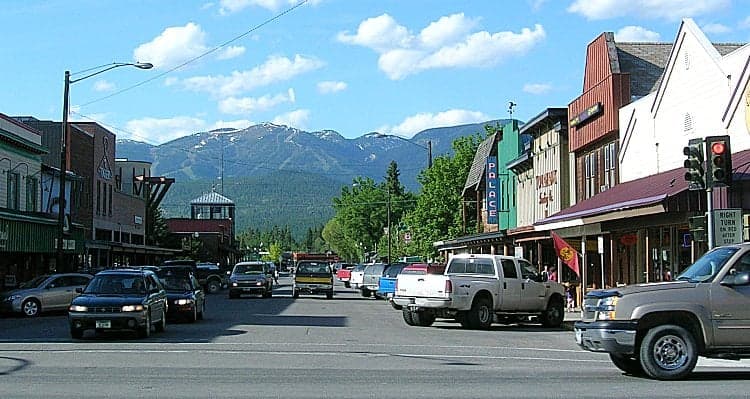
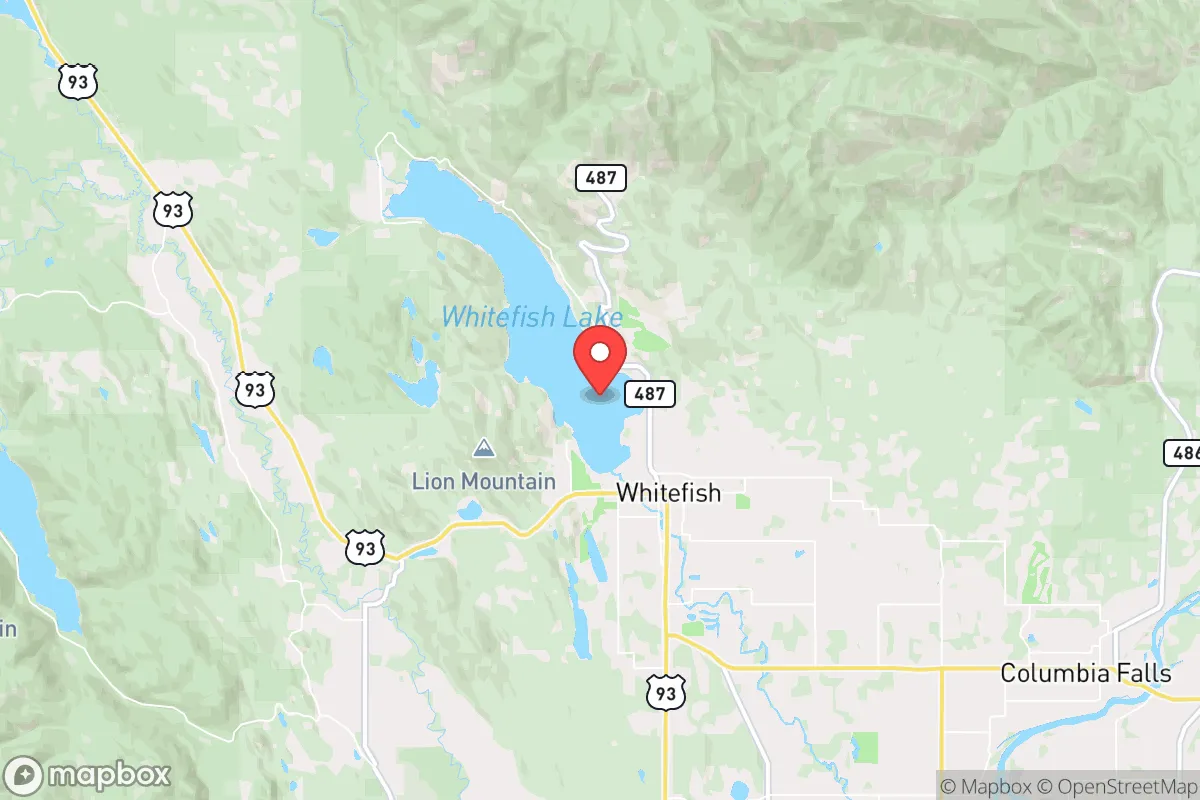
Photo: Wikipedia
Political ClimatePolitical Climate in Whitefish, MT
District shown is the primary district for this city’s centroid. Cities may span multiple districts.
Local Political AnalysisPolitical Analysis of Whitefish, MT
Whitefish, Montana, has long been a conservative stronghold, but like many resort towns in the West, it’s seeing a noticeable shift. The area’s Cook PVI of R+5 tells you the baseline is still Republican, but that number feels thinner every year as out-of-state money and new arrivals bring progressive politics with them. Flathead County as a whole still votes reliably red, but Whitefish itself—especially the downtown core and lakefront neighborhoods—has become a battleground between old-school libertarian-leaning locals and a newer, more activist crowd. If you’ve been here a decade or more, you’ve watched the local elections get tighter and the rhetoric louder.
How it compares
Drive 20 minutes east to Columbia Falls or 30 minutes north to Eureka, and you’re back in deep-red territory where folks still wave Gadsden flags and talk about property rights without apology. Kalispell, the county seat, is more mixed but still leans conservative, especially in its rural outskirts. The real contrast is with Whitefish’s own recent history: the city council has debated everything from short-term rental caps to “sanctuary city” resolutions, and the local school board has seen heated fights over curriculum transparency. Meanwhile, the surrounding county commissioners remain firmly conservative, creating a constant tension between town and county government. It’s not uncommon to hear a rancher in Olney say Whitefish has “gone California,” while a new transplant from Seattle calls it “refreshingly moderate.”
What this means for residents
For a long-time resident, the biggest concern is how much government overreach is creeping in under the guise of “community values.” The push for stricter land-use regulations, higher impact fees, and even discussions about rent control feel like a slow erosion of the personal freedoms that drew people here in the first place. Property taxes have climbed as the town tries to fund new public amenities, and some locals worry that the next step will be income or sales tax expansions. On the plus side, the county sheriff’s office still operates with a strong “don’t tread on me” ethos, and the state legislature in Helena has kept Montana’s gun laws among the most permissive in the nation. But if you value minimal government interference in your daily life, you’ll want to keep a close eye on city council elections—those are where the real battles are fought now.
Culturally, Whitefish still has its rodeo and its winter carnival, but the vibe is undeniably changing. The old logging-town grit is being polished over by craft breweries and boutique hotels, and with that comes a different set of political priorities. The local paper’s letters page now runs as many complaints about “hate speech” as it does about elk management. For now, the balance of power is still in conservative hands, but the trajectory is concerning. If you’re thinking of moving here, understand that the political climate is more volatile than the PVI suggests—and that the fight over what kind of town Whitefish will be is far from over.

State Political ClimatePolitical Climate in Montana
State Political AnalysisPolitical Environment in the State
Montana has long been a reliably Republican state in presidential elections, voting for the GOP candidate in every contest since 1992 except for a narrow 1992 vote for Bill Clinton. However, the state’s political landscape is far from monolithic. Over the past 10-20 years, a significant shift has occurred: the western mountain counties, once a mix of libertarian-leaning and moderate Republican, have seen an influx of out-of-state transplants, particularly from California and the Pacific Northwest, pushing places like Missoula, Bozeman, and Gallatin County toward a more progressive, Democratic-leaning posture. Meanwhile, the eastern plains and smaller towns remain deeply conservative, creating a stark urban-rural divide that defines the state’s current political battles.
Urban vs. rural divide
The political map of Montana is essentially a tale of two landscapes. The state’s population centers—Missoula, Bozeman, and to a lesser extent Helena and Billings—drive the Democratic vote. Missoula County, home to the University of Montana, has been a reliable blue stronghold for decades, with Democrats often winning by double digits. Bozeman’s Gallatin County, once a swing area, has flipped decisively blue in recent cycles due to explosive growth from tech workers and remote professionals; in 2020, Joe Biden carried Gallatin County by about 3 points, a stark contrast to its Republican lean just a decade prior. In contrast, the vast rural counties east of the Rockies—places like Dawson County (Glendive), Richland County (Sidney), and Blaine County—routinely vote 70-80% Republican. The suburban fringe around Billings, particularly the Heights area and Lockwood, leans conservative, but the city core of Billings itself is a purple battleground. The real story is the growing tension between the booming, transplant-heavy western valleys and the traditional, resource-dependent eastern plains.
Policy environment
Montana’s policy environment is a mixed bag for conservatives. On the plus side, the state has no sales tax, a flat income tax rate of 5.9% (recently lowered from 6.9% via 2023’s HB 192), and relatively low property taxes compared to coastal states. The regulatory posture is generally business-friendly, especially in energy and agriculture. However, the state’s education policy has been a flashpoint: while Montana has a strong tradition of local control, the state’s public school system is heavily unionized, and recent efforts to expand school choice (like the 2023 Montana Parental Choice Tax Credit) have been modest compared to other red states. Healthcare is a mixed bag—Montana expanded Medicaid under the Affordable Care Act in 2015, a move that many conservatives opposed, and the program remains popular in rural areas. Election laws are relatively secure: Montana requires a photo ID to vote, has no same-day registration, and in 2021 passed SB 169 to tighten absentee ballot procedures. Still, the state’s open primary system and lack of a voter ID requirement for mail ballots have drawn scrutiny from election integrity advocates.
Trajectory & freedom
Montana’s trajectory on personal freedom is a tug-of-war. On the positive side, the state has seen a strong push for gun rights: in 2021, the legislature passed a permitless carry law (HB 102), and in 2023, it passed a law prohibiting local governments from enforcing federal gun regulations (the “Second Amendment Preservation Act”). Property rights have been bolstered by the 2021 passage of SB 280, which limits the ability of counties to impose restrictive land-use regulations on private property. Parental rights got a boost with the 2023 passage of HB 361, which requires schools to notify parents of any changes to a student’s health or well-being. However, there are concerning trends. The influx of new residents from blue states has driven up housing costs and pushed local governments in Bozeman and Missoula toward more progressive zoning policies, including inclusionary zoning and rent control discussions. Medical autonomy took a hit in 2023 when the legislature passed a ban on gender-affirming care for minors (SB 99), which conservatives saw as protecting children but which also expanded government intervention in medical decisions. The state’s tax burden, while low, is creeping up as infrastructure demands grow with population.
Civil unrest & political movements
Montana is not a hotbed of civil unrest, but there are visible flashpoints. The most prominent is the ongoing debate over public lands and federal overreach. In 2016, the armed occupation of the Malheur National Wildlife Refuge in neighboring Oregon had echoes in Montana, where the “Sovereign Citizens” movement has a small but vocal presence, particularly in rural counties like Sanders and Lincoln. On the left, the “Yellowstone to Yukon” conservation initiative has sparked organized opposition from ranchers and property rights groups who see it as a federal land grab. Immigration politics are relatively quiet, as Montana has a small foreign-born population, but the state has seen a rise in sanctuary city debates—Missoula declared itself a “welcoming city” in 2017, which drew backlash from state lawmakers who passed a 2021 law (SB 169) prohibiting sanctuary policies. Election integrity controversies flared after the 2020 election, with some rural counties like Flathead and Ravalli calling for hand-count audits, though no widespread fraud was found. The most visible political movement in recent years has been the “Montana Freedom Caucus,” a group of hardline conservative legislators who have pushed for tighter budget controls and more aggressive nullification of federal laws.
Projection
Over the next 5-10 years, Montana is likely to become more politically polarized, not less. The demographic shift is the key driver: the western counties (Gallatin, Missoula, Ravalli) are growing fast, attracting young, college-educated, and often left-leaning transplants. This will likely turn Bozeman and Missoula into permanent Democratic strongholds, while the eastern plains continue to bleed population and remain deeply red. The state’s overall partisan lean will probably remain Republican, but the margin could narrow as the western population centers grow. The real wildcard is the state’s housing crisis—if it continues to push locals out, it could fuel a populist backlash against both parties. Expect more fights over land use, school funding, and local control, with the state legislature increasingly at odds with the growing urban counties. For a conservative moving in now, the bottom line is this: you’ll find a state that still values individual liberty and low taxes, but you’ll need to pick your county carefully. The western valleys are becoming more progressive by the year, while the eastern plains and smaller towns like Kalispell, Helena, and Butte remain solidly conservative. If you want a place where your vote still counts and your values are reflected in local policy, look east of the Divide.
For a new resident, the practical takeaway is straightforward: Montana is still a good bet for conservatives who value personal freedom, low taxes, and a slower pace of life. But the state is changing fast. The influx of new people is reshaping the political landscape, and the battles over property rights, education, and local control are only going to intensify. If you’re moving here, get involved in local politics early—your county commission and school board will have more impact on your daily life than the state legislature. And if you’re looking for a place where the political culture matches your values, skip the trendy mountain towns and head for the plains.
* Values derived from national, state, county, city and local statistics and may differ in a specific area. Last updated: 2026-04-29T21:12:37.000Z
Narrative content on this page is AI-generated and may contain mistakes. Verify any details that matter before acting on them.
ReloMaps may earn a commission from affiliate links at no extra cost to you.

