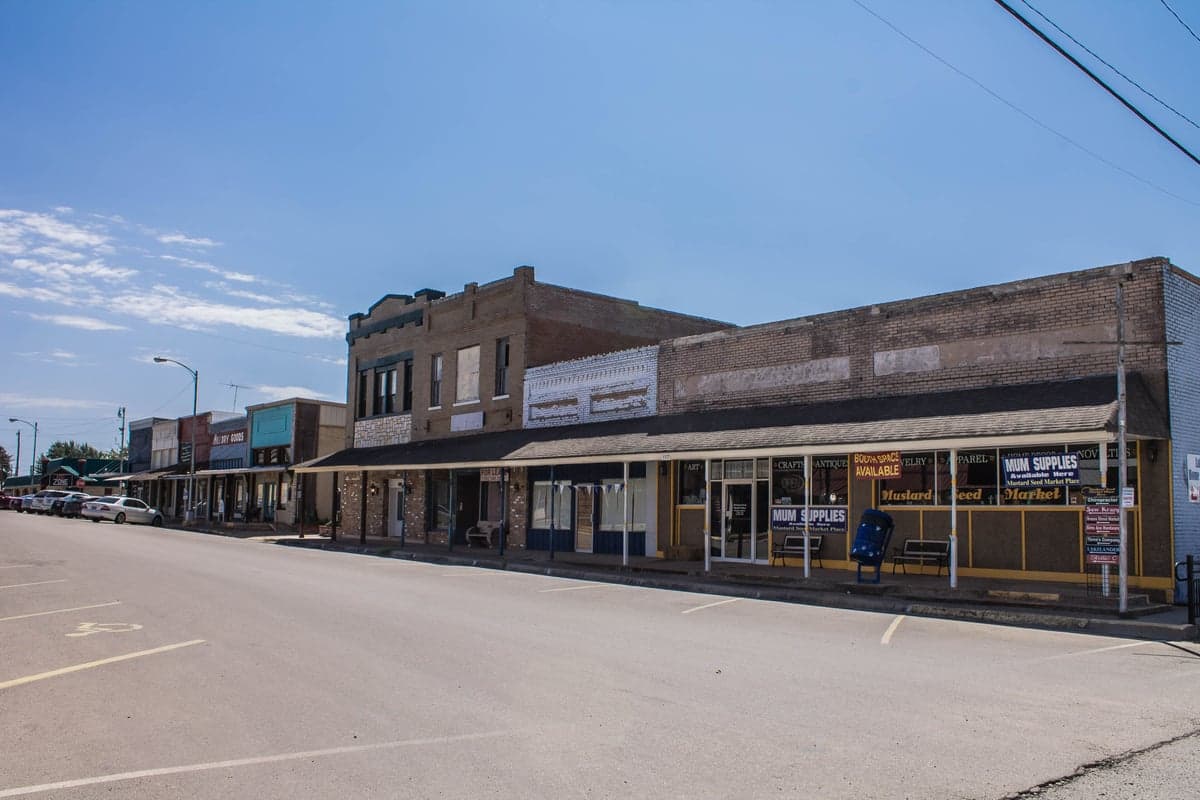
Photo: Wikipedia
Personal Sovereignty in Whitney, TX
Strong independent fundamentals that actively favor personal liberty and low regulation.
What does Personal Sovereignty tell us?
Personal Sovereignty measures your capacity for self-reliance and independence with minimal government friction. Higher scores mean fewer barriers between you and the way you want to live... but it assumes you have the space you need and good neighbors.
What does this tell us?
Personal Sovereignty measures your capacity for self-reliance and independence with minimal government friction. Higher scores mean fewer barriers between you and the way you want to live... but it assumes you have the space you need and good neighbors.
State Policy
Energy independence: Net exporter (220% of energy produced in-state)
Personal Liberty
Homesteading

Personal Liberty Analysis
Whitney, Texas, offers a notably high degree of personal sovereignty compared to many other parts of the country, particularly for those who prioritize minimal government interference in daily life. Nestled in Hill County, this small town of roughly 2,500 residents sits at the intersection of rural self-reliance and the practical limitations of Texas state law, which generally favors individual liberty over collective mandates. For the survivalist or prepper, Whitney provides a solid foundation for autonomy, but it is not a libertarian utopia—local zoning, property taxes, and state-level regulations still impose real constraints that must be weighed carefully.
Tax burden and regulatory posture: How much government reach can you expect?
Texas has no state income tax, which is a major advantage for anyone seeking to keep more of their earnings and reduce government dependency. In Whitney, the total property tax rate typically hovers around 2.0% to 2.5% of assessed value, which is moderate for the state but still a significant annual cost. Hill County’s appraisal district is known for being relatively aggressive in valuations, so expect annual increases that track with rising rural property demand. Sales tax in Whitney is 8.25% (state + local), which is standard for Texas and not burdensome. Regulatory posture here is light: there are no city-level business license requirements for most home-based operations, and the county has minimal building codes outside of septic and well permits. However, the Texas Department of Licensing and Regulation does enforce some state-level rules on things like water wells and rainwater harvesting systems, so off-grid setups require permits and inspections. Overall, the tax and regulatory environment is favorable for self-reliance, but it’s not a free-for-all—you’ll still deal with property tax creep and state oversight on infrastructure.
Self-defense and gun law specifics: What are your rights on the ground?
Texas is a constitutional carry state, meaning you can carry a handgun openly or concealed without a permit if you are 21 or older and not prohibited by law. Whitney itself has no local ordinances restricting firearms beyond state statutes, so you can legally carry in most public places, including parks and businesses unless posted. The town has a small police force (about 8 officers), and response times in rural areas can be 15-30 minutes, making personal firearms a practical necessity for home defense. Stand your ground laws are fully in effect, with no duty to retreat in any place you are lawfully present. For preppers, this is critical: you can defend your property and person without fear of prosecution, provided the threat is reasonable. Magazine capacity limits do not exist in Texas, and suppressors are legal with a federal tax stamp. However, be aware that federal law still applies—NFA items require ATF approval, and the Bureau of Alcohol, Tobacco, Firearms and Explosives (ATF) has a field office in Waco, about 40 minutes away, so enforcement is present. For those building a survival arsenal, Whitney’s legal environment is permissive, but you must still navigate federal red tape for certain items.
Self-reliance and homesteading viability: Lot sizes, zoning, and off-grid feasibility
Whitney’s rural character makes homesteading genuinely viable. Most residential lots outside the city limits are 1 to 10 acres, with many parcels available for under $10,000 per acre as of 2025. Inside the city, zoning is minimal—no HOA-style restrictions on chickens, goats, or gardens in most areas, though you’ll need to check specific subdivisions. Off-grid living is feasible but not without hurdles: rainwater harvesting is legal and encouraged by the state (Texas offers a sales tax exemption on collection equipment), but you must register your well with the Texas Water Development Board if it produces more than 25,000 gallons per day—a threshold few homesteaders will hit. Solar panels are unrestricted, and net metering is available through the local electric co-op (Navarro County Electric Cooperative), but battery storage is more practical for true off-grid independence. Septic systems require a permit from Hill County Environmental Health, and the county enforces minimum lot sizes of 1 acre for conventional septic. For the serious prepper, you can achieve near-total self-sufficiency on 5-10 acres here, with water, power, and food production all legally possible, but you must budget for permits and inspections that add bureaucratic friction.
Personal liberties: Parental rights, medical autonomy, speech, and property
Texas has strong parental rights laws, including the Parental Bill of Rights (HB 1015, 2023), which affirms that parents have the fundamental right to direct their children’s education, healthcare, and moral upbringing. In Whitney, this translates to practical freedom: homeschooling is unregulated (no notification required to the state), and private schools are abundant within a 30-minute drive. Medical autonomy is mixed—Texas does not have a state-level right-to-try law for experimental treatments, but it does allow for medical freedom of choice regarding vaccines (no state mandate for adults, though some employers may require them). The Texas Medical Board is active, so alternative medicine practitioners face licensing hurdles. Free speech is protected under the First Amendment, and Whitney has no local ordinances restricting public expression or assembly. Property rights are strong: Texas has no state-level property tax on homesteads over a certain value (the homestead exemption is $40,000 for school taxes), and eminent domain is limited to public projects with fair compensation. However, the Texas Railroad Commission regulates mineral rights, so if you own land with oil or gas potential, the state can force pooling with adjacent owners—a concern for those wanting full control of their subsurface assets. Overall, personal liberties are robust, but the state’s regulatory reach into healthcare and mineral rights is a reminder that no area is entirely free from government overreach.
In the broader context of personal sovereignty, Whitney, TX, ranks favorably against most of the United States, particularly for those with a survivalist or prepper mindset. The combination of no income tax, constitutional carry, minimal zoning, and strong parental rights creates a foundation for self-reliance that is hard to find in coastal states or even in many parts of the Midwest. However, it is not a haven of absolute liberty—property taxes are a persistent drain, state permits are required for wells and septic, and federal oversight on firearms and healthcare remains. For the strategic relocator who values autonomy above all, Whitney offers a workable balance: enough freedom to build a self-sufficient life, but with enough government presence to remind you that you are still living under a system that demands compliance. If you are willing to navigate the bureaucratic friction, this small Texas town can be a solid base for weathering whatever comes next.

* Values derived from national, state, county, city and local statistics and may differ in a specific area. Last updated: 2026-05-09T00:08:08.000Z
Narrative content on this page is AI-generated and may contain mistakes. Verify any details that matter before acting on them.
ReloMaps may earn a commission from affiliate links at no extra cost to you.

