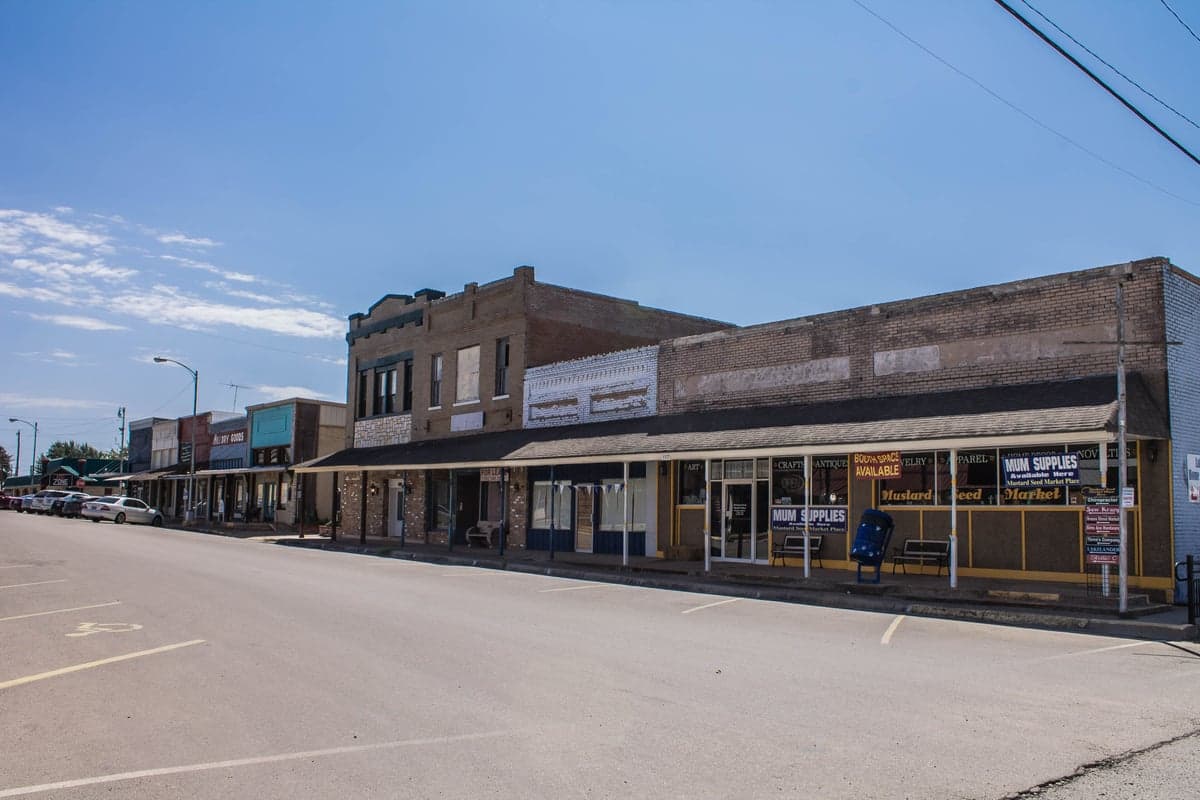
Photo: Wikipedia
Political ClimatePolitical Climate in Whitney, TX
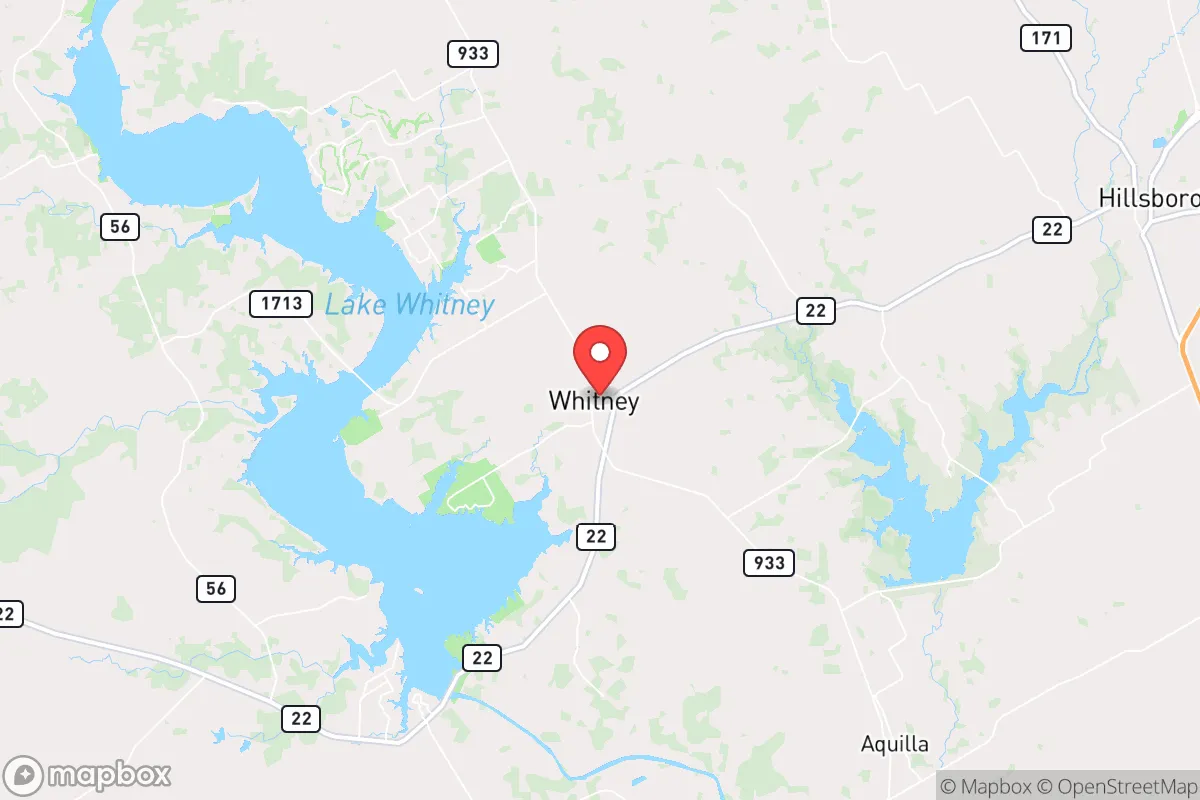
District shown is the primary district for this city’s centroid. Cities may span multiple districts.
Local Political AnalysisPolitical Analysis of Whitney, TX
Whitney, Texas, sits in a solidly conservative pocket of the state, with a Cook Partisan Voting Index of R+14—meaning the area votes about 14 points more Republican than the national average. That’s a far cry from the statewide R+4 rating for Texas as a whole, which already leans right. For folks who’ve been here a while, the political climate feels like a throwback to the Texas of the 1990s: low-key, pro-business, and deeply skeptical of government meddling in daily life. The shift you see in bigger cities—Austin, Dallas, even Waco—hasn’t really touched Whitney yet, and most residents aim to keep it that way.
How it compares
When you stack Whitney against the rest of Texas, the difference is stark. The state’s R+4 PVI means it’s a battleground for suburban swing voters, especially around Houston and the I-35 corridor. But Whitney is a different animal. The nearest town of any size, Hillsboro (about 20 miles west), leans R+10, while Waco (30 miles south) is closer to R+6—still red, but with a noticeable progressive undercurrent from Baylor University and a growing tech sector. Whitney, by contrast, is surrounded by rural Hill County, which hasn’t voted for a Democratic presidential candidate since 1964. The local school board, county commissioners, and even the water district are all reliably conservative. That’s not an accident; it’s a reflection of a community that values local control over personal freedoms—like gun rights, property use, and homeschooling—and sees any move toward progressive policy as a direct threat to that way of life.
What this means for residents
For someone moving here, the political climate translates into fewer headaches from government overreach. You won’t see mask mandates or business shutdowns like you did in Austin or Dallas during 2020—Whitney’s leaders largely told the state to back off. Property taxes are still a pain (that’s Texas-wide), but there’s no city income tax, no heavy-handed zoning that tells you what you can do with your land, and no push for “equity” programs that feel like social engineering. The downside? If you’re hoping for progressive amenities—like a robust public transit system or a city-funded arts scene—you’ll be disappointed. The trade-off is a community where your neighbor’s business is their own, and the government stays out of your garage, your church, and your backyard. That’s the deal, and most folks here are happy with it.
Culturally, Whitney stands apart from the rest of Texas in a few key ways. The state’s big cities have seen a wave of transplants from California and New York, bringing blue-state voting habits and a demand for more government services. Whitney hasn’t seen that influx—it’s still mostly native Texans and folks from nearby rural counties. The local politics reflect that: the city council rarely debates anything beyond water rates and road repairs, and the biggest controversy in recent years was over a proposed solar farm that residents worried would scar the landscape. There’s no talk of defunding the police or “sanctuary city” policies here. If you’re looking for a place where the political temperature stays cool and the government keeps its nose out of your life, Whitney is about as close as you’ll get in modern Texas.

State Political ClimatePolitical Climate in Texas
State Political AnalysisPolitical Environment in the State
Texas has been a reliably Republican state for decades, with a Cook PVI of R+4, but the coalition that keeps it red is shifting under your feet. The dominant coalition is still a mix of rural conservatives, suburban families, and business-minded libertarians, but the margins have been shrinking since 2012. In 2020, Donald Trump won the state by only 5.5 points—down from 9 points in 2016 and 16 points in 2012. The 2022 midterms saw Governor Greg Abbott win by 11 points, a solid but not overwhelming victory, while down-ballot races in places like Dallas and Harris County (Houston) flipped or tightened. The long arc is clear: Texas is still conservative, but the suburbs are getting purple, and the cities are getting bluer.
Urban vs. rural divide
The political map of Texas is a story of three distinct regions. The vast rural and exurban areas—places like Lubbock, Amarillo, and the Permian Basin around Midland-Odessa—vote Republican by 30 to 50 points. These are the oil, agriculture, and ranching communities that form the GOP’s bedrock. Meanwhile, the major metros are a mixed bag. Houston and Dallas-Fort Worth are competitive but lean Republican in the suburbs (Collin County voted +15 R in 2024) while the urban cores are deep blue. Austin and El Paso are the state’s most reliably Democratic cities, with Austin’s Travis County voting +40 D and El Paso’s county voting +30 D. The real battleground is the suburban ring around San Antonio and Fort Worth, where fast-growing communities like Kyle and Frisco are seeing an influx of out-of-state transplants who often bring more moderate or left-leaning views. This urban-rural split means that a new resident in a small town will find a very different political culture than someone moving to a hip Austin neighborhood.
Policy environment
Texas’s policy environment is a mixed bag for a conservative. On the plus side, there is no state income tax, which is a huge draw for families and entrepreneurs. The regulatory posture is generally business-friendly, with minimal zoning in many areas and a right-to-work law that keeps unions weak. On education, the state has expanded school choice through the 2023 creation of education savings accounts (ESAs) for special needs students, and there is a strong push for universal ESAs in the next session. However, property taxes are among the highest in the nation—averaging about 1.8% of home value—because the state relies on them to fund schools and local services. Healthcare is a mixed picture: Texas did not expand Medicaid, which keeps costs lower for the state but leaves many rural hospitals struggling. Election laws have been tightened since 2021’s SB 1, which added ID requirements for mail-in voting and banned 24-hour and drive-through voting. For a conservative, the policy environment is generally favorable, but the property tax burden and the growing influence of blue-city mayors (like Houston’s Sylvester Turner) are real concerns.
Trajectory & freedom
On the freedom front, Texas has been a mixed bag over the last five years. On the positive side, the state passed permitless carry (HB 1927) in 2021, allowing law-abiding adults to carry a handgun without a license—a major expansion of Second Amendment rights. Parental rights were strengthened with the 2023 passage of the “Parental Bill of Rights” (HB 900), which requires school libraries to get parental consent for certain materials and restricts instruction on sexual orientation in elementary grades. Medical freedom took a hit during the pandemic, with Governor Abbott’s executive orders on masks and vaccines creating confusion, but the 2023 ban on COVID-19 vaccine mandates for private employers (SB 7) was a strong step back toward liberty. On the negative side, property rights are under pressure from the growing use of eminent domain for private infrastructure projects like the Texas Bullet Train, and the state’s strict drug laws (including a near-total ban on cannabis) limit personal autonomy. The trajectory is toward more freedom on guns and education, but less on property and medical choices.
Civil unrest & political movements
Texas has seen its share of political flashpoints. The 2020 Black Lives Matter protests in Austin and Dallas were large and sometimes violent, leading to property damage and a lasting police reform debate. On the right, the “Trump Train” convoys and the 2021 “Operation Lone Star” border security initiative have energized grassroots conservatives. Immigration politics are the most visible flashpoint: the state has bused thousands of migrants to northern cities, and the 2023 passage of SB 4 (which allows state law enforcement to arrest illegal border crossers) has sparked federal lawsuits. Election integrity remains a hot topic, with the 2020 audit of Harris County revealing minor irregularities that fueled ongoing distrust. Secession rhetoric, while not mainstream, has a vocal fringe in groups like the Texas Nationalist Movement. A new resident will notice the heavy police presence at the border, the constant political yard signs in suburban neighborhoods, and the fact that local news is dominated by fights over school boards and property taxes.
Projection
Over the next 5-10 years, Texas is likely to become more competitive but not flip blue. The key demographic shift is the continued influx of Californians and other out-of-staters, who tend to be more moderate or liberal. However, many of these transplants are moving to red suburbs like Frisco or Kyle for lower taxes and better schools, and they often vote Republican on economic issues even if they lean left on social ones. The rural vote will remain solidly red, but the growth in Austin and Dallas will keep the state purple at the presidential level. The state legislature will likely remain Republican-controlled through 2030 due to gerrymandering, but the margins will narrow. A new resident moving in now should expect a state that is still conservative on taxes and guns, but where the culture wars over education and immigration will only intensify. The freedom to live your life without government interference will remain strong in rural areas, but in the big cities, expect more progressive policies on zoning, policing, and public health.
For a conservative family or individual, Texas still offers a strong foundation: no income tax, a growing economy, and a political system that generally respects gun rights and parental authority. But the cracks are showing. The property tax burden is real, the cities are trending left, and the constant political battles over the border and education can be exhausting. If you move here, pick your county carefully—a place like Collin County or Montgomery County will feel very different from Travis County or El Paso County. The bottom line: Texas is still a good bet for a conservative, but it’s no longer a sure thing. You’ll need to stay engaged locally to keep it that way.
* Values derived from national, state, county, city and local statistics and may differ in a specific area. Last updated: 2026-05-09T00:08:08.000Z
Narrative content on this page is AI-generated and may contain mistakes. Verify any details that matter before acting on them.
ReloMaps may earn a commission from affiliate links at no extra cost to you.

