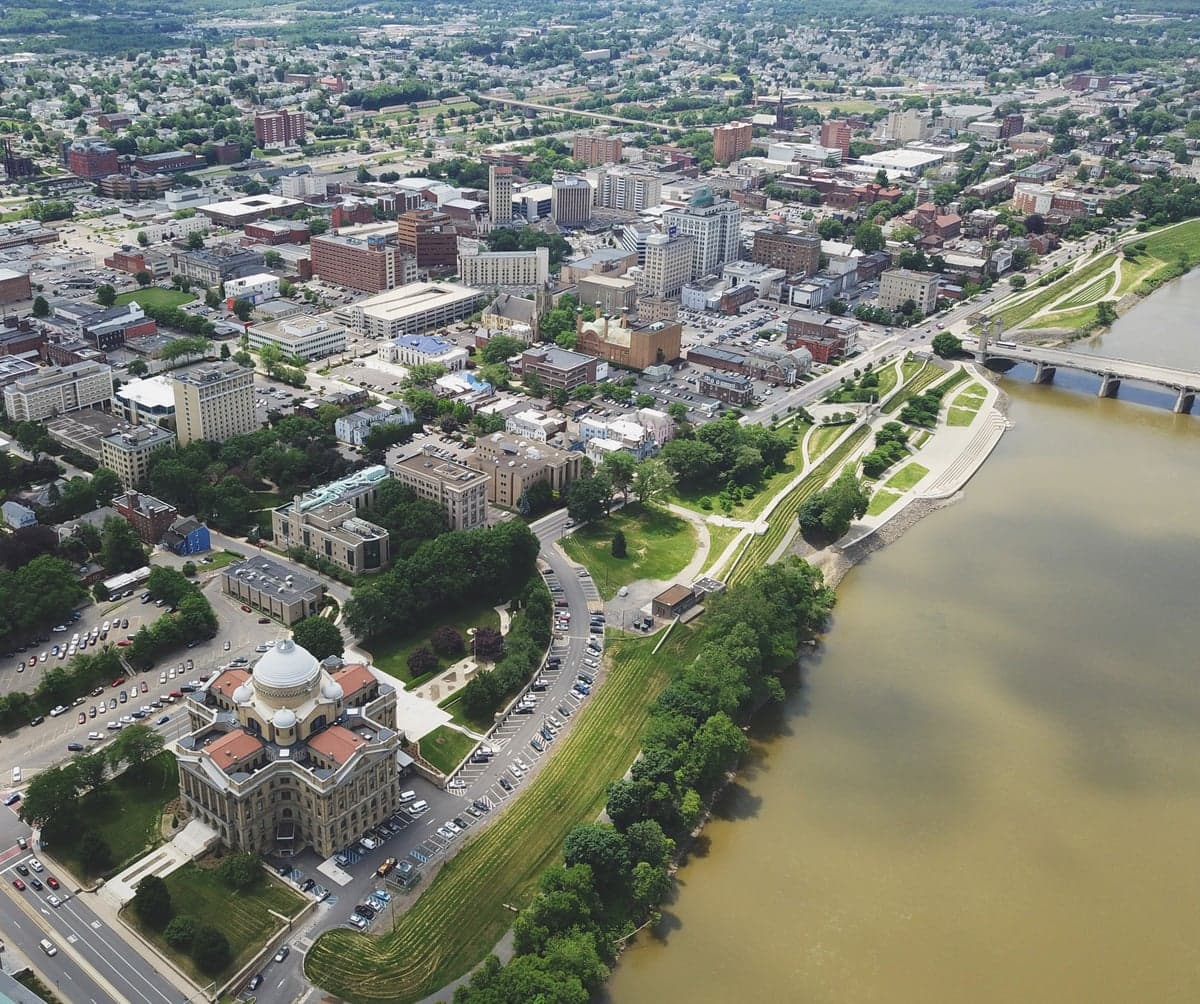
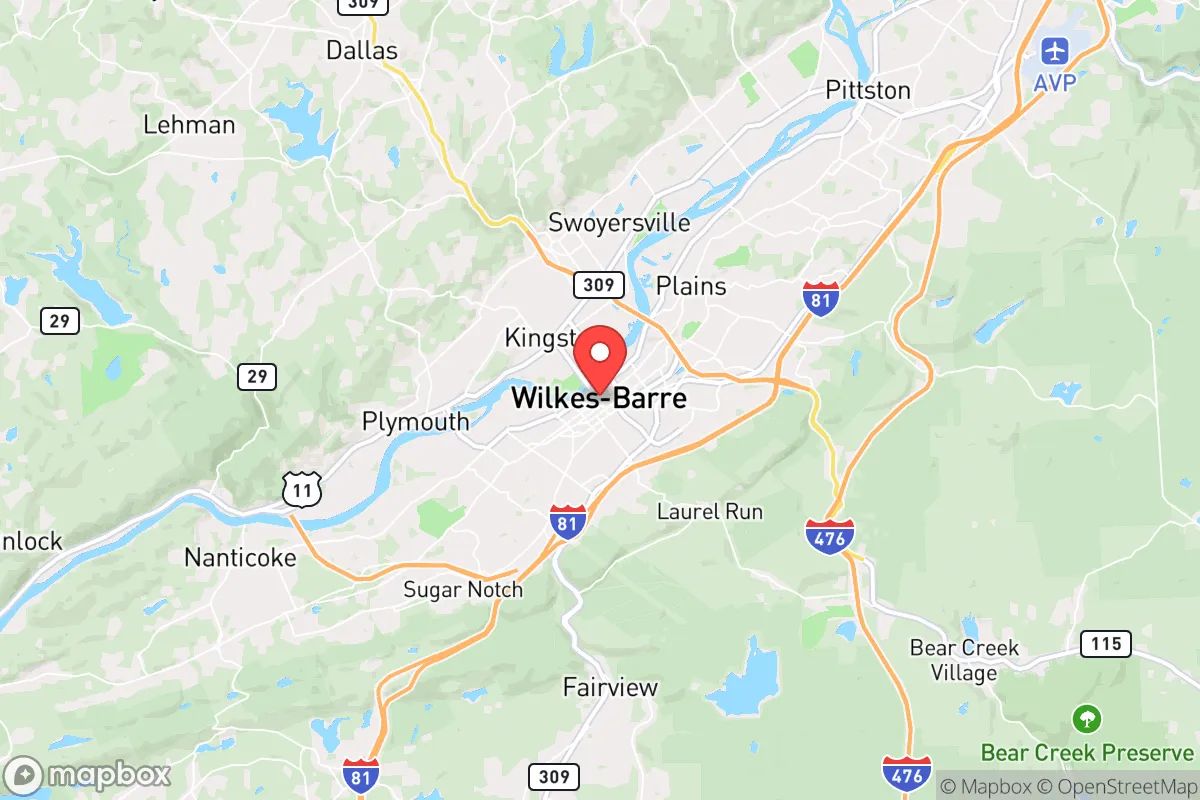
Photo: Wikipedia
Strategic Assessment of Wilkes Barre, PA
Multiple tactical vulnerabilities. Population density, target proximity, or disaster risk are likely compounding. A retreat property and exit planning is required.
What does the Strategic Assessment tell us?
Our Strategic Assessment grades tactical survivability of an area. Major population centers, military targets, fallout zones, natural disasters, and border exposure all drive risk — lower exposure means a more defensible position in a crisis.
This is heavily inspired by Joel Skousen's Strategic Relocation book. Highly recommended you checkout the book ($)What does this tell us?
Our Strategic Assessment grades tactical survivability of an area. Major population centers, military targets, fallout zones, natural disasters, and border exposure all drive risk — lower exposure means a more defensible position in a crisis.
This is heavily inspired by Joel Skousen's Strategic Relocation book. Highly recommended you checkout the book ($)Strategic Pillars

Key Distances
Regional Safe Places
Below is our recommended "safe zones" in Pennsylvania and the surrounding area based on our strategic heuristics. For most people, it's unrealistic to live in a “safe zone” full-time due to work, family or other personal reasons. They tend to be more rural. However, many of these areas are perfect for second homes and retreat properties that double as a vacation home or even a short-term rental.
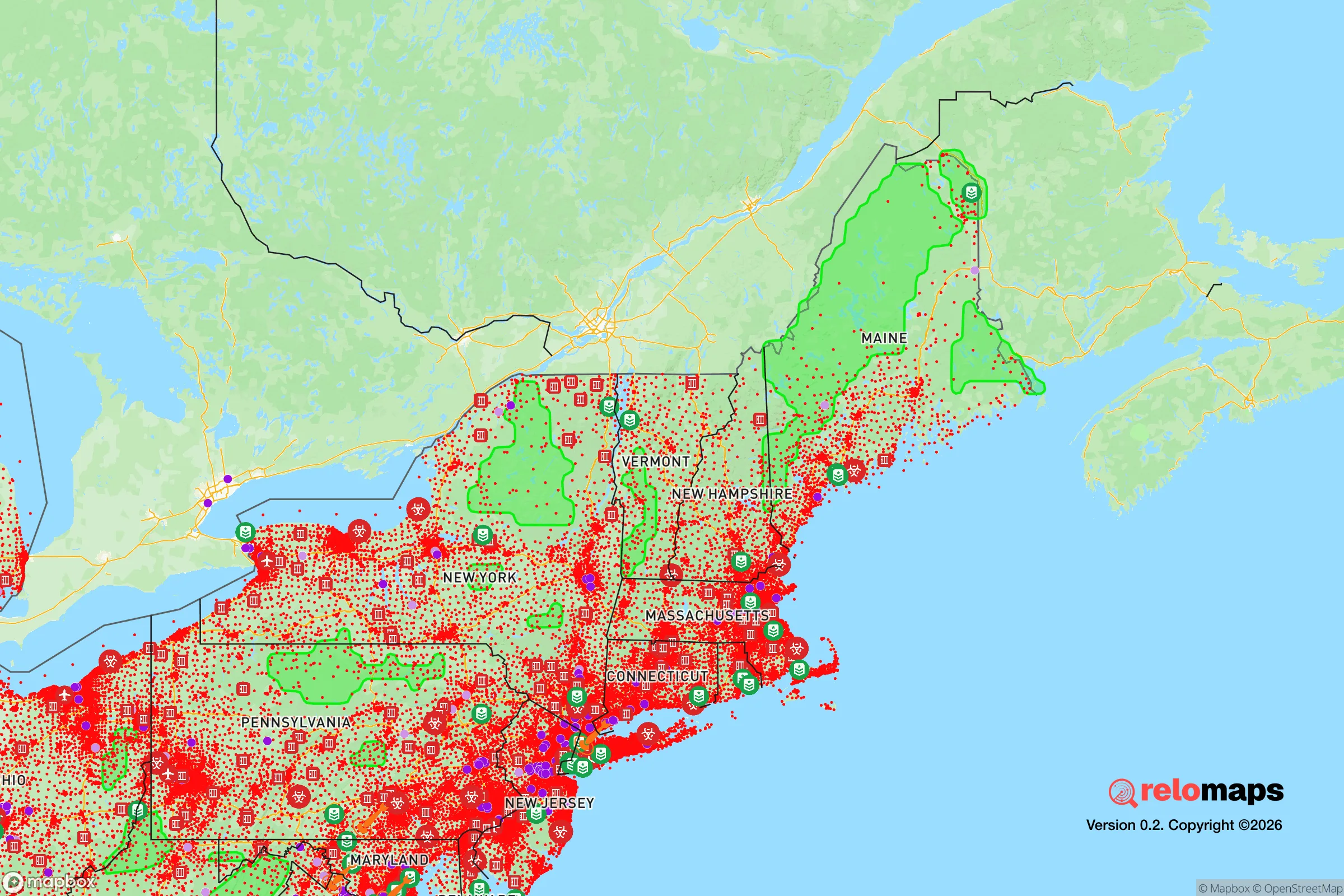
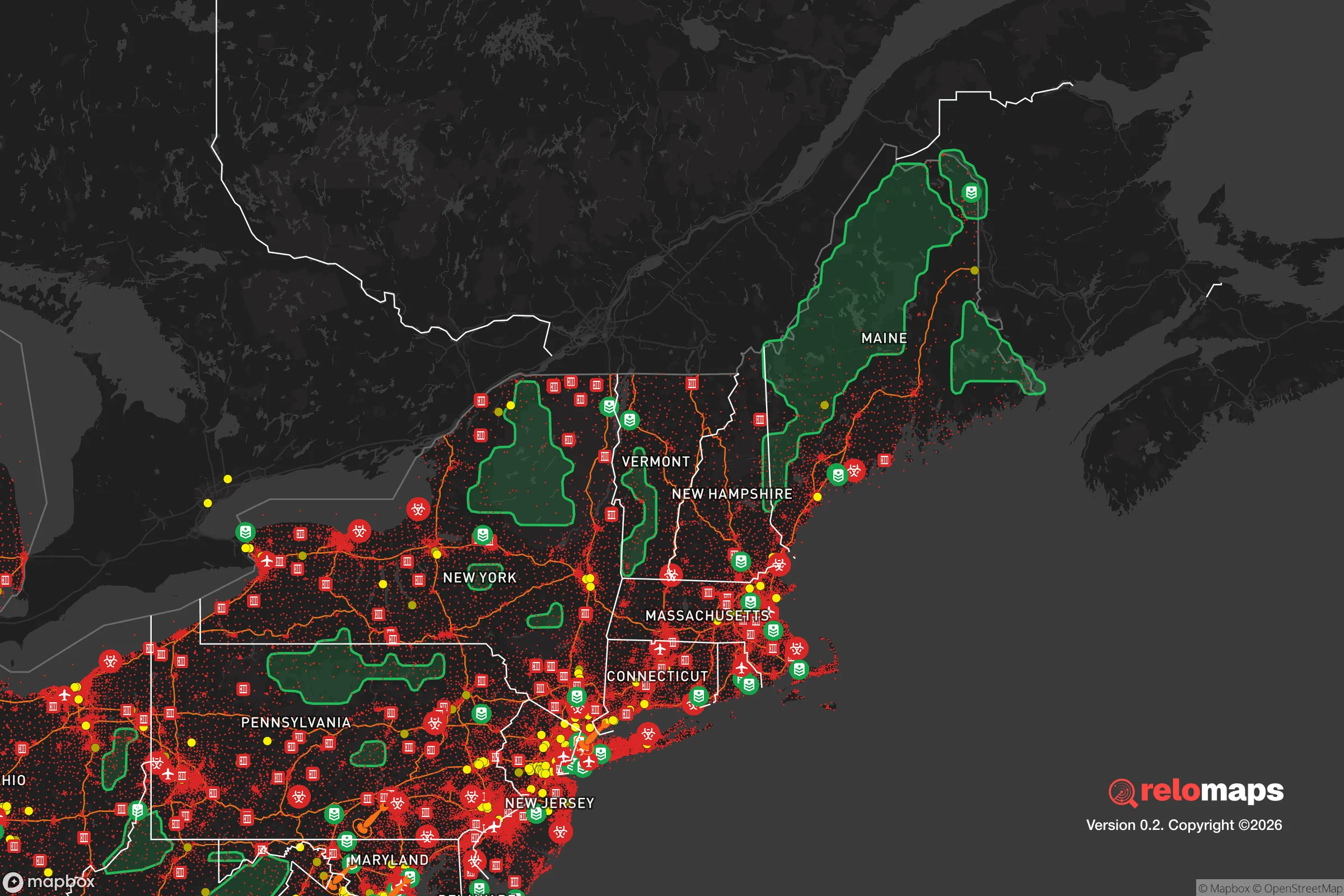


Important Note: For informational purposes only. This does not mean nothing bad ever happens in the green zones. Please use common sense. This is based on public data and modeled with AI. We tried to take a conservative approach but mistakes happen. We update this regularly as new information becomes available.
Solar Generator Recommendations
Backup power matters more here than in safer locations. We've picked three solar generators across budgets and capacity tiers — start with the budget unit if you only need a few essentials, or step up if you want to run a fridge and HVAC for days at a time.

Jackery Portable Power Station Explorer 300
Budget OptionPower on the Go: Weighing only 11 lbs, it's convenient to set up and store with book-sized foldable solar panels

BLUETTI Portable Power Station AC180
Designed for both indoor and outdoor scenarios, AC180 is highly capable as it has a robost capacity and continuous output power.

EF ECOFLOW DELTA Pro Ultra Power Station
Upgraded PickEcoFlow DELTA Pro Ultra is a whole-home energy system designed to grow with your family. Integrated with the Smart Home Panel 2, it scales to meet your evolving energy needs — keeping your home powered, intelligent, and secure through every stage of life.
We earn a commission, at no additional cost to you.
Strategic Assessment Analysis
Wilkes-Barre, Pennsylvania, occupies a strategic position in the Wyoming Valley that has historically proven resilient, but its current viability for a prepper-minded relocator requires a hard look at both its natural advantages and its proximity to modern vulnerabilities. The city sits in a narrow river valley flanked by the Pocono Plateau to the east and the Endless Mountains to the west, offering a degree of natural defensibility that flatland suburbs lack. However, its location within a 2-hour drive of New York City, Philadelphia, and the I-95 corridor means it is squarely within the fallout zone of any major urban collapse, mass casualty event, or grid-down scenario originating from those population centers.
Geographic position and natural advantages for long-term survival
Wilkes-Barre’s primary strategic asset is its position within the Appalachian Mountain chain, which provides natural barriers against large-scale movement and offers abundant water, timber, and game. The Susquehanna River runs through the city, and the surrounding Lackawanna State Forest and Pinchot State Forest offer thousands of acres of public land for hunting, foraging, and retreat. The region’s elevation—roughly 550 feet above sea level in the valley floor, with ridges rising to over 2,000 feet—means cooler summers and a longer growing season than the deep South, but also harsh winters that can be a double-edged sword for unprepared relocators. The area’s coal mining history has left behind a network of underground voids and abandoned mine drainage, which can be a source of water contamination but also offers potential for geothermal or underground sheltering if properly assessed. For a conservative-leaning individual concerned with federal overreach or societal breakdown, the region’s relative isolation from major military installations and federal command centers is a plus—there are no major bases or nuclear command facilities within 50 miles, reducing the likelihood of being a target in a conflict scenario.
Risks, exposures, and proximity to fallout-relevant landmarks
The most significant risk for a Wilkes-Barre relocator is its proximity to the Northeast Corridor’s critical infrastructure. The city lies directly under the flight path of the New York-Philadelphia airspace, and the nearby Scranton/Wilkes-Barre International Airport (AVP) serves as a regional hub that could become a chokepoint for evacuation or a target for civil unrest. The Susquehanna River itself is a double-edged sword: it provides water and transportation, but the valley’s flood history—most notably the 1972 Hurricane Agnes flood that devastated the city—means any prolonged grid-down scenario could leave low-lying neighborhoods underwater. The region is also within 30 miles of the Susquehanna Steam Electric Station (a nuclear power plant in Berwick), and while the plant has a solid safety record, a major incident there would put the entire valley at risk. For a prepper, the concentration of population in the Scranton/Wilkes-Barre metro area (roughly 550,000 people) means that any mass casualty event or food/water shortage in the Northeast would send refugees up the I-81 and I-80 corridors, directly through Wilkes-Barre. The city’s reliance on the I-81 bridge over the Susquehanna is a single-point-of-failure vulnerability—if that bridge goes down, the valley is effectively split in two.
Practical resilience for a relocator: food, water, energy, and defensibility
For a single individual or family looking to establish a resilient homestead, Wilkes-Barre offers mixed prospects. The valley’s soil is fertile for a northern climate, and the surrounding farmland in Luzerne County produces corn, hay, and dairy, but the local food system is heavily dependent on trucking from the I-81 corridor. A serious grid-down event would see supermarket shelves empty within 72 hours, so a relocator must plan for at least a 6-month food cache and a reliable water source—the Susquehanna is available but requires heavy filtration due to agricultural runoff and legacy mining contamination. The region’s energy picture is more favorable: natural gas is abundant from the Marcellus Shale, and many rural properties have access to propane or heating oil. Solar potential is moderate (roughly 4.2 peak sun hours per day), but the valley’s frequent cloud cover in winter means battery storage is essential. Defensibility is a mixed bag: the valley floor offers few natural chokepoints, but the surrounding ridges provide excellent observation points and retreat options. The city itself has a high crime rate (roughly 2.5x the national average for violent crime), so a relocator should avoid urban Wilkes-Barre proper and focus on the outlying townships like Dallas, Kingston, or the Back Mountain area, which offer larger lots, lower population density, and better access to state game lands. The local gun culture is strong—Pennsylvania is a shall-issue state for concealed carry, and there are multiple gun clubs and ranges within 30 minutes—which aligns with a prepper mindset for self-defense and hunting.
The overall strategic picture for Wilkes-Barre is one of cautious viability for a relocator who understands its trade-offs. It is not a remote bunker location—you are still within a day’s drive of 40 million people, and any major East Coast crisis will wash over this valley like floodwater. But for someone who wants to stay within the Northeast for family or work reasons, it offers a rare combination of natural resources, defensible terrain, and a conservative-leaning population that is generally self-reliant and skeptical of federal authority. The key is to avoid the urban core, secure a property with well water and septic above the flood plain, and build a network with like-minded locals through churches, gun clubs, or farming co-ops. If you can handle the snow and the risk of a refugee surge from the coast, Wilkes-Barre is a solid B-tier relocation option—not a fortress, but a place where a prepared individual can hold their own while the cities burn.

* Values derived from national, state, county, city and local statistics and may differ in a specific area. Last updated: 2026-05-01T03:08:12.000Z
Narrative content on this page is AI-generated and may contain mistakes. Verify any details that matter before acting on them.
ReloMaps may earn a commission from affiliate links at no extra cost to you.

