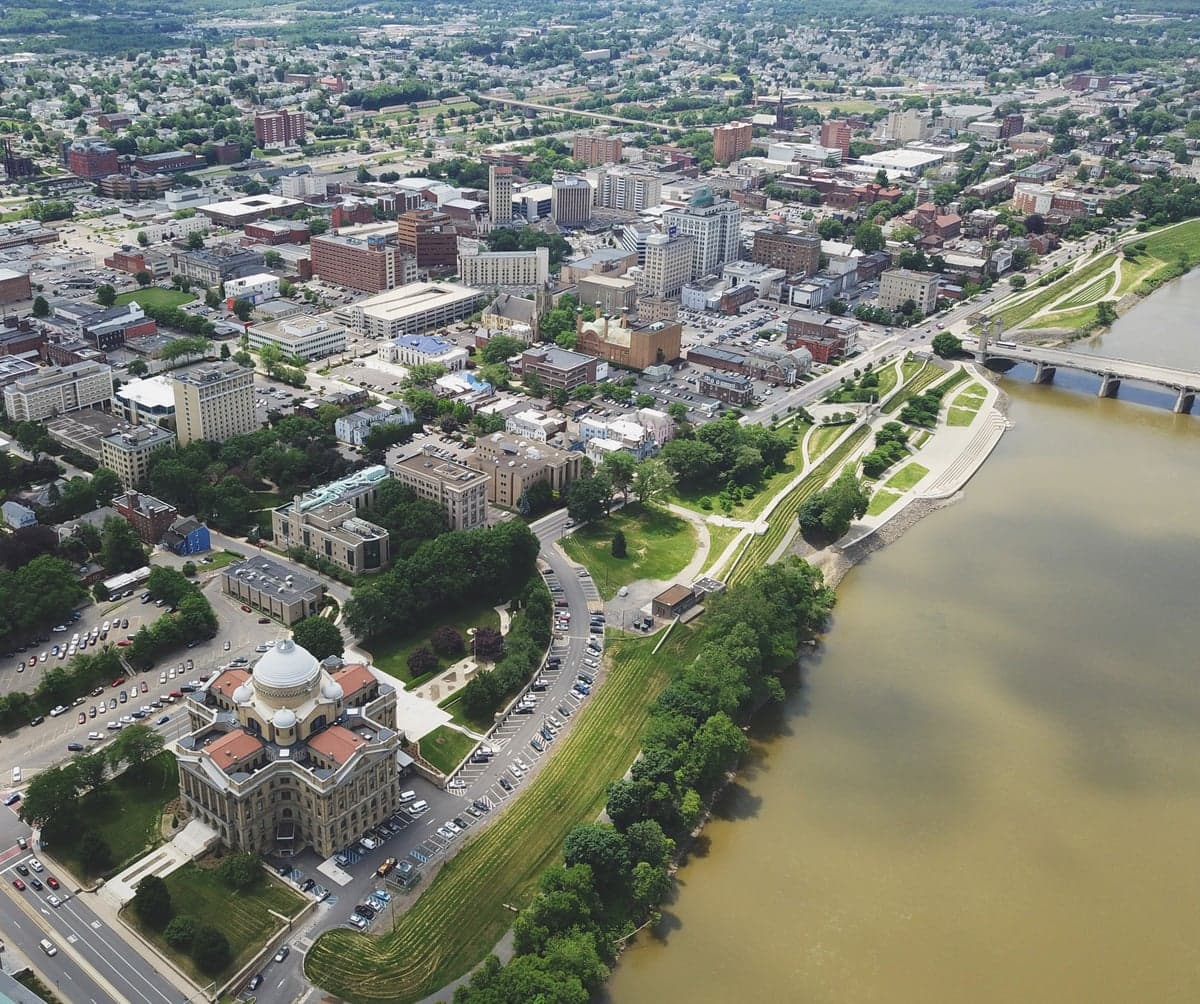
Photo: Wikipedia
Political ClimatePolitical Climate in Wilkes Barre, PA
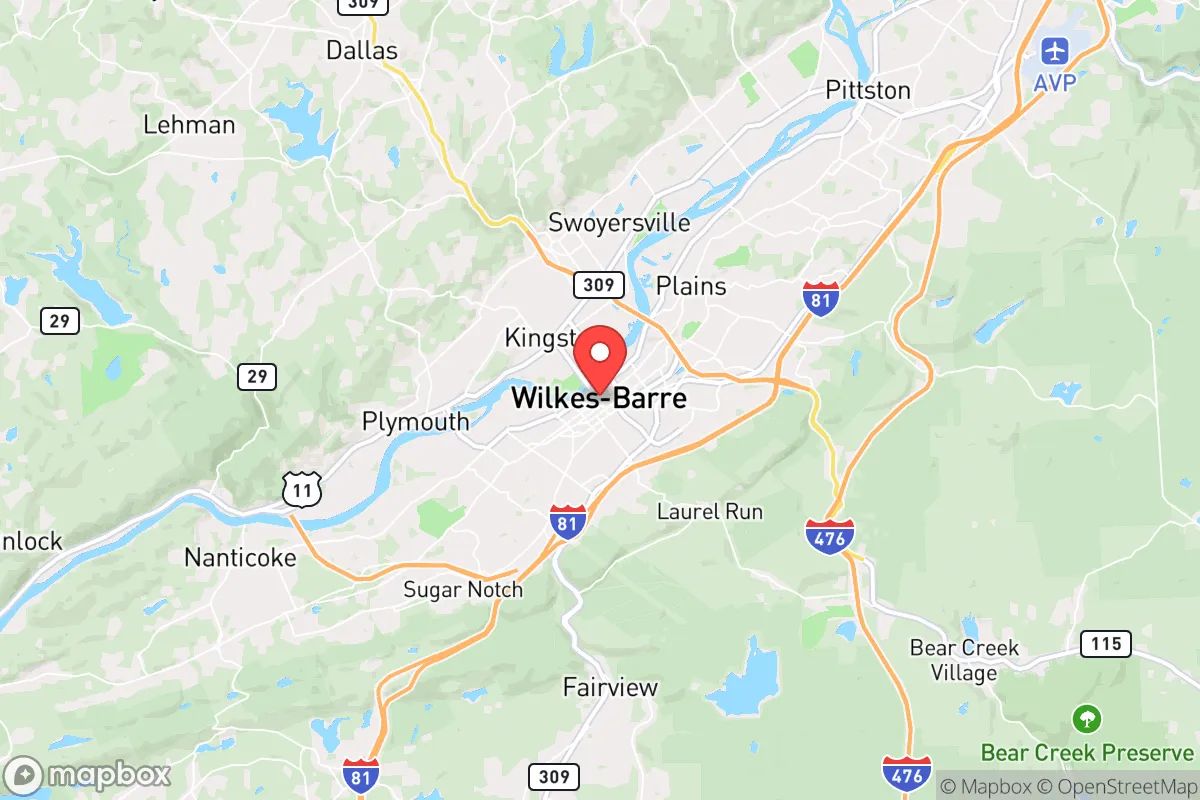
District shown is the primary district for this city’s centroid. Cities may span multiple districts.
Local Political AnalysisPolitical Analysis of Wilkes Barre, PA
Wilkes-Barre has long been a reliably conservative stronghold in northeastern Pennsylvania, and despite some demographic and economic shifts over the past decade, the area still leans solidly to the right. The Cook Partisan Voting Index (PVI) for the city and its surrounding Luzerne County sits at R+4, meaning the district votes about four points more Republican than the national average. In the 2024 presidential election, Luzerne County went for Donald Trump by a margin of roughly 12 points, a pattern that has held steady since 2016. That said, you can feel the political ground shifting under your feet if you’ve lived here long enough—especially in the city proper, where younger transplants and out-of-state students from Wilkes University and King’s College have started to nudge things leftward. But step just a few miles outside the city limits into places like Dallas, Kingston, or Mountain Top, and you’re back in deep-red territory where folks still fly the Gadsden flag and talk about property rights over coffee.
How it compares
Wilkes-Barre’s political character stands in sharp contrast to its neighbors to the east and west. Drive 20 miles east to Scranton, and you’ll find a city that’s been trending blue for years—Lackawanna County went for Biden in 2020 and Harris in 2024, driven largely by union households and a growing service-sector workforce. Meanwhile, head west toward Bloomsburg or south toward Hazleton, and you’ll hit towns that are even more conservative than Wilkes-Barre, with Hazleton’s mayor publicly vowing to resist sanctuary city policies and Bloomsburg’s rural outskirts voting +20 points redder. The real contrast, though, is between Wilkes-Barre’s urban core and its surrounding townships. In the city itself, you’ll see more Harris signs and “In This House We Believe” yard placards than you would have a decade ago, but in places like Plains Township or Hanover Township, it’s still a sea of Trump flags and “Don’t Tread on Me” banners. That split is a microcosm of the broader national divide, and it’s getting sharper every election cycle.
What this means for residents
For those of us who’ve lived here a while, the biggest concern is how this creeping progressive influence in the city could lead to government overreach into our daily lives. We’ve already seen the city council flirt with zoning changes that would limit how you can use your own property, and there’s been talk of adopting “equity” policies in local hiring that sound a lot like quotas. The county commissioners, thankfully, have held the line on things like mask mandates and business closures—remember the 2020 lockdowns? Luzerne County was one of the first in the state to push back, and that’s because the local leadership still respects the idea that you don’t get to tell a small business owner how to run their shop. But if the city keeps tilting left, you can bet those fights will come back. For now, most residents in the outlying areas enjoy a pretty hands-off approach from local government—low property taxes relative to the rest of the state, no county-wide income tax, and a sheriff’s office that doesn’t play games with Second Amendment rights.
Culturally, Wilkes-Barre still feels like a place where tradition matters. The annual Cherry Blossom Festival, the strong Catholic and Orthodox church presence, and the local VFW posts are all reminders that this isn’t some transient suburb—it’s a community where people have roots. That said, the long-term trajectory is a little worrying. The city’s population has been slowly declining (down about 5% since 2010), and the younger folks who do move in tend to bring big-city ideas about “inclusivity” and “sustainability” that often translate into more regulations and higher costs. If you’re looking for a place that still values personal freedom and local control, the surrounding townships are where you want to be. The city itself? Keep an eye on it—but don’t hold your breath.

State Political ClimatePolitical Climate in Pennsylvania
State Political AnalysisPolitical Environment in the State
Pennsylvania is a classic purple state that has been drifting leftward over the past 20 years, though it still retains a strong conservative backbone in its rural and exurban regions. The state voted for Joe Biden by just over 1 point in 2020 after backing Donald Trump in 2016, and the 2024 race was again decided by razor-thin margins, with Trump narrowly reclaiming it. The dominant coalition is a split between the heavily populated, increasingly progressive southeast (Philadelphia and its collar counties) and the reliably red, sprawling central and northern rural areas, with the southwestern Pittsburgh region acting as a moderating blue anchor. For a conservative considering relocation, the key takeaway is that Pennsylvania offers a mixed bag: low taxes on retirement income and strong Second Amendment protections in the state constitution, but a state government that has been aggressively pushing progressive policies on education, voting, and energy regulation.
Urban vs. rural divide
The political map of Pennsylvania is a textbook study in the urban-rural chasm. Philadelphia and its immediate suburbs in Montgomery, Delaware, and Chester counties are the engine of the state's Democratic vote, delivering margins of 70-80% in the city itself. Pittsburgh and Allegheny County are similarly blue, though with a more moderate, union-heavy flavor. The real story is the massive red wall stretching from the northern tier through the center and into the southwest. Counties like Tioga, Potter, and Bradford routinely vote 70-75% Republican. The key battlegrounds are the "collar counties" around Philadelphia — Bucks, Berks, and Northampton — which have been trending blue as suburbanites move in from the city. Lancaster County remains a conservative stronghold, but even there, the city of Lancaster itself is a blue island. The Scranton/Wilkes-Barre area in the northeast is a classic bellwether, having flipped from blue to red over the past decade as union Democrats shifted to Trump. If you're looking for a conservative-friendly area, the rural north-central region or the Amish country around Lancaster are your best bets, while the Philly suburbs are increasingly hostile territory for traditional values.
Policy environment
Pennsylvania's policy environment is a tug-of-war between a Republican-leaning legislature and a Democratic governor (Josh Shapiro as of 2026). On the plus side for conservatives, the state has a flat income tax of 3.07% and does not tax retirement income (Social Security, pensions, 401(k) withdrawals), making it a tax-friendly destination for retirees. Property taxes are high, averaging around 1.5% of home value, but there is a homestead exemption and a property tax/rent rebate program for seniors. The regulatory posture is mixed: the state has a strong oil and gas industry, especially in the Marcellus Shale region, but Governor Shapiro has imposed new permitting fees and environmental review requirements that have slowed drilling. Education policy is a flashpoint: the state has a school voucher program that was expanded in 2024, but it's under constant legal attack from teachers' unions. Election laws are a sore spot: Pennsylvania has no voter ID requirement (though a 2024 law tightened absentee ballot rules), and mail-in voting was expanded in 2019, leading to ongoing integrity concerns. The state also has a "sanctuary city" problem in Philadelphia, which limits cooperation with ICE, though state law prohibits sanctuary policies at the county level.
Trajectory & freedom
Over the past decade, Pennsylvania has been on a trajectory of declining personal freedom in several key areas, though it remains freer than neighboring New York or New Jersey. On gun rights, the state has a preemption law that prevents local governments from passing their own restrictions, but Philadelphia has repeatedly challenged it, and in 2024 the state Supreme Court upheld a ban on "ghost guns" and expanded background checks for private sales. This is a worrying trend for Second Amendment supporters. On parental rights, the state passed a law in 2023 requiring school districts to notify parents of "sexually explicit" instructional materials, but it was watered down in committee and is weakly enforced. Medical autonomy took a hit in 2022 when the state banned gender transition procedures for minors, a rare win for conservatives. On property rights, the state's Act 13 (2012) gave the oil and gas industry broad authority to drill on private land with minimal local input, but recent court rulings have chipped away at that. The biggest freedom concern is the state's emergency powers: during COVID, Governor Wolf used executive orders to shut down businesses and schools for months, and the legislature's attempt to limit those powers via constitutional amendment was struck down by the courts. That memory still stings for many residents.
Civil unrest & political movements
Pennsylvania has seen its share of political flashpoints. Philadelphia experienced significant civil unrest in 2020 following the George Floyd protests, with looting and property damage in Center City and University City. The city's progressive district attorney, Larry Krasner, has been a lightning rod, facing impeachment efforts from the state legislature for what critics call a soft-on-crime approach. On the right, the Pennsylvania Freedom Caucus has grown in influence, pushing for election integrity reforms and school choice. The 2020 election was a major battleground, with Trump's campaign challenging mail-in ballot procedures in court, and the state Supreme Court's decision to extend the ballot receipt deadline was a key flashpoint. Immigration politics are heated in the southeast: Philadelphia's sanctuary policies have led to several high-profile incidents of illegal immigrants being released from custody despite ICE detainers. The Lancaster County area has seen a surge of legal immigration from Central America, which has been largely peaceful but has created cultural tensions in some school districts. There is no serious secession movement, but there is a growing "state of independence" sentiment in the rural north, where residents feel ignored by Harrisburg and Philadelphia.
Projection
Looking ahead 5-10 years, Pennsylvania is likely to continue its slow leftward drift, driven by in-migration from New York and New Jersey into the southeastern counties. The Philadelphia suburbs will become more Democratic, while the rural areas will remain deeply red but lose population. The key wildcard is the Marcellus Shale region: if the state continues to tighten regulations on natural gas drilling, it could accelerate economic decline in the northwest and central regions, pushing those voters further right but also reducing their political clout. The state's electoral college votes will remain competitive, but the trend lines favor Democrats in statewide races. For a conservative moving in now, expect to see continued battles over school choice, gun rights, and election integrity. The state constitution's strong protections for individual rights (including a "free and equal" election clause) will be tested. The best bet for maintaining a conservative lifestyle is to settle in a county like Butler, Lancaster, or York, where local government is still friendly to traditional values and the state's progressive policies are less aggressively enforced.
Bottom line for a new resident: Pennsylvania is a state where you can still find affordable land, good schools in conservative areas, and a strong sense of community, but you'll need to stay politically engaged to protect those things. The state government in Harrisburg is increasingly hostile to gun rights, parental control, and energy independence, but the rural and exurban counties are fighting back. If you're willing to be active in local politics and school boards, you can carve out a good life here. If you're looking for a state that's already solidly red and trending that way, you might be better off in Texas or Florida. But if you want to be in a battleground where your vote actually matters and where the fight for freedom is still winnable, Pennsylvania is your place.
* Values derived from national, state, county, city and local statistics and may differ in a specific area. Last updated: 2026-05-01T03:08:12.000Z
Narrative content on this page is AI-generated and may contain mistakes. Verify any details that matter before acting on them.
ReloMaps may earn a commission from affiliate links at no extra cost to you.

