 Popular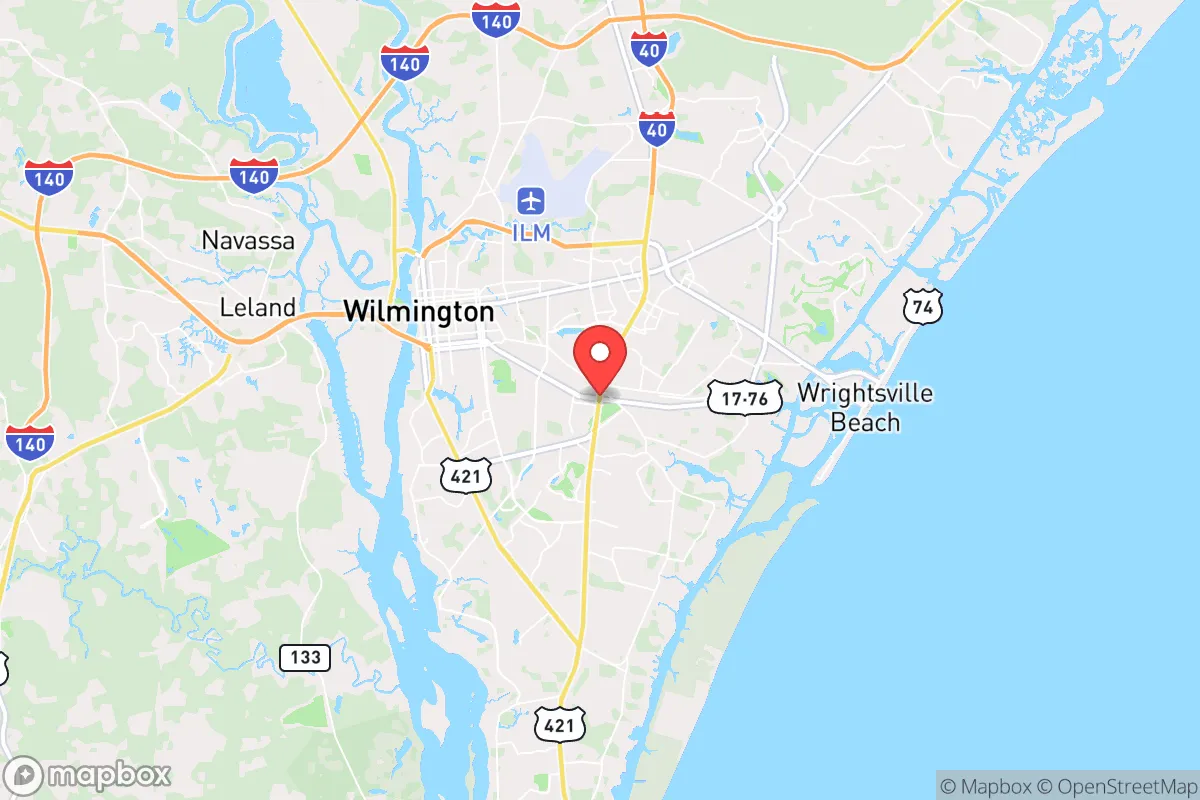
Photo: Wikipedia
Demographics of Wilmington, NC
Affluence Level in Wilmington, NC
A middle-class area roughly in line with national averages across income, home values, education, and employment.
People of Wilmington, NC
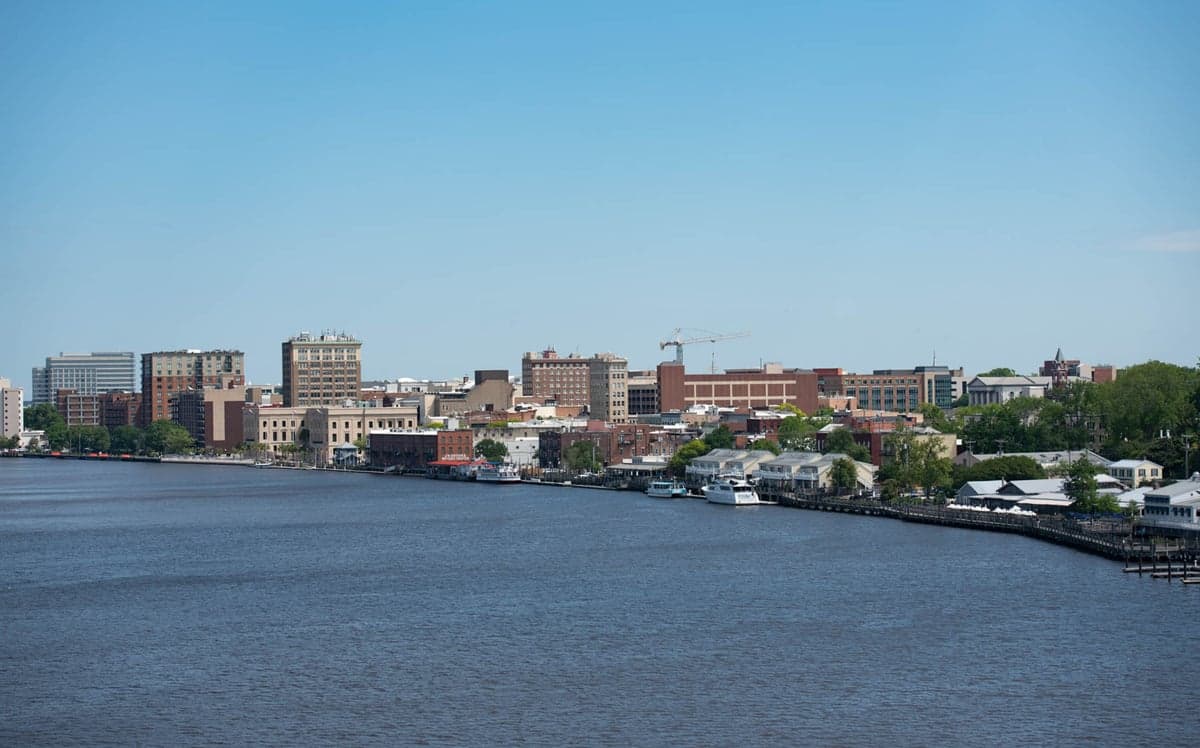
The people of Wilmington, North Carolina today form a predominantly White (69.9%) and native-born (96.8% U.S.-born) population of 118,578, with a notable Black minority (14.8%) and a growing Hispanic presence (8.9%). The city’s character is defined by a college-educated majority (45.8%) and a coastal economy anchored by film production, tourism, and the University of North Carolina Wilmington. Distinctive identity markers include a historic riverfront, a strong military-adjacent population from nearby Camp Lejeune and Fort Bragg, and a cultural divide between the historic downtown, the suburban sprawl of Landfall, and the working-class neighborhoods of the Northside.
How the city was settled and grew
Wilmington was founded in 1739 as a port town on the Cape Fear River, drawing its original European settlers—primarily English, Scottish, and Welsh—through land grants and the promise of trade in naval stores, lumber, and rice. The city’s early economy relied heavily on enslaved African labor, and by 1860, Black residents made up a majority of the population. After the Civil War, the Black community concentrated in the Brooklyn neighborhood (now part of the Southside) and the Northside, building churches, schools, and businesses. The 1898 Wilmington Insurrection, a violent coup by White supremacists, forcibly expelled many Black leaders and property owners, reshaping the city’s demographics for decades. The early 20th century brought a wave of White rural migrants from the surrounding counties, drawn by the port and the new shipbuilding industry during World War II. These families settled in the Carolina Heights and Forest Hills neighborhoods, which remain predominantly White and middle-class today.
Modern era (post-1965)
The post-1965 era saw Wilmington’s population shift from a biracial Black-White dynamic to a more diverse but still heavily native-born composition. The 1965 Hart-Cellar Act had minimal direct impact here—foreign-born residents remain just 3.2% of the population, far below the national average. Instead, domestic in-migration drove growth. The 1970s and 1980s brought White retirees and professionals from the Northeast and Midwest, attracted by the mild climate and lower cost of living. They settled in the master-planned community of Landfall (golf-course homes, gated entries) and the beach-adjacent Wrightsville Beach area. Meanwhile, the Black population, which had been concentrated in the Northside and Creekwood public housing projects, began a slow suburbanization into the Murrayville area and unincorporated New Hanover County. The Hispanic population, though small (8.9%), grew steadily from the 1990s onward, driven by construction and service-industry jobs; most settled in the South 17th Street corridor and the Monkey Junction area. East/Southeast Asian communities (1.2%) are largely tied to UNCW’s academic programs and the medical sector, clustering near the university and the hospital district. The Indian-subcontinent population (0.1%) is negligible, with no distinct enclave.
The future
Wilmington’s population is heading toward continued White-majority growth, with the Hispanic share rising slowly and the Black share holding steady or declining slightly. The city is not homogenizing into a single identity but rather tribalizing into distinct enclaves: affluent White retirees and professionals in Landfall and Wrightsville Beach; a younger, more transient population in the downtown historic district; and a working-class Black and Hispanic base in the Northside and South 17th Street areas. The foreign-born population is unlikely to grow significantly—the city lacks the industrial base or refugee resettlement programs that drive immigration in other Southern cities. The next 10-20 years will likely see continued domestic in-migration from the Northeast and Midwest, pushing the White share above 70% and the college-educated share above 50%. The Black population may continue a slow outward drift to suburban Pender and Brunswick counties, where housing is cheaper.
For someone moving in now, Wilmington is becoming a more affluent, more White, and more college-educated city—a coastal retirement and lifestyle destination rather than a diverse, immigrant-driven hub. The city offers a stable, native-born population with a strong sense of local history, but the legacy of 1898 and the ongoing racial geography of neighborhoods like the Northside versus Landfall remain visible. New arrivals should expect a place where social circles often form along economic and racial lines, and where the “small-town feel” is increasingly a product of demographic homogeneity rather than intentional integration.

* Values derived from national, state, county, city and local statistics and may differ in a specific area. Last updated: 2026-05-03T04:51:26.000Z
Narrative content on this page is AI-generated and may contain mistakes. Verify any details that matter before acting on them.
ReloMaps may earn a commission from affiliate links at no extra cost to you.

