 Popular
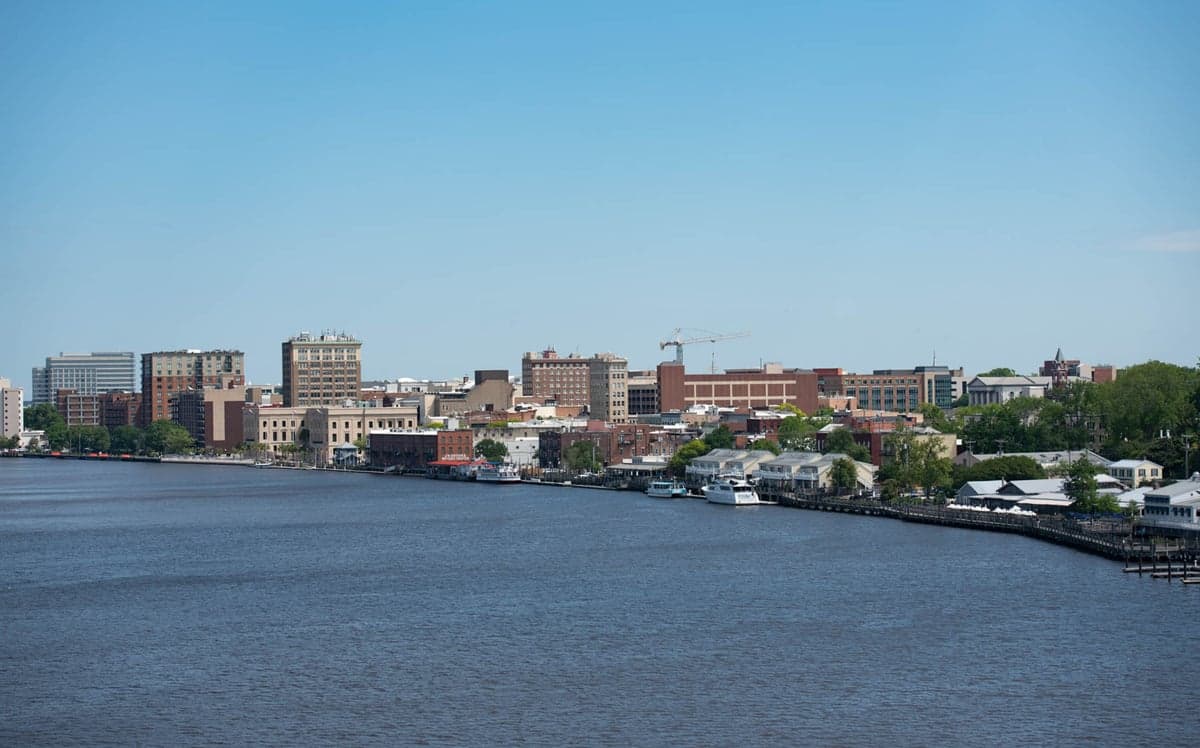
Photo: Wikipedia
Personal Sovereignty in Wilmington, NC
Viable for self-reliance. Generally workable, though some barriers may limit total independence.
What does Personal Sovereignty tell us?
Personal Sovereignty measures your capacity for self-reliance and independence with minimal government friction. Higher scores mean fewer barriers between you and the way you want to live... but it assumes you have the space you need and good neighbors.
What does this tell us?
Personal Sovereignty measures your capacity for self-reliance and independence with minimal government friction. Higher scores mean fewer barriers between you and the way you want to live... but it assumes you have the space you need and good neighbors.
State Policy
Energy independence: Importer (15% of energy produced in-state)
Personal Liberty
Homesteading

Personal Liberty Analysis
Wilmington, North Carolina, offers a mixed but generally favorable environment for personal sovereignty, though it requires strategic navigation. The city sits in a state that has moved decisively toward protecting individual rights in recent years, but local governance in New Hanover County introduces some friction. For those prioritizing autonomy—whether as a single professional or a parent—Wilmington provides a solid foundation for self-reliant living, provided you understand where the local political currents diverge from state-level protections.
Tax burden and regulatory posture in New Hanover County
North Carolina’s flat income tax rate of 4.5% (as of 2026) and a state sales tax capped at 7% keep the overall tax burden manageable compared to northeastern or West Coast alternatives. New Hanover County adds a local sales tax of 2.25%, bringing the total to 7.25% in Wilmington—competitive but not the lowest in the state. Property taxes in the county run about $0.58 per $100 of assessed value, which on a median home value of roughly $350,000 translates to around $2,030 annually. That’s reasonable, but note that Wilmington’s city limits add an extra layer of regulation. The city enforces a strict stormwater utility fee and has adopted more aggressive environmental ordinances than surrounding rural counties, particularly around coastal development and tree preservation. For a prepper mindset, this means the regulatory posture is moderate: you won’t face California-style permitting nightmares, but you also can’t build a bunker without pulling permits. The state’s right-to-work laws and lack of a state income tax on military pensions are pluses for those seeking financial independence.
Self-defense and gun law specifics in Wilmington
North Carolina is a shall-issue state for concealed carry permits, and Wilmington’s local sheriff’s office processes applications without the delays seen in more restrictive counties. The state allows permitless open carry of handguns for anyone legally allowed to possess a firearm, though local ordinances in Wilmington prohibit carrying on city-owned property like parks and government buildings. Stand-your-ground laws are fully in effect, meaning no duty to retreat exists when you’re lawfully present. Magazine capacity is not restricted at the state level, and suppressors are legal with a federal tax stamp. The practical reality for Wilmington residents: you can keep a rifle in your truck or a pistol in your glove box without a permit, but the city’s police department has a reputation for proactive enforcement of disorderly conduct statutes that can be used to harass lawful carriers. For parents, the state’s firearm safety courses are widely available, and many local ranges offer family-oriented training. The biggest sovereignty win here is that Wilmington sits in a county where sheriff elections have historically favored Second Amendment advocates, so local enforcement culture is generally supportive.
Self-reliance and homesteading viability in the Cape Fear region
Wilmington’s urban core offers little room for serious homesteading—typical lots in the city are 0.15 to 0.25 acres, and zoning restricts livestock, beekeeping, and even large gardens in many residential districts. However, the surrounding unincorporated areas of New Hanover County and neighboring Pender County open up options. In Pender County, just 15 minutes north, you can find 1- to 5-acre parcels zoned agricultural, where chickens, goats, and even a single cow are permitted without special permits. Off-grid feasibility is limited by North Carolina’s building codes, which require connection to the electrical grid for new construction in most subdivisions, but rural parcels in Pender allow for solar arrays with battery storage as long as you maintain a minimum square footage for the primary dwelling. Rainwater collection is legal for non-potable uses, and well water is common on larger lots. The catch: Wilmington’s proximity to the coast means floodplain regulations are strict—any new structure in a flood zone must be elevated, which adds $20,000 to $40,000 to construction costs. For a prepper, the best strategy is to buy land in Pender or Brunswick County and commute into Wilmington for work, preserving the ability to grow food and store supplies without city interference.
Personal liberties: parental rights, medical autonomy, speech, and property
North Carolina has been a battleground for parental rights, but recent legislation has strengthened them. The Parents’ Bill of Rights, enacted in 2023, gives parents explicit authority over their children’s education, medical decisions, and access to school materials. In practice, New Hanover County Schools have been relatively responsive to parental concerns, though the district’s size (over 25,000 students) means some bureaucratic resistance remains. Medical autonomy is a mixed bag: the state does not have a vaccine mandate for adults, and COVID-era restrictions were lifted early, but the medical board retains authority over alternative treatments. For those seeking natural health options, Wilmington has a robust network of functional medicine practitioners and a strong farmers’ market culture. Free speech protections are solid under state law, and Wilmington’s public forums—like the riverfront and city parks—are generally open for protest or assembly, though the city has been known to require permits for groups over 50. Property rights are where Wilmington shines: North Carolina’s eminent domain laws are among the most protective of private owners in the Southeast, and the state’s right-to-farm act shields agricultural operations from nuisance lawsuits. The one sore point is the city’s historic preservation commission, which can restrict exterior modifications on older homes in designated districts—a direct limit on property sovereignty that preppers should factor in when house hunting.
Overall, Wilmington offers a better-than-average sovereignty profile compared to most mid-sized coastal cities in the United States. The state’s conservative tilt on taxes, guns, and parental rights provides a buffer against local progressive impulses, but the city itself leans left on environmental and land-use issues. For a single individual or family with a prepper mindset, the smart play is to live outside city limits—ideally in Pender or Brunswick County—while leveraging Wilmington’s job market and infrastructure. You won’t find the raw autonomy of rural Montana or the legal protections of Texas, but you will find a community where self-reliance is still respected and government overreach is kept in check by a state legislature that values personal freedom. The key is knowing where the boundaries are and choosing your property accordingly.

* Values derived from national, state, county, city and local statistics and may differ in a specific area. Last updated: 2026-05-03T04:51:26.000Z
Narrative content on this page is AI-generated and may contain mistakes. Verify any details that matter before acting on them.
ReloMaps may earn a commission from affiliate links at no extra cost to you.

