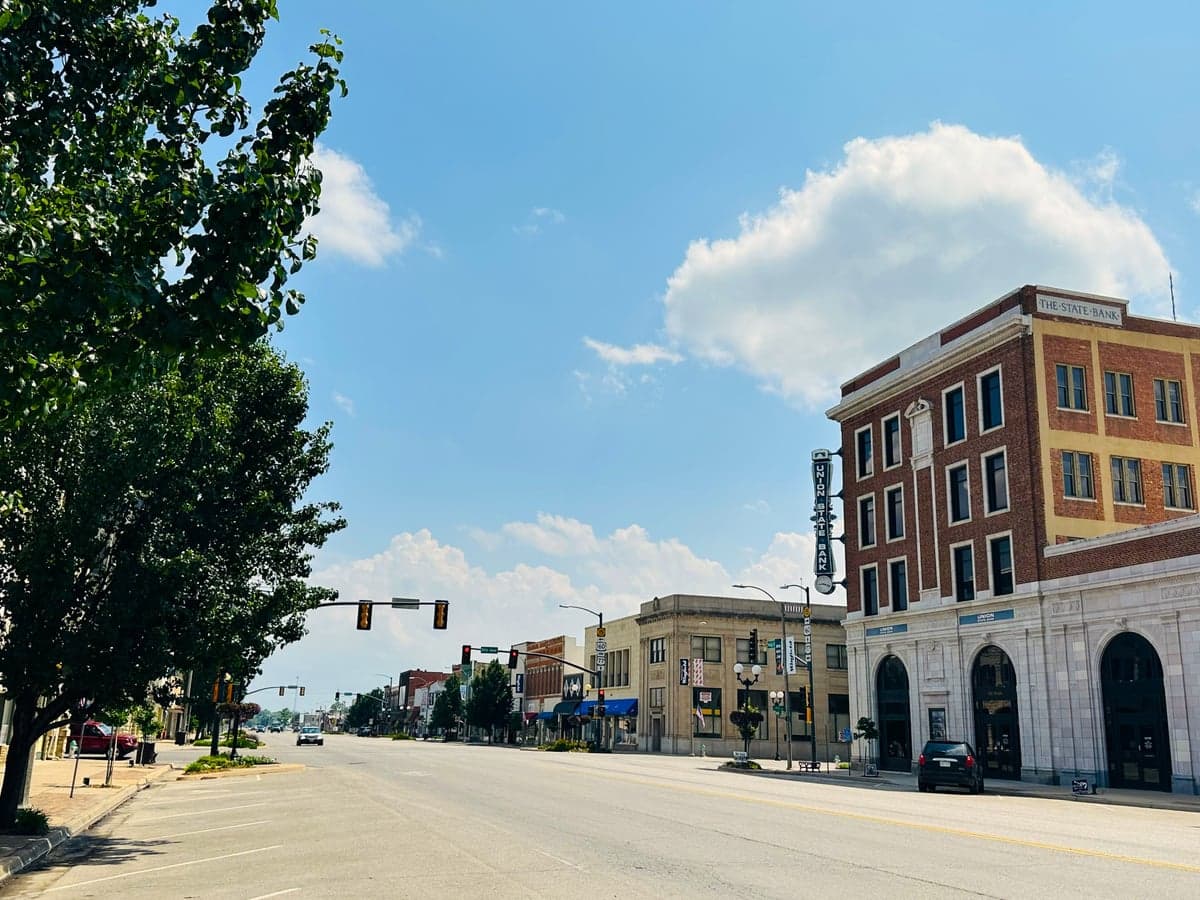
Photo: Wikipedia
Political ClimatePolitical Climate in Winfield, KS
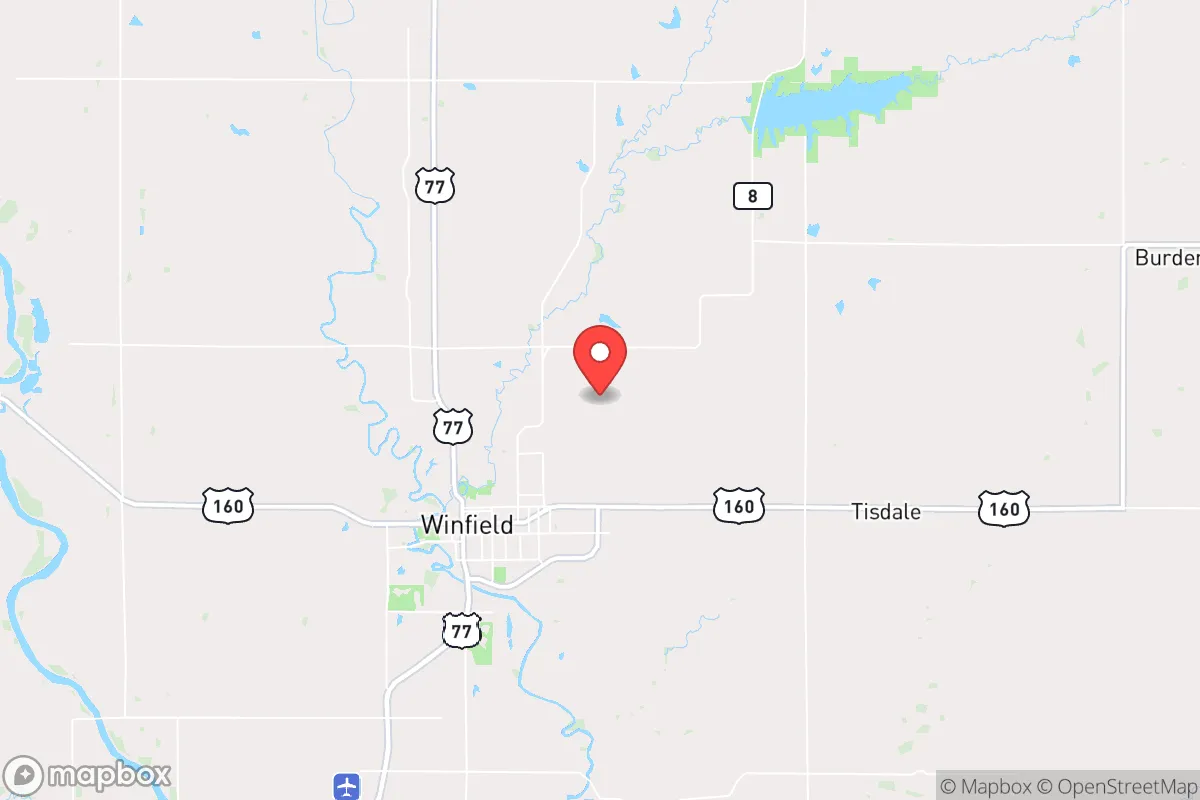
District shown is the primary district for this city’s centroid. Cities may span multiple districts.
Local Political AnalysisPolitical Analysis of Winfield, KS
Winfield, Kansas, has long been a solidly conservative community, and that hasn't changed much despite the national trends. The Cook PVI rating of R+12 tells you the real story—this area leans heavily Republican, and it's been that way for as long as most folks around here can remember. You won't find many yard signs for progressive candidates, and the local elections tend to reflect that same steady, traditional mindset. If anything, the political climate here feels like a quiet holdout against the kind of rapid change you see in places like Lawrence or even Wichita, which is about an hour north and has gotten noticeably more liberal over the last decade.
How it compares
When you stack Winfield up against other towns in Cowley County, it's pretty much in the middle of the pack politically. Arkansas City, just a few miles south, leans even more conservative—you'll hear folks there talk about "keeping government out of the backyard" with a lot more fire. But drive an hour east to Coffeyville or Independence, and you start seeing a bit more of a mixed bag, though still solidly red. The real contrast is with places like Manhattan or Lawrence, where the university crowds shift things left. Here in Winfield, the local paper's letters to the editor still mostly complain about taxes and federal overreach, not social issues. That's the kind of place it is—practical, skeptical of big government, and not interested in being told how to live.
What this means for residents
For someone moving here, the political climate means a few concrete things. First, you won't see much push for new regulations on businesses or property—the county commission tends to side with landowners and small business owners when it comes to zoning or permitting. Second, the schools and local government are run by folks who generally believe in limited government, so you're not going to get a lot of "progressive" programming or policies pushed down from the top. That said, there's been a slow creep of national politics into local conversations over the last five years or so, especially around things like library content and school board decisions. It's not a full-blown culture war yet, but you can feel the tension building. Most residents just want to be left alone to live their lives, and they vote that way.
What daily life is like for families
If you're raising kids here, you'll find the community is tight-knit and pretty hands-off when it comes to personal choices. Neighbors look out for each other, but they don't meddle. The local churches are active, and the 4-H and FFA programs are strong—those are the kinds of institutions that shape the local culture. You won't see many protests or political rallies, but you will see a lot of flags and bumper stickers that make the political lean clear. The biggest concern for families lately has been the slow erosion of local control—state mandates from Topeka that feel like they're written by people who've never set foot in a small town. That's the kind of thing that gets people talking over coffee at the Sonic or the diner on Main Street.
One thing that sets Winfield apart from some of its neighbors is the strong sense of personal responsibility that runs through the community. People here don't look to the government to solve their problems—they form a church group, start a fundraiser, or just handle it themselves. That's not to say there aren't disagreements; there are plenty, especially around property taxes and school funding. But the overall vibe is one of "live and let live" as long as you're not asking for a handout or a new regulation. Looking ahead, the biggest concern for long-time residents is whether the national progressive wave will eventually wash over this town. So far, it hasn't, and most folks are determined to keep it that way. If you're looking for a place where your rights and freedoms aren't constantly under the microscope, Winfield is still that kind of town—for now.

State Political ClimatePolitical Climate in Kansas
State Political AnalysisPolitical Environment in the State
Kansas has long been a reliably Republican state, but the picture is more nuanced than a simple red-state label suggests. Over the past 20 years, the state has shifted from a solidly conservative stronghold—where Republicans routinely held every statewide office and supermajorities in the legislature—to a more contested battleground, with Democrats making gains in suburban districts while rural areas have hardened their GOP allegiance. The 2022 governor’s race, where Democrat Laura Kelly won re-election by a narrow 49.5% to 48.5% margin, underscores this tension, even as the state legislature remains firmly under Republican control with a veto-proof supermajority. For a conservative-leaning audience, the key takeaway is that Kansas is still a fundamentally conservative state, but its political future is being shaped by a tug-of-war between traditional values and encroaching progressive influence, particularly in its growing suburbs.
Urban vs. rural divide
The political map of Kansas is a textbook case of the urban-rural split. The state’s two major metros—Kansas City (Johnson and Wyandotte counties) and Wichita (Sedgwick County)—drive the Democratic and moderate Republican vote. Johnson County, the state’s wealthiest and most populous, has been trending left for a decade; in 2020, Joe Biden won it by 8 points, a stark contrast to its 2012 support for Mitt Romney by 12 points. This shift is driven by educated professionals in suburbs like Overland Park and Lenexa, where school funding and social issues often trump fiscal conservatism. Meanwhile, Wichita itself is a mixed bag—its urban core leans Democratic, but the surrounding Sedgwick County suburbs like Andover and Derby remain reliably red. The real conservative strongholds are the vast rural stretches: western Kansas counties like Sherman and Greeley routinely vote 80%+ Republican, while the Flint Hills region around Emporia and Manhattan (home to Kansas State University) also leans heavily right. The divide is stark: in 2024, rural counties voted +40 to +60 points for Trump, while Johnson County flipped to Biden. This geographic split means state policy often reflects rural priorities, but suburban growth is slowly eroding that dominance.
Policy environment
Kansas’s policy environment is a mixed bag for conservatives. On the plus side, the state has a flat income tax rate of 5.7% (down from a progressive structure under the 2012 Brownback tax cuts, which were partially rolled back in 2017). Property taxes are relatively low, and there is no state estate tax. The regulatory climate is business-friendly, with right-to-work laws and limited zoning restrictions outside major cities. However, the state’s education policy is a flashpoint: the Kansas Supreme Court has repeatedly ordered the legislature to increase school funding, leading to a $6 billion annual K-12 budget that conservatives argue is bloated. On social issues, Kansas has a 2015 law protecting religious freedom for businesses, and a 2022 law banning transgender athletes from girls’ sports. Election laws are moderately conservative: voter ID is required, but the state has no restrictive absentee ballot rules. The biggest red flag for conservatives is the state’s Medicaid expansion stalemate—Governor Kelly has pushed for it, but the legislature has blocked it, keeping Kansas one of only 10 states without expansion. This creates a tension between fiscal restraint and healthcare access that new residents should watch.
Trajectory & freedom
On personal freedom, Kansas has been a mixed bag. The state is a constitutional carry state (permitless concealed carry since 2015) and has strong Second Amendment protections, including a 2021 law prohibiting local governments from enforcing federal gun restrictions. Parental rights were bolstered in 2023 with a law requiring schools to notify parents of any changes to a student’s mental or physical health, including gender identity. However, the state’s trajectory on economic freedom is concerning: the 2017 tax hike (which raised the top income rate from 4.6% to 5.7%) was a step backward, and property tax increases have outpaced inflation in growing counties like Johnson. Medical autonomy took a hit in 2022 when the legislature passed a near-total abortion ban (with exceptions only for rape, incest, and life of the mother), which was then upheld by voters in a 2022 referendum—a win for pro-life advocates but a reminder that the state is willing to restrict personal medical choices. The biggest freedom concern is the state’s growing reliance on federal funds (about 30% of the budget), which could create leverage for future federal mandates. Overall, Kansas is still freer than most blue states, but the trend is toward more government involvement in both social and economic spheres.
Civil unrest & political movements
Kansas has seen relatively low levels of civil unrest compared to coastal states, but there are visible flashpoints. The 2022 abortion referendum sparked intense activism, with pro-life groups like Kansans for Life mobilizing heavily in rural areas, while pro-choice groups concentrated in Lawrence and Kansas City. Immigration politics are less heated than in border states, but there is a growing tension in agricultural counties like Finney and Ford (home to Garden City and Dodge City), where meatpacking plants have drawn significant Hispanic populations. These areas have seen occasional protests over immigration enforcement, but no sanctuary city policies exist—Kansas law prohibits them. Election integrity controversies flared after 2020, with some rural counties (like Thomas and Sheridan) passing resolutions questioning election results, though no major fraud was found. The most visible political movement is the rise of the “Moms for Liberty” chapter in Johnson County, which has pushed for school board transparency and parental rights. For a new resident, the political climate is generally calm, but the suburban-rural divide means you’ll see starkly different signs and conversations depending on whether you’re in Olathe or Hays.
Projection
Over the next 5-10 years, Kansas is likely to become more politically competitive, but not necessarily more liberal. The key driver is demographic: Johnson County is growing fast (projected to add 100,000 residents by 2030), and its voters are increasingly moderate-to-liberal on social issues while remaining fiscally conservative. This could flip the state’s 6th Congressional District (currently held by Republican Sharice Davids) permanently blue, and put pressure on the GOP to moderate on issues like education funding and Medicaid. However, rural counties are also growing in political influence through the state legislature, where rural districts have disproportionate power due to low population. The result is a stalemate: the legislature will remain Republican and conservative on social issues, but the governor’s office may flip between parties. For a conservative moving in, expect a state that is still broadly red but with growing blue pockets in the suburbs. The biggest risk is that the state’s tax and regulatory environment could become less friendly if Democrats gain more power, but for now, the trajectory is one of slow, contested change rather than a dramatic shift.
Bottom line for a new resident: Kansas offers a solidly conservative foundation—low taxes, strong gun rights, and a pro-business climate—but it’s not immune to the cultural and political shifts affecting the rest of the country. If you’re moving to a rural area like Hays or Emporia, you’ll find a deeply red community with minimal progressive influence. If you’re settling in Overland Park or Lenexa, expect more political diversity and occasional clashes over school policy and social issues. The state’s trajectory is toward a more divided future, but for now, it remains a safe bet for conservatives who value personal freedom and limited government—just keep an eye on the suburbs, where the real political battles are being fought.
* Values derived from national, state, county, city and local statistics and may differ in a specific area. Last updated: 2026-04-30T03:55:13.000Z
Narrative content on this page is AI-generated and may contain mistakes. Verify any details that matter before acting on them.
ReloMaps may earn a commission from affiliate links at no extra cost to you.

