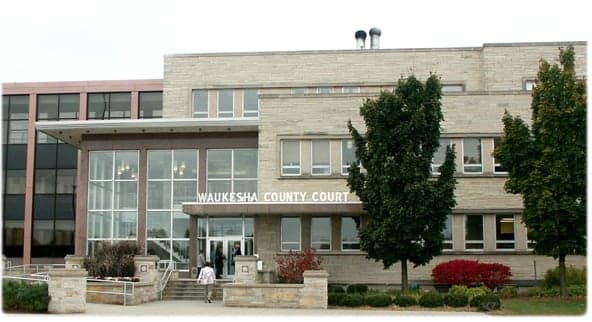
Photo: Wikipedia
Demographics of Waukesha County
Affluence Level in Waukesha County
An upper-middle-class area. Household wealth, education levels, and homeownership run ahead of national benchmarks.
People of Waukesha County
Waukesha County is home to 409,040 residents, making it Wisconsin’s third-most populous county, yet it retains a distinctly suburban and small-town character defined by its 85.7% white population and a foreign-born share of just 2.2% — roughly one-third the national average. The county’s identity is shaped by its deep German and Irish roots, a high college attainment rate of 47.9%, and a political culture that leans conservative, with the city of Waukesha, Brookfield, and Pewaukee serving as its economic and civic anchors. Today, the population is notably more diverse than a generation ago, with growing Hispanic (5.6%), Indian subcontinent (2.1%), and East/Southeast Asian (1.7%) communities, though these groups remain concentrated in specific suburbs rather than evenly distributed across the county.
Settlement & growth (pre-1960)
Before European settlement, the area now known as Waukesha County was inhabited by the Potawatomi people, who ceded their lands to the U.S. government in the 1833 Treaty of Chicago. The first permanent American settlers arrived in the 1830s and 1840s, primarily Yankees from New England and New York, drawn by the fertile glacial soils and the promise of wheat farming. These early settlers founded the county’s original towns — Waukesha (originally Prairie Village), Brookfield, and Delafield — and established a rural, Protestant, and abolitionist-leaning society that dominated local politics through the Civil War era.
The defining demographic wave came between 1845 and 1880, when massive numbers of German immigrants poured into the county. German Catholics and Lutherans settled heavily in the city of Waukesha, Pewaukee, and Menomonee Falls, where they established churches, breweries, and tight-knit farming communities. By 1900, roughly 40% of Waukesha County residents claimed German ancestry, a proportion that remains visible today in the county’s many Lutheran and Catholic parishes, its Oktoberfest traditions, and its family-owned manufacturing firms. A smaller but significant Irish Catholic wave arrived in the same period, concentrating in Waukesha’s downtown and in the town of Mukwonago, where they worked as laborers on the railroad and in the region’s growing lime and stone quarries.
From 1880 through 1960, the county’s growth was steady but modest. The rise of Milwaukee as an industrial powerhouse pulled some residents east, while the arrival of the Chicago & North Western Railway made Waukesha a popular summer resort destination for wealthy Chicagoans, drawn by the area’s natural springs. The village of Oconomowoc became the epicenter of this resort culture, earning the nickname “Newport of the West” for its lakefront estates. No major new immigrant groups arrived during this period; the county remained overwhelmingly white, native-born, and German-American. The Dust Bowl and Great Migration largely bypassed Waukesha County, as its economy was based on small-scale manufacturing and agriculture rather than heavy industry.
Modern era (post-1965)
The 1965 Hart-Cellar Act had a delayed and muted effect on Waukesha County compared to coastal regions. Through the 1970s and 1980s, the county remained 97% white, with immigration limited to small numbers of European professionals and a trickle of Southeast Asian refugees resettled through Milwaukee-area churches. The real demographic shift began in the 1990s, driven by two forces: the expansion of the Milwaukee suburbs and the growth of the county’s knowledge economy. Brookfield and Waukesha emerged as hubs for corporate headquarters and professional services, attracting domestic migrants from Illinois and other Midwestern states, as well as a new wave of immigrants with advanced degrees.
The most notable post-1965 change has been the growth of the Hispanic population, which rose from under 1% in 1990 to 5.6% today. Hispanic residents are concentrated in the city of Waukesha and in the village of Sussex, where they work in construction, landscaping, and food processing. The East/Southeast Asian community (1.7%) is smaller but highly educated, with many professionals employed in Brookfield’s corporate offices and in the medical sector at Waukesha’s ProHealth Care system. The Indian subcontinent population (2.1%) is the fastest-growing non-white group, drawn by jobs in engineering and information technology; most Indian families have settled in Brookfield and New Berlin, where school districts are highly rated and housing stock is newer. The Black population remains very small at 1.5%, concentrated in the city of Waukesha, and has grown only modestly since 2000.
Domestic migration has been the larger force reshaping the county. Since 2000, Waukesha County has absorbed tens of thousands of former Milwaukee residents — many of them white families seeking lower taxes, better schools, and lower crime rates. This suburban flight has made Waukesha County one of the fastest-growing counties in Wisconsin, but it has also deepened the region’s political and cultural divide with Milwaukee County. The county’s foreign-born share (2.2%) remains low by national standards, and the population is still overwhelmingly white and native-born, but the non-white share has doubled since 2000, driven almost entirely by Hispanic and Indian growth.
The future
Waukesha County’s population is projected to continue growing slowly, reaching roughly 430,000 by 2035, driven by domestic in-migration from Illinois and other Midwestern states rather than by international immigration. The county is not homogenizing into a single melting pot; instead, it is tribalizing into distinct enclaves. Brookfield and New Berlin are becoming the primary destinations for Indian and East/Southeast Asian professionals, while the city of Waukesha and Sussex are absorbing most Hispanic growth. The white population, while still dominant, is aging and slowly declining in share as younger, more diverse families move in.
The Hispanic and Indian communities are both growing and assimilating, but at different paces. Hispanic residents are more likely to be U.S.-born and English-dominant by the second generation, while Indian families tend to maintain stronger linguistic and cultural ties through religious institutions and professional networks. The county’s political identity — reliably Republican, with a strong libertarian streak — is unlikely to shift dramatically in the next decade, as the new immigrant populations are small and tend to be more moderate or conservative than their counterparts in Milwaukee. The cultural identity of Waukesha County is absorbing these changes rather than being transformed by them; German-American traditions, Lutheran church attendance, and conservative social values remain the baseline against which all newcomers are measured.
For someone moving in now, Waukesha County offers a stable, safe, and well-educated environment where the population is slowly diversifying but the dominant culture remains rooted in its 19th-century German and Yankee heritage. The county is becoming slightly more pluralistic, but it is not becoming a truly multicultural region — it is a white-majority suburb with growing minority enclaves, where newcomers are expected to integrate into existing institutions rather than reshape them. The bottom line: Waukesha County is a place where tradition and stability are the primary draws, and where demographic change is real but incremental, not disruptive.

* Values derived from national, state, county, city and local statistics and may differ in a specific area. Last updated: 2026-05-13T00:43:39.000Z
Narrative content on this page is AI-generated and may contain mistakes. Verify any details that matter before acting on them.
ReloMaps may earn a commission from affiliate links at no extra cost to you.

