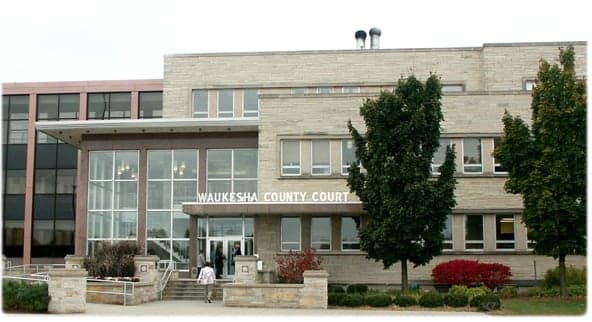
Photo: Wikipedia
Personal Sovereignty in Waukesha County
Moderate friction. Expect trade-offs in some aspect of personal liberty and independence.
What does Personal Sovereignty tell us?
Personal Sovereignty measures your capacity for self-reliance and independence with minimal government friction. Higher scores mean fewer barriers between you and the way you want to live... but it assumes you have the space you need and good neighbors.
What does this tell us?
Personal Sovereignty measures your capacity for self-reliance and independence with minimal government friction. Higher scores mean fewer barriers between you and the way you want to live... but it assumes you have the space you need and good neighbors.
State Policy
Energy independence: Importer (15% of energy produced in-state)
Personal Liberty
Homesteading

Personal Liberty Analysis
Waukesha County offers one of the strongest environments for personal sovereignty in the Upper Midwest, combining Wisconsin’s constitutional protections with a local culture that actively resists state-level overreach. While the state as a whole has trended toward moderate governance, Waukesha County—anchored by the city of Waukesha and towns like Delafield, Hartland, and Oconomowoc—has consistently voted as a conservative stronghold, with the county delivering a +21-point margin for the Republican presidential candidate in 2024. This political reality translates into a regulatory climate where individual autonomy, from property rights to self-defense, is taken seriously by local officials. For those prioritizing freedom from government intrusion, the county sits in a sweet spot: close enough to Milwaukee for economic opportunity, but far enough to maintain a rural-suburban character where personal responsibility still matters.
Tax burden and regulatory posture: How Waukesha County compares to surrounding areas
Wisconsin’s tax structure is a mixed bag for sovereignty-minded individuals, but Waukesha County mitigates the worst of it through local fiscal discipline. The state’s income tax is progressive, topping out at 7.65% for the highest bracket, and property taxes are among the highest in the nation—averaging roughly 1.7% of home value statewide. However, Waukesha County’s property tax rates are slightly below the state average, with the city of Waukesha levying around $22 per $1,000 of assessed value, while towns like Genesee and Summit offer rates closer to $18 per $1,000 due to minimal municipal services. The county’s regulatory posture is notably leaner than in Dane County (Madison) or Milwaukee County. Zoning is handled at the town level, meaning places like the Town of Lisbon and Town of Brookfield have far more permissive land-use rules than their city counterparts. There is no county-wide building code beyond state minimums, and many towns allow owner-built structures with minimal permitting—a stark contrast to the strict codes in nearby Wauwatosa or Milwaukee. For those seeking to minimize tax exposure, the unincorporated areas of the county, such as the Town of Merton, offer the lowest effective rates, though they lack municipal services like sewer and water—a trade-off many preppers consider worthwhile.
Self-defense and gun law specifics: What you can and cannot do in Waukesha County
Wisconsin is a shall-issue state for concealed carry, and Waukesha County is one of the most gun-friendly jurisdictions in the state. The county sheriff’s office processes carry permits efficiently, with no local ordinances that restrict magazine capacity, firearm types, or storage requirements beyond state law. Open carry is legal without a permit, and the county has no history of local officials attempting to impose “safe storage” or “red flag” laws—a significant advantage over counties like Dane or Milwaukee, where such measures have been debated. The city of Waukesha itself has a few municipal parks where firearms are restricted, but these are clearly posted and easily avoided. In towns like Delafield and Hartland, gun ranges operate without harassment, and private property rights for shooting are generally respected, provided you’re outside city limits and follow noise ordinances. Stand-your-ground laws apply statewide, and Waukesha County juries have historically been sympathetic to self-defense claims. The biggest practical limitation is the state’s 48-hour waiting period for handgun purchases, which applies uniformly. For those building a prepper arsenal, the county’s proximity to rural dealers in Jefferson and Dodge counties offers additional purchasing options without the political friction found in urban areas.
Self-reliance and homesteading viability: Lot sizes, zoning, and off-grid feasibility
Waukesha County is a patchwork of zoning regimes, and your ability to live off-grid depends heavily on which town you choose. The western and northern towns—like Eagle, Genesee, and Ottawa—offer the most freedom, with minimum lot sizes of 5 to 10 acres in agricultural zoning districts. These areas allow chickens, goats, and even small livestock without special permits, and several towns have no restrictions on rainwater collection or composting toilets. The Town of Eagle, for example, explicitly permits “alternative sanitation systems” with county health department approval, making off-grid living feasible. In contrast, the eastern towns closer to Milwaukee—like New Berlin and Muskego—have suburban-style zoning with 1-acre minimums and stricter building codes that effectively ban permanent off-grid setups. Solar panels are legal everywhere, but net metering policies from We Energies can be restrictive; some preppers opt for battery storage and grid disconnection, which is legal in unincorporated areas as long as you meet basic safety codes. The county’s soil quality is excellent for gardening, with the Kettle Moraine region providing well-drained loam. Water access is a key consideration: most rural lots rely on wells, and the county’s groundwater is generally clean, though agricultural runoff in the southern towns near Mukwonago can be an issue. For those serious about self-reliance, the Town of Ottawa and Town of Genesee represent the best balance of large lots, lax zoning, and affordable land—still under $15,000 per acre as of 2026.
Personal liberties: Parental rights, medical autonomy, speech, and property
Waukesha County is a stronghold for parental rights and medical freedom, with local school boards consistently rejecting state-level mandates on curriculum and health policies. The Kettle Moraine School District, serving parts of Delafield and Wales, has a formal policy that requires parental opt-in for any health-related surveys or instruction—a rarity in Wisconsin. Medical autonomy is protected by state law, which allows individuals to refuse any treatment, including vaccines, without penalty for school attendance or employment in most private-sector jobs. The county’s health department has not pursued aggressive public health orders since 2021, and local officials have publicly stated they will not enforce future state mandates without county board approval. Free speech is robust, with the city of Waukesha hosting regular political rallies and protests without the permit delays seen in Milwaukee. Property rights are protected by Wisconsin’s “private property rights” statute, which requires governments to prove a compelling interest before restricting land use—a law that has been tested successfully in Waukesha County courts. The biggest threat to personal liberty in the county is the potential for state-level preemption on issues like firearm regulation or zoning, but local officials have a track record of pushing back. For example, the Town of Lisbon passed a resolution in 2023 declaring itself a “Second Amendment Sanctuary” and refusing to enforce any future state gun bans—a symbolic but meaningful stance.
Overall, Waukesha County ranks among the top 10% of U.S. counties for personal sovereignty, particularly for those willing to live in the rural towns rather than the suburban cities. The combination of low local taxes, permissive zoning, strong gun rights, and a culture of self-reliance creates an environment where preppers and freedom-minded individuals can operate with minimal government interference. The trade-off is proximity to Milwaukee’s urban problems—crime, taxes, and political overreach—but the county’s buffer zones, especially in the western towns, provide a genuine escape. Compared to neighboring counties like Washington or Ozaukee, Waukesha offers more land and less density; compared to rural counties further north, it offers better infrastructure and job access. For those serious about building a sovereign life, the towns of Eagle, Genesee, and Ottawa are the clear winners, while the city of Waukesha itself remains a practical hub for supplies and services. The county is not a libertarian utopia—state taxes and some municipal restrictions remain—but it is as close as you’ll find in the Midwest without moving to the remote northwoods.

* Values derived from national, state, county, city and local statistics and may differ in a specific area. Last updated: 2026-05-13T00:43:39.000Z
Narrative content on this page is AI-generated and may contain mistakes. Verify any details that matter before acting on them.
ReloMaps may earn a commission from affiliate links at no extra cost to you.

