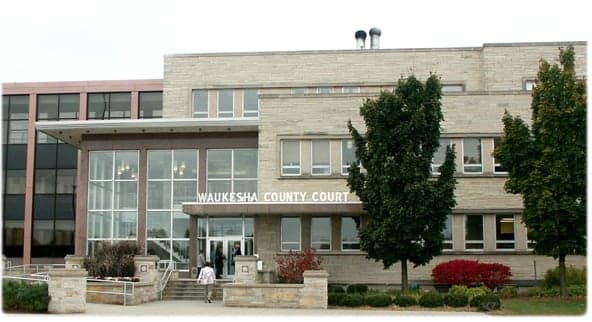
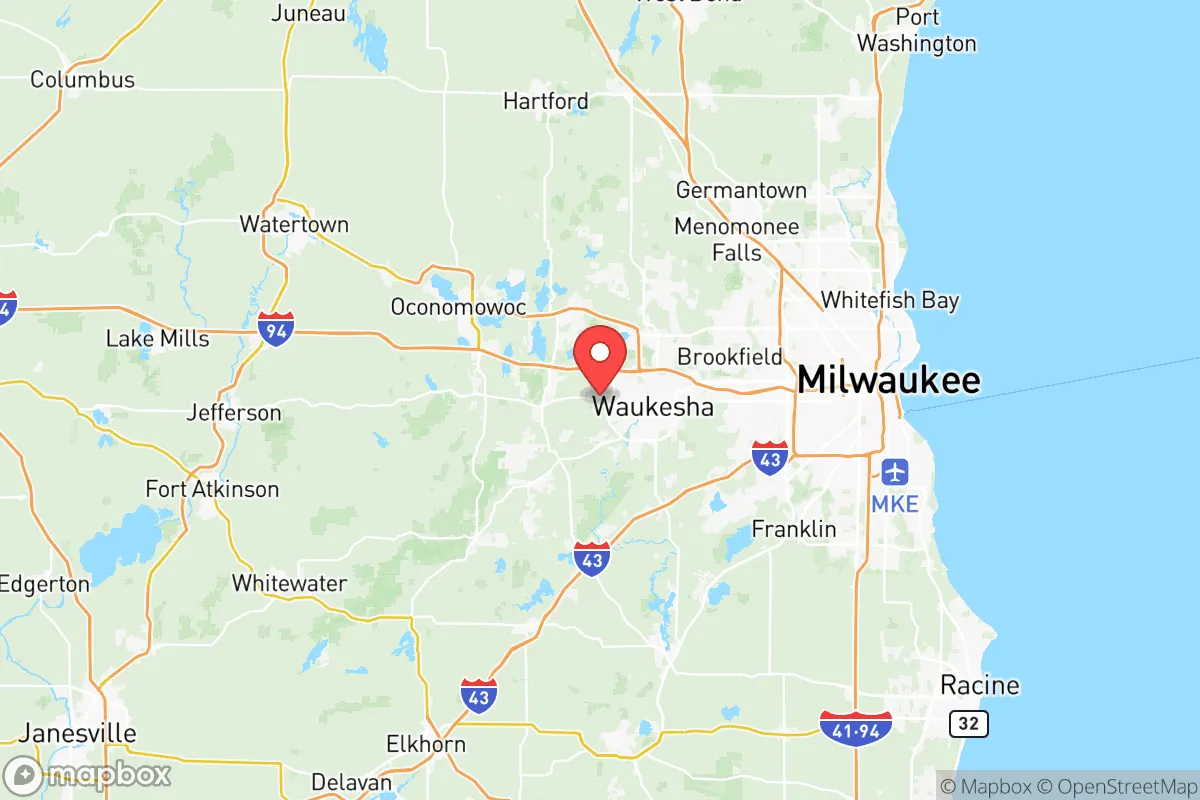
Photo: Wikipedia
Political ClimatePolitical Climate in Waukesha County
Showing district-level results — no local-only data available.
Local Political AnalysisPolitical Analysis of Waukesha County
Waukesha County has long been one of Wisconsin's most reliably conservative strongholds, with a Cook Partisan Voting Index of R+11 that puts it firmly in the red column. That means in a state that's essentially a political coin flip—Wisconsin as a whole carries a Cook PVI of EVEN—this county consistently delivers double-digit Republican margins. If you've lived here as long as I have, you've watched that pattern hold steady through wave elections and close races alike, though there are some subtle shifts happening beneath the surface that are worth keeping an eye on.
How it compares
The contrast between Waukesha County and the rest of Wisconsin is stark. While the state swings back and forth between parties—think of it as a purple battleground where every presidential race is decided by a point or two—Waukesha County hasn't voted for a Democratic presidential candidate since Lyndon Johnson in 1964. In 2020, Donald Trump carried the county by roughly 20 points, even as he narrowly lost the state. That's the kind of margin that makes Waukesha the anchor of the conservative "WOW" counties (Waukesha, Ozaukee, Washington) that offset the liberal votes coming out of Milwaukee and Dane County. But not every corner of the county votes the same. The city of Waukesha itself has some precincts that lean blue, particularly around Carroll University and the downtown core, while towns like Delafield, Hartland, and Pewaukee are deep red. The swing precincts tend to be in the more suburban areas like Brookfield and New Berlin, where you'll find a mix of fiscal conservatives and moderate Republicans who sometimes split tickets in local races.
What this means for residents
For those of us who value limited government and personal freedoms, Waukesha County's political climate offers a welcome buffer against the progressive policies that have crept into other parts of Wisconsin. You won't see the kind of government overreach here that you might in Madison or Milwaukee—things like heavy-handed public health mandates, restrictive zoning that tells you what you can do with your own property, or school boards pushing ideological curricula on kids. The county's conservative majority has kept taxes relatively low, maintained strong Second Amendment protections, and resisted the kind of top-down regulation that can make daily life feel like you're constantly asking permission. That said, there are warning signs. The city of Waukesha has seen a slow but steady influx of younger, more progressive residents, and some of the outer-ring suburbs are starting to show cracks in the red wall. If you're paying attention, you'll notice that local school board races and county board elections are getting more competitive, which is how these shifts usually start.
Culturally, Waukesha County still feels like a place where traditional values hold sway. You'll find churches well-attended, community events centered around family and local businesses, and a general expectation that government should stay out of your life unless absolutely necessary. The county's strong Republican lean means that policies around school choice, property rights, and local control are generally protected. But if you're considering a move here, keep an eye on the long-term trends—the same demographic and cultural pressures that have turned other conservative suburbs purple over the past decade are starting to ripple through Waukesha County. For now, though, it remains one of the best places in Wisconsin to live free from the kind of progressive overreach that's become common elsewhere in the state.

State Political ClimatePolitical Climate in Wisconsin
State Political AnalysisPolitical Environment in the State
Wisconsin is a classic swing state with a Cook PVI of EVEN, but over the past 20 years it has shifted from a reliably blue-leaning battleground to a deeply polarized toss-up where Republicans hold structural advantages in the legislature despite statewide races being decided by razor-thin margins. The dominant coalition is a rural and exurban conservative base concentrated in the WOW counties (Waukesha, Ozaukee, Washington) outside Milwaukee, pitted against a growing progressive coalition anchored in Dane County (Madison) and Milwaukee proper. The 10-20 year trajectory shows a state that has become more competitive for conservatives at the state level—thanks to gerrymandered maps and a 2011 Act 10 that crippled public unions—but also one where demographic trends in the Madison-Milwaukee corridor are slowly pulling the statewide needle leftward.
Urban vs. rural divide
The political map of Wisconsin is a textbook example of the urban-rural chasm. Milwaukee County, home to roughly 950,000 people, votes about 65-70% Democratic in presidential years, driven by a strong Black and Hispanic voting bloc in the city proper and a progressive white base in the near-north suburbs like Shorewood and Whitefish Bay. Dane County, anchored by Madison, is the state’s most reliably blue region, routinely delivering 75%+ Democratic margins thanks to the University of Wisconsin system, state government workers, and a booming tech and biotech sector. Meanwhile, the WOW counties—Waukesha, Ozaukee, and Washington—are the Republican heartland, with Waukesha County alone often providing a 60,000-vote GOP margin that offsets Milwaukee’s Democratic advantage. The rural Driftless Area in the southwest (e.g., Vernon County, Crawford County) has trended sharply red over the past decade, while the Northwoods counties like Vilas and Oneida remain solidly Republican but with a libertarian streak. The key swing counties are Brown (Green Bay), Outagamie (Appleton), and Racine—places where suburban voters and manufacturing workers have oscillated between parties. In 2020, Brown County flipped to Biden by 0.4 points after going for Trump in 2016, but the surrounding rural counties like Kewaunee and Door stayed deep red.
Policy environment
Wisconsin’s policy environment is a mixed bag for conservatives. On the plus side, the state has a flat income tax rate of 4.4% (down from 6.27% in 2011 under Act 10 reforms), no estate tax, and a relatively low corporate tax rate of 7.9%. Property taxes are moderate, with the median effective rate around 1.6%, but they vary wildly—Waukesha County averages 1.8% while rural Burnett County is closer to 1.2%. The state is a right-to-work state (since 2015), and Act 10 effectively ended collective bargaining for most public employees, saving local governments billions. However, the regulatory environment is not uniformly friendly: the state has a strict renewable energy mandate (100% carbon-free electricity by 2050) signed by Governor Tony Evers in 2019, and the DNR has aggressively enforced wetland and water quality rules that frustrate farmers and developers. Education policy is a bright spot for school choice advocates—Wisconsin has one of the oldest and most robust voucher programs in the nation, with the Milwaukee Parental Choice Program (since 1990) and the statewide Racine and statewide programs. But the state also has a high per-pupil spending floor and a powerful teachers’ union that has regained some influence under Evers. Election laws are relatively secure: voter ID is required (since 2011), and the state has a bipartisan Elections Commission, though the 2020 election saw intense controversy over ballot drop boxes and the use of private grants (Zuckerberg-funded) in Milwaukee and Madison. The legislature has since banned private election funding and tightened absentee ballot rules.
Trajectory & freedom
Wisconsin’s trajectory on personal freedom is a tug-of-war. On the positive side for conservatives, the state passed a constitutional amendment in 2024 enshrining the right to keep and bear arms, making it one of the strongest Second Amendment states in the Midwest. Permitless carry has been law since 2011, and the state has no red flag law, no waiting period, and no magazine capacity restrictions. Parental rights got a boost in 2023 with the passage of Act 12, which requires school districts to notify parents of any changes to a student’s health or emotional well-being and prohibits instruction on gender identity and sexual orientation in grades K-3. However, the Evers administration has used executive orders to expand Medicaid (BadgerCare Plus) and create a state-run health insurance exchange, and in 2023 the governor vetoed a bill that would have banned gender transition procedures for minors—a major flashpoint. Medical freedom took a hit during COVID: the state had a mask mandate (struck down by the state Supreme Court in 2021) and business closures that were unevenly enforced. The state Supreme Court flipped to a 4-3 liberal majority in 2023 after Janet Protasiewicz’s election, and the court is now expected to strike down the current legislative maps as unconstitutional, which could flip the Assembly to Democratic control by 2026. Property rights are generally strong, but the DNR’s wetland permitting process is notoriously slow and expensive, and the state has a high property tax burden relative to income.
Civil unrest & political movements
Wisconsin has a long history of political activism, from the 2011 Act 10 protests that drew 100,000 people to the Capitol in Madison to the 2020 Kenosha unrest following the Jacob Blake shooting, which saw two nights of rioting, arson, and the killing of two protesters by Kyle Rittenhouse (later acquitted). The state has a vibrant grassroots conservative movement, anchored by groups like Wisconsin Family Action (social issues) and the Wisconsin Institute for Law & Liberty (legal advocacy). On the left, the Wisconsin Democratic Party is heavily influenced by the Service Employees International Union (SEIU) and the state’s powerful teachers’ union, WEAC. Immigration politics are relatively quiet compared to border states, but there have been flashpoints over sanctuary policies: Milwaukee and Dane County have declared themselves “welcoming cities” and limit cooperation with ICE, while the legislature has passed bills (vetoed by Evers) to ban such policies. Election integrity remains a live issue: the 2020 election saw a 20,000-vote margin for Biden, and the GOP-controlled legislature conducted a $676,000 investigation (the Michael Gableman probe) that found no widespread fraud but did recommend abolishing the bipartisan Elections Commission. The 2024 election saw a 30,000-vote margin for Trump, and the state’s new maps (if redrawn) could shift the political landscape dramatically. A new resident would notice the “Wisconsin nice” culture but also the deep polarization—yard signs, bumper stickers, and local Facebook groups are intensely partisan.
Projection
Over the next 5-10 years, Wisconsin is likely to become more competitive for Democrats at the state level due to demographic shifts and the likely redrawing of legislative maps. The Madison-Milwaukee corridor is growing faster than the rural north and west, and in-migration from Illinois (especially Chicago suburbs) is bringing more progressive voters to places like Kenosha and Racine. The state Supreme Court’s liberal majority will almost certainly impose new maps that give Democrats a chance to win the Assembly, and the 2026 gubernatorial race will be a toss-up. However, the rural and exurban base remains solid, and the WOW counties are growing as well—Waukesha County added 30,000 people between 2010 and 2020. The wild card is the Green Bay area: if the Packers’ fan base continues to trend right, and if the Fox Valley (Appleton, Oshkosh) stays red, the state could remain a true swing state. For a conservative moving in now, expect a state where your vote matters but where the cultural and policy winds are shifting left in the cities. The next decade will likely see a fight over school funding, abortion rights (the 1849 ban is still on the books but unenforceable), and energy policy.
For a new resident, the bottom line is that Wisconsin offers a relatively low-tax, high-freedom environment in the suburbs and rural areas, but the cities are increasingly progressive and the state government is gridlocked. If you value school choice, gun rights, and a strong local economy, the WOW counties or the Fox Valley are your best bets. If you want to avoid the political drama, the Northwoods offer a quieter, more libertarian vibe. Just be prepared for cold winters and hot-button elections every two years.
* Values derived from national, state, county, city and local statistics and may differ in a specific area. Last updated: 2026-05-13T00:43:39.000Z
Narrative content on this page is AI-generated and may contain mistakes. Verify any details that matter before acting on them.
ReloMaps may earn a commission from affiliate links at no extra cost to you.

