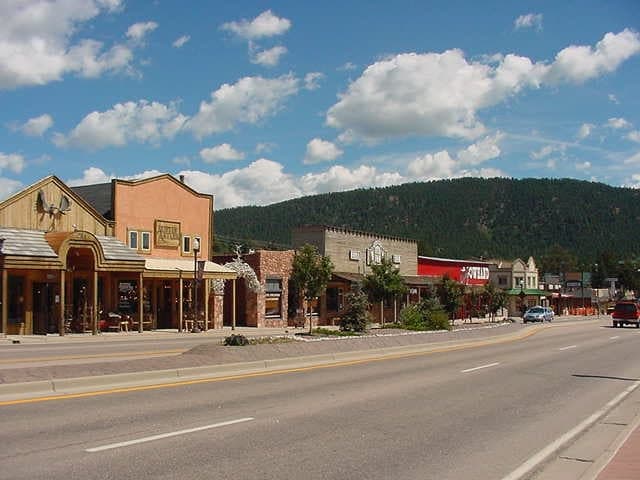
Photo: Wikipedia
Demographics of Woodland Park, CO
Affluence Level in Woodland Park, CO
An upper-middle-class area. Household wealth, education levels, and homeownership run ahead of national benchmarks.
People of Woodland Park, CO
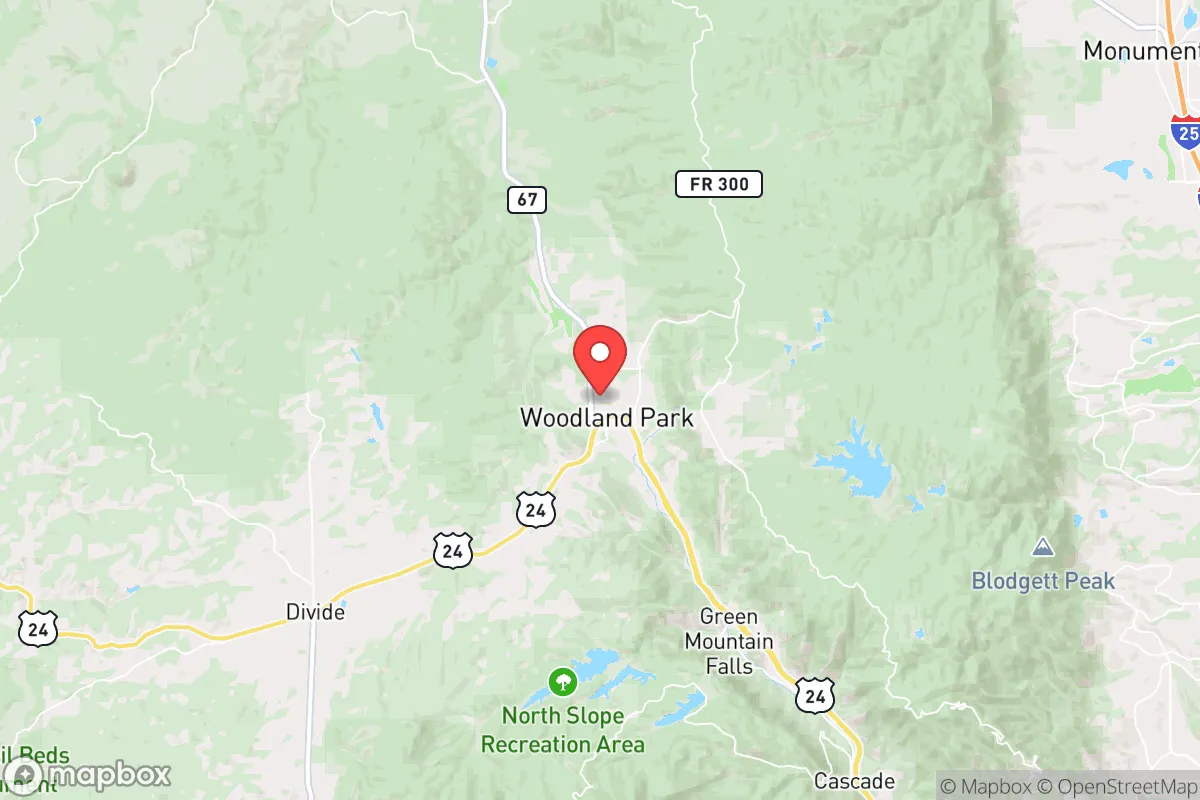
The people of Woodland Park, Colorado today number 7,909, forming a predominantly white (85.4%) and highly educated (41.7% college graduates) community with a distinctly low foreign-born population of just 0.7%. This is a city shaped by domestic in-migration—primarily from other parts of Colorado and the Front Range—rather than international immigration, giving it a character that is culturally homogeneous, politically conservative, and oriented toward outdoor recreation and a small-town mountain lifestyle. The city’s identity is less about ethnic diversity and more about a shared ethos of self-reliance, proximity to Pike National Forest, and a deliberate distance from the faster pace of Colorado Springs, 18 miles east.
How the city was settled and grew
Woodland Park was not a pioneer-era farming settlement or mining camp. It was founded in the 1880s as a summer resort destination for residents of Colorado Springs and Denver seeking cooler mountain air, with the first permanent structures appearing around 1887. The original population was almost entirely white, drawn by the promise of a healthful climate and later by the timber industry and small-scale ranching. The historic Ute Pass Avenue corridor became the commercial and social spine, where early homesteaders and seasonal visitors built modest cabins and boarding houses. By the early 20th century, the Mountain Shadows area—then a cluster of summer cottages—attracted middle-class families from the plains. The city incorporated in 1906, but growth remained slow through the 1950s, with the population hovering around 500. The post-World War II era saw a modest wave of returning veterans and their families settling in the Pine Valley subdivision, drawn by cheap land and the promise of a quiet, rural life within commuting distance of Colorado Springs’ growing defense industry.
Modern era (post-1965)
The modern demographic story of Woodland Park begins in earnest after the 1965 Hart-Cellar Act, though its effects were minimal here. Unlike many U.S. cities, Woodland Park did not experience a surge in foreign-born immigration; the 0.7% foreign-born share today is among the lowest in Colorado. Instead, the city’s growth from the 1970s through the 2000s was driven by domestic relocation—primarily white, middle-class families and retirees from Colorado Springs, Denver, and other Front Range communities seeking lower housing costs, larger lots, and a slower pace. The Meadow Wood subdivision, developed in the 1980s, absorbed many of these newcomers, offering newer single-family homes on acreage. The Woodland Park Estates neighborhood, built in the 1990s and 2000s, attracted a slightly more affluent wave, including telecommuters and second-home buyers. The Hispanic population, now at 7.2%, grew gradually through domestic migration from other parts of Colorado and the Southwest, settling primarily in older, more affordable rental stock along West Street and the Highway 24 corridor. The Black population (2.1%) and East/Southeast Asian population (0.0%) remain negligible, reflecting the city’s limited economic pull for non-white domestic migrants and its lack of ethnic enclave infrastructure. The Indian subcontinent population is 0.0%.
The future
Demographic projections for Woodland Point suggest continued homogenization rather than diversification. The city’s low foreign-born share and negligible Asian and Indian populations are unlikely to shift significantly, as the local economy—dominated by tourism, retail, and remote work—does not attract the labor-intensive industries or refugee resettlement programs that drive immigration in larger Colorado cities. The Hispanic share may rise modestly, mirroring statewide trends, but will likely remain below 10% due to high housing costs (median home price above $600,000) that price out lower-income families. The white population, while still dominant, is aging: the median age is 47.2, well above the national average, suggesting a future of slow natural decrease unless younger families are drawn by new development. The North Meadows area, currently zoned for mixed-use growth, could attract a slightly younger, more diverse cohort if affordable housing units are built, but no major demographic inflection point is on the horizon. The city is not tribalizing into distinct ethnic enclaves; rather, it is consolidating as a predominantly white, older, and politically conservative community.
For a conservative-leaning individual or family considering relocation, Woodland Park offers a stable, culturally familiar environment with low crime, strong schools, and a community that values privacy and self-sufficiency. The population is not diversifying rapidly, nor is it shrinking—it is slowly aging and homogenizing. New arrivals will find a city that looks and feels much as it did 30 years ago, with the same demographic profile and the same small-town mountain ethos. The trade-off is clear: demographic stability and cultural continuity in exchange for limited diversity and a high cost of entry.

* Values derived from national, state, county, city and local statistics and may differ in a specific area. Last updated: 2026-04-29T00:34:54.000Z
Narrative content on this page is AI-generated and may contain mistakes. Verify any details that matter before acting on them.
ReloMaps may earn a commission from affiliate links at no extra cost to you.

