Photo: Wikipedia
Strategic Assessment of Woodland Park, CO
Meaningful friction. Expect exposure to either population pressure, blast zones, or natural disaster risk. Consider buying a retreat property.
What does the Strategic Assessment tell us?
Our Strategic Assessment grades tactical survivability of an area. Major population centers, military targets, fallout zones, natural disasters, and border exposure all drive risk — lower exposure means a more defensible position in a crisis.
This is heavily inspired by Joel Skousen's Strategic Relocation book. Highly recommended you checkout the book ($)What does this tell us?
Our Strategic Assessment grades tactical survivability of an area. Major population centers, military targets, fallout zones, natural disasters, and border exposure all drive risk — lower exposure means a more defensible position in a crisis.
This is heavily inspired by Joel Skousen's Strategic Relocation book. Highly recommended you checkout the book ($)Strategic Pillars

Key Distances
Regional Safe Places
Below is our recommended "safe zones" in Colorado and the surrounding area based on our strategic heuristics. For most people, it's unrealistic to live in a “safe zone” full-time due to work, family or other personal reasons. They tend to be more rural. However, many of these areas are perfect for second homes and retreat properties that double as a vacation home or even a short-term rental.
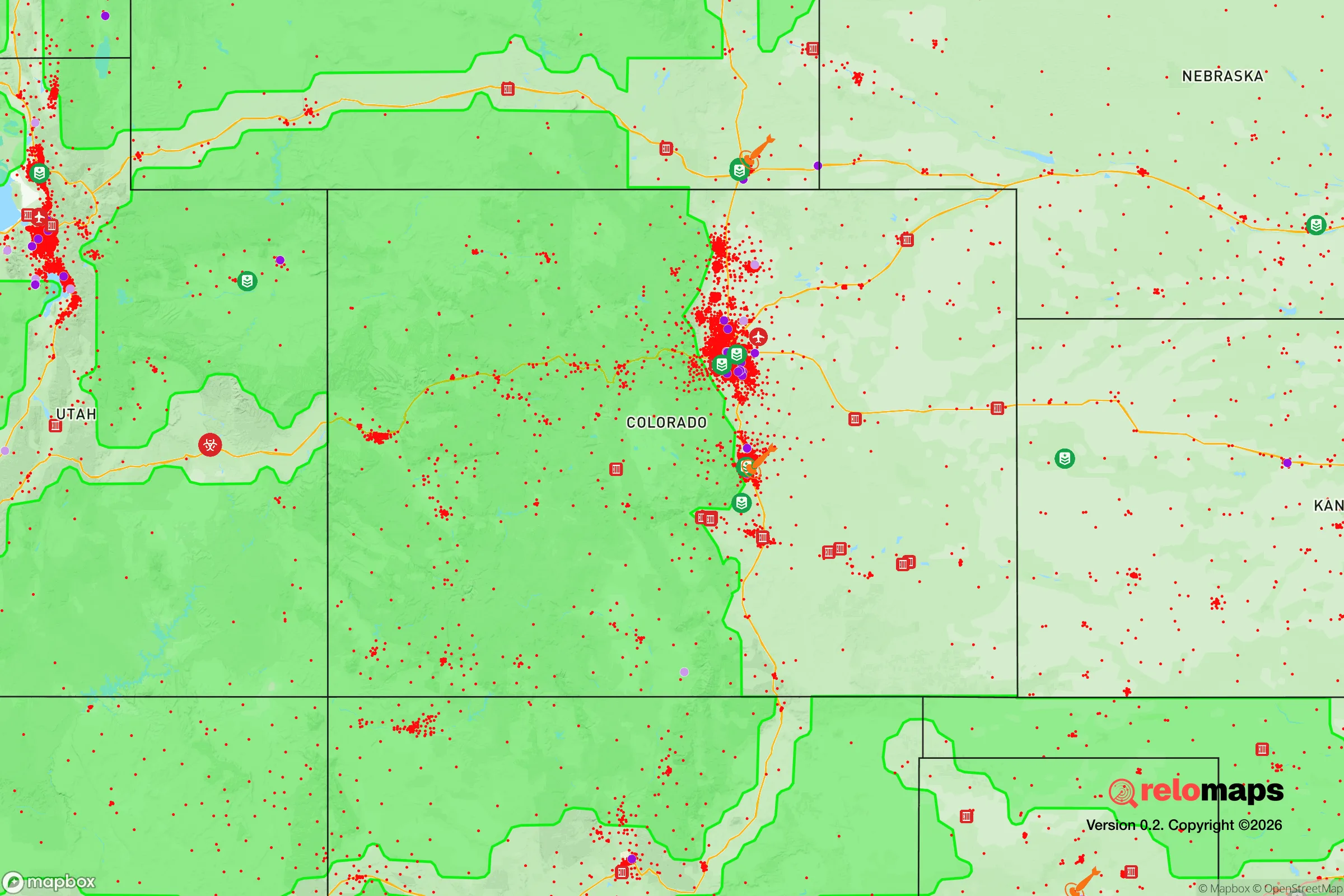
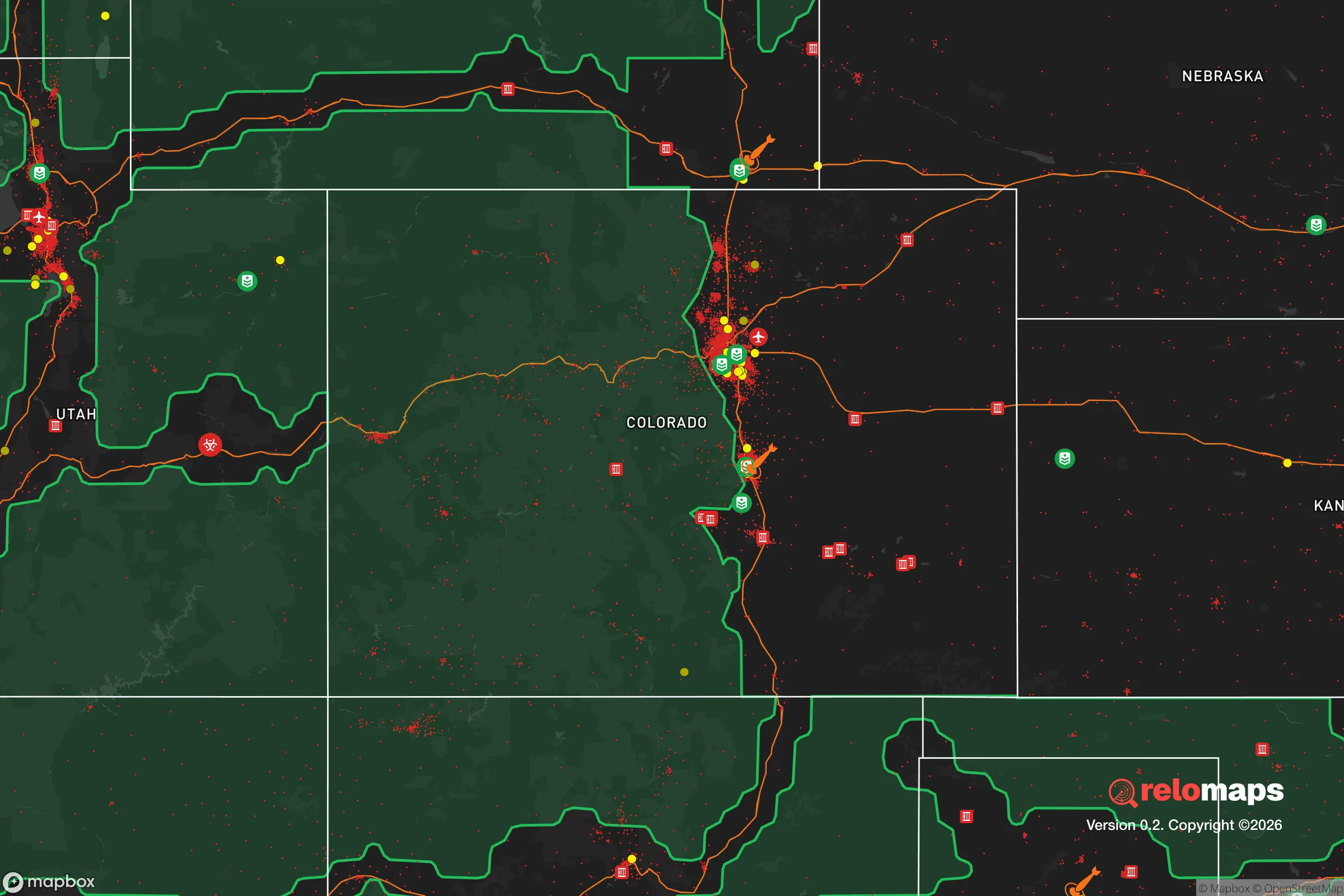


Important Note: For informational purposes only. This does not mean nothing bad ever happens in the green zones. Please use common sense. This is based on public data and modeled with AI. We tried to take a conservative approach but mistakes happen. We update this regularly as new information becomes available.
Solar Generator Recommendations
Backup power matters more here than in safer locations. We've picked three solar generators across budgets and capacity tiers — start with the budget unit if you only need a few essentials, or step up if you want to run a fridge and HVAC for days at a time.

Jackery Portable Power Station Explorer 300
Budget OptionPower on the Go: Weighing only 11 lbs, it's convenient to set up and store with book-sized foldable solar panels

BLUETTI Portable Power Station AC180
Designed for both indoor and outdoor scenarios, AC180 is highly capable as it has a robost capacity and continuous output power.

EF ECOFLOW DELTA Pro Ultra Power Station
Upgraded PickEcoFlow DELTA Pro Ultra is a whole-home energy system designed to grow with your family. Integrated with the Smart Home Panel 2, it scales to meet your evolving energy needs — keeping your home powered, intelligent, and secure through every stage of life.
We earn a commission, at no additional cost to you.
Strategic Assessment Analysis
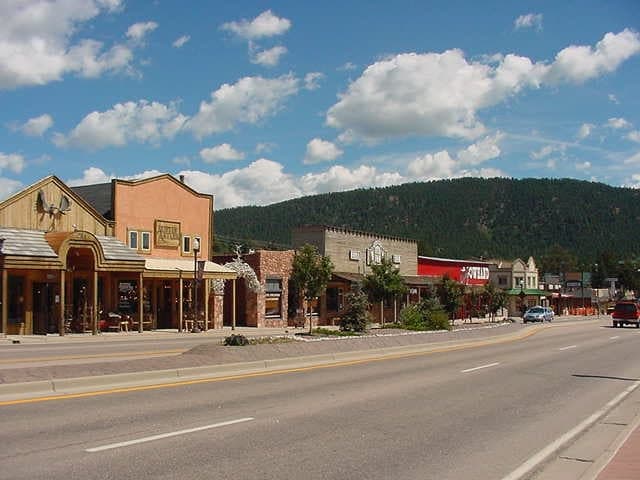
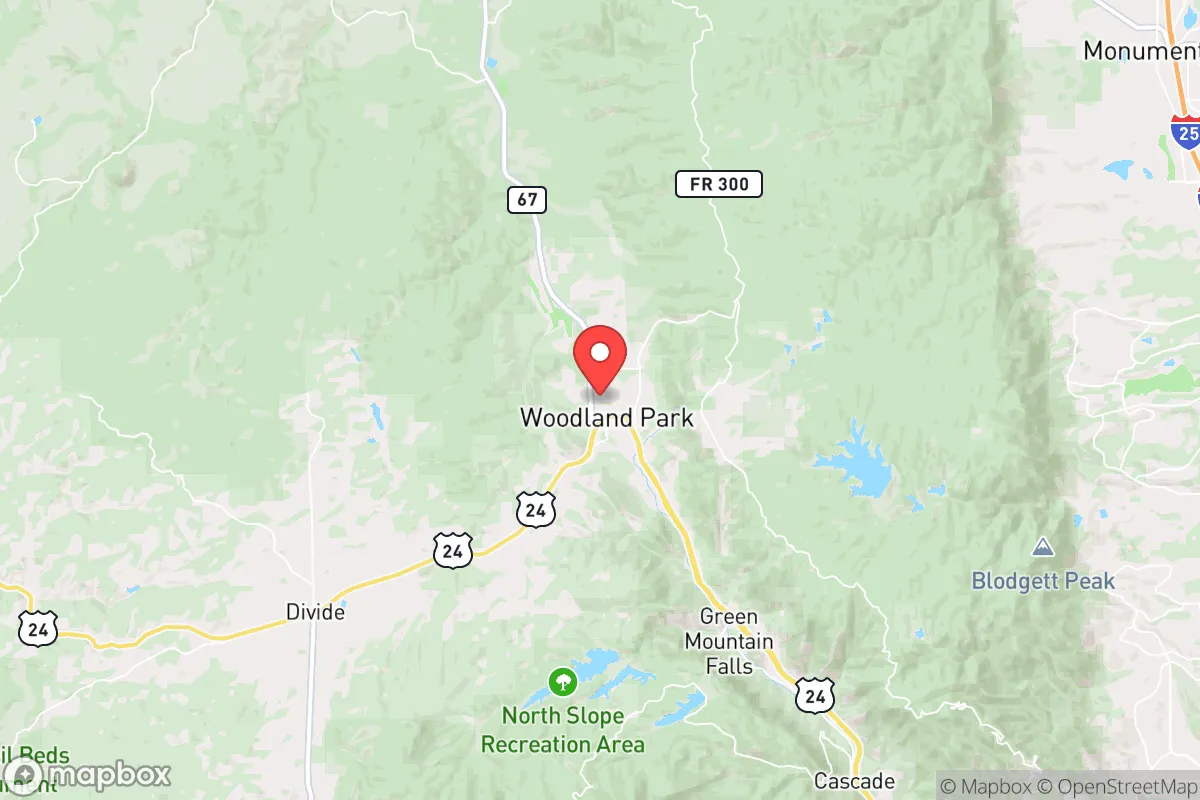
Woodland Park, Colorado, sits at a strategic altitude of 8,500 feet on the Rampart Range, offering a natural fortress-like position that combines isolation with reasonable access to critical resources. This Teller County town, roughly 20 miles west of Colorado Springs, provides a defensible high-ground location that avoids the direct fallout corridors of major metropolitan areas while maintaining a viable supply chain connection. For those assessing relocation through a survivalist lens, Woodland Park’s elevation, limited road access, and low population density (around 7,500 residents) create a strong baseline for resilience against both natural disasters and civil unrest scenarios.
Geographic position and natural defensive advantages
Woodland Park’s primary strategic asset is its elevation and terrain. Perched on a plateau above the Ute Pass, the town commands views of the Front Range and the Great Plains to the east, while the Pike National Forest wraps around its western and southern flanks. This high ground provides natural surveillance advantages—any approach from Colorado Springs or Denver is visible for miles, and the single primary access route (US Highway 24) funnels traffic through a narrow canyon that can be monitored or controlled if necessary. The surrounding forest and rugged terrain create a buffer zone that discourages casual foot traffic, and the area’s numerous dirt roads and trails offer multiple egress options for those familiar with the landscape. Winters are harsh, with average snowfall around 80 inches, which acts as a natural barrier to movement for unprepared individuals or groups. The cold itself is a defensive asset: it limits the operational window for any large-scale movement into the area, especially during the months from November through April. For a relocator, this means the town is inherently harder to reach and harder to sustain a presence in without proper cold-weather gear and supplies.
Risks, exposures, and proximity to fallout-relevant landmarks
The most significant exposure for Woodland Park is its proximity to Colorado Springs, home to Peterson Space Force Base, Schriever Space Force Base, and the U.S. Air Force Academy. In a major conflict or EMP scenario, these are high-value targets that could generate secondary effects—electromagnetic pulse, refugee flow, or localized infrastructure collapse. The town sits roughly 20 miles from these installations, which is close enough to feel the shockwave of a conventional strike but far enough to avoid the immediate blast radius of most conventional weapons. Denver, 70 miles north, is a larger concern for civil unrest and supply chain disruption, but the distance and mountain barrier provide a meaningful buffer. Wildfire is the most immediate natural risk: the 2012 Waldo Canyon Fire and 2013 Black Forest Fire both came within miles of Woodland Park, and the surrounding forest is dry and dense. The town’s water supply comes from a combination of wells and the nearby Rampart Reservoir, which is vulnerable to drought and contamination from fire runoff. Earthquake risk is low, but the area sits near the Ute Pass fault line, which has produced minor tremors historically. For a prepper, the key takeaway is that Woodland Park is not immune to large-scale events, but its distance from primary targets and its natural barriers reduce the likelihood of being in the direct path of a coordinated attack or major civil disturbance.
Practical resilience for a relocator: food, water, energy, and defensibility
Water is the most critical resource in Woodland Park, and it’s a mixed bag. The town’s municipal water comes from the Rampart Reservoir and several deep wells, but the system is aging and vulnerable to power loss. Many homes have private wells, which is a major advantage—those with a well and a hand pump or solar-powered pump can maintain water independence. The average well depth in the area is 200-400 feet, tapping into the Denver Basin aquifer, which is reliable but requires electricity or mechanical pumping. Rainwater collection is legal in Colorado but limited to 110 gallons per property, so it’s not a primary solution. For food, the growing season is short (May to September) and cold-tolerant crops like potatoes, kale, and root vegetables do best. The soil is rocky and acidic, so raised beds or greenhouse setups are necessary for serious gardening. Local game includes mule deer, elk, and turkey, but hunting pressure is moderate and permits are required. The town has a small grocery store (Safeway) and a few local markets, but supply chains are thin—a disruption in Colorado Springs would empty shelves within days. Energy resilience is strong: the area has good solar exposure despite the snow, and many homes already have backup generators or wood stoves. Propane is widely available, and firewood is abundant in the national forest (with a permit). Defensibility is excellent for a small group: the town’s layout on a plateau means most homes have clear sightlines, and the surrounding forest provides cover for those who know the terrain. The local sheriff’s office is small but responsive, and the community has a strong “neighbor-help-neighbor” culture that would likely coalesce quickly in a crisis. For a single individual or family, the key is to secure a property with a well, a wood stove, and a defensible perimeter—preferably on a dead-end road or cul-de-sac that limits approach vectors.
The overall strategic picture for Woodland Park is one of calculated trade-offs. It offers genuine high-ground security, natural barriers, and a community that values self-reliance, but it sits close enough to military targets and metropolitan chaos to require serious preparation. The town is not a bunker—it’s a base camp. For those willing to invest in water independence, cold-weather gear, and a solid retreat plan, it provides a viable long-term position that balances isolation with access to the Front Range’s resources. The key vulnerability is the single road in and out, which can become a choke point in a mass evacuation. Anyone serious about relocating here should have multiple vehicles, a stockpile of fuel, and a plan for winter travel. Woodland Park won’t save you from a direct hit on Colorado Springs, but it will give you a fighting chance in the aftermath—and that’s more than most places can offer.

* Values derived from national, state, county, city and local statistics and may differ in a specific area. Last updated: 2026-04-29T00:34:54.000Z
Narrative content on this page is AI-generated and may contain mistakes. Verify any details that matter before acting on them.
ReloMaps may earn a commission from affiliate links at no extra cost to you.

