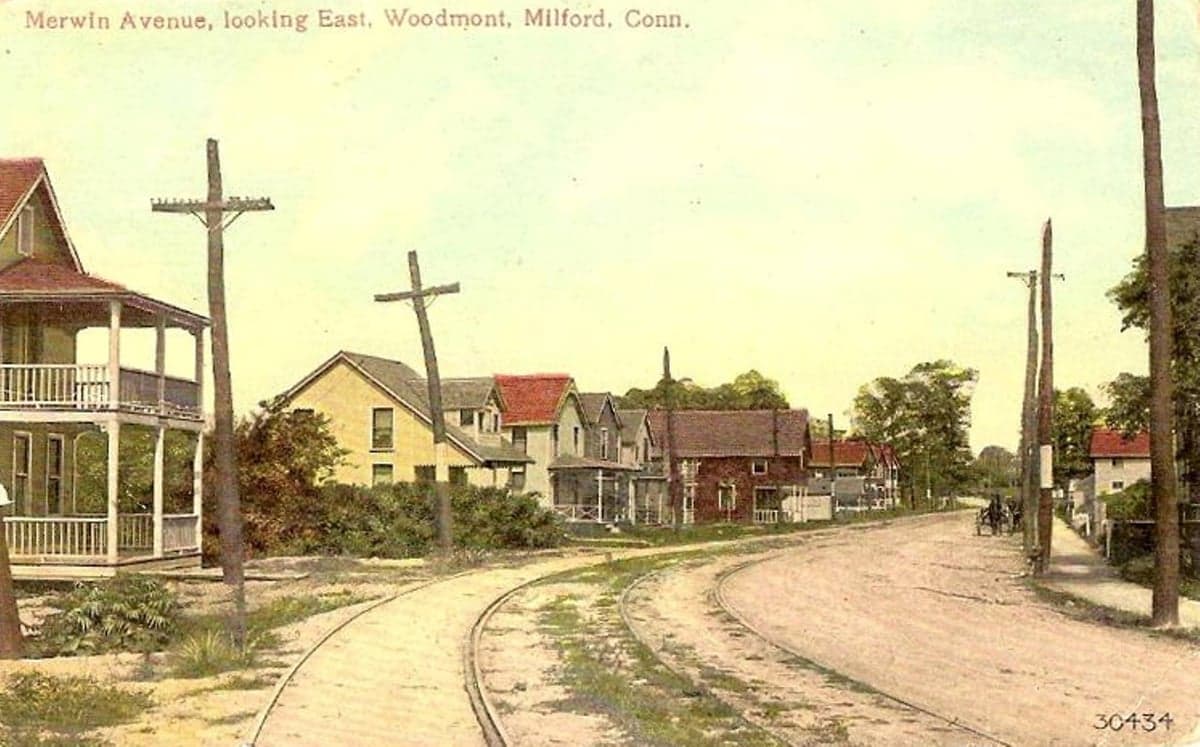
Photo: Wikipedia
Personal Sovereignty in Woodmont, CT
Viable for self-reliance. Generally workable, though some barriers may limit total independence.
What does Personal Sovereignty tell us?
Personal Sovereignty measures your capacity for self-reliance and independence with minimal government friction. Higher scores mean fewer barriers between you and the way you want to live... but it assumes you have the space you need and good neighbors.
What does this tell us?
Personal Sovereignty measures your capacity for self-reliance and independence with minimal government friction. Higher scores mean fewer barriers between you and the way you want to live... but it assumes you have the space you need and good neighbors.
State Policy
Energy independence: Importer (5% of energy produced in-state)
Personal Liberty
Homesteading

Personal Liberty Analysis
For the individual or family prioritizing personal sovereignty above all else, Woodmont, Connecticut presents a deeply conflicted picture. As a coastal village within the town of Milford, it offers a degree of local autonomy and a quieter, more self-reliant lifestyle than many of its densely populated neighbors, but it remains firmly under the thumb of one of the most administratively heavy states in the Northeast. The core tension here is between a desirable, semi-rural coastal environment and a state-level political and regulatory apparatus that consistently ranks among the most restrictive in the nation on personal freedoms, from taxation to self-defense. You are not escaping government overreach by moving here; you are choosing a specific, localized battleground within a larger, high-control state.
Tax burden and regulatory posture in a high-control state
Connecticut’s reputation for a heavy tax burden is earned, and Woodmont residents are not exempt. The state income tax is progressive, with rates climbing to nearly 7% for higher earners, and the state sales tax sits at 6.35%. More critically for property owners, Milford’s mill rate, while not the highest in the state, combines with Connecticut’s notoriously high property valuations to create a significant annual liability. This is a direct, recurring claim on your personal resources. The regulatory environment is equally dense. From stringent building codes and environmental regulations governing coastal properties to a complex state-level bureaucracy for everything from vehicle registration to business licensing, the default posture is one of permission-seeking. For the prepper or survivalist, this means any significant project—be it a substantial home renovation, a private well, or a solar array—will involve permits, inspections, and potential delays. The state’s overall regulatory climate is hostile to the idea that a person can manage their own affairs without government oversight.
Self-defense and gun law specifics in Connecticut
This is the most significant point of friction for the sovereignty-minded individual. Connecticut has some of the most restrictive gun laws in the United States. It requires a permit to purchase any firearm, a permit to carry (which is "may-issue" in practice, though nominally "shall-issue" after a lengthy background check and training requirement), and maintains a state-level assault weapons ban and a ban on magazines capable of holding more than ten rounds. The state also has a "red flag" law (Extreme Risk Protection Order) that allows for the temporary seizure of firearms based on a complaint, without a criminal conviction. For the survivalist, this represents a direct and significant limitation on the right to keep and bear arms. Self-defense options are legally constrained, and the process for obtaining and maintaining firearms is deliberately burdensome. While local law enforcement in Milford may be professional, the legal framework they enforce is fundamentally at odds with a high degree of personal armed autonomy. You must be prepared to navigate a complex, and from a conservative perspective, rights-infringing legal landscape.
Self-reliance and homesteading viability in a coastal village
The physical environment of Woodmont offers some genuine advantages for self-reliance, but they come with major caveats. Many properties, particularly those further from the immediate shoreline, sit on lots ranging from a quarter-acre to half-acre, which is enough for a substantial vegetable garden, a small orchard, and perhaps a few chickens (check local ordinances, as Milford has specific rules on livestock). The coastal location provides access to fishing and shellfishing in Long Island Sound, a real asset for supplementing food supplies. However, true off-grid feasibility is extremely low. Zoning is standard suburban, and building codes are strictly enforced. A composting toilet, a standalone rainwater collection system for potable use, or a full solar array with battery backup would face significant regulatory hurdles and likely be prohibited for a primary residence. The grid is reliable, but the ability to disconnect from it is virtually nonexistent. Homesteading here is a hobby, not a survival strategy. You can supplement your food, but you cannot achieve meaningful independence from municipal water, sewer, and power systems.
Personal liberties: parental rights, medical autonomy, speech, and property
On social and cultural liberties, Woodmont sits within a state that has moved aggressively in a progressive direction. Parental rights in education are a live issue, with the state government generally supportive of curriculum and policies that some conservative parents view as infringing on their authority. Medical autonomy, particularly regarding vaccine mandates and public health orders, has been a point of contention, with the state showing a willingness to impose broad mandates. Free speech is protected by the First Amendment, but the general cultural climate in Connecticut leans heavily toward enforced conformity on social issues, which can create a chilling effect for those holding dissenting views. Property rights are the most consistently eroded area. Beyond the tax burden, the state’s regulatory power over land use, environmental protection, and historic districts (Woodmont has a historic character) means your ability to use your property as you see fit is heavily circumscribed. You cannot simply build a workshop, run a business from your home, or modify your landscape without navigating a permitting process that assumes the state has a say in your private decisions.
In the final analysis, Woodmont offers a specific trade-off for the sovereignty-focused individual. You gain a beautiful, walkable coastal community with a strong local identity and a lower crime rate than many urban areas, which provides a degree of personal security. However, you are doing so within the framework of a state that actively centralizes power, restricts self-defense, taxes aggressively, and regulates personal and property decisions heavily. Compared to a freehold in a state like New Hampshire or a more rural county in the South or Midwest, Woodmont represents a significant compromise on nearly every metric of personal sovereignty. It is a viable location for someone who values the coastal environment and community stability enough to accept a high level of state control, but it is not a refuge from that control. For the serious prepper or the individual seeking maximum personal autonomy, the state-level liabilities likely outweigh the local-level assets.

* Values derived from national, state, county, city and local statistics and may differ in a specific area. Last updated: 2026-04-19T07:40:42.000Z
Narrative content on this page is AI-generated and may contain mistakes. Verify any details that matter before acting on them.
ReloMaps may earn a commission from affiliate links at no extra cost to you.

