Photo: Wikipedia
Demographics of Woodmont, CT
Affluence Level in Woodmont, CT
An upper-middle-class area. Household wealth, education levels, and homeownership run ahead of national benchmarks.
People of Woodmont, CT
Woodmont, Connecticut, is a small, tight-knit coastal village of 1,591 residents, characterized by its dense, walkable layout and a strong sense of historic identity. The population is overwhelmingly White (89.7%) and well-educated (62.1% college-educated), with a very low foreign-born share of just 2.6%. This is a community that has remained remarkably stable in its ethnic composition, shaped by its origins as a summer resort and later a year-round enclave for families seeking a quiet, waterfront lifestyle. The village's distinctive character is less about diversity and more about a deep-rooted, multi-generational local culture, with a small but growing Hispanic presence (5.8%) beginning to add a new layer to its demographic story.
How the city was settled and grew
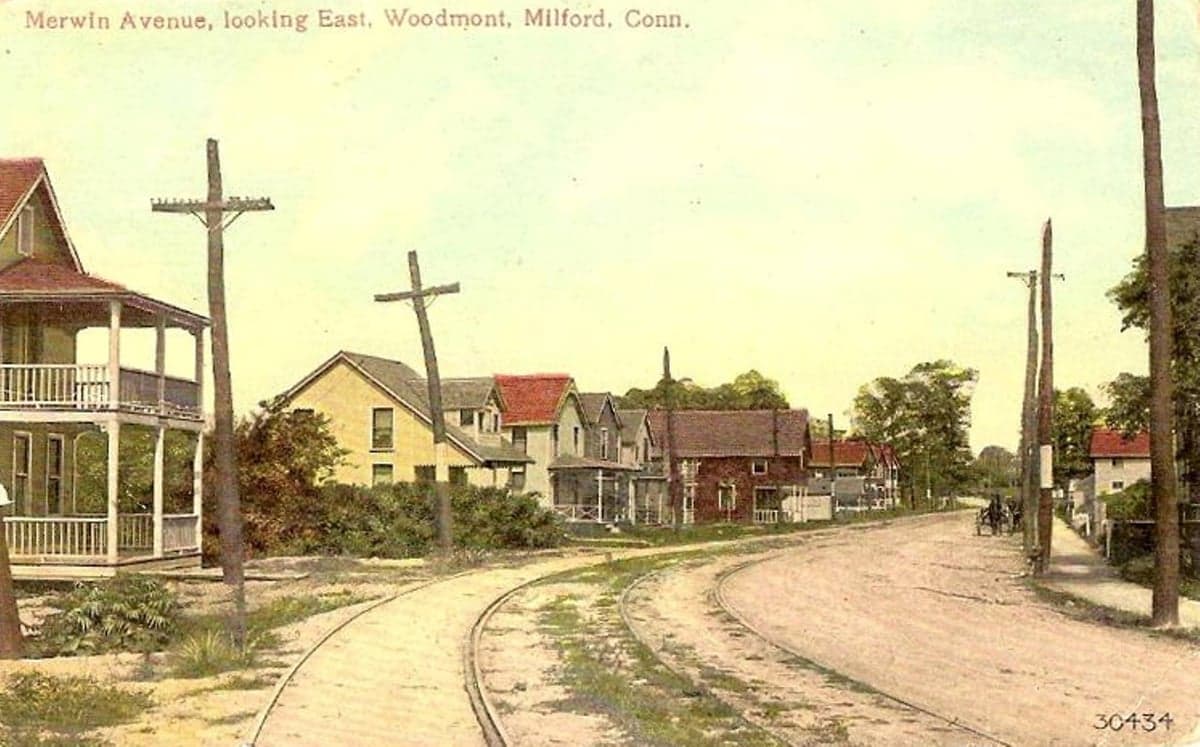
Woodmont's human history begins not with colonial farming, but with a late-19th-century real estate vision. The area was originally part of the larger town of Milford, and its development was driven by the arrival of the railroad in the 1870s, which made the Long Island Sound shoreline accessible to city dwellers. The Woodmont Association, formed in the 1890s, purchased the land and laid out a planned summer colony, attracting middle-class families from New Haven and Bridgeport seeking escape from urban heat and congestion. The original settlers were predominantly White, Protestant, and of English and German descent, who built the first wave of cottages and seasonal homes in what is now the Woodmont Historic District, centered around the village green and the Woodmont Beach. This area, with its distinctive Victorian and Shingle-style architecture, remains the historic heart of the community. A second wave of development occurred in the early 20th century, with the construction of more permanent homes along Naugatuck Avenue and the streets radiating toward the water, solidifying Woodmont's transition from a seasonal retreat to a year-round residential village for commuters and local professionals.
Modern era (post-1965)
The post-1965 era, marked by the Hart-Cellar Act, had a minimal direct impact on Woodmont's demographics. Unlike many urban centers, Woodmont did not experience a significant influx of new immigrant groups. The village's high property values and limited rental housing stock created a natural barrier to large-scale demographic change. Instead, the modern era has been defined by domestic in-migration and the gradual replacement of older summer cottages with larger, year-round homes. The Ansonia Drive and Broad Street neighborhoods, which had more modest, older housing stock, saw some turnover as younger families moved in, but the overall racial and ethnic composition remained overwhelmingly White. The most notable demographic shift has been the emergence of a small Hispanic community, now at 5.8% of the population, concentrated in a few pockets along the western edge of the village near the Milford line. This growth has been gradual, driven by service-sector employment in the broader New Haven area, and has not fundamentally altered the village's character. The Black (1.1%) and East/Southeast Asian (0.4%) populations remain very small, reflecting the area's high cost of entry and limited diversity in housing options.
The future
Looking ahead, Woodmont's population is likely to continue its slow, steady trajectory of modest growth and demographic stability. The village is not homogenizing in the sense of becoming more diverse; rather, it is tribalizing into distinct enclaves based on housing type and generational status. The historic core near the beach is increasingly occupied by affluent, older residents and second-home owners, while the inland areas along Woodmont Road and near the Milford border are seeing more young families and a slightly more diverse mix. The Hispanic community is expected to grow slowly, possibly reaching 8-10% over the next decade, but will likely remain concentrated in the more affordable rental units and older homes. The East/Southeast Asian and Indian populations are projected to remain negligible, as the village lacks the job centers, ethnic institutions, or housing stock that typically attract these groups. The biggest demographic pressure will come from rising property taxes and home prices, which may accelerate the out-migration of middle-class families and further entrench the village as an enclave of wealthier, older residents.
For someone moving in now, Woodmont is becoming a place of increasing economic homogeneity, where the cost of entry filters for a specific demographic profile: predominantly White, well-educated, and financially comfortable. The village offers a stable, safe, and historically rooted community, but one with limited racial or ethnic diversity. The future points toward a continuation of this trend, with a slow, incremental growth in the Hispanic population being the only significant demographic change on the horizon. This is a community where the past is deeply valued, and the future will likely look very much like the present.

* Values derived from national, state, county, city and local statistics and may differ in a specific area. Last updated: 2026-04-19T07:40:42.000Z
Narrative content on this page is AI-generated and may contain mistakes. Verify any details that matter before acting on them.
ReloMaps may earn a commission from affiliate links at no extra cost to you.

