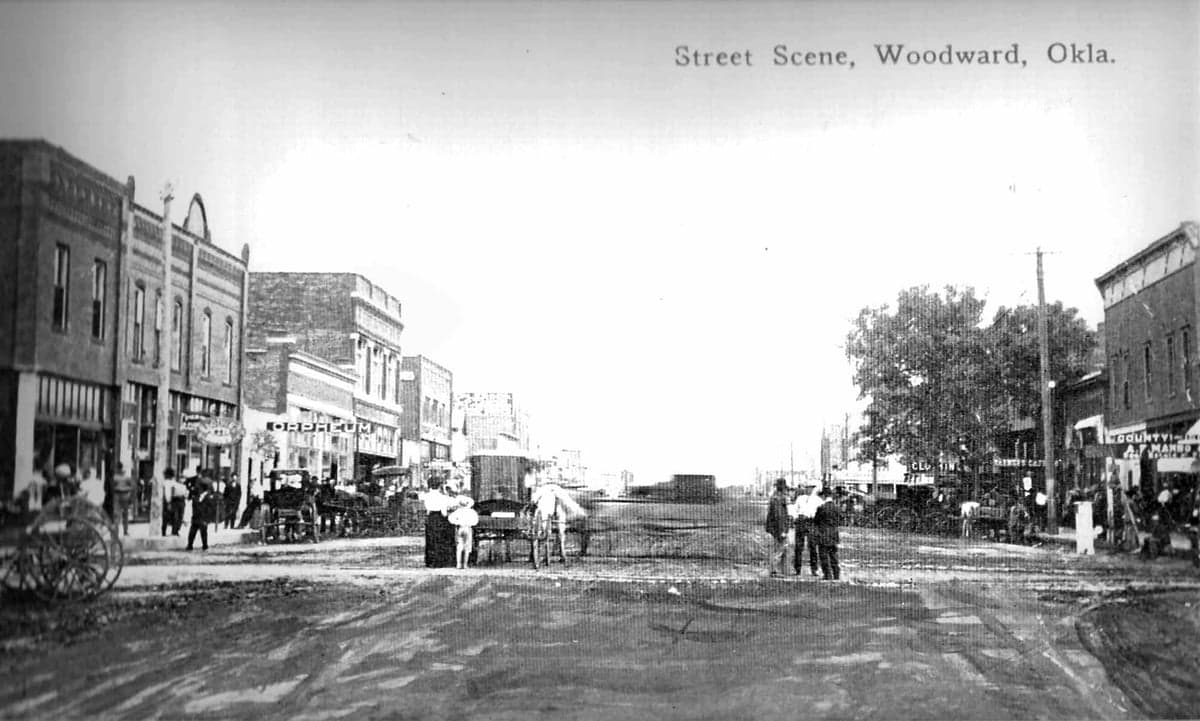
Photo: Wikipedia
Quality of Life in Woodward, OK
A high quality of life with strong walkability, manageable living costs, healthy neighborhood signals, and solid amenity access.
What does Quality of Life tell us?
Quality of Life blends cost of living, nearby amenities, socioeconomic signals, and neighborhood character. City-level scores represent the whole municipality; individual neighborhoods can differ.
What does this tell us?
Quality of Life blends cost of living, nearby amenities, socioeconomic signals, and neighborhood character. City-level scores represent the whole municipality; individual neighborhoods can differ.
Cost of Living
33% below national average
The Real Cost of Living in Woodward, OK for 2026
| Tier | Individual | Family (4) |
|---|---|---|
| Survival | $13k | $25k |
| Comfortable | $32k | $47k |
| Luxury | $110k+ | $170k+ |
| Elite (Top 5%) | $137k+ | $212k+ |
129%
The Area Signal
A metric tracking the socioeconomic signals of the area.


Hobbies
Explore the areaGroceries
5 within 10 miles
Gas
0 within 10 miles
Hospital
3 within 20 miles
Airport
DFW — Dallas/Fort Worth International
Post Office
USPS — Woodward, OK
Critical Amenities
Quality-of-Life Analysis
Woodward, Oklahoma, presents a notably affordable quality of life, with a cost of living index of 67—well below the national average of 100—and a median home value of $164,200. The area attracts a mix of families, energy-sector workers, and retirees drawn to its low housing costs, short commutes, and a slower, community-oriented pace of life. With an average commute of just over 22 minutes, residents enjoy a balance of small-town convenience and access to regional employment hubs in the Oklahoma Panhandle and northern Texas.
Cost of living, housing affordability, and how Woodward compares to nearby cities
Woodward’s cost of living is roughly one-third lower than the U.S. average, making it one of the most affordable communities in northwestern Oklahoma. The median home value of $164,200 is significantly less than the national median of roughly $350,000, and the median rent of $839 per month is similarly accessible. Compared to nearby cities like Enid (COL index 72) or Guymon (COL index 74), Woodward offers a slight edge in affordability, while still providing a wider range of services and amenities than smaller towns like Buffalo or Shattuck. The low housing costs are a primary draw for first-time homebuyers and those relocating from higher-cost states, though property taxes in Woodward County remain modest, averaging around 0.8% of assessed value. The short average commute of 22 minutes further reduces transportation costs, as most residents can reach work, schools, and shopping within a 15-minute drive.
Local amenities, schools, and what daily life is like for families
Daily life in Woodward centers on a compact downtown with local restaurants, a historic theater, and seasonal events like the Woodward Elks Rodeo and the annual Christmas parade. The Woodward Public Schools system serves the majority of families, with three elementary schools, one middle school, and Woodward High School, which maintains a student-teacher ratio of roughly 16:1. For healthcare, the Woodward Regional Hospital provides emergency and specialty care, though residents may travel to Enid or Oklahoma City for more advanced services. Outdoor recreation is a key amenity: Boiling Springs State Park, just 10 miles east, offers hiking, fishing, and camping, while the nearby North Canadian River provides additional fishing and wildlife viewing. The city’s retail options include a Walmart Supercenter, a few grocery chains, and local shops, but for major shopping or entertainment, residents often drive 90 minutes to Enid or two hours to Amarillo, Texas. The pace of life is unhurried, with low traffic, minimal crime compared to national averages, and a strong sense of neighborly connection.
Woodward is best suited for individuals and families who prioritize affordability, a slower pace, and a close-knit community over urban amenities. Energy-sector workers—particularly those in oil and gas—find stable employment, while remote workers and retirees benefit from the low housing costs and short commutes. Those seeking vibrant nightlife, diverse dining, or extensive cultural institutions may find Woodward limiting, but for anyone wanting a safe, budget-friendly base with access to outdoor recreation and a supportive community, it is a strong choice. The area’s low cost of living and manageable commute make it particularly attractive for first-time homebuyers and those looking to stretch their income further than in larger Oklahoma cities like Oklahoma City or Tulsa.

Crime in Woodward, OK
Generally safer than 74% of comparable U.S. locations.
Violent CrimeViolent Crime Analysis
Property CrimeProperty Crime Analysis
Crime Analysis
Woodward, Oklahoma, reports a violent crime rate of 394.2 incidents per 100,000 residents and a property crime rate of 1,234.1 per 100,000, placing it above national averages for both categories. While not among the most dangerous cities in the state, these figures indicate that crime is a tangible concern for residents and prospective movers. The city's safety profile is shaped by its role as a regional hub for commerce and energy in northwest Oklahoma, which brings both economic activity and associated crime pressures.
Crime in context
Woodward's violent crime rate of 394.2 per 100,000 is roughly 13% higher than the national average of approximately 350 per 100,000 and significantly exceeds the Oklahoma state average of around 460 per 100,000. The property crime rate of 1,234.1 per 100,000 is about 25% above the national average of roughly 1,000 per 100,000, though it falls below the Oklahoma state average of approximately 1,500 per 100,000. This places Woodward in a middle tier among Oklahoma cities of similar size—safer than high-crime areas like Lawton or Muskogee but with higher rates than many smaller, more rural communities in the Panhandle region. The city's location along U.S. Highway 412 and its proximity to the booming oil and gas fields of the Anadarko Basin contribute to transient populations and property crime opportunities.
What residents experience
Residents most commonly encounter property crimes such as theft from vehicles, burglary, and vandalism, particularly in commercial districts and near the main highway corridors. Violent crime, while less frequent, includes aggravated assault and robbery, with incidents often concentrated in specific areas rather than distributed evenly across the city. The Woodward Police Department maintains a visible presence, but clearance rates for property crimes remain low, as is typical for smaller departments with limited investigative resources. The local justice system operates under Oklahoma's conservative legal framework, which generally emphasizes tougher sentencing and accountability. This stands in contrast to jurisdictions with progressive district attorneys who may prioritize diversion programs and reduced incarceration—a model that critics argue can lead to higher recidivism and more criminals on the street. In Woodward, the focus on traditional prosecution helps maintain a degree of deterrence, though it does not eliminate the underlying socioeconomic factors driving crime.
Neighborhood-level variation
Crime in Woodward is not uniformly distributed. The downtown core and areas near the railroad tracks and older housing stock see higher rates of both property and violent incidents. Newer subdivisions on the north and west sides of town, such as those near the hospital and Woodward High School, report significantly lower crime rates. The area around the airport and industrial parks experiences elevated property crime due to commercial targets and lower foot traffic. Prospective residents should examine block-level data for specific streets, as a single block can vary dramatically from its neighbors. Overall, Woodward offers a moderate safety profile where awareness of surroundings and basic property security measures—like locking vehicles and using outdoor lighting—are prudent practices for daily life.
* Values derived from national, state, county, city and local statistics and may differ in a specific area. Last updated: 2026-04-19T19:40:04.000Z
Narrative content on this page is AI-generated and may contain mistakes. Verify any details that matter before acting on them.
ReloMaps may earn a commission from affiliate links at no extra cost to you.

