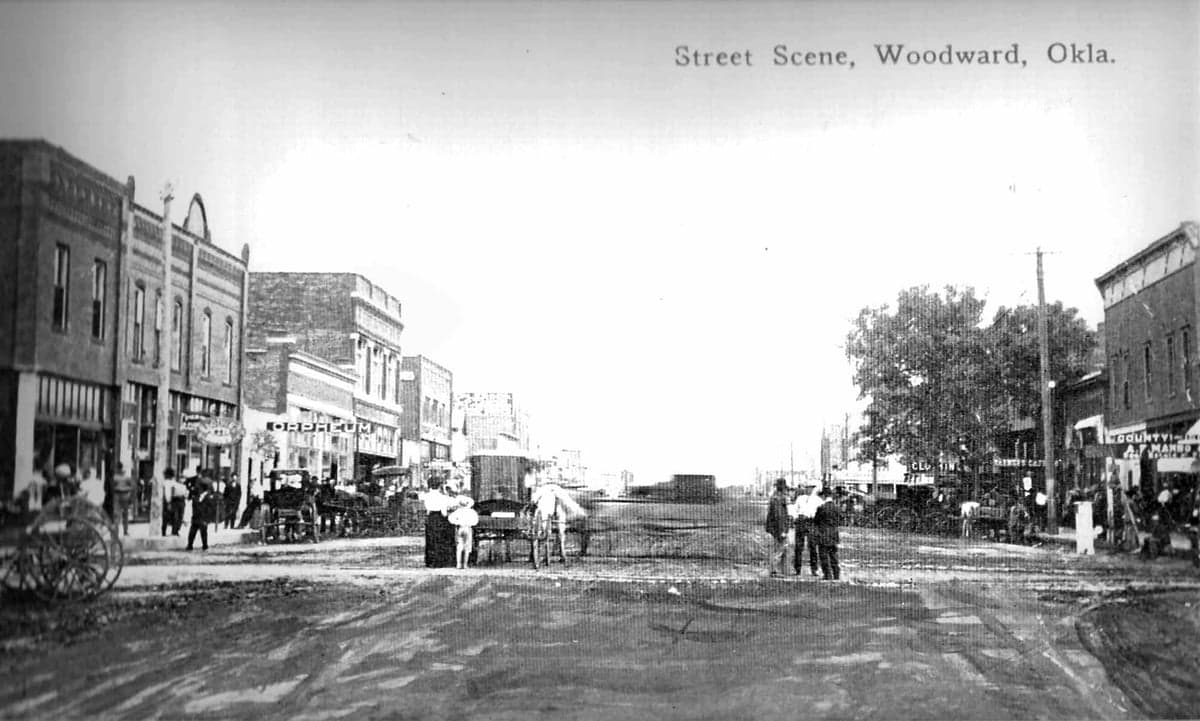
Photo: Wikipedia
Political ClimatePolitical Climate in Woodward, OK
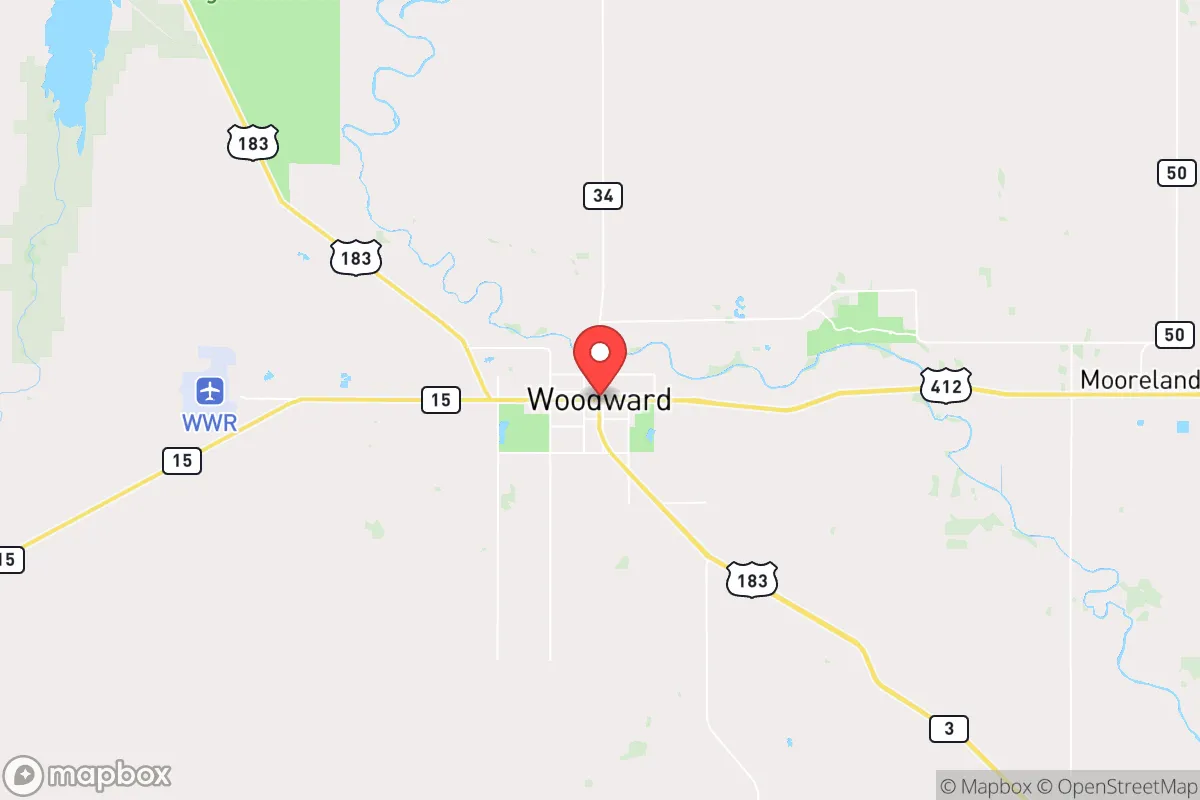
District shown is the primary district for this city’s centroid. Cities may span multiple districts.
Local Political AnalysisPolitical Analysis of Woodward, OK
Woodward, Oklahoma, sits deep in the heart of the state’s conservative stronghold, and the numbers back up what you’ll feel the moment you step off the highway. With a Cook PVI of R+23, this area votes Republican by a margin that’s nearly a third wider than the national average. That’s not just a statistic—it’s a way of life. For as long as anyone around here can remember, Woodward has leaned solidly red, and the trajectory hasn’t budged much. If anything, the surrounding rural counties have only gotten more conservative over the last decade, while the town itself has stayed steady, resisting the kind of shifts you see in places like Oklahoma City or Norman. You won’t find much hand-wringing over progressive policies here; folks tend to see that as a problem for other people in other places.
How it compares
Drive an hour east to Enid, and you’ll find a similar conservative vibe, though Enid’s a bit more moderate on local economic issues. Head south to Elk City or Clinton, and the politics are nearly identical—R+20 or higher. The real contrast comes if you go west to Guymon, where the growing Hispanic population has started to shift local elections slightly, or north to the Kansas border towns, which lean red but with a more libertarian streak. Woodward, though, is the anchor of the region’s old-school conservatism. It’s not just about voting Republican; it’s about a deep skepticism of government overreach. People here remember when the federal government tried to force land-use policies on ranchers in the 1990s, and that memory sticks. Any move toward progressive ideology—whether it’s on energy regulations, school curriculum, or gun rights—gets met with a hard “no thanks.” The nearby town of Mooreland is even more insulated, but Woodward is where the political pulse of the northwest part of the state really beats.
What this means for residents
For the people who live here, the political climate translates into a daily life that feels free from a lot of the bureaucratic nonsense you hear about in bigger cities. Property taxes stay low, there’s no city income tax, and the local government generally keeps its hands off small businesses. You can buy a hunting rifle without a waiting period, and the local school board isn’t pushing critical race theory or gender ideology—they’re focused on reading, math, and ag science. That said, there’s a growing concern among longtime residents about the slow creep of state-level mandates, especially around environmental rules for oil and gas. The state legislature in Oklahoma City has been mostly friendly, but every session brings a few bills that feel like they’re testing the limits of local control. Woodward’s city council is reliably conservative, but you still have to keep an eye on them—nobody wants a repeat of the 2015 zoning fight that tried to limit livestock operations near town. The bottom line: if you value personal freedom and want a place where the government stays out of your way, Woodward delivers. But it’s not immune to the pressures of the modern world, and the fight to keep it that way is ongoing.
Culturally, Woodward is a place where the Second Amendment isn’t debated—it’s practiced. The annual Woodward Elks Rodeo and the county fair are bigger draws than any political rally. You’ll see “Don’t Tread on Me” flags on trucks and “God Bless America” signs in front yards. There’s a strong sense of self-reliance here, and that extends to policy preferences: lower taxes, fewer regulations, and a deep distrust of federal intervention in local affairs. The biggest policy distinction from the rest of the state is Woodward’s fierce independence on land use and energy—this is oil and gas country, and any talk of green mandates is met with a collective eye roll. If you’re looking for a place where the political climate matches the values of personal responsibility and limited government, Woodward is about as close as it gets in 2026. Just don’t expect it to change anytime soon—and that’s exactly how most folks want it.

State Political ClimatePolitical Climate in Oklahoma
State Political AnalysisPolitical Environment in the State
Oklahoma has long been one of the most reliably Republican states in the nation, with a deep-red partisan lean that has only deepened over the past two decades. The state hasn’t voted for a Democratic presidential candidate since 1964, and in 2024, Donald Trump carried it by over 34 points. The dominant coalition is a mix of rural conservatives, evangelical Christians, and energy-sector workers, but the real story is how the state has shifted rightward even in its suburbs and small cities since the early 2000s. If you’re looking for a place where conservative values aren’t just tolerated but baked into the policy fabric, Oklahoma is about as solid as it gets — though the political landscape isn’t without its own internal tensions.
Urban vs. rural divide
The political map of Oklahoma is starkly divided between its two major metros and the vast rural expanse. Oklahoma City and its suburbs, particularly places like Edmond and Yukon, lean reliably Republican, though the city proper has a slight Democratic tilt in its core neighborhoods. Tulsa is similar — the suburban ring in Broken Arrow and Jenks is deeply conservative, while the urban core has pockets of progressive activism. The real engine of the state’s red dominance is the rural and exurban vote: counties like Texas County in the Panhandle and Roger Mills County in the west routinely deliver 80-90% Republican margins. The only reliably blue counties are Oklahoma County (OKC) and Tulsa County, and even those have trended rightward in recent cycles. The divide isn’t just about cities versus farms — it’s about a cultural and economic chasm between the energy-driven, church-going small towns and the more diverse, service-oriented metro cores.
Policy environment
Oklahoma’s policy environment is aggressively conservative, with a focus on low taxes, limited regulation, and cultural traditionalism. The state has a flat income tax rate of 4.75%, which lawmakers have been steadily cutting from over 5% a decade ago, and there’s active discussion of eliminating it entirely. Property taxes are among the lowest in the nation, capped by a constitutional amendment. On education, the state has embraced school choice aggressively: the Oklahoma Parental Choice Tax Credit Act (2023) provides up to $7,500 per child for private school expenses, and charter schools are widespread. Healthcare is a mixed bag — Oklahoma expanded Medicaid under a 2020 ballot initiative, but the state legislature has resisted further expansion of government-run programs. Election laws are strict: voter ID is required, and the state has purged inactive voters regularly. There’s no sanctuary city policy anywhere — in fact, Oklahoma City and Tulsa both cooperate with federal immigration enforcement. The regulatory posture is business-friendly, especially for oil and gas, with the Oklahoma Corporation Commission keeping a light hand on drilling permits.
Trajectory & freedom
Oklahoma has been moving decisively toward greater personal liberty on several fronts, particularly around gun rights, parental rights, and economic freedom. In 2019, the state passed constitutional carry (permitless carry of firearms), and in 2024, it enacted a law prohibiting local governments from enforcing federal gun regulations — a direct nullification-style move. Parental rights were strengthened with the Oklahoma Parental Bill of Rights (2022), which gives parents explicit authority over their children’s education and medical decisions. On medical autonomy, the state passed a near-total abortion ban in 2022 (SB 612) with no exceptions for rape or incest, and it has resisted any COVID-19 vaccine mandates. Property rights are strong, with no statewide rent control and minimal eminent domain abuse. However, there are concerning trends: the state has seen a push for more centralized control over local school boards, and some lawmakers have floated restrictions on homeschooling oversight. The overall trajectory is toward more freedom, but the government’s willingness to intervene in local affairs — especially on education — is a watchpoint for liberty-minded residents.
Civil unrest & political movements
Oklahoma has seen relatively little large-scale civil unrest compared to coastal states, but there have been notable flashpoints. The 2020 George Floyd protests in Oklahoma City and Tulsa drew thousands, with some property damage and arrests, but they were smaller and shorter-lived than in many other cities. The right-wing activist scene is robust: groups like Oklahoma Second Amendment Association and Moms for Liberty have strong chapters, and the state has been a hotbed of election integrity activism since 2020. Immigration politics are tense but not explosive — the state has no sanctuary policies, and local law enforcement in Lawton and Enid has cooperated with ICE. There’s been some nullification rhetoric around federal gun laws and vaccine mandates, but no serious secessionist movement. The most visible political flashpoint in recent years has been the 2023 Tulsa school board recall over critical race theory and mask mandates, which saw intense grassroots organizing on both sides. A new resident would notice a generally civil political culture, but with sharp divides in the metros and a strong undercurrent of distrust toward federal authority.
Projection
Over the next 5-10 years, Oklahoma is likely to become even more conservative, driven by in-migration from blue states and a growing population of families seeking lower taxes and cultural alignment. The state’s population grew by about 5% between 2020 and 2025, with much of that growth in the Oklahoma City suburbs and the Tulsa exurbs. These new arrivals tend to be conservative-leaning, often from California, Texas, and Colorado. The rural areas will continue to shrink demographically, but their political influence will remain outsized thanks to the state’s heavily gerrymandered legislative maps. Expect further tax cuts, expanded school choice, and more preemption of local ordinances on issues like housing and zoning. The biggest wildcard is the energy transition — if oil and gas decline, the state’s economy and political culture could shift, but for now, the trajectory is solidly red. Someone moving in now should expect to find a state that is doubling down on its conservative identity, with a government that is increasingly willing to assert state sovereignty against federal overreach.
For a new resident, the bottom line is this: Oklahoma offers a political environment where conservative values are not just safe but actively championed. You’ll find low taxes, strong gun rights, parental control over education, and a government that generally stays out of your personal life. The trade-offs are a limited public healthcare system, a heavy reliance on energy-sector employment, and a political culture that can feel insular in the rural areas. If you’re looking for a place where your vote actually matters and your freedoms are respected, Oklahoma is a solid bet — just be prepared for the summer heat and the occasional political dust-up over school boards.
* Values derived from national, state, county, city and local statistics and may differ in a specific area. Last updated: 2026-04-19T19:40:04.000Z
Narrative content on this page is AI-generated and may contain mistakes. Verify any details that matter before acting on them.
ReloMaps may earn a commission from affiliate links at no extra cost to you.

