Photo: Wikipedia
Personal Sovereignty in Worcester, MA
Viable for self-reliance. Generally workable, though some barriers may limit total independence.
What does Personal Sovereignty tell us?
Personal Sovereignty measures your capacity for self-reliance and independence with minimal government friction. Higher scores mean fewer barriers between you and the way you want to live... but it assumes you have the space you need and good neighbors.
What does this tell us?
Personal Sovereignty measures your capacity for self-reliance and independence with minimal government friction. Higher scores mean fewer barriers between you and the way you want to live... but it assumes you have the space you need and good neighbors.
State Policy
Energy independence: Importer (5% of energy produced in-state)
Personal Liberty
Homesteading

Personal Liberty Analysis
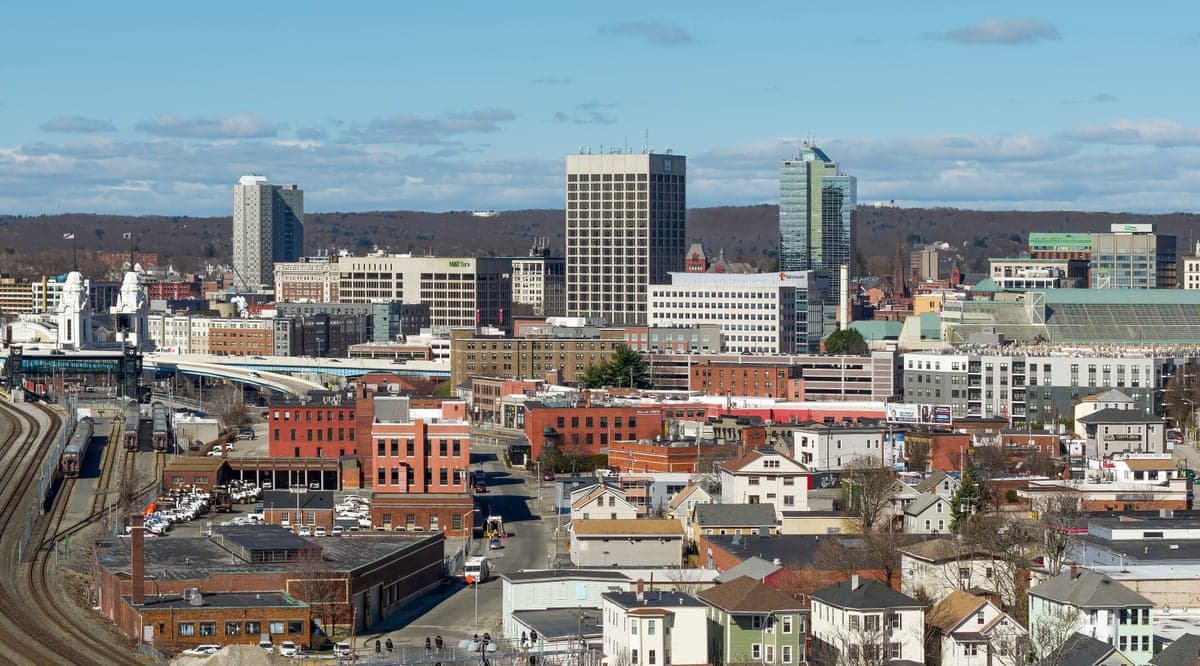
Worcester, Massachusetts presents a challenging environment for personal sovereignty, where state-level policies significantly constrain individual autonomy in ways that conservative-leaning individuals and preppers should carefully weigh. As the second-largest city in New England, Worcester offers a dense urban setting that is tightly integrated into Massachusetts' broader regulatory framework, which consistently ranks among the most restrictive in the nation for gun rights, tax burdens, and parental control over education. For those prioritizing self-reliance and minimal government interference, the city's practical freedoms are limited by state mandates that override local governance, making it a location where strategic relocation requires a clear-eyed assessment of trade-offs between economic opportunity and personal liberty.
Tax burden and regulatory posture: How Massachusetts policies limit financial autonomy
Massachusetts imposes one of the highest combined state and local tax burdens in the country, with a flat income tax rate of 5.0% (effectively higher with surtaxes) and a state sales tax of 6.25% that applies to most goods, including preparedness supplies like tools, generators, and bulk food storage items. Property taxes in Worcester average around $1.50 per $1,000 of assessed value, which is moderate for the state but still adds up quickly given the city's median home value near $400,000. The state's regulatory posture is aggressively interventionist: strict building codes, environmental regulations, and energy mandates (like the "Net Zero" building requirements for new construction) drive up costs for anyone attempting to modify property for self-sufficiency. For preppers, the state's ban on natural gas hookups in new buildings starting in 2025 is a direct hit to energy independence, forcing reliance on electric heat pumps that are vulnerable to grid failures. Additionally, Massachusetts has some of the nation's highest vehicle excise taxes and registration fees, adding recurring costs that erode disposable income. The overall message is clear: the state views personal wealth as a resource to be redistributed, not retained by individuals.
Self-defense and gun law specifics: What Worcester residents face for firearm ownership
Massachusetts is one of the most restrictive states for gun ownership in the U.S., and Worcester residents must navigate a dense web of laws that severely limit self-defense options. The state requires a License to Carry (LTC) for any handgun possession, which involves a background check, fingerprinting, a firearms safety course, and a local police chief's approval—a process that can take months and is subject to discretionary denial. Worcester itself has a mixed record on issuing LTCs, but the state's "may issue" framework means that even law-abiding citizens can be denied without clear recourse. Magazine capacity is capped at 10 rounds, and the state maintains a restrictive "approved firearms roster" that bans many popular defensive handguns and rifles. "Assault weapons" are effectively banned, including AR-15-style platforms, which are standard for home defense and prepper scenarios. Open carry is illegal, and concealed carry requires the same LTC. For preppers, the inability to own standard-capacity magazines or modern sporting rifles is a major liability. Furthermore, Massachusetts has a red flag law that allows for temporary firearm seizure without a criminal conviction, and safe storage laws mandate that guns be locked when not in use—even in a home invasion scenario. The state's gun culture is hostile to the idea of armed self-reliance, and Worcester residents must accept that their ability to defend life and property is heavily circumscribed by government decree.
Self-reliance and homesteading viability: Lot sizes, zoning, and off-grid feasibility in Worcester
Worcester's dense urban and suburban zoning makes traditional homesteading nearly impossible within city limits. Most residential lots are 5,000 to 10,000 square feet, with strict zoning codes that prohibit livestock, limit garden sizes, and require permits for any outbuildings like sheds or greenhouses. The city's zoning ordinance explicitly bans chickens, goats, and bees in most residential districts, and even vegetable gardens can be subject to nuisance complaints if they exceed certain dimensions. Off-grid living is effectively illegal: Massachusetts requires all habitable structures to be connected to municipal water and sewer systems, and solar panels must be grid-tied with net metering agreements—standalone battery systems are discouraged by utility regulations. Rainwater collection is legal but restricted to 250 gallons per property without a permit, and composting toilets are not allowed as primary sanitation. For those seeking true self-reliance, Worcester's dense layout and strict codes mean that even a modest homesteading lifestyle is a bureaucratic battle. The nearest viable land for rural homesteading is in central or western Massachusetts, such as in Worcester County's more rural towns like Hubbardston or Barre, but those areas require a 30-60 minute commute to Worcester for work. Within the city, the best a prepper can do is a container garden, a backup generator (subject to noise ordinances), and a deep pantry—all of which are vulnerable to supply chain disruptions and utility failures.
Personal liberties: Parental rights, medical autonomy, speech, and property in Massachusetts
Massachusetts is a state where government overreach into personal freedoms is institutionalized, particularly in areas of parental rights and medical autonomy. The state has universal vaccine mandates for school attendance, with no philosophical exemptions and only narrow medical exemptions that are difficult to obtain. This directly impacts parental control over children's healthcare decisions. In education, Massachusetts has a strong "sex ed" mandate that requires LGBTQ-inclusive curriculum from kindergarten, and parents have limited ability to opt their children out of specific lessons. The state's Department of Children and Families (DCF) has broad authority to investigate families for "educational neglect" if children are homeschooled without rigorous approval, and homeschoolers must submit annual curriculum plans and assessments. On medical autonomy, Massachusetts imposed one of the nation's strictest COVID-19 mandates, including vaccine requirements for healthcare workers and state employees, and the state maintains a mandatory vaccine registry that tracks immunization status. Free speech is generally protected, but the state has a "hate crimes" law that enhances penalties for speech deemed to target protected groups, which can chill political expression. Property rights are weak: the state's Chapter 40B law allows developers to override local zoning for affordable housing projects, meaning Worcester residents have little say in what gets built next door. The overall picture is one of a state that actively curtails parental authority, medical choice, and property control in favor of centralized government directives.
In the broader landscape of personal sovereignty, Worcester ranks poorly compared to states like New Hampshire, Texas, or Idaho, where tax burdens are lower, gun rights are protected, and parental control is stronger. For conservative-leaning individuals and preppers, the city's economic opportunities (biotech, healthcare, education) come at the cost of accepting a government that views self-reliance as a threat to be regulated. The strategic calculus is clear: Worcester is a place to earn a living, not to build a sovereign life. Those who value autonomy above all else should look to the free states, where the balance of power tilts toward the individual rather than the state.

* Values derived from national, state, county, city and local statistics and may differ in a specific area. Last updated: 2026-05-01T21:34:17.000Z
Narrative content on this page is AI-generated and may contain mistakes. Verify any details that matter before acting on them.
ReloMaps may earn a commission from affiliate links at no extra cost to you.

