Photo: Wikipedia
Political ClimatePolitical Climate in Worcester, MA
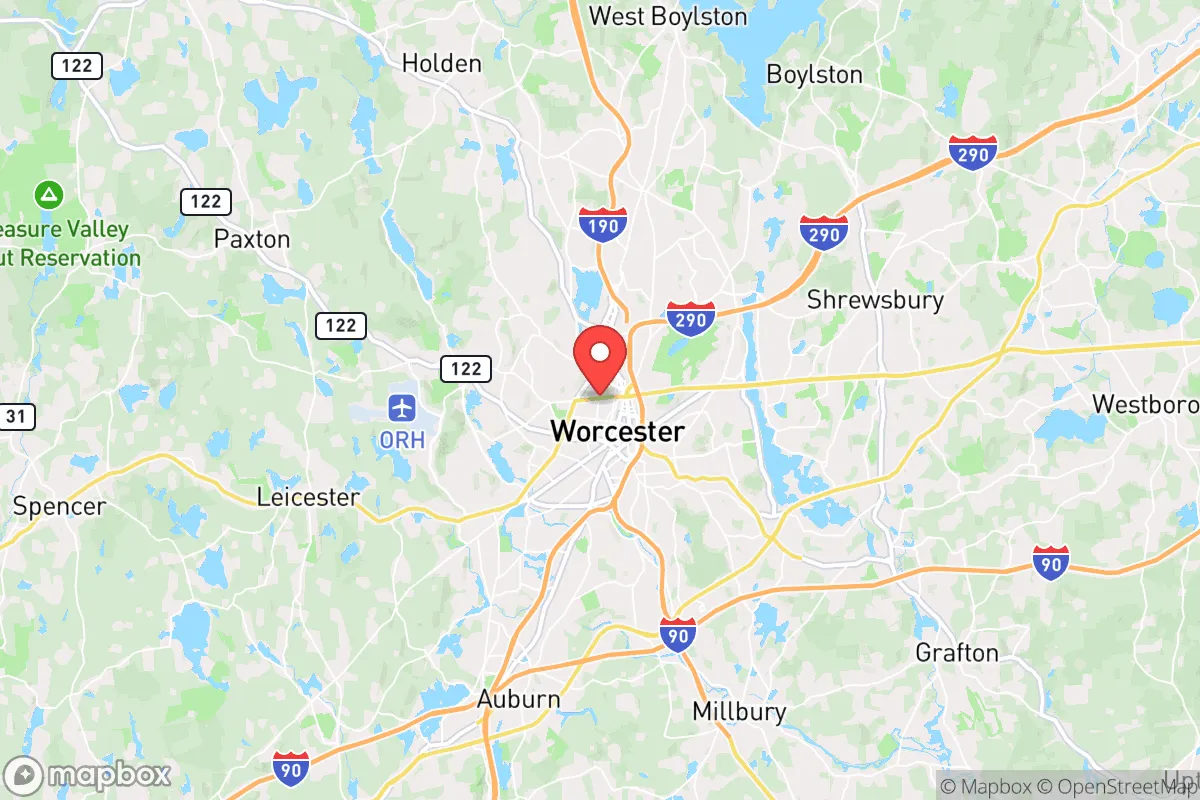
District shown is the primary district for this city’s centroid. Cities may span multiple districts.
Local Political AnalysisPolitical Analysis of Worcester, MA
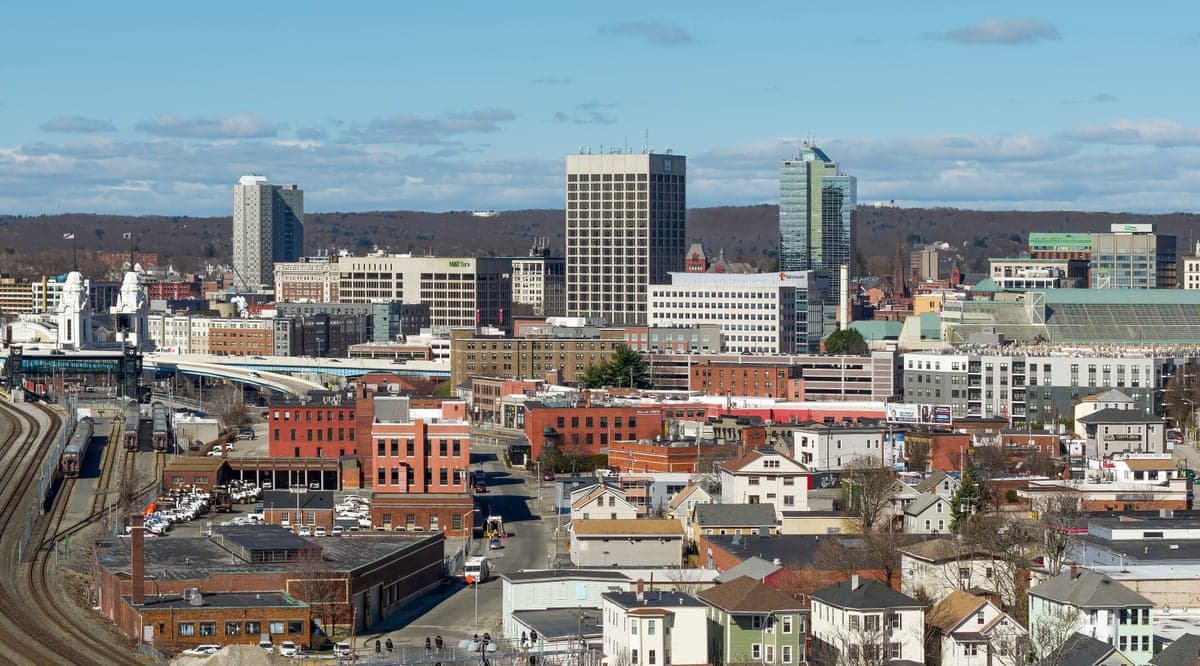
Worcester, Massachusetts, has a political climate that leans heavily to the left, with a Cook PVI of D+13, meaning the city votes about 13 points more Democratic than the national average. This wasn't always the case. I remember when Worcester was a real working-class town, a place where your neighbor was a machinist or a firefighter, and local politics were about potholes and school budgets, not social engineering. Over the last two decades, the shift has been dramatic. The city has become a stronghold for progressive policies, and the old-school, live-and-let-live attitude has been replaced by a more activist, top-down approach to governing. If you value personal freedoms and a government that stays out of your business, the trajectory here is concerning.
How it compares
To understand Worcester's politics, you have to look at the surrounding towns. Places like Holden, Paxton, and Rutland, just a 15-minute drive west, are politically conservative strongholds. They vote reliably Republican and have a much more hands-off approach to local governance. Even Shrewsbury, right next door, is more moderate. Worcester, by contrast, is an island of deep-blue politics in a sea of red and purple suburbs. The city council and school committee are dominated by progressive voices, and the state delegation from Worcester is among the most liberal in Massachusetts. This creates a real cultural and political divide. You can drive 10 minutes and feel like you're in a different country, where people are skeptical of government overreach and value individual responsibility over collective mandates.
What this means for residents
For a resident who values personal freedom, the practical effects are noticeable. The city has embraced strict zoning and housing policies that limit property rights, and there's a constant push for higher taxes and fees to fund an ever-expanding list of social programs. The school system, once a point of pride, is now heavily focused on ideological curricula, with less emphasis on traditional academics. You'll see more mandates from City Hall—on everything from energy use to business operations—that feel less like common-sense regulations and more like social experiments. The police department, while still professional, is under constant pressure to "reform" in ways that often seem to prioritize optics over public safety. The general vibe is that the government knows better than you do, and your personal choices—from what car you drive to how you heat your home—are subject to increasing scrutiny and control.
Looking ahead, I don't see this trend reversing. The city's demographics are shifting, with a growing population of young professionals and academics who are comfortable with, and even demand, a more activist government. The old guard of moderate Democrats and independents who kept things balanced is fading. The long-term outlook is for more of the same: higher taxes, more regulations, and a continued erosion of the kind of personal liberty that made Worcester a great place to raise a family. If you're considering a move here and you lean conservative, be prepared to be a political minority. Your voice will be heard, but it will often be drowned out by the progressive consensus that now defines the city's political culture. It's a shame, really, because the bones of a great city are still here—it's just the spirit that's changed.

State Political ClimatePolitical Climate in Massachusetts
State Political AnalysisPolitical Environment in the State
Massachusetts has been a one-party Democratic stronghold for decades, with a political climate that leans further left with each election cycle. The state hasn't voted for a Republican presidential candidate since 1984, and in 2024, Kamala Harris carried it by over 25 points. The dominant coalition is a blend of coastal urban progressives, academic elites, and union-aligned public sector workers, with a small but vocal Republican minority concentrated in the central and southeastern parts of the state. Over the past 20 years, the GOP has been systematically squeezed out of state-level power, losing nearly all competitive legislative seats and seeing its voter registration share drop below 10%.
Urban vs. rural divide
The political map of Massachusetts is a tale of two worlds. The Greater Boston metro area—including Boston, Cambridge, Somerville, and Newton—is the engine of the state's progressive dominance, routinely delivering 75-85% of the vote to Democrats. These cities are home to the state's major universities, tech hubs, and financial services, and they drive policy through sheer population density. In contrast, the rural western part of the state, places like Pittsfield and the Berkshires, are more moderate but still reliably blue. The real Republican redoubts are in the southeastern corner—Plymouth County and the Cape Cod towns of Sandwich and Bourne—where Trump won some precincts in 2020 and 2024. Central Massachusetts, including Worcester, is a battleground: the city itself votes Democratic, but the surrounding suburbs like Shrewsbury and Holden are more evenly split. The key takeaway: if you're looking for a conservative enclave, you're limited to a few pockets in the southeast and some rural towns in the central part of the state.
Policy environment
The policy environment in Massachusetts is aggressively progressive, and it shows in the tax code and regulatory structure. The state has a flat income tax rate of 5%, but in 2022 voters approved a "millionaire's tax" (a 4% surcharge on income over $1 million), which is already driving high-earners to consider leaving. Property taxes are moderate compared to national averages, but they vary wildly by town—expect to pay $8,000-$12,000 annually on a median home in the Boston suburbs. Sales tax is 6.25%, and there's no exemption for groceries or clothing. On education, Massachusetts has the best public schools in the nation, but the cost is a rigid, union-dominated system that leaves little room for school choice or charter expansion. Healthcare is heavily regulated, with near-universal coverage under the state's 2006 reform law, but wait times for specialists can be long. Election laws are among the most liberal in the country: no-excuse mail-in voting, same-day registration, and automatic voter registration are all in place. For a conservative, the policy environment feels like a one-way ratchet toward bigger government and higher costs.
Trajectory & freedom
Massachusetts is becoming less free by the year, especially on issues of personal liberty. The most glaring example is gun rights: the state already had some of the strictest laws in the nation, but in 2024, Governor Maura Healey signed a sweeping gun control package that bans "ghost guns," expands the "red flag" law, and requires a license to purchase ammunition. On parental rights, the state passed a law in 2023 that allows minors 16 and older to consent to gender-affirming care without parental notification, and school districts are increasingly adopting policies that hide a child's gender identity from parents. On speech, the state's public universities have implemented "bias response teams" that chill conservative speech, and there's no campus free speech protection law. On medical autonomy, the state has a vaccine mandate for healthcare workers that remains in effect, and COVID-era emergency powers were only partially rolled back. On property rights, the state's rent control ban was repealed in 2023, allowing Boston and other cities to impose rent caps. The trajectory is clear: every legislative session brings new restrictions on what you can own, say, or do with your own body and property.
Civil unrest & political movements
Massachusetts has a long history of political activism, but it's almost entirely from the left. The 2020 Black Lives Matter protests in Boston were massive and largely peaceful, but they did lead to the removal of a statue of Christopher Columbus in the North End. The state's sanctuary state status, codified by the 2017 "Safe Communities Act," means local law enforcement cannot cooperate with ICE detainers, and the state has seen a surge in illegal immigration, particularly in Springfield and Holyoke, where shelter systems are overwhelmed. On the right, the most visible movement is the Massachusetts Fiscal Alliance, which pushes for tax cuts and transparency, but it has little legislative success. There have been scattered "election integrity" concerns, particularly around the 2020 and 2022 mail-in ballot expansions, but no major fraud has been proven. The most visible flashpoint for a new resident would be the constant presence of political signage in liberal towns—you'll see "Black Lives Matter" and "Trans Rights Are Human Rights" signs in nearly every yard in Cambridge and Somerville. In the more conservative towns like Sandwich, you'll see "Don't Tread on Me" flags and the occasional Trump banner, but they're increasingly rare.
Projection
Over the next 5-10 years, Massachusetts will only get more progressive. The demographic shift is relentless: young, college-educated professionals from across the country are moving to Boston for tech and biotech jobs, and they overwhelmingly vote Democratic. The state's in-migration from other states is actually negative—more people are leaving than arriving—but the ones who stay are the ones who like the politics. The Republican Party is in a death spiral, with no bench of statewide candidates and a shrinking donor base. Expect more tax increases, more gun control, more parental rights restrictions, and more sanctuary policies. The only wild card is the housing crisis: if the state fails to build enough housing, the cost of living could drive out the very progressives who sustain the political machine, potentially creating a small opening for moderate Republicans in the suburbs. But don't bet on it. If you're moving here now, plan for a state that will be more like California in a decade: high taxes, heavy regulation, and a one-party government that feels no need to compromise.
Bottom line for a new resident: If you're a conservative or even a moderate, Massachusetts is a tough place to live politically. You'll be in the minority, your vote will rarely matter in statewide elections, and you'll see policies passed that directly conflict with your values. The trade-off is world-class schools, a strong economy, and beautiful natural scenery—but you'll pay for it in taxes and lost freedoms. If you can afford it and you're willing to be a political outlier, it's livable. If you're looking for a place where your vote counts and your values are respected, look elsewhere.
* Values derived from national, state, county, city and local statistics and may differ in a specific area. Last updated: 2026-05-01T21:34:17.000Z
Narrative content on this page is AI-generated and may contain mistakes. Verify any details that matter before acting on them.
ReloMaps may earn a commission from affiliate links at no extra cost to you.

