Demographics of Wrangell City And, AK
Affluence Level in Wrangell City And, AK
A middle-class area roughly in line with national averages across income, home values, education, and employment.
People of Wrangell City And, AK
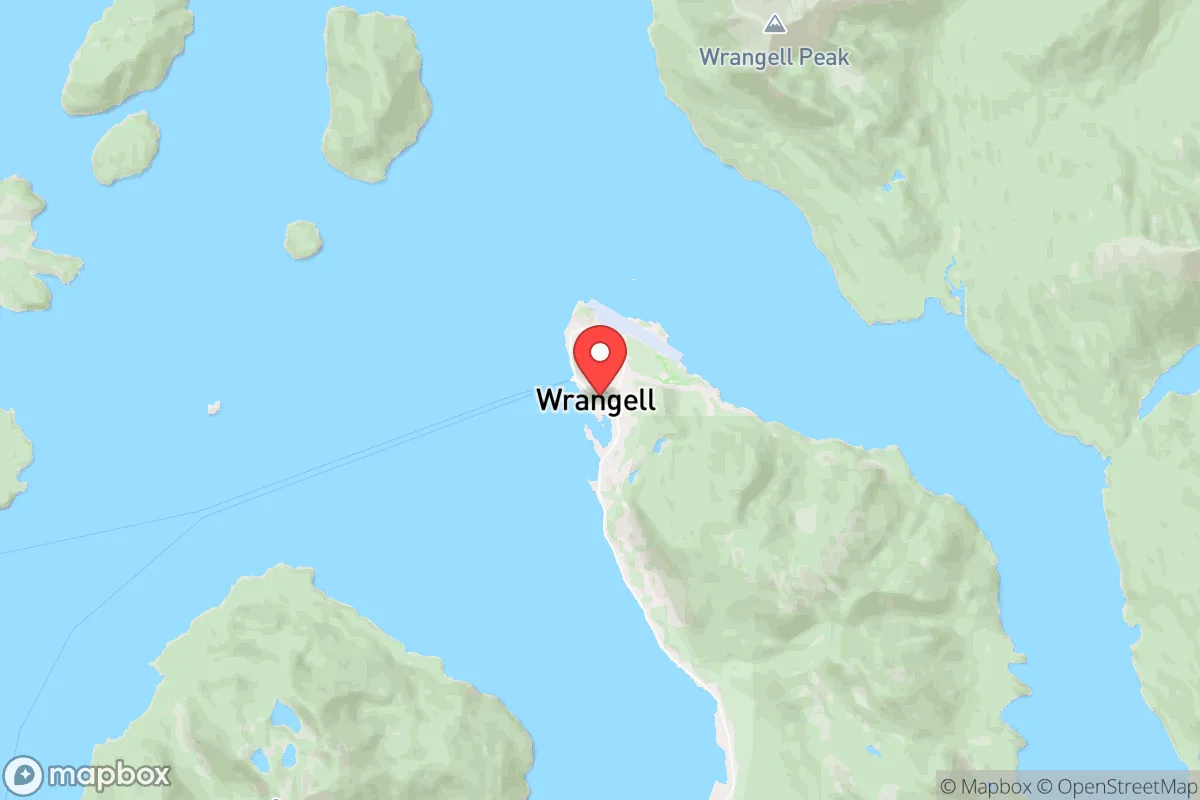
Wrangell, Alaska, is a small, tight-knit community of 2,106 residents where the population is predominantly white (54.2%) and Alaska Native, with a notably low foreign-born share of just 3.4%. The city’s character is defined by its remote island location, a working waterfront economy, and a population that is older and less transient than many Southeast Alaska towns, with only 18.9% holding a college degree. Distinctive identity markers include a strong subsistence lifestyle, a deep connection to Tlingit heritage, and a conservative-leaning, self-reliant ethos shaped by generations of fishing, logging, and government service.
How the city was settled and grew
Wrangell’s human history begins with the Stikine Tlingit people, who established seasonal fish camps and permanent villages along the Stikine River delta and on Wrangell Island for centuries. The first major non-Native wave arrived with Russian fur traders in the 1830s, who built a stockade near what is now Chief Shakes Island and the downtown waterfront. The Hudson’s Bay Company took over in 1840, and after the Alaska Purchase in 1867, the U.S. Army established a post at Fort Wrangell, drawing American prospectors, traders, and missionaries. The 1870s and 1880s brought a gold rush up the Stikine River, swelling the population with miners and merchants who settled in the Old Town district along Front Street. By the early 1900s, the cannery industry anchored the economy, and a wave of Scandinavian and Filipino fishermen arrived, living in company housing near the Cannery Hill neighborhood. The Tlingit population, meanwhile, was pushed to the Case Avenue area and the nearby village of Thoms Place, where many families maintained traditional fishing and trapping practices. The city was formally incorporated in 1903, and the population hovered around 1,000 until the mid-20th century, sustained by salmon canneries, the Civilian Conservation Corps projects, and the U.S. Forest Service presence.
Modern era (post-1965)
After the 1964 Alaska earthquake and the decline of the cannery industry, Wrangell’s population shifted toward government and service-sector employment. The Alaska Marine Highway System began ferry service in the 1960s, connecting the town to the rest of the Panhandle and bringing a modest influx of state employees and retirees. The Zimovia Highway corridor, developed in the 1970s, opened up new residential subdivisions like South Wrangell and Mountain View, where many white and Alaska Native families moved from the older downtown core. The post-1965 immigration reforms had minimal impact here—the foreign-born share remains just 3.4%, and the Asian population (East/Southeast Asian) is only 4.1%, concentrated among a few Filipino families who arrived in the 1970s and 1980s to work in the seafood processing plants. The Hispanic population (5.5%) is small and largely transient, tied to seasonal fishing crews. The black population is negligible at 0.1%, and there is no recorded Indian subcontinent population. The most significant demographic shift since 1965 has been the gradual outmigration of young adults seeking education and jobs in Anchorage or Seattle, leaving an aging population. The Tlingit community, now about 25% of the city, has seen a resurgence in cultural pride and political influence, with the Wrangell Cooperative Association tribal government playing a key role in land management and housing on the Case Avenue and Shakes Island areas.
The future
Wrangell’s population is projected to remain stable or decline slightly over the next 10–20 years, as the city lacks the economic diversification to attract large numbers of new residents. The white and Alaska Native populations are both aging, and the small Hispanic and Asian communities are likely to remain niche groups tied to the seafood industry. There is no evidence of tribalization into distinct enclaves—the city is too small for that—but the Tlingit community is increasingly assertive in local governance and cultural preservation, which may create a more bicultural identity rather than a homogenized one. The foreign-born share is unlikely to rise significantly, as the remote location and limited job market do not attract immigrants. For a conservative-leaning individual or family moving in now, Wrangell offers a stable, low-crime environment with strong community ties, but the demographic reality is a slowly shrinking, older population with limited ethnic diversity and a heavy reliance on government and natural resource jobs.
Wrangell is becoming a place where Alaska Native heritage and white working-class traditions coexist in a small, aging community that values self-sufficiency and continuity over growth. For someone moving in now, the city offers a quiet, safe, and culturally rich environment, but with a demographic trajectory that points toward further shrinkage and a bicultural identity rather than rapid change or diversification.

* Values derived from national, state, county, city and local statistics and may differ in a specific area. Last updated: 2026-04-19T19:43:40.000Z
Narrative content on this page is AI-generated and may contain mistakes. Verify any details that matter before acting on them.
ReloMaps may earn a commission from affiliate links at no extra cost to you.

